Basque Cheesecake the Burnt Creamy Dream Authentic Tarta De Queso
Why the Basque Cheesecake Defies All Traditional Rules
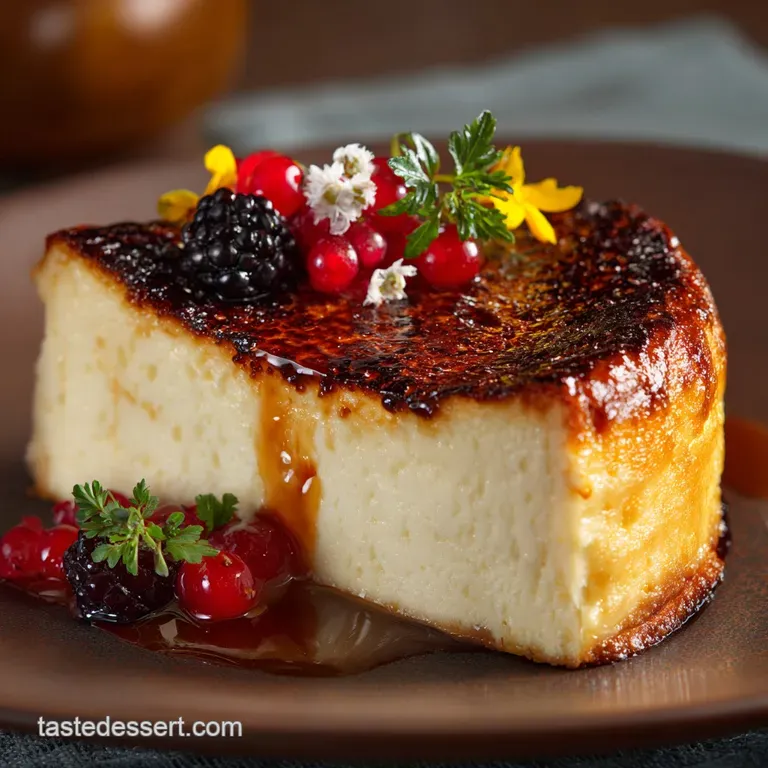
Forget those perfect, pristine New York cheesecakes. Seriously. The Basque cheesecake, or Tarta de Queso , is the dessert that threw the rule book out the window, set it on fire, and then ate the results. This is the antithesis of careful, slow baking.
It’s messy, dramatic, and completely brilliant. If you’ve ever felt intimidated by water baths or cracked tops, this is your spiritual home. We’re aiming for burnt on the outside and pure liquid silk on the inside.
Hailing from San Sebastián: The La Viña Legacy
This phenomenon started in a small, unassuming bar in San Sebastián, Spain, called La Viña. It was born out of necessity, really. They wanted a simple cheesecake, something rustic and easy, but that didn't compromise on flavor. They cranked up the heat and bam the charred crust was born.
When I first heard about it, I thought, "Burnt dessert? Are you kidding me?" But once you taste that bitter, caramelized edge melting into the sweet, almost savory custard core (hello, basque cheesecake origin!), you get it. This recipe isn't just about baking; it's about embracing imperfection.
Understanding the Maillard Reaction: How Burnt Equals Flavor
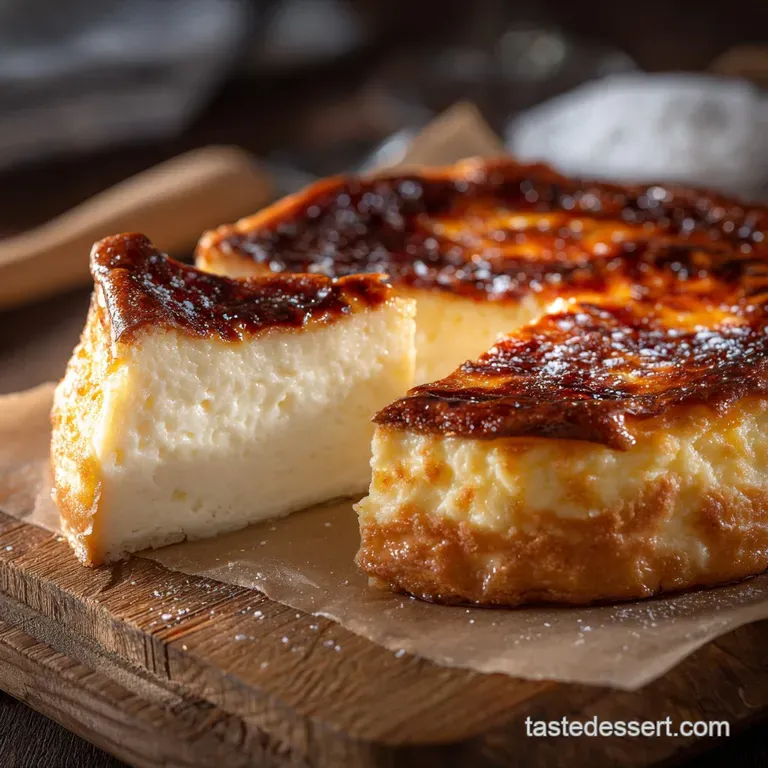
We are intentionally burning the sugars and proteins on the surface. That intense high heat (you need to push your oven to 425°F or higher) causes the Maillard reaction to go into overdrive. It creates hundreds of complex flavor compounds, resulting in that smoky, deeply caramel note.
This dark crust acts like a protective shell, insulation for the gorgeous filling underneath. Trust me, the ‘burnt’ part is the flavor bomb. If your cake looks light brown when you pull it out, you failed the assignment. Go darker. Be brave.
Texture Wars: Defining the Custardy Core
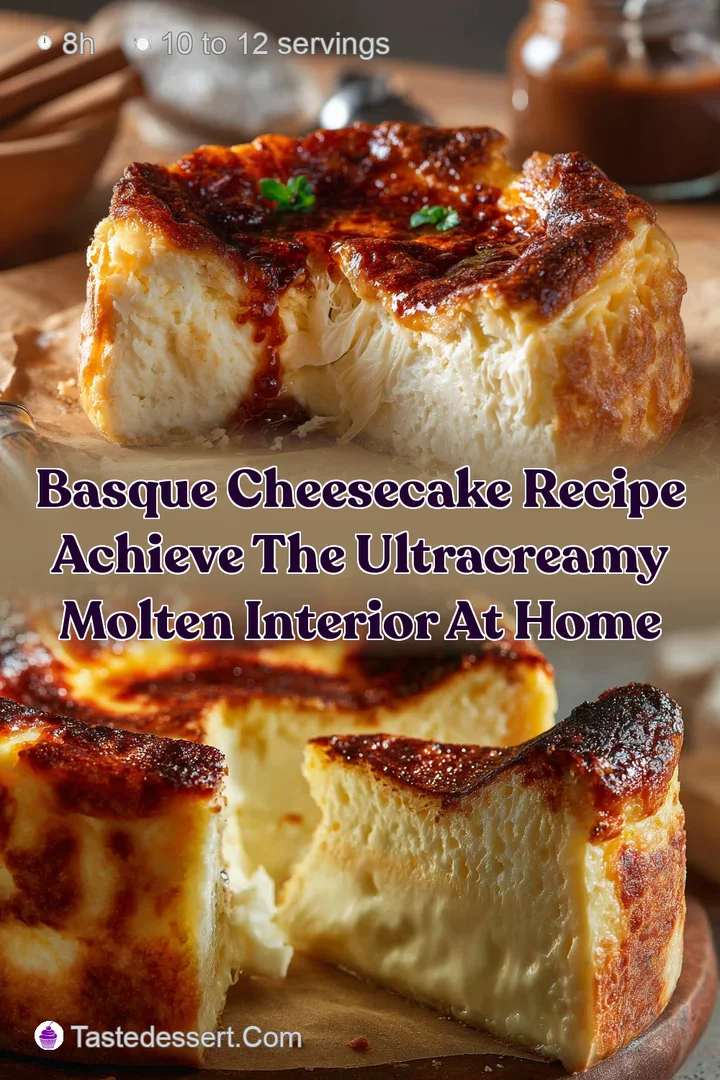
The entire magic of the basque cheesecake recipe rests on the texture contrast. A proper Tarta de Queso should be impossibly creamy, almost molten, when sliced at room temperature. It shouldn't be dry or uniformly spongy like a traditional American version.
Crucial Note: When this cheesecake comes out of the oven, the entire center must still be visibly wobbly. I mean, it should look utterly and terrifyingly underbaked. If it looks set, you’ve cooked the custard too much, and you’re going to end up with a dry doorstop. Don’t panic about the wobble.
That’s the custardy core setting during the slow cool and down period.
Essential Components for a Perfectly Scorched Tarta de Queso
Right then, let's talk ingredients. This is a very short list (some people call it 3 ingredient basque cheesecake if they only count the heavy lifters), but quality absolutely matters. Because we’re using so few items, each one needs to pull its weight.
Non and Negotiables: The Importance of High and Fat Cream Cheese and Dairy
Listen up, this isn't the time to be cutting calories. We are using full and fat, block and style cream cheese. Honestly, don't even bother with low and fat cheese here. It messes with the emulsion and the cake ends up rubbery. I learned that the hard way when I tried to substitute half and fat cream cheese once.
Big mistake. The resulting basque cheesecake ingredients list relies heavily on high and fat dairy (the heavy cream needs to be at least 35% fat) to deliver that signature richness. This is what helps it stay creamy while the outside is getting incinerated.
Pantry Prep: Ensuring Ingredients are at Optimal Room Temperature
This is my biggest non and negotiable step before baking anything. Cold ingredients are the enemy of smooth batter. If your cream cheese is even slightly cold, you will end up with unmixable lumps that ruin the final texture. Plan ahead. Pull the cream cheese out onto the counter a good two hours before you start.
The eggs need to be room temperature too. The only thing you want cold (and this is key for mixing) is the heavy cream, which helps stabilize the batter just before baking.
Equipment Check: The Essential Springform and High and Walled Paper Linings
You need a good quality 9 inch (23 cm) springform pan. Why? Because you can’t get this baby out any other way. But the real star is the parchment paper. You need two large sheets.
The cake rises dramatically, and I mean dramatically, so you need the paper walls to stick up about three inches over the rim of the pan.
- Springform Pan: Makes removal painless.
- Parchment Paper: Must be high-quality and non and stick.
- A Baking Sheet: Place the springform pan on a rimmed baking sheet before it goes in the oven. Why? Because the cream sometimes seeps a little, and you don’t want to be cleaning burnt cream off the bottom of your oven.
Related Recipes Worth Trying
- Pumpkin Cheesecake Shooters Decadent NoBake Dessert Shooters — Pumpkin Cheesecake Shooters deliver creamy spiced indulgence without the oven These No Bake Pumpkin Cheesecake Shooters are sophisticated mini desserts...
- FussFree NoBake Peppermint White Chocolate Cheesecakes Festive Minis — Whip up these glorious NoBake Peppermint White Chocolate Cheesecakes Creamy cool and perfect for Christmas Theyre quick individual mini cheesecakes ready...
- UltraCreamy NoBake Vegan Peanut Butter Cup Cheesecake Recipe — This NoBake Vegan Peanut Butter Cup Cheesecake uses cashews for a silky rich filling atop a dark chocolate crust Its a foolproof vegan cheesecake recipe...
Mastering the Technique: From Whisking to the Infernal Oven
Crafting the Crinkled Barrier: Folding the Parchment Paper Exactly Right
This is the technique that makes the basque cheesecake look rustic and stops it from sticking. You don't neatly cut the paper. No way. Take the two sheets of parchment paper, crumple them up into balls, and run them briefly under the tap. Then, squeeze them out. Yes, they should be damp! This makes the paper pliable.
Press the damp paper into the pan, overlapping them slightly, ensuring those high, crinkly walls stand proud. It should look like a glorious, messy paper boat.
The Blitzkrieg Batter: Achieving Homogeneity Without Incorporating Too Much Air
We want a homogenous, smooth batter, but we don't want to whisk in so much air that the cheesecake puffs up like a soufflé and collapses tragically later.
| Stage | Goal | Mixing Speed |
|---|---|---|
| Cream Cheese/Sugar | Smooth and lump and free | Medium (Scrape frequently) |
| Eggs (One at a Time) | Just until yellow streak disappears | Low Speed/Hand Whisk |
| Heavy Cream/Flour | Thick, pourable soup consistency | Very Low (Manual Whisk preferred) |
This is a fast process. Once the ingredients are room temp, mixing should take you less than 10 minutes. Stop mixing the second the batter is uniform.
The over High heat Blast: Monitoring the Crucial 40 Minute Burn Window
Preheat your oven higher than you think you should. 425°F (220°C) is the baseline, but if your oven can handle 450°F (230°C), go for it. The high heat creates the char so quickly that the interior doesn't have time to fully cook. Bake it on the middle rack.
Mine usually takes 35 to 40 minutes exactly. Start checking around 35 minutes. When you open the oven, the cake will be massive, puffed up, and deep brown. The edges should look almost black in spots. Give the pan a gentle shake.
If the center wobbles heavily, you’re done. Pull it.
Cooling Protocol: Why Slow Descent is Necessary for the Creamy Set
The cake will deflate almost immediately once it's out of the heat. Don't worry, that’s supposed to happen. Leave it on a cooling rack at room temperature for at least 90 minutes. Do not try to move it or cut it. It will look like a liquid puddle, but trust the process.
Once it has cooled down sufficiently meaning the pan no longer feels hot you can put the whole thing (pan and all) into the fridge. Minimum chilling is six hours, but overnight is genuinely better. This slow chill firms up the creamy center to that perfect, melt and in-your and mouth texture.
Extending the Life of Your Basque Cheesecake Masterpiece
Troubleshooting Tips: Addressing Underbaked Centers or Lack of Char
I’ve had a few fails over the years. Usually, it comes down to ingredient temperature or not trusting the oven heat. Here are the quick fixes.
-
Problem:
Cake is pale/blonde after
40
minutes.
- Fix: Crank the oven to maximum and move the cake to the top rack for 5- 10 minutes. That last blast often gets the char you need.
-
Problem:
The cake looks solid in the center when removed.
- Fix: Unfortunately, it's overcooked and will likely be less creamy. Next time, pull it earlier.
-
Problem:
Lumps in the final texture.
- Fix: Your cream cheese wasn't soft enough. You must use room and temperature cream cheese to make this basque cheesecake recipe with condensed milk (if you use that version) or regular sugar.
Storage Secrets: Refrigeration, Slicing, and Optimal Serving Temperature
Once chilled, the cheesecake stores beautifully in the fridge for 4 to 5 days, covered loosely. I usually leave it right in the springform pan until I'm ready to serve. When you finally go to eat it, peel the paper off gently, slice, and enjoy.
- Serving Temperature: The traditional way to serve this is slightly warmer than cold from the fridge. Pull it out about 30 minutes before serving. The warmth allows the custard core to become almost spoonable.
- Slicing: Use a sharp, thin knife dipped in hot water and wiped dry between slices. It makes a huge difference in getting clean cuts!
Flavor Innovations: Subtle Twists to the Traditional Basque Cheesecake
While the purist in me loves the classic, it’s fun to play around a bit once you've mastered the technique. These variations don't change the basic structure, just the flavor profile.
- Dark Chocolate Swirl: Melt 100g of really good dark chocolate (70% or higher). Swirl it gently into the finished batter just before pouring it into the pan. The bitter chocolate complements the caramelization gorgeously.
- Espresso Powder: Dissolve 2 teaspoons of instant espresso powder in the heavy cream before you add it to the mix. It gives the Tarta de Queso a deeper, richer flavor.
- Lemon Zest Boost: Zest two large lemons into the cream cheese and sugar mix. It cuts the richness just enough and brightens the whole thing. It’s a great basque cheesecake variation if you find the original too heavy.
Recipe FAQs
Crikey, that crust looks black! Is my oven too hot, or is the 'burnt' bit intentional?
It's completely intentional, you ace baker! The high heat caramelises the sugars rapidly, creating that dark, nearly charred exterior, which provides the crucial bitter contrast to the smooth, sweet interior it's the flavour bomb of the whole dish.
What exactly is the 'wobble test,' and how wobbly should the centre of my Basque Cheesecake be?
The 'wobble' should be significant, like a thick soup or jelly; the edges must be firm and dark, but the entire middle third should still visibly shake when you nudge the pan, as it will set fully during the long chilling process.
I've got a dinner party tomorrow; can I make this Basque Cheesecake ahead of time, and how long does it keep?
Absolutely; this cake is even better the next day, once the flavours have matured and the texture is perfect; store it covered in the fridge for up to 4 days, though the ideal creaminess is usually best preserved within 48 hours.
Why do I have to use so much parchment paper, sticking up so high around the edges?
Because of the ferocious heat, the batter rises dramatically and quickly, often puffing up well above the pan rim; the crumpled, high sided paper acts like an essential safety barrier to prevent the beautiful batter from spilling over.
I'm watching the calories. Can I use a lighter cream cheese or substitute the heavy cream?
Unfortunately, that’s a hard pass; the high fat content (using full fat cream cheese and heavy/double cream) is absolutely essential for achieving the signature silky, molten texture low-fat substitutes will result in a dry, rubbery, or grainy cake.
Authentic Basque Cheesecake Recipe
Ingredients:
Instructions:
Nutrition Facts:
| Calories | 400 calories |
|---|---|
| Fat | 32 g |
| Fiber | 0.5 g |
