Baklava Pistachio Cheesecake: Crispy Golden Layers
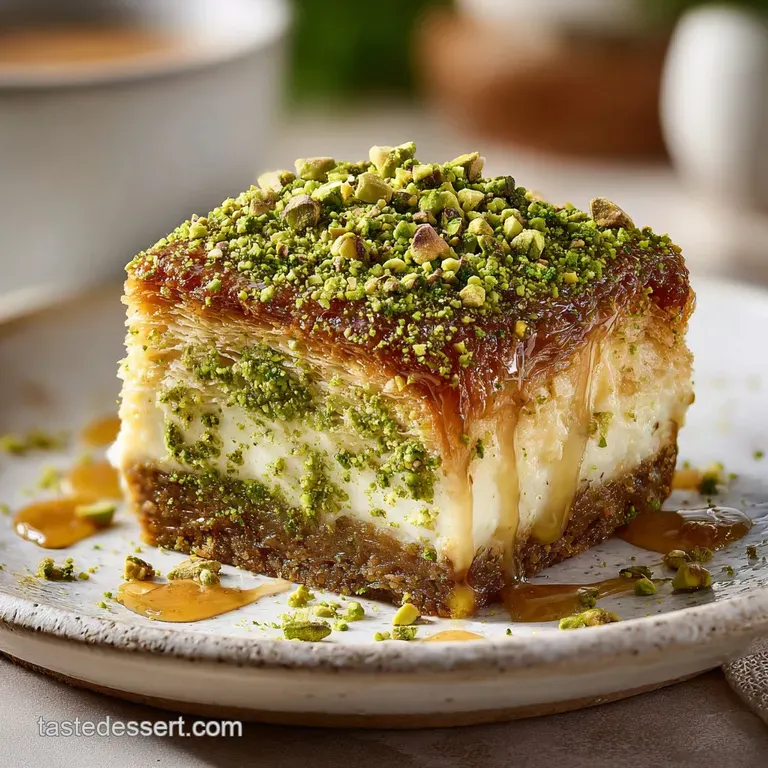
- Time: Active 45 minutes, Passive 1 hours 15 mins, Total 2 hours
- Flavor/Texture Hook: Shattering golden phyllo layers paired with velvety pistachio cream.
- Perfect for: Holiday dinner parties or special family celebrations.
- Creating the Ultimate Baklava Pistachio Cheesecake
- The Secret Science of Layered Textures
- Smart Budget Friendly Ingredient Choices
- Essential Tools for Flawless Results
- Stepping Through the Baking Process
- Preventing Common Baklava Baking Errors
- Scaling the Recipe for Any Crowd
- Creative Ways to Customize Desserts
- Storage and Smart Leftover Management
- Finishing Touches for Stunning Looks
- Recipe FAQs
- 📝 Recipe Card
Creating the Ultimate Baklava Pistachio Cheesecake
That distinct shatter of paper thin phyllo layers is a sound I’ll never get tired of hearing. I remember my first attempt at this Baklava Pistachio Cheesecake vividly because it was a complete disaster - the bottom was a soggy, gray mess and the cheese filling had cracked so wide it looked like a canyon.
I realized then that you can't just treat phyllo like a standard graham cracker crust.
The magic happens when the warm honey syrup meets the cooled, baked pastry, creating that signature tacky, sweet crunch. This isn't just a dessert; it's a project that rewards your patience with textures that range from brittle to buttery to incredibly smooth.
We're going to use specific techniques to ensure every bite has that aromatic rose water and cinnamon punch without being cloying.
Trust me, once you pull this out of the oven and hear that light sizzle as the syrup hits the edges, you'll be hooked. It’s a sophisticated twist on two classics that honestly feel like they were always meant to be together.
We're focusing on a budget smart approach here, using smart swaps to keep costs down while maintaining that high end bakery finish.
The Secret Science of Layered Textures
Understanding how these ingredients interact is the difference between a soggy pastry and a masterpiece. It isn't just about mixing things together; it's about managing moisture and heat.
- Lamination via Fat: Brushing clarified butter between phyllo sheets creates microscopic steam pockets that force the layers apart, resulting in a distinct shatter rather than a dense clump.
- Protein Coagulation: Eggs and cream cheese set at different temperatures, so a low and slow bake ensures the proteins bond gently without tightening too much and causing cracks.
- Osmotic Pressure: The sugar in the honey syrup draws moisture toward itself, but by cooling the cheesecake first, we ensure the syrup coats the pastry instead of soaking into the cheese.
- Maillard Reaction: Toasted pistachios provide a deeper flavor because the heat browns the natural sugars and proteins, creating a nutty profile that offsets the sweetness of the honey.
| Premium Option | Budget Shortcut | Flavor Impact | Savings |
|---|---|---|---|
| Pure Pistachio Paste | DIY Nut Butter | Slightly more textured | Save $12-15 |
| Grade A Honey | Clover Honey | Milder floral notes | Save $5-8 |
| Vanilla Bean Paste | Vanilla Extract | Fewer visible bean flecks | Save $4-6 |
Choosing a budget shortcut doesn't mean sacrificing the soul of the dish. For example, making your own pistachio paste by blending 0.5 cup of the roasted nuts with a teaspoon of neutral oil gives you a rustic, authentic feel that actually highlights the "homemade" aspect of this Baklava Pistachio Cheesecake.
Smart Budget Friendly Ingredient Choices
Using high-quality components doesn't always mean the most expensive ones, but rather the ones that do the heavy lifting for flavor and structure.
| Component | Science Role | Pro Secret |
|---|---|---|
| Phyllo Dough | Structural Base | Keep it under a damp towel to prevent it from turning into brittle confetti before you even start. |
| Cream Cheese | Fat & Body | Always use full fat; the lower moisture content prevents the crust from steaming and getting soft. |
| Honey | Hygroscopic Agent | It keeps the pastry tacky and moist for days while adding a complex floral sweetness that sugar lacks. |
| Rose Water | Aromatic Depth | A tiny amount acts as a flavor bridge between the nutty pistachios and the tangy cheese. |
The key to a successful Baklava Pistachio Cheesecake is the quality of your pistachios. I always suggest buying them in bulk and roasting them yourself to unlock those oils just before pulsing them into the mix.
Essential Tools for Flawless Results
You don't need a professional kitchen, but a few specific items make the process much smoother. A 9 inch springform pan is non negotiable here; you need to be able to remove the sides to show off those gorgeous, flaky layers of the Baklava Pistachio Cheesecake.
A high-quality pastry brush, preferably silicone, is also essential for applying the 0.75 cup of melted butter without tearing the delicate phyllo. I also recommend a heavy bottomed small saucepan for the honey syrup to ensure it simmers evenly without scorching.
Finally,, a food processor is your best friend for getting those 1.5 cups of pistachios to the perfect "coarse sand" consistency.
Stepping Through the Baking Process
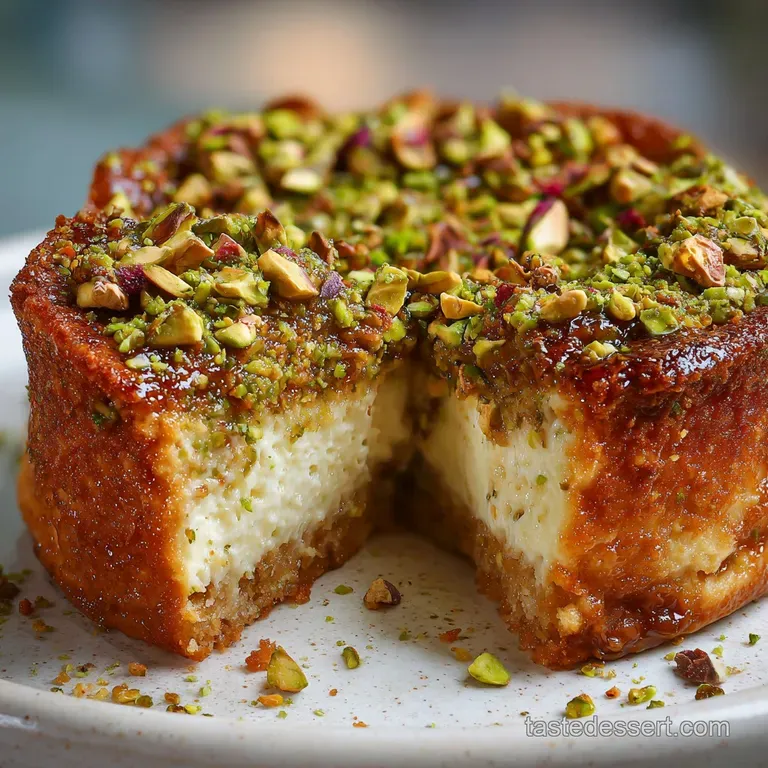
Let's break this down into manageable phases. Organization is your best friend when dealing with phyllo.
Phase 1: Constructing the Foundation
- Clarify the butter. Melt 0.75 cup unsalted butter and skim off the white milk solids. Note: This prevents the crust from burning too quickly in the oven.
- Prep the nut mix. Pulse 1.5 cups roasted pistachios with 2 tbsp granulated sugar and 1 tsp cinnamon until finely ground but not a paste.
- Layer the phyllo. Lay one sheet of phyllo in the springform pan, letting edges hang over. Brush with butter.
- Build the base. Repeat with 10 sheets, rotating each slightly, and sprinkling a tablespoon of the nut mix between every third layer. until the bottom is sturdy and thick.
Phase 2: The Pistachio Infusion
- Cream the cheese. Beat 24 oz room temperature cream cheese with 0.5 cup sugar until silky. Note: If the cheese is cold, you will get lumps that never go away.
- Add the flavor. Mix in 0.5 cup pistachio paste and 1 tsp vanilla bean paste until the color is a uniform pale green.
- Incorporate eggs. Add 3 large eggs one at a time on low speed. until just combined to avoid whipping in air.
- Finish the batter. Stir in 0.5 cup heavy cream and 0.25 tsp salt by hand.
Phase 3: The Low and Slow Bake
- Fill and fold. Pour the batter into the phyllo crust. Fold the overhanging edges inward to create a ruffled border.
- Bake the masterpiece. Bake at 325°F for 1 hours 15 mins until the edges are golden and the center has a slight jiggle.
- Cool slowly. Turn off the oven, crack the door, and let it sit for 30 minutes before removing.
Phase 4: The Final Glaze
- Simmer the syrup. Combine 0.5 cup honey, 0.25 cup water, 1 tsp lemon juice, and 1 cinnamon stick. Simmer for 10 minutes.
- Infuse aromatics. Remove from heat and stir in 1 tsp rose water.
- The Big Finish. Pour the cooled syrup over the warm cheesecake. until the pastry looks glossy and translucent.
Preventing Common Baklava Baking Errors
If things go sideways, don't panic. Most cheesecake issues are fixable or avoidable with a few quick adjustments.
Fixing a Soggy Phyllo Base
This usually happens if the butter wasn't clarified or if the syrup was added while the cheesecake was still piping hot. If your base feels soft, you can try returning it to a 350°F oven for 5-8 minutes after it has cooled slightly to help the sugar in the syrup re crystallize and crisp up the outer layers.
Healing a Cracked Cheesecake Top
Cracks happen when the filling dries out or cools too fast. If you see a fissure, don't worry! This is the beauty of the Baklava Pistachio Cheesecake - you can cover any imperfections with a generous layer of crushed pistachios or extra ruffled phyllo.
The syrup also helps fill in small gaps, making them nearly invisible.
| Problem | Root Cause | Solution |
|---|---|---|
| Phyllo is tough | Not enough butter | Use a generous hand when brushing each layer; the fat is what tenderizes the flour. |
| Filling is grainy | Cold ingredients | Ensure cream cheese and eggs are truly room temperature before mixing. |
| Syrup is too thin | Not boiled long enough | Simmer until it coats the back of a spoon; it should be tacky, not watery. |
Common Mistakes Checklist
- ✓ Never skip the lemon juice in the syrup (it prevents crystallization).
- ✓ Ensure the phyllo is fully thawed in the fridge, not on the counter (prevents gummy sheets).
- ✓ Use a "low and slow" approach - high heat is the enemy of creamy cheesecake.
- ✓ Don't over beat the eggs; excess air causes the cake to rise and then collapse.
- ✓ Let the cheesecake chill for at least 6 hours before slicing for the best texture.
Scaling the Recipe for Any Crowd
Adjusting this recipe requires a bit of math to keep the ratios of the Baklava Pistachio Cheesecake perfect.
Scaling Down (Making 6 servings): Use a 6 inch springform pan. Cut the ingredients exactly in half, but use 2 small eggs instead of 1.5 large ones. Reduce the bake time by about 15-20 minutes.
The technique for layering the phyllo remains the same, though you'll need to trim the sheets to fit the smaller diameter.
Scaling Up (Making 24 servings): It is much safer to make two separate 9 inch cheesecakes than one massive one. A double sized cheesecake often results in an overbaked exterior and a raw center.
If you do use a larger rectangular pan (like a 9x13), increase the phyllo count to 30 sheets and extend the bake time by 25 minutes, checking the internal temp frequently.
Creative Ways to Customize Desserts
While the classic version is iconic, there are several ways to put your own spin on this dessert.
- Pistachio Baklava Cheesecake Bars: Bake this in a square pan lined with parchment. Once cooled and set, cut into small squares. They are much easier to serve at parties and have a higher crust to filling ratio.
- Mini Baklava Pistachio Cheesecake Bites: Use a muffin tin. Layer small squares of buttered phyllo into each cup, fill with the batter, and bake for about 20-25 minutes. These are perfect for "grab and go" dessert tables.
- Chocolate Twist: Drizzle a bit of dark chocolate over the final honey glaze. The bitterness of the cocoa pairs beautifully with the earthy pistachio and sweet honey.
This recipe shares some structural DNA with my Honey Pistachio Baklava recipe, especially in how we handle the syrup to pastry ratio. If you find yourself with extra filling, it also works wonderfully as a dip for fruit or simple crackers.
Storage and Smart Leftover Management
Storage: This cheesecake keeps beautifully in the fridge for up to 4 days. Keep it in an airtight container to prevent the phyllo from absorbing fridge odors. Note that the phyllo will lose some of its "shatter" after the first 24 hours as it absorbs the moisture from the cheese, but it remains delicious and tacky.
Freezing: I don't recommend freezing the fully assembled cheesecake because the phyllo becomes very soggy upon thawing. However, you can freeze the cheesecake filling (baked) separately and add fresh phyllo later if you're in a pinch.
Zero Waste Tip: If you have leftover phyllo scraps, don't toss them! Brush them with butter, sprinkle with cinnamon sugar, and bake them on a tray for 5 minutes. They make an excellent "ice cream topper" or a quick snack while you wait for your main dessert to bake.
Finishing Touches for Stunning Looks
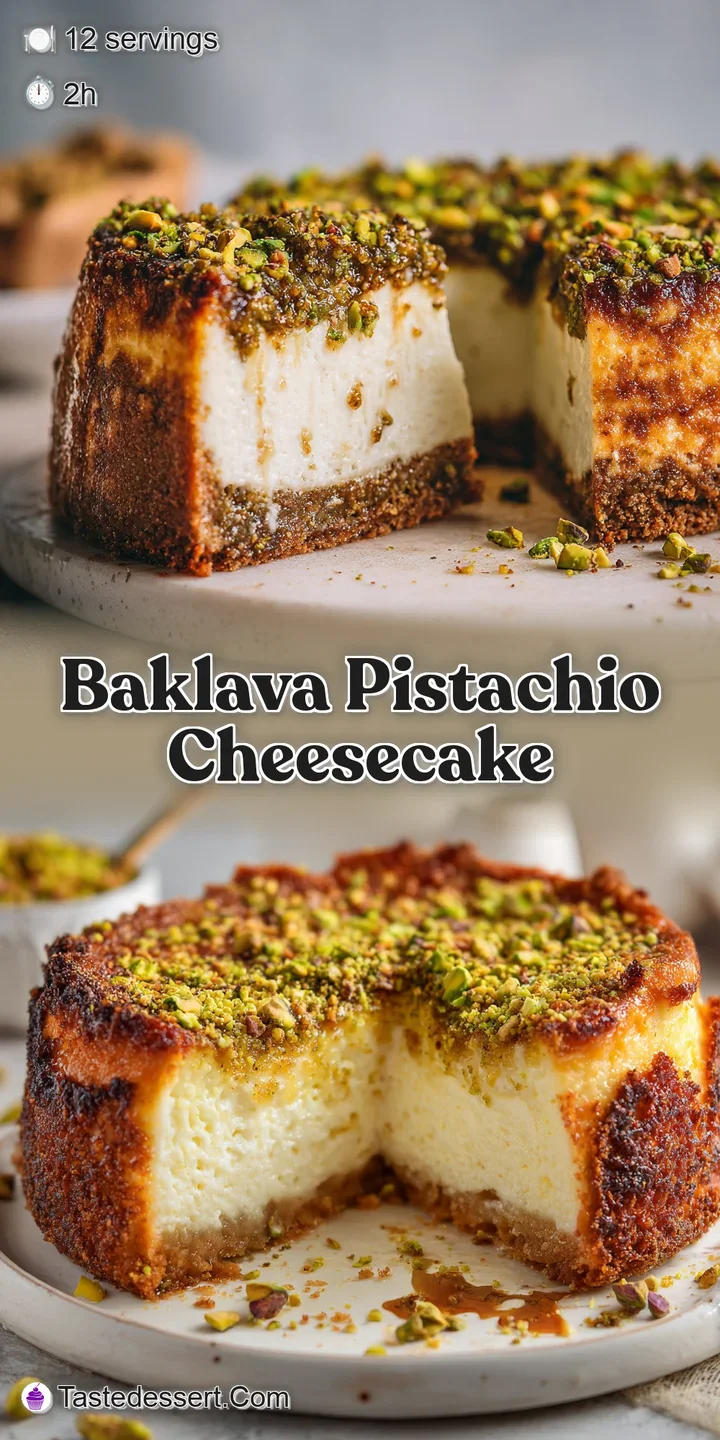
Presentation is where this dish really shines. Before serving, I like to pile an extra 0.5 cup of roughly chopped pistachios in the center to create a "nest" look. You can also add a few dried edible rose petals for a pop of color that hints at the rose water inside.
When slicing, use a very sharp, thin bladed knife dipped in hot water and wiped clean between every single cut. This ensures you cut through the crisp phyllo without squashing the velvety center. This technique is very similar to what I use for my German Chocolate Cheesecake recipe to keep those layers looking sharp.
Chef's Tip: If you want an extra glossy finish, brush a tiny bit of warmed honey directly onto the ruffled phyllo edges just before bringing it to the table. It makes the gold color "pop" under the lights!
Recipe FAQs
Can I substitute graham crackers for the phyllo dough layers?
No, this fundamentally changes the dessert. Phyllo provides the essential shatter and crispness that defines Baklava; graham crackers will create a dense, soggy base.
How do I prevent the cream cheese filling from cracking on top?
Bake low and slow, then cool gradually. Ensure your ingredients are room temperature and avoid whipping air into the eggs; the slow cooling inside the turned off oven prevents rapid temperature shock that causes fissures.
How to ensure the honey syrup soaks the phyllo without ruining the cheesecake texture?
Apply the syrup while the cheesecake is warm and the syrup is cool. Pour slowly around the edges first, allowing capillary action to draw the liquid into the crust layers before it soaks the cheese layer.
Is it true that using pre-made pistachio paste results in an inauthentic flavor?
No, this is often a time saving trade off, not an authenticity issue. If you enjoyed mastering the texture control needed here, see how the same principle of emulsification is used in our Silky Pistachio Butter Recipe for a homemade option.
What is the best way to cut through the crunchy phyllo layers cleanly?
Use a thin, sharp knife dipped in hot water between every cut. Wiping the blade clean ensures the heat melts the sticky honey slightly, allowing the knife to slice through the brittle phyllo without crushing the cheesecake.
Can I make this recipe ahead of time for a party?
Yes, preparing it a day ahead is recommended for optimal flavor. The cheesecake should be fully cooled, glazed, and then refrigerated for up to 24 hours; this allows the syrup time to fully permeate the base.
What alternative dessert shape would work well if I don't want a traditional round cake?
Bake it in a 9x13 rectangular pan for easy bar servings. This allows you to use larger, untrimmed phyllo sheets, similar to the base structure we use in The Cheesecake Pie recipe.
Baklava Pistachio Cheesecake
Ingredients:
Instructions:
Nutrition Facts:
| Calories | 598 calories |
|---|---|
| Protein | 12.8 g |
| Fat | 44.2 g |
| Carbs | 41.5 g |
| Fiber | 3.1 g |
| Sugar | 29.4 g |
| Sodium | 291 mg |
