Banana Chocolate Chip Cookies: Chewy and Fudgy
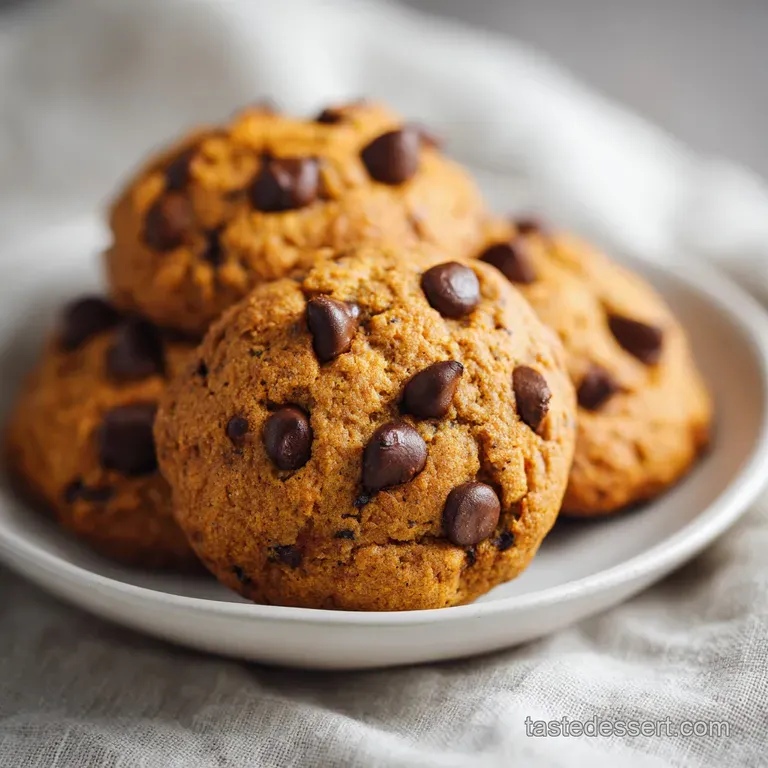
- Time: Active 15 minutes, Passive 12 minutes, Total 27 minutes
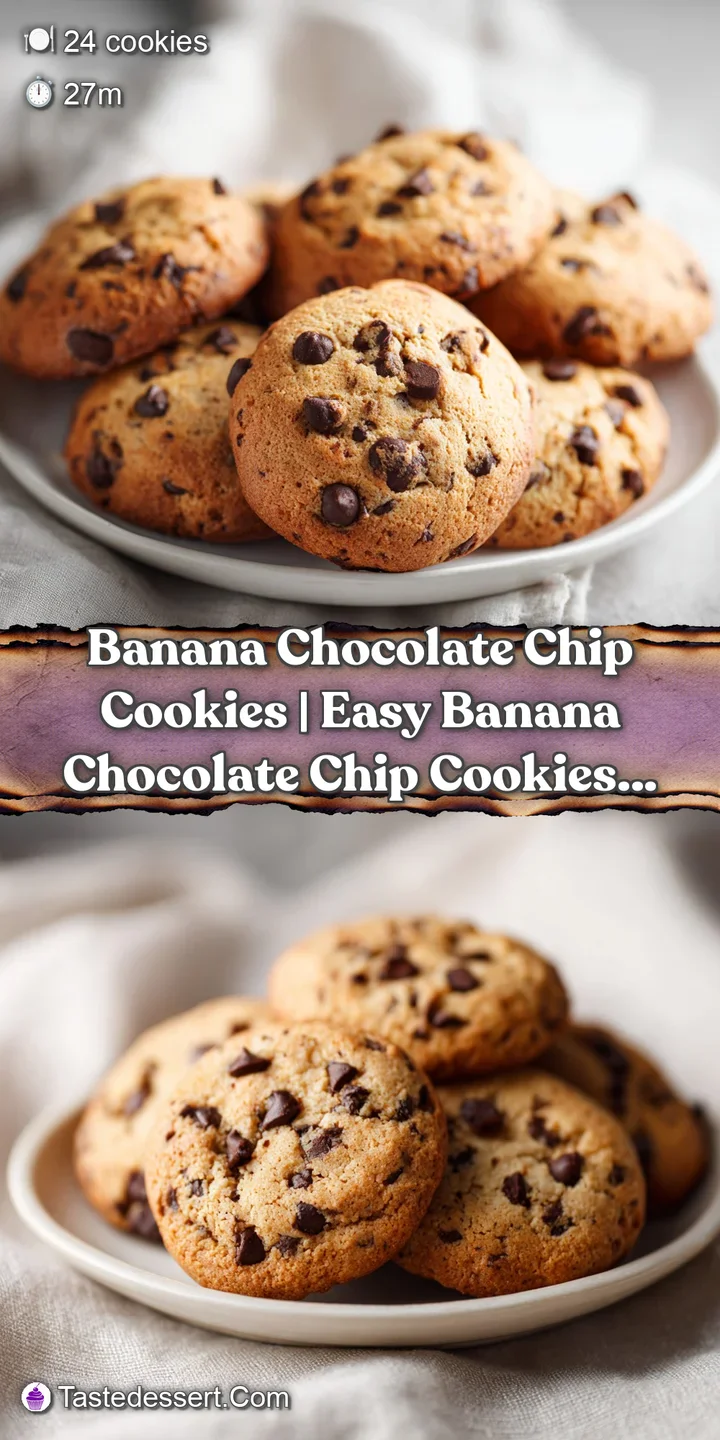
- Flavor/Texture Hook: Velvety banana interior with a crisp, mahogany edge
- Perfect for: Using up overripe bananas for an indulgent weeknight treat
- Baking Perfect Banana Chocolate Chip Cookies
- Why This Recipe Stays Chewy
- Essential Ingredient Science Table
- Choosing Quality Ingredients and Subs
- Must Have Tools for Best Results
- Detailed Step-By-Step Baking Instructions
- Troubleshooting Your Cookie Batch
- Creative Swaps and Variations
- Storing and Freezing Your Cookies
- Beautiful Ways to Serve Dessert
- Recipe FAQs
- 📝 Recipe Card
Baking Perfect Banana Chocolate Chip Cookies
We’ve all been there. You have three "cheetah spotted" bananas sitting on the counter, and you're tired of making the same old dense loaf. You decide to try a cookie recipe, but instead of a chewy, buttery disc, you end up with a puffy, pale mound that tastes more like a dry muffin than a real treat.
It’s frustrating because the aroma in the kitchen promises so much, but the texture just doesn't deliver that satisfying "snap and chew" we crave in a classic chip cookie.
I spent months trying to figure out why my banana cookies always felt like bread. The moisture in the fruit was the culprit, fighting against the fats and sugars. This recipe is the targeted fix for that exact issue.
By adjusting the moisture to fat ratio and introducing specific structural ingredients, we are transforming those mushy bananas into something truly decadent. You're going to get those beautiful, rippled edges and a fudgy center that stays soft for days.
The secret lies in the emulsification of the melted butter and the fruit sugars. When we whisk them together until they look like liquid gold, we’re creating a stable base that won't collapse or turn spongy in the oven.
This isn't just another way to use up old fruit, it is a deliberate, carefully balanced dessert that happens to feature bananas as the star. Let's get into what makes this specific method so much better than the standard "dump and stir" recipes you might have seen before.
Why This Recipe Stays Chewy
Fat Stabilization: Using only the egg yolk instead of the whole egg removes excess water from the whites, which prevents the cookies from steaming and becoming cakey.
Starch Reinforcement: Adding a tablespoon of cornstarch creates a tender, velvety crumb by softening the harsh proteins in the all purpose flour.
Sugar Dissolution: Whisking melted butter with brown sugar for a full 30 seconds helps the sugar begin to dissolve, leading to a shinier, crackly top.
Moisture Control: Mashing the banana to a completely smooth liquid consistency ensures it integrates into the fats rather than sitting in lumps that create soggy pockets.
| Cookie Thickness | Internal Temperature | Rest Time | Visual Cue |
|---|---|---|---|
| 0.5 inch (Flat) | 175°F (79°C) | 5 minutes | Edges turn deep mahogany |
| 0.75 inch (Soft) | 170°F (77°C) | 8 minutes | Center looks slightly under set |
| 1.0 inch (Chewy) | 185°F (85°C) | 10 minutes | Surface shows small cracks |
Getting the temperature right is everything when you're working with fruit based doughs. If you pull them out when the middle looks "done," they will likely be overbaked and dry by the time they cool.
The banana holds onto heat, so that carryover cooking during the rest time is vital for achieving that fudge like interior.
Managing Moisture Levels
The biggest challenge with these cookies is the water content in the bananas. As bananas ripen, their starches turn to sugar and they become more liquid. This is why we use exactly 1/2 cup (115g) of mashed fruit. If you go over, the dough becomes a batter, and you'll lose that beautiful spread and chew.
The Egg Yolk Secret
Most recipes call for a whole egg, but in this house, we ditch the white. The white is mostly water and protein that "sets" like a sponge. By using just the yolk, we are adding lecithin and fat. This results in a much richer mouthfeel that mimics a high end bakery style cookie. It’s the same logic I use when I want a richer dough, much like the base of my favorite butter cookies recipe.
Essential Ingredient Science Table
| Ingredient | Science Role | Pro Secret |
|---|---|---|
| Light Brown Sugar | Humectant | Pack it tightly to ensure the molasses content keeps the dough moist without being runny. |
| Cornstarch | Protein Softener | It interrupts gluten formation, giving you a "shatter" on the edge and a soft middle. |
| Baking Soda | Leavening/Browning | Reacts with the acidity in the banana and brown sugar to create a deep, golden color. |
| Melted Butter | Fat Structure | Melted butter creates a denser, chewier cookie compared to creamed, softened butter. |
When you melt the butter, you are essentially releasing the water content, which then binds with the sugars. This creates a much more uniform dough that spreads predictably. If you used softened butter, you'd end up with a loftier, airier cookie, which isn't what we’re after here.
We want that dense, "bend but-don't break" texture.
Choosing Quality Ingredients and Subs
For this recipe, your bananas need to be past the point of no return. I’m talking black skins, or at least covered in dark spots. If they aren't soft enough to mash with a fork into a literal liquid, they won't incorporate correctly.
The semi sweet chocolate chips provide a necessary bitterness to cut through the heavy sweetness of the fruit and brown sugar.
- 1/2 cup (115g) ripe banana: Mash until liquid. Why this? Provides natural sweetness and the base moisture for the dough.
- 1/2 cup (113g) unsalted butter: Melted and cooled. Why this? Fat for flavor and to create a chewy, dense texture.
- 3/4 cup (150g) light brown sugar: Packed firmly. Why this? Molasses adds moisture and a hint of caramel flavor.
- 1/4 cup (50g) granulated sugar: For crisp edges. Why this? Aids in browning and adds a structural "snap" to the rim.
- 1 large egg yolk: Room temperature. Why this? Emulsifies the dough while keeping the texture fudgy, not cakey.
- 2 cups (250g) all purpose flour: Spooned and leveled. Why this? The skeletal structure of the cookie.
- 1 tbsp cornstarch: Don't skip this. Why this? Keeps the cookies tender and prevents them from getting tough.
- 1 1/4 cups (210g) semi sweet chocolate chips: high-quality. Why this? The classic pairing that melts into velvety pools.
| Original Ingredient | Substitute | Why It Works |
|---|---|---|
| Unsalted Butter | Coconut Oil (Solid) | Same fat ratio. Note: Adds a slight tropical flavor and crispier edges. |
| Light Brown Sugar | Dark Brown Sugar | Higher molasses content. Note: Makes the cookies much darker and chewier. |
| All Purpose Flour | 1 to-1 GF Blend | Similar weight. Note: Texture may be slightly more gritty depending on the brand. |
If you find yourself out of chocolate chips, you can always chop up a high-quality chocolate bar. This actually creates even better "puddles" of chocolate throughout the dough. For another fun twist on chocolate and carbs, you should definitely see how the flavors meld in my chocolate chip bagels — it's a similar flavor profile but in a breakfast format!
Must Have Tools for Best Results
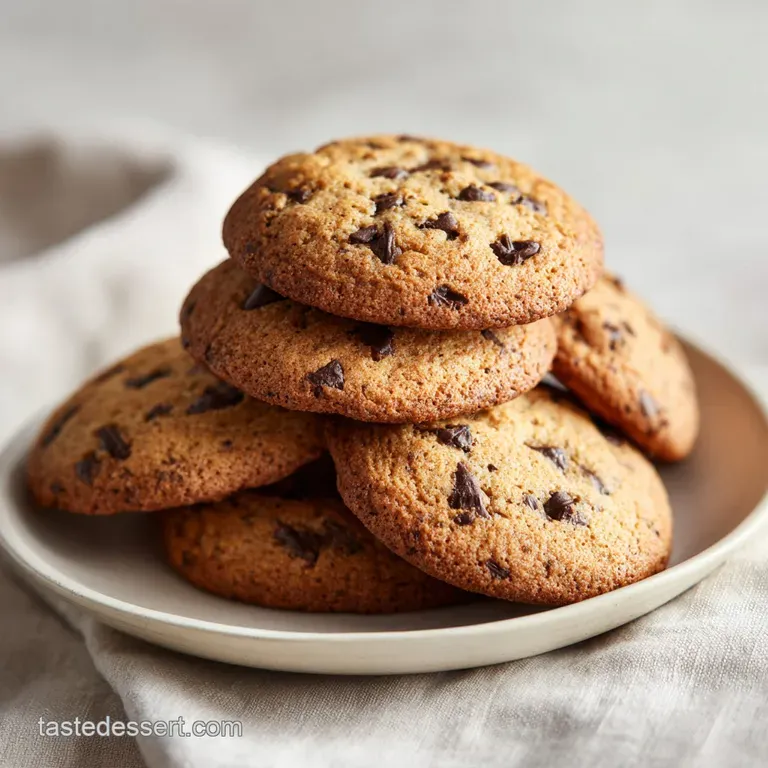
You don't need a massive stand mixer for this recipe, which is one of the reasons I love it so much. A simple large mixing bowl and a sturdy whisk will get the job done. In fact, over mixing with a power mixer can lead to too much air, which causes the cookies to puff up and then collapse, leaving you with a wrinkled, thin mess.
A silicone spatula is also non negotiable for the folding phase. You want to be gentle once the flour goes in. If you beat the flour into the wet ingredients, you’ll activate the gluten too much. That leads to a rubbery texture that is honestly heartbreaking after all that prep work.
Also, invest in a good cookie scoop. Using 1.5 to 2 tablespoons per cookie ensures they all bake at the same rate, so you don't have some burnt and some raw.
Chef's Tip: Freeze your chocolate chips for 15 minutes before folding them in. This prevents the warmth of the room temperature dough from melting the chips prematurely, which can streak the dough with brown.
Detailed step-by-step Baking Instructions
- Prepare the banana base. Mash 1/2 cup of ripe banana in a large bowl until it is a smooth liquid. Note: No lumps should remain or you'll have soggy spots.
- Combine fats and sugars. Whisk 1/2 cup melted butter, 3/4 cup brown sugar, and 1/4 cup granulated sugar into the banana until the mixture looks glossy.
- Emulsify the liquids. Add 1 large egg yolk and 2 tsp vanilla. Whisk vigorously for 30 seconds until the mixture lightens slightly in color.
- Sift the dry ingredients. Sift 2 cups flour, 1 tbsp cornstarch, 1 tsp baking soda, 1/2 tsp salt, and 1/2 tsp cinnamon into the bowl. Note: Sifting prevents "flour bombs" in the dough.
- Fold the dough. Use a silicone spatula to gently mix until no white streaks of flour remain.
- Add the inclusions. Fold in 1 1/4 cups semi sweet chocolate chips. Note: Save a few to press into the tops after scooping.
- Scoop the portions. Portion 1.5 to 2 tablespoons of dough per cookie onto a parchment lined baking sheet.
- Bake the batch. Bake at 350°F (175°C) for 10-12 minutes until the edges are mahogany colored and the center is set but soft.
- Cool for structure. Let the cookies rest on the hot pan for at least 5 minutes before moving them. Note: They are fragile while hot and need this time to "set."
| Cooking Method | Time | Texture | Best For |
|---|---|---|---|
| Oven (Standard) | 12 minutes | Crispy edge, chewy middle | Large batches and classic results |
| Stovetop (Skillet) | 15 minutes | Fudgy, slightly gooey | Individual "deep dish" cookie desserts |
| Air Fryer | 8 minutes | Extra crispy exterior | Quick, small batches (3-4 cookies) |
The oven remains the gold standard for these Banana Chocolate Chip Cookies because the dry, circulating heat helps evaporate just enough moisture from the banana. While a skillet cookie is fun and indulgent, you lose that signature "ring" of crispness that makes a cookie feel like a cookie.
Troubleshooting Your Cookie Batch
If your cookies didn't turn out exactly like the photos, don't panic. Baking with fruit is inherently unpredictable because every banana has a different sugar and water content. The most common issue is the "puffy" cookie.
If your cookies stayed round and tall like a ball of dough, you likely added too much flour or didn't mash the banana enough.
Avoiding Cakey Textures
A cakey cookie is usually caused by over whisking the egg or the banana. When you whisk too much air into the wet ingredients, it acts like a leavening agent. Keep your whisking to the initial sugar and butter phase, then be very gentle once the flour and fruit come together.
Also, ensure your baking soda is fresh; if it’s old, the cookies won't brown or spread correctly.
Fixing Spreading Issues
If your cookies turned into one giant pancake on the tray, your butter might have been too hot when you mixed it in, or the dough was too warm. If you live in a very humid environment, the flour might have absorbed extra moisture.
Next time, try chilling the dough balls for 20 minutes before they hit the oven.
| Problem | Root Cause | Solution |
|---|---|---|
| Cookies are pale | Oven temp too low | Check oven with a thermometer; bake at 350°F (175°C). |
| Too many crumbs | Too much flour | Spoon and level flour; do not scoop directly with the cup. |
| Burned bottoms | Dark baking sheet | Use parchment paper or a silicone mat to insulate. |
Common Mistakes Checklist:
- ✓ Ensure bananas are heavily spotted (yellow bananas will make the dough starchy).
- ✓ Let the melted butter cool for 5 minutes before adding to the sugar.
- ✓ Use a kitchen scale for the banana (115g) to avoid moisture imbalances.
- ✓ Don't skip the cornstarch; it's the difference between "okay" and "velvety."
- ✓ Space cookies 2 inches apart to allow for proper heat circulation.
Creative Swaps and Variations
Once you've mastered the base, you can start getting creative. I personally love adding a half cup of toasted walnuts to the mix for a "banana nut bread" vibe. The crunch of the nuts against the soft dough is absolutely delightful. If you want a more complex flavor, try browning the butter before melting it.
It adds a nutty, toasted aroma that works perfectly with the cinnamon.
Adding Hearty Oatmeal
If you want a more substantial, breakfast style cookie, you can swap 1/2 cup of the all purpose flour for 1/2 cup of old-fashioned rolled oats. This will make the cookie much denser and give it a "chew" that lasts longer.
Just be aware that oats absorb moisture, so you might need to under bake them by a minute to keep them from getting too dry.
Making a Vegan Batch
You can easily make these vegan by using a vegan butter stick (like Miyoko's) and replacing the egg yolk with 1 tablespoon of ground flaxseed mixed with 1 tablespoon of water. Since the banana already acts as a binder, the transition is much smoother than in other cookie recipes.
The texture will be slightly more soft and less "snappy," but the flavor remains top tier.
Storing and Freezing Your Cookies
These cookies actually taste better on day two! The banana flavor intensifies and the moisture redistributes, making the center even fudgier. Store them in an airtight container at room temperature for up to 3 days.
If you keep them any longer, the moisture from the fruit can start to make the edges soft, losing that "mahogany" crunch we worked so hard for.
For long term storage, these freeze beautifully. You can freeze the baked cookies in a single layer before transferring them to a freezer bag for up to 2 months. To reheat, just pop one in the microwave for 10 seconds or in a 300°F oven for 5 minutes.
You can also freeze the raw dough balls! Just add 2 minutes to the baking time when cooking from frozen.
Regarding zero waste, don't throw away those banana peels! You can soak them in water for 24 hours to make a nutrient rich "tea" for your houseplants. Or, if you have leftover mashed banana that didn't make it into the 1/2 cup measurement, stir it into your morning oatmeal or yogurt.
Beautiful Ways to Serve Dessert
Presentation is where you can really make these feel like a high end bakery item. While they are stunning on their own, a few small tweaks can transform them into a restaurant quality experience.
| Plating Level | Key Addition | Visual Impact |
|---|---|---|
| Simple | Wire Rack | Casual, "fresh from the oven" look. |
| Polished | Flaky Sea Salt | Glistering crystals that contrast the dark chocolate. |
| Restaurant | Warm Ganache | A decadent drizzle that adds height and luxury. |
If you want to go the restaurant route, serve a warm cookie in a small cast iron skillet with a scoop of vanilla bean ice cream on top. The heat from the cookie will start to melt the ice cream, creating a velvety sauce that mingles with the melted chocolate chips.
Sprinkle a tiny bit of extra cinnamon over the top for an aroma that will fill the entire room.
Honestly, the best way to enjoy these is about 15 minutes after they come out of the oven, with a cold glass of milk. The edges will be at their absolute peak of crispness, and the chocolate will still be in that perfect liquid state.
It’s the kind of homemade comfort that makes all the testing and "muffin cookie" failures worth it. Trust me, once you try this cornstarch and yolk method, you'll never go back to those cakey versions again. Let's crack on and get baking!
Recipe FAQs
What are common mistakes in banana cookies?
The most frequent error is improper mashing or incorrect flour ratios. If you leave large lumps of banana or add too much flour, your cookies will puff up into dry mounds instead of spreading into the desired mahogany edged treats.
Can you add banana to chocolate chip cookies?
Yes, this is a delicious way to change the texture. Integrating mashed banana adds natural sugars and moisture, which shifts the final result from a standard crisp cookie to a softer, fudgier dessert similar to our chocolate chip cookie dough cups.
Are these the same as Snoop Dogg cookies?
No, this is a common misconception. While many recipes feature bananas and chocolate, our version relies on a specific emulsification of melted butter, egg yolk, and mashed fruit to achieve its unique flavor profile.
What do bananas replace in baking?
Bananas primarily replace some of the fat or moisture in a recipe while providing sweetness. Because they are high in water and sugar, they act as both a binder and a flavor enhancer, though they require careful balancing with dry ingredients to ensure the cookie sets properly.
How to get the perfect mahogany edge?
Bake the cookies at 350°F (175°C) for 10-12 minutes until the edges are clearly browned. If they are still pale, add one extra minute to the oven time, as fruit based doughs can take slightly longer to caramelize than traditional sugar based doughs.
How to store these cookies to keep them fresh?
Place them in an airtight container at room temperature for up to 3 days. You will notice the banana flavor actually intensifies by the second day as the internal moisture redistributes throughout the cookie.
How to freeze banana cookies for later?
Freeze the baked cookies in a single layer on a tray before transferring them into a freezer safe bag. This method prevents them from sticking together and allows you to pull out one at a time for up to 2 months.
Banana Chocolate Chip Cookies
Ingredients:
Instructions:
Nutrition Facts:
| Calories | 154 kcal |
|---|---|
| Protein | 1.7g |
| Fat | 6.6g |
| Carbs | 23g |
| Fiber | 1g |
| Sugar | 13.6g |
| Sodium | 98mg |
