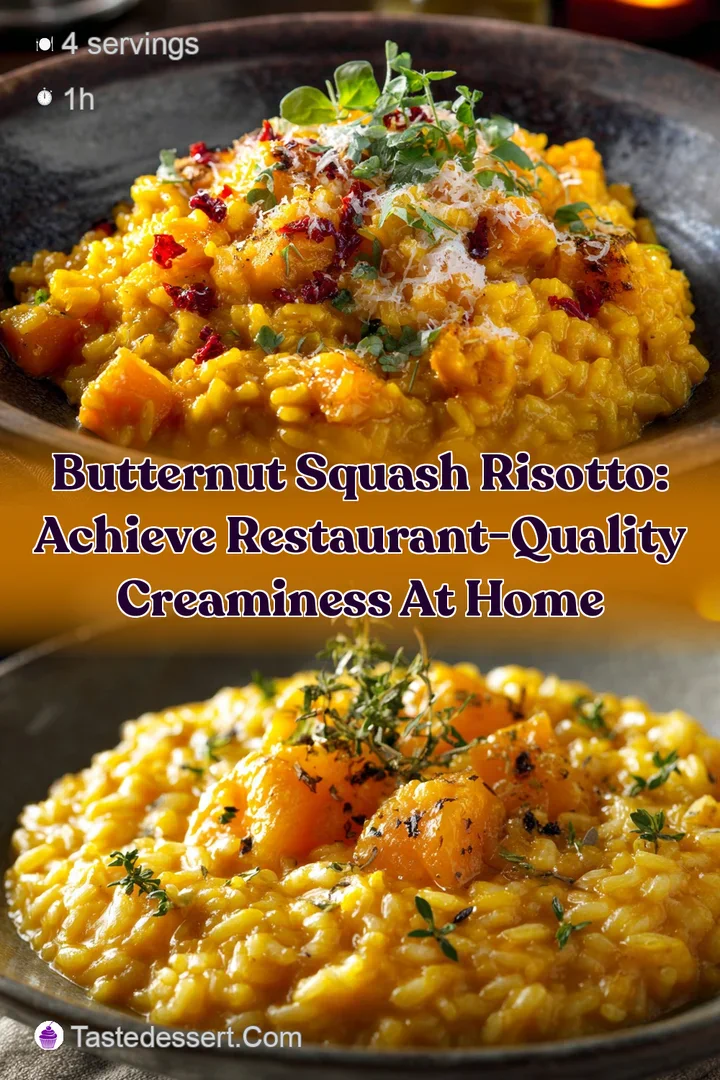
Butternut Squash Risotto: Velvet Gold Recipe with Crispy Sage Finish

- Velvet & Gold Comfort: Mastering the Perfect Butternut Squash Risotto
- The Science of Creaminess: Why This Risotto Recipe Excels
- Essential Ingredients for Your Autumnal Risotto Base
- The Method: A Step-by-Step Guide to Butternut Squash Risotto Perfection
- Chef’s Advanced Techniques and Troubleshooting for Risotto Success
- Handling Leftovers: Storage, Reheating, and Freezing Guide
- Ideal Pairings: What to Serve Alongside Butternut Squash Risotto
- Recipe FAQs
- 📝 Recipe Card
Velvet & Gold Comfort: Mastering the Perfect Butternut Squash Risotto
When the air gets crisp and the leaves turn copper, this Velvet & Gold Butternut Squash Risotto is literally the first thing I crave. The aroma of sage and caramelized squash mixing with the slow simmer of wine and stock creates the coziest feeling imaginable.
You get this incredible, unbelievably creamy texture, rich with Parmesan, but balanced by the sweet, nutty depth of perfectly roasted squash.
I know what you’re thinking: Risotto is fussy, right? Honestly, it's not. It only requires 20 minutes of active stirring, making it totally manageable for a weeknight, or even better, a stunning dish to impress your friends.
It’s also incredibly budget friendly, relying on pantry staples and cheap, seasonal squash, which is a total win in my book.
This recipe isn't about following rules slavishly; it’s about understanding the why behind the steps, which I learned through many trials (and many gummy failures). Let's crack on and make the truly best, most velvety butternut squash risotto you’ve ever scooped onto a spoon.
The Science of Creaminess: Why This Risotto Recipe Excels
The Culinary Philosophy: Seasonal Elegance and Effort
I call this the "Goldilocks" risotto because we’re aiming for perfect balance not too sweet, not too savory, and definitely not too dry. We are building flavor from the ground up, ensuring every element, from the caramelized shallots to the crispy sage, contributes to the final masterpiece.
Why We Roast: Deepening the Squash's Savory Sweet Profile
Roasting the butternut squash beforehand is non-negotiable for success. If you just boil it or sauté it, you get watery sweetness, which we absolutely do not want. Roasting drives off moisture and concentrates the natural sugars , giving the squash a beautiful, almost malty flavor that stands up perfectly against the salty Parmesan. I use this roasting technique all the time when I make things like Thanksgiving Vegetable Side Dishes: Maple Glazed Brussels Sprouts Squash .
Crispy Sage and Brown Butter: The Essential Finishing Technique
Don't skip the crispy sage leaves they are not just a garnish, they are a textural necessity. Frying the sage briefly in butter until shatteringly crisp brings an earthy, sharp contrast to the rich, creamy risotto.
This little step takes two minutes, but it completely transforms the dish into something restaurant worthy.
The Starch Principle: Arborio vs. Carnaroli Rice Explained
We need rice that is high in amylopectin, which is the soft, soluble starch that dissolves off the grain during stirring. Arborio is widely available and works wonderfully, but I personally prefer Carnaroli rice when I can find it.
Carnaroli has higher starch content and holds up better to constant stirring, making it much more resistant to overcooking.
The Importance of Hot Stock and Gradual Addition
This might be the most crucial tip in all of risotto making: Your stock must be actively simmering when you add it. Adding cold stock instantly drops the temperature of the rice, stopping the starch release, and leaving you with hard, unevenly cooked grains surrounded by soupy liquid.
We need that constant, gentle heat.
The Mantecare Moment: Achieving the Signature Wave
Mantecare is the Italian term for stirring in the fat (butter) and cheese vigorously off the heat right at the end. This rapid, intense mixing emulsifies the fat with the released starch, creating that signature texture called all’onda (wavy).
It should ripple like a slow moving lava flow, not sit like a solid lump.
Chef’s Note: Use cold butter for the mantecare. The difference in temperature between the hot rice and the cold butter helps the emulsion bind beautifully, yielding a much creamier result than room temperature butter.
Essential Ingredients for Your Autumnal Risotto Base
Selecting the Right Butternut Squash (Colour and Firmness)
Look for a squash with a deep, uniform tan color that feels heavy for its size. Avoid any squash with green patches or soft spots, as this means it was harvested too early. If you happen to have a Kabocha or Sugar Pie pumpkin lying around, those make brilliant substitutions for the butternut.
Dairy Choices: high-quality Parmesan and Butter Notes
high-quality Parmesan Reggiano is worth the splurge here, trust me. Skip the pre-grated stuff; it’s often coated in anti caking agents that will make your risotto grainy, not creamy. For butter, use unsalted so you can control the final seasoning perfectly.
Aromatic Foundation: The Soffritto Ratios
We use shallots instead of onions because they are sweeter and have a softer, less aggressive flavor, ensuring they melt into the background. If you only have white onion, use half the amount and cook it much slower.
Stock Selection: Ensuring a Light but Flavorful Broth
I usually opt for a good quality vegetable stock because I want the butternut squash to be the star. If you use chicken stock, ensure it is low-sodium, or your final dish will be shockingly salty after the Parmesan is added.
| Ingredient | Substitution Options |
|---|---|
| Butternut Squash | Kabocha, Sugar Pie Pumpkin, or Sweet Potato |
| Arborio Rice | Carnaroli Rice (Superior texture), Pearl Barley (Requires longer cook time) |
| Dry White Wine | Dry Cider or 1 tsp white wine vinegar mixed into the first ladle of stock |
| Parmesan Cheese | Grana Padano, or nutritional yeast (for a vegan option) |
| Shallots | Half the amount of yellow onion, diced very finely |
The Method: A step-by-step Guide to Butternut Squash Risotto Perfection

Step 1: Roasting the Butternut Squash for Maximum Flavor Depth
Preheat your oven to 400°F (200°C). Peel, seed, and cube your squash. Toss it with olive oil, salt, and pepper, then spread it out on a baking sheet don't crowd the pan! Roast for 25– 30 minutes until edges are tender and caramelized.
Once roasted, mash or blend about two-thirds of the squash until smooth; keep the rest whole for folding in later.
Step 2: The Tostatura —Toasting the Rice Correctly
While the squash roasts, get your stock simmering gently in a separate pan. In a heavy bottomed pot, melt 2 tablespoons of butter with the olive oil, then add your finely minced shallots. Cook them gently until they are translucent and soft, about 6 minutes.
Add the dry Arborio rice and stir continuously for 2 minutes this is the tostatura (toasting). You want the edges of the grain to look translucent; this step is essential for preventing the rice from collapsing.
Deglaze by pouring in the white wine and stir until it’s fully evaporated.
Step 3: Ladling and Stirring: The 18 Minute Cooking Window
Start adding the simmering stock, one ladleful at a time (about ½ cup). You must stir constantly, making sure to scrape the bottom of the pot. Do not add the next ladle until the previous one is almost completely absorbed. This continuous stirring releases the starch necessary for creaminess.
After about 15 minutes, stir in your mashed butternut squash puree, the minced fresh sage, and a tiny pinch of freshly grated nutmeg. Continue ladling until the rice is al dente .
Step 4: Preparing the Crispy Sage and Brown Butter Finish
As soon as the rice is cooked (usually around 18– 20 minutes), remove the pot from the heat. Fold in the remaining whole roasted squash cubes and adjust your final seasoning.
Now for the mantecare : Vigorously stir in the remaining 2 tablespoons of cold butter and the grated Parmesan cheese. Stir aggressively for a full minute to create the emulsion. Cover the pot and let it rest for exactly 3 minutes.
While it rests, melt 1 tablespoon of butter in a small pan, brown it lightly, and fry the fresh sage leaves until they are brittle, draining them on paper towels immediately.
Chef’s Advanced Techniques and Troubleshooting for Risotto Success
Preventing Gummy or Sticky Risotto
The main culprits for gummy risotto are cold stock and overcooking. If the rice looks like porridge, you’ve gone too far. Always stop cooking when the risotto still feels loose and wet; it will firm up dramatically during the 3 minute rest.
If you are struggling with the timing, try switching to Carnaroli rice, which is far more forgiving than Arborio.
Dealing with Under Seasoned Stock and Overcooked Rice
Under seasoned stock is the silent killer of a great risotto. Since you are building the dish gradually, if the stock isn't seasoned, the final result will taste flat, even with the Parmesan. Always taste your stock!
If your rice is overcooked and mushy, unfortunately, there’s no going back, but try to redeem it next time by setting a timer for the 18 minute window and focusing on tasting for the al dente bite.
Can I Use a Pressure Cooker? (How Technique Alters Texture)
You absolutely can make risotto in a pressure cooker or Instant Pot, but the texture is different. While it's quick, you sacrifice the slow, manual stirring that releases the soluble starch gradually, which is necessary for the authentic all’onda flow.
Pressure cooker risotto tends to be creamy but less naturally emulsified and sometimes a little more dense.
Handling Leftovers: Storage, Reheating, and Freezing Guide
Achieving Perfect Al Dente Texture
Remember the texture standard: creamy, loose, and all’onda , with rice grains that have a faint, pleasing resistance in the center. If it’s sticky in the pot, stir in a tiny splash more stock or water just before serving.
Quick Cooling and Refrigeration Guidelines
Risotto must be cooled quickly to be stored safely, as rice is a high risk food. Spread the leftovers in a thin layer on a baking sheet and refrigerate within two hours. Once cool, transfer it to an airtight container. It keeps beautifully in the fridge for 3 to 4 days.
The Best Way to Reheat Risotto Without Drying It Out
Never microwave it unless you plan to make arancini (fried rice balls). Reheat risotto gently on the stovetop in a small pan. Add a few tablespoons of fresh stock or water and a tiny knob of fresh butter. Stir gently over low heat until it loosens up and becomes creamy again.
It won't be quite as perfect as fresh, but it will be delicious.
Ideal Pairings: What to Serve Alongside Butternut Squash Risotto
This risotto is rich, so you need a side dish that offers crunch, acidity, or something sharp to cut through the decadence.
- Sharp Salad: A simple peppery arugula (rocket) salad tossed with a sharp, lemon heavy vinaigrette is perfection. For maximum autumn vibes, you could even try making my Harvest Fall Salad Butternut Squash Apple Maple Vinaigrette Recipe .
- Simple Greens: Steamed or lightly sautéed green beans with a bit of garlic and olive oil.
- Protein Addition: If you must add a protein, a simple pan-seared chicken breast or some grilled Italian sausage works wonderfully alongside the creamy texture without overpowering the delicate squash.
- Alternative Squash Dish: If you love working with the season's bounty, this risotto pairs nicely with simpler sides, but it also sits well next to more complex mains like my Stuffed Butternut Squash Hearty Sausage Wild Rice and Sage Main . It's just too good!
Recipe FAQs
Why is my risotto pastey or too thick instead of creamy and flowing ('all'onda')?
This usually happens if you add the stock too quickly or didn't stir enough to release the starch gradually. To fix it, add a splash more warm stock or water until it reaches the proper flowing consistency, ensuring you stir vigorously during the final enrichment (mantecatura) phase.
Remember, risotto should settle on the plate but flow slightly when the plate is tilted.
My risotto rice is still crunchy in the middle. What did I do wrong?
Risotto should be al dente (firm to the bite) but not crunchy; this means the Arborio needs more cooking time. Ensure your stock is piping hot before adding it, as cold stock stops the cooking process instantly.
Continue adding small amounts of hot stock and stirring until the grains are tender but still retain a tiny, pleasant chew in the centre.
Can I make this recipe vegan or dairy-free?
Absolutely. Substitute the butter used for roasting the squash and the final enrichment with high-quality olive oil or vegan butter alternatives. For the cheese, use a few tablespoons of nutritional yeast for a classic cheesy depth, or incorporate a grated vegan hard cheese substitute during the final mantecatura.
Is it necessary to use hot stock, or can I use it cold from the container?
Using hot stock is absolutely essential for successful risotto. Adding cold liquid drastically reduces the temperature of the pan, shocking the rice grains and preventing the starch from releasing properly, which results in unevenly cooked, gummy risotto.
Keep your stock simmering gently in a separate pan throughout the entire cooking process.
Do I have to use white wine, or can I skip the deglazing step?
While you can skip it, the white wine provides crucial acidity that balances the richness of the squash and dairy, making the overall flavour profile less heavy. If avoiding alcohol, substitute the wine with an equal amount of warm stock mixed with 1/2 teaspoon of lemon juice to introduce the necessary acidity.
What other squash varieties work well besides butternut?
Delicata and Honeynut squashes are excellent alternatives, as they offer similar sweetness and creamy textures when roasted or puréed. You can also use pumpkin varieties like Crown Prince, but be mindful of their water content and adjust the amount of stock needed accordingly.
Can I freeze leftover butternut squash risotto?
Freezing risotto is generally discouraged because the rapid temperature change significantly alters the rice texture upon thawing, often resulting in a mushy or pasty dish. If you absolutely must freeze leftovers, cool the risotto completely before storing it in an airtight container, and reheat it slowly on the stovetop with fresh stock to attempt to restore some creaminess.
Butternut Squash Risotto With Crispy Sage

Ingredients:
Instructions:
Nutrition Facts:
| Calories | 755 kcal |
|---|---|
| Protein | 32.3 g |
| Fat | 40.6 g |
| Carbs | 63.1 g |
