The Quintessential Home Bakers Chewy Bagel Recipe
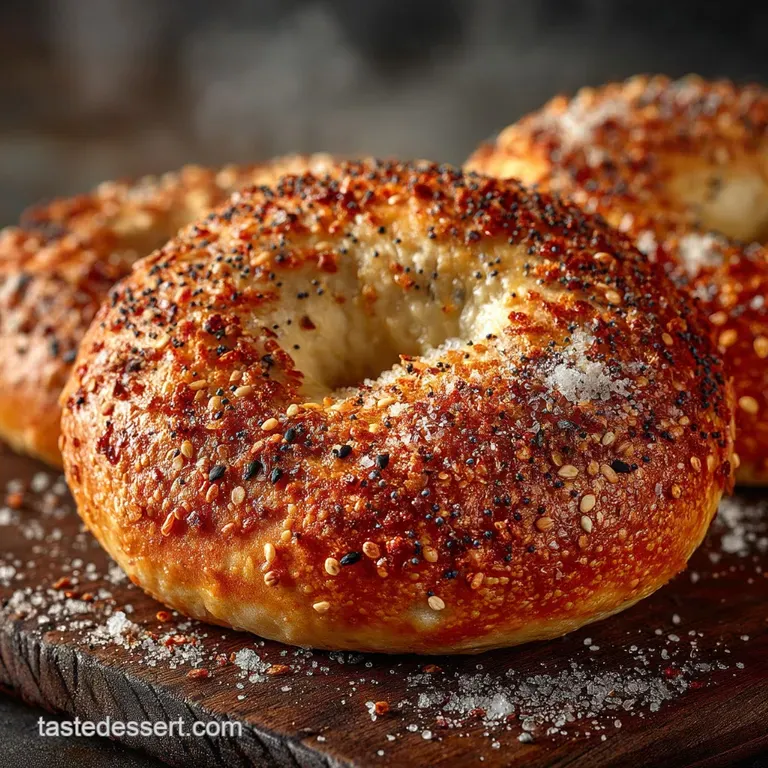
- Unlocking the Secret to Truly Authentic New York-Style Bagels at Home
- Why This Specific Bagel Recipe Outperforms Store-Bought
- The Building Blocks: Precise Components for Your Masterpiece Bagel Recipe
- Gathering Your Toolkit: Essential Equipment for Success
- From Shaggy Mass to Smooth Dough: Mixing and Developing Gluten
- The Crucial Two-Stage Proofing Process for Deep Flavor
- Mastering the Signature Boil and Bake Transformation
- Elevating Your Creation: Topping Combinations Beyond the Basics
- Troubleshooting and Maximizing Shelf Life for Fresh Bagels
- Recipe FAQs
- 📝 Recipe Card
Unlocking the Secret to Truly Authentic New York Style Bagels at Home
There is a monumental difference between a supermarket bagel often soft, airy, and suspiciously bread like and the genuine article. If you’ve ever dreamed of sinking your teeth into a perfectly chewy interior encased in a burnished, slightly crisp exterior, then you’ve come to the right place.
Mastering the Bagel Recipe at home is less about complicated equipment and more about respecting a few fundamental culinary rules. Forget the bakery lines; we are embarking on a journey to create exceptional, authentic Homemade Bagels that rival those from the finest Manhattan delis, all while using straightforward ingredients.
Why This Specific Bagel Recipe Outperforms store-bought
The reason commercially produced bagels often fall flat is usually speed. They skip the necessary slow fermentation and, crucially, the boiling step. Our goal here is not just to make bread shaped like a ring; we are aiming for that specific density and crust that defines a truly great bagel.
This method is designed to achieve that precise textural contrast.
Setting the Stage: Achieving That Signature Snap and Chew
The hallmark of a superb bagel is the "snap" when you bite through the crust, followed by the satisfying, dense chewiness inside. This balance is orchestrated by the flour quality and the two essential processing steps: the long, cold proof and the quick boil in an alkaline bath.
The Bagel Recipe New York Style we are following leverages these techniques to lock in structure before the intense heat of the oven causes the final transformation.
The Alchemy: Understanding the Essential Ingredients for Perfection
While this is an Easy Bagel Recipe in terms of component count, the quality matters. We rely heavily on high protein flour ideally bread flour which allows the dough to develop robust gluten networks capable of handling the rigorous boiling process without collapsing.
Adding a touch of malt syrup or honey feeds the yeast and caramelizes beautifully during baking, contributing to that deep, golden hue and subtle underlying sweetness that balances the salt.
A Warm Welcome to Your Ultimate Bagel Journey
We’re going to create a yield of 8 perfect rings. Active participation is needed initially, but a significant portion of the work will be done quietly in the refrigerator while you sleep or go about your day.
This patient approach is what separates an average bake from a truly masterful set of Bagels Recipe Homemade . It requires approximately 45 minutes of active involvement, spread over 13 to 19 hours total time, yielding results that redefine comfort food.
The Building Blocks: Precise Components for Your Masterpiece Bagel Recipe
To start crafting these incredible rings, we need a specific assembly of components. For the dough itself, you will need 4 cups (500g) of high protein bread flour while a Bagel Recipe with All Purpose Flour is possible, bread flour provides the necessary gluten strength.
Combine this with 2 teaspoons of active dry yeast and 2 teaspoons of fine sea salt. Liquid requirements call for 1 ½ cups (360ml) of warm water (around 105° F/ 40° C) and 1 tablespoon of malt syrup or honey to encourage flavour and colour development.
Gathering Your Toolkit: Essential Equipment for Success
While you can manage this with simple bowls and hands, efficiency is key. A stand mixer equipped with a dough hook speeds up gluten development considerably. However, the most crucial tools involve precision: a digital kitchen scale is highly recommended to ensure accurate flour and water ratios for a non-sticky yet manageable dough.
You will also need a large stockpot for the boil and parchment lined baking sheets ready for the final bake.
Flour Power: Selecting the Right Protein Content
The structural integrity of your finished product hinges on your flour choice. Bread flour typically boasts 12 14% protein, which develops strong gluten strands that resist stretching during boiling and create that desirable, tight crumb.
If you are attempting a Bagel Recipe Sourdough variation later, the strength of the flour becomes even more critical to support the natural acids.
Malt Magic and Yeast Activation: Priming the Flavor Base
Before combining everything, activate your yeast. Stir the 2 teaspoons of yeast and the tablespoon of malt syrup into the warm water. Allowing this mixture to sit for about 5 to 10 minutes until it becomes visibly foamy confirms that your yeast is alive and ready to work its magic, initiating the rise that transforms the flour and water into a living dough.
Weighing It Out: Accurate Measurements for Dough Consistency
Precision in baking is paramount, especially when dealing with hydration levels that border on sticky. Weighing your 500g of flour and 360ml of water (which is equivalent to 360g) provides a consistent ratio, which is far more reliable than relying solely on cup measurements that can fluctuate wildly based on how the flour is packed.
Related Recipes Worth Trying
- The Fluffy Cloud Dough Cottage Cheese Protein Bagels Recipe — Forget dense boring fitness food These unbelievably light Cottage Cheese Protein Bagels are ready in under an hour and make healthy quick breakfast ideas a...
- Authentic Southern Caramel Cake Recipe NeverFail Boiled Icing — Bake the best Southern Caramel Cake from scratch This foolproof buttermilk recipe includes the secret to a rich glossy cooked caramel icing Learn the technique
- Zesty Cold Summer Pasta with Feta Mint Easy Recipe — Ditch the mayo This vibrant Cold Summer Pasta Salad is packed with lemon artichokes and fresh mint A perfect light Summer Lunch Salad Recipe Get the...
From Shaggy Mass to Smooth Dough: Mixing and Developing Gluten
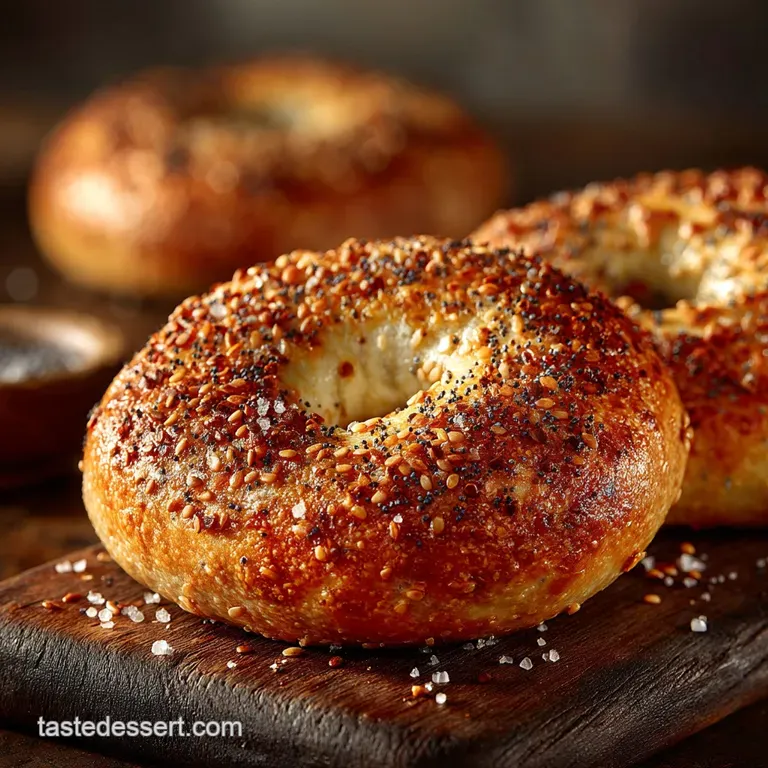
Once your yeast mixture is bubbly, combine it with the dry ingredients in your mixer bowl. Start mixing on low speed until a shaggy mass forms. Then, increase the speed to medium and allow the dough hook to work for 8 to 10 minutes.
You are looking for the dough to transition from a ragged ball to one that is smooth, slightly tacky but not overly sticky, and capable of passing the 'windowpane test' stretching thinly enough to see light through it without tearing immediately.
Kneading Techniques for Optimal Bagel Structure
If kneading by hand, this takes patience about 15 minutes of firm, rhythmic pushing and folding will be necessary. Proper kneading aligns the gluten strands, building the internal structure necessary to withstand the forthcoming boiling phase.
A well developed dough prevents your bagels from flattening out during the final stages of Cooking And Baking Bagels .
The Crucial Two-Stage Proofing Process for Deep Flavor
Bagel dough requires a slow, two-step proofing process for superior flavour and texture. The initial bulk fermentation lasts only about 1 hour at room temperature after kneading, allowing the yeast to establish itself. The real flavour development happens during the second, cold proof.
After dividing and shaping the dough, place the rings on parchment lined trays, cover loosely, and chill them in the refrigerator for a minimum of 12 hours, ideally up to 24. This slow, cold rest develops the characteristic subtle tang often missing in faster recipes.
Mastering the Signature Boil and Bake Transformation
Once your dough has rested in the cold, it’s time for the definitive stage that separates true bagels from simple bread rings. Preheat your oven to 425° F ( 220° C).
Simultaneously, prepare your boiling bath: fill a large pot two-thirds full with water, adding 1 tablespoon of baking soda and 1 tablespoon of malt syrup or brown sugar. The baking soda helps neutralize surface starches, contributing to that sought after Shiny Crust Bagel Recipe .
Shaping Your Rings: Creating Uniformity Before the Rest
Before the chilling phase, you must divide the dough into 8 equal pieces (roughly 125g each). Roll each piece tightly into a smooth ball, then create a hole by gently poking a floured finger through the centre. Stretch this hole until it measures about 1.5 inches wide.
Remember, the hole will shrink slightly during the boil and bake, so aim slightly larger than you think necessary.
The Hot Water Bath: Why Boiling is Non-Negotiable for Crust Development
Bring the prepared bath to a rolling boil. Working in batches of two or three to avoid dropping the water temperature too drastically, gently drop the bagels in. Boil for precisely 30 seconds per side.
This brief immersion gelatinizes the starches on the surface, locking the shape in and guaranteeing the chewy interior texture.
Oven Configuration: Hitting the Temperature Sweet Spot
Immediately after boiling, remove the bagels using a slotted spoon. Dip the top side into an egg wash (one whisked egg with a teaspoon of water) and press firmly into your topping mix we are using Everything Bagel Seasoning today. Place them seasoned side up on the parchment lined sheets.
Bake for 18 to 22 minutes, rotating the trays halfway through, until they achieve a deep, mahogany brown colour.
Elevating Your Creation: Topping Combinations Beyond the Basics
While the Everything Seasoning provides a robust, savoury experience, don't limit yourself. Consider adding coarse salt and caraway seeds for a distinctly Eastern European flavour, or finely chopped sun-dried tomatoes and oregano mixed into the egg wash for a Mediterranean twist.
The beauty of this Bagel Recipe lies in its adaptability.
Troubleshooting and Maximizing Shelf Life for Fresh Bagels
If your bagels emerged flatter than expected, it usually points to one of two issues: under kneading, leading to weak structure, or an insufficient cold proof, preventing proper tightening of the dough.
If the hole closed up entirely during the boil, the dough may have been insufficiently rested after shaping before boiling.
Creative Flavor Twists: Incorporating Cheese or Spices Directly
For an enhanced flavour experience, consider variations like a Bagel Recipe Greek Yogurt modification where a small amount of yogurt is swapped for some of the water, adding a pleasant tang and softness to the crumb, or directly incorporating grated Parmesan cheese into the dough during the final
stages of mixing.
Storing Your Bagels: Keeping that Fresh Baked Texture Intact
The enemy of a fresh bagel is moisture loss followed by staling. Once completely cooled on a wire rack, store day-old bagels in a paper bag at room temperature for up to two days. For longer storage, slice them first, wrap tightly in plastic wrap, and freeze. Re-toast directly from frozen do not microwave!
Nutrition Snapshot: Understanding the Homemade Difference
When you control the ingredients, you control the output. These homemade bagels, while satisfyingly dense, avoid the excessive preservatives and added sugars sometimes found in commercial varieties. They offer a substantial energy base, with the nutrition being heavily influenced by the bread flour used.
Perfect Pairings: What to Slather on Your Finished Bagel Recipe Rings
A truly exceptional bagel deserves the best accompaniments. Beyond the mandatory cream cheese, try a layer of whipped avocado mixed with chili flakes, or perhaps homemade cultured butter with flaky sea salt.
Each bite of these beautifully rendered Bagels Recipe Homemade rings is a reward for your patient effort.

Recipe FAQs
Can I skip the boiling step in this Bagel Recipe? I'm a bit worried about boiling dough!
Honestly, hold your horses! Skipping the boil is like watching a football match without the penalty shootout it just won't feel right. Boiling for 30 seconds per side sets the crust, gives you that shiny exterior, and is the secret ingredient for that signature chewy texture.
My dough didn't rise properly overnight; what went wrong with my cold proofing?
That's a common sticking point, mate. The cold proof relies on the yeast being active but slow. Ensure your fridge temperature isn't set too high (it should be around 40°F/4°C) and that you covered the tray loosely; too tight a cover can suffocate the dough.
Give it a few extra hours if necessary, but don't rush it!
What's the best way to store these homemade bagels once they’re baked?
For maximum freshness, eat them on the day you bake them nothing beats a fresh bagel! If you have leftovers, store them in an airtight container at room temperature for up to two days.
For longer storage, slice them first, then freeze them in a freezer bag; they freeze brilliantly and can be popped straight into the toaster later.
I only have All-Purpose flour; can I still make a decent bagel without bread flour?
You can certainly try, but it won't be quite the same kettle of fish. Bread flour has higher protein, which gives bagels their structure and chew. If you only have AP, I highly recommend adding 1 teaspoon of vital wheat gluten to the flour mix to compensate it’ll help the dough hold up during that crucial boiling stage.
How can I make these bagels healthier or reduce the carbohydrates?
While bagels are traditionally carbs heavy comfort food, you can lighten things up slightly. Try replacing about a third of the white flour with whole wheat flour for added fibre, though this will slightly affect the classic chewiness.
Avoid sugary additions in the boiling bath, and definitely skip the thick layer of butter when serving!
Chewy New York Bagel Recipe
Ingredients:
Instructions:
Nutrition Facts:
| Calories | 654 kcal |
|---|---|
| Protein | 12.7 g |
| Fat | 2.3 g |
| Carbs | 40.0 g |
| Fiber | 5.0 g |
| Sodium | 6215 mg |
