The Ultimate Cream Tea Chocolate Chip Scones

Mastering the Crumb: Why Your Scones Have Failed Until Now
Scones occupy a unique space in baking, standing halfway between a fluffy American biscuit and a richer European pastry. Achieving that perfect, flaky lift requires an understanding of thermodynamics and gluten inhibition, not complex technique.
Most failed batches of Chocolate Chip Scones suffer from density because the delicate dough structure was destroyed before it hit the oven. We must prioritize lightness and speed in every step of this chocolate chip scones recipe.
The British Heritage Meets American Chocolate Chips
The traditional scone is the cornerstone of the British cream tea experience, relying on simple flour, butter, and often buttermilk or heavy cream for tenderness. Our approach adopts this classic structure but infuses it with generous semi sweet chocolate chips.
This combination ensures the buttery layers are complemented by bursts of luxurious, melted chocolate, elevating the flavor profile significantly. Using heavy cream over milk is essential here, as the higher fat content contributes directly to the scones' creamy interior.
The 'No-Knead' Secret to Flaky Layers
The primary goal in creating exceptional scones is to minimize gluten development; kneading is strictly forbidden. Overworking the dough activates the gluten in the flour, leading to a tough, dense product rather than the desired tender crumb.
We aim for a rough, shaggy mass that just barely holds together when we incorporate the liquid. This light touch ensures the steam generated by the melting butter can easily push the layers apart during baking, resulting in a lofty rise.
Essential Mindset: The Virtue of Cold Ingredients
Temperature control is arguably the most crucial variable for light and tall Chocolate Chip Scones. The butter must be incorporated into the dry ingredients while nearly frozen, forming small, distinct pockets of fat.
When these chilled pockets hit the intense heat of the 400° F ( 200° C) oven, the trapped moisture rapidly turns to steam. This sudden expansion creates the signature high rise and delicate, flaky layers characteristic of a well made scone.
Gathering Your Arsenal for Perfect Chocolate Chip Scones
Before beginning the chocolate chip scones recipe, assembling and chilling your ingredients is non-negotiable. Quality ingredients, particularly in baking, often make the difference between a good treat and a truly stellar one. We are aiming for layers of flavor, starting with the highest quality dairy available.
high-quality Dairy: Butter and Cream Fat Content Matters
The richness of these scones comes directly from the 8 tablespoons of cold, unsalted butter and the 3/4 cup plus 2 tablespoons of heavy cream used in the dough. Heavy cream (or double cream) typically contains a fat content well above 36%, which adds unmatched moisture and richness compared to lower fat milk.
While a chocolate chip scones with buttermilk option yields a pleasant tang, the richness provided by heavy cream is what gives these particular scones their decadent, creamy texture. If you must use a substitute, ensure you choose a high fat alternative to achieve the expected results.
Choosing the Right Chocolate: Chip Size and Cocoa Percentage
For this specific chocolate chip scones recipe, semi sweet chocolate chips are generally the standard choice, offering a balanced sweetness that doesn't overpower the buttery dough. Standard or mini chips work best, as they distribute evenly without tearing the delicate dough structure while mixing.
For superior results, ensure your chips are also thoroughly chilled, which helps prevent them from melting prematurely into the flour mixture.
Required Tools: Beyond the Bowl and Baking Sheet
While scone dough can certainly be mixed by hand, a few specialized tools will streamline the process and minimize the time the warm touch of your hands spends near the cold butter. Time is of the essence when working with chilled ingredients.
A heavy gauge baking sheet also helps promote even browning and prevents scorching the bottoms.
Expert Tip: Using cold tools, such as running your pastry cutter under cold water before use, further ensures the butter stays firm during incorporation.
Essential non-standard equipment includes:
- Pastry Blender/Cutter: Perfect for cutting cold butter into the flour quickly and efficiently.
- Box Grater: A handy alternative for grating frozen butter directly into the bowl if a cutter isn't available.
- Bench Scraper/Sharp Knife: Crucial for cutting the scone disk cleanly into eight wedges without twisting or dragging the edges.
Related Recipes Worth Trying
- Foolproof Bisquick Scones Recipe Fluffy Golden Ready in 30 Mins — Achieve skyhigh tender Bisquick scones in under 30 minutes This easy scone recipe uses cold butter for an extra rich flaky crumb Perfect for elevenses with...
- Foolproof NY Famous Chocolate Chip Cookies Giant Gooey Bakery Style — Recreate the authentic NY Famous Chocolate Chip Cookies at home These bakery style giants are thick soft and chewy Chilling is a bit of a faff but results...
- Velvety Frozen Hot Chocolate The Serendipity Style Recipe — Forget the watery versions This velvety Frozen Hot Chocolate recipe uses a rich ganachelike base guaranteeing a thick cold snack idea A proper treat for summer
The Method: Executing a Flawless Batch of Chocolate Chip Scones
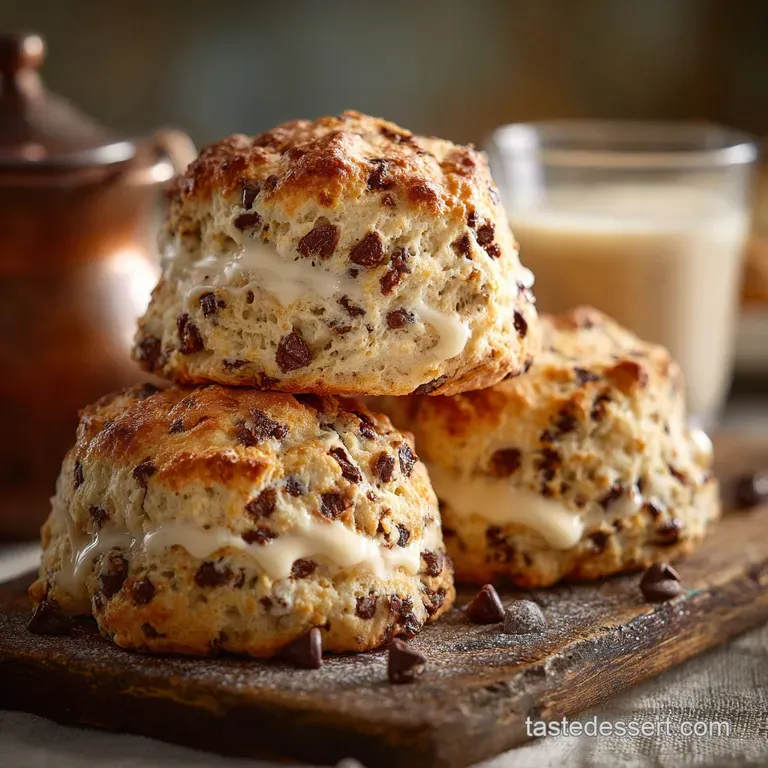
Success in this bake relies entirely on following a precise, low-impact process. We must move efficiently from combining the dry ingredients to shaping the final product without generating heat or excessive friction.
This careful execution is what separates dense baking powder biscuits from tall, flaky scones like those popularized by Skinnytaste Scones or the Preppy Kitchen method.
Cutting the Fat: The Art of the Pea-Sized Butter Rub
Begin by whisking the flour, sugar, baking powder, and salt together to ensure the leavening agents are perfectly distributed. Next, scatter the cold butter cubes over the mixture before using a pastry cutter or your fingertips to rapidly cut the fat into the dry ingredients.
The ideal texture is sandy and coarse, with some larger pieces no bigger than small peas remaining visible throughout the mix. These larger pieces are essential; they create the steam pockets necessary for the dramatic rise.
Hydration Control: Mixing the Dough Just Until Shaggy
Once the chocolate chips are mixed into the dry ingredients, pour the entire measured amount of cold heavy cream in all at once. Using a wooden spoon or spatula, mix quickly and lightly just until the dough comes together into a shaggy mass, avoiding any visible dry flour streaks.
This delicate hydration step is critical, as it ensures you stop mixing before the gluten develops fully. If you attempt a chocolate chip scones no buttermilk variation, this stage is identical; just ensure your substitute liquid is equally cold.
Shaping and Slicing: Achieving Maximum Height
Turn the fragile, shaggy dough out onto a lightly floured counter and gently pat it together with minimum handling. Avoid kneading or rolling with a pin, which compresses the dough unnecessarily. Gently form the dough into a thick round disk, approximately $1
frac{1}{2}$ inches (4 cm) high.
Using a sharp bench scraper, cut the disk directly into eight equal triangular wedges, applying firm, quick pressure straight down to maintain sharp, unsealed edges.
The Golden Glaze: Preparing for the Oven Spring
Before the crucial chilling step, the scones must be brushed with an egg wash, which is a simple mixture of one whisked egg and a teaspoon of milk or cream. This wash promotes a deep, golden brown crust and a beautiful sheen that enhances the finished presentation.
The high fat content in the wash helps the scones cook evenly and achieves that desirable crisp exterior when they hit the 400° F ( 200° C) oven.
Elevating Your Bake: Advanced Scone Strategies
Moving beyond the basic recipe, there are several adjustments and techniques experts use to optimize the rise, texture, and flavor of their chocolate chip scones. These strategies focus on maximizing the coldness of ingredients and introducing complexity.
Achieving these superior results means paying attention to subtle cues throughout the mixing process.
For bakers interested in more complex flavors or lighter textures, consider these professional moves:
| Strategy | Benefit |
|---|---|
| Use Frozen Grated Butter | Maximizes surface area for cold mixing; ensures quicker incorporation and less hand contact. |
| Introduce Sourdough Discard | Adding 1/4 cup of cold chocolate chip scones sourdough discard (for flavor, not rise) offers a subtle tanginess and improves moisture retention. |
| Bake Separated | Place cut scones 1 inch apart for crisp edges, or touching for softer, pull apart sides. |
Sometimes, bakers are looking for recipes comparable to the high standards of a "Skinnytaste Scones" recipe, which often prioritizes nutrient density or slight modifications. Adapting this recipe to be marginally "healthier" might involve reducing the added sugar slightly, though the high fat dairy is essential and non-negotiable for texture.
The addition of a high acid element, such as lemon juice in the cream, can also boost the effectiveness of the baking powder.
Troubleshooting and Serving Recommendations
Even when following the instructions precisely, environmental factors like kitchen temperature and flour type can affect the outcome. Knowing how to prevent common issues and how to properly store your finished bake ensures maximum enjoyment.
Preventing Spread: Why Chilling Is Non-Negotiable
If you skip the critical 20-minute chilling period before baking, the butter pockets in the dough will melt prematurely on the hot baking sheet, causing the scones to slump outwards. This rapid melting results in flat, wide, and dense scones a common baking disappointment.
Chilling firms up the butter and allows the flour’s hydration to stabilize, ensuring the dough maintains its tall, 1 $
frac{1}{2}$-inch shape when subjected to the oven's intense heat.
Storage Solutions for Fresh and Baked Chocolate Chip Scones
These buttery treats are best enjoyed immediately, ideally within an hour of coming out of the oven. If you have leftovers, baked scones can be kept in an airtight container at room temperature for up to two days, refreshing them briefly in the oven before serving.
For making the recipe ahead, you can freeze the unbaked, fully shaped wedges on a baking sheet; once frozen, transfer them to a freezer bag and bake straight from frozen (adding a few extra minutes to the cooking time).
Swaps and Substitutions: dairy-free Alternatives That Work
While the original recipe relies heavily on high fat dairy for flavor and rise, certain substitutions can be made successfully. When experimenting with alternative liquids, always check the consistency of your final dough it should remain shaggy and slightly tacky.
| Component | Recommended Substitution | Note on Texture/Flavor |
|---|---|---|
| Unsalted Butter | high-quality Vegan Butter Sticks (Cold) | Texture holds up well if chilled; check salt content. |
| Heavy Cream | Full Fat Canned Coconut Milk (Refrigerated) | Adds slight coconut undertone; may require less volume. |
| Heavy Cream | Buttermilk (Requires Added Soda) | Tangier flavor; if using a chocolate chip scones with buttermilk swap, add 1/4 tsp baking soda to the dry mix. |
Understanding Nutritional Information (Per Scone Estimate)
As these Chocolate Chip Scones are rich in both butter and heavy cream, they are intended as an indulgent treat, perfect for breakfast or afternoon tea. Based on the recipe yielding eight generous servings, the estimated caloric intake is substantial, typically ranging between 380 and 410 kcal per scone.
This high energy count primarily reflects the significant contribution of saturated fats from the premium dairy ingredients and the simple carbohydrates from the flour and sugar.
Recommended Pairings: What to Serve Alongside
A beautifully baked scone demands traditional, high-quality accompaniments for the ultimate experience. The warm, chocolate studded pastry offers the perfect canvas for rich spreads and aromatic beverages.
- The Classic British: Luxurious clotted cream and a vibrant strawberry or raspberry preserve are mandatory for a true tea time presentation.
- A Simple Finish: Alternatively, simply serve the warm scones dusted with a little powdered sugar alongside softened, slightly salted butter.
- Beverage: Pair these rich, hearty pastries with a strong black tea, such as Earl Grey or English Breakfast, whose tannins cut through the dairy richness beautifully.

Recipe FAQs
Why did my scones turn out flat and dense instead of tall and fluffy?
This common mishap, often resulting in a "doorstop" scone, usually means the dough was overworked and the gluten developed, or your ingredients weren't cold enough. Remember, rapid steam from cold butter is what gives you that magnificent, dramatic rise handle the dough quickly and gently.
How long will these Chocolate Chip Scones stay fresh, and how should I store them?
Scones are always best enjoyed warm within an hour of baking, but they can be kept in an airtight container at room temperature for up to two days. If they've gone a bit stale, slice them open and toast them in the oven for a quick revival that’s perfect for slathering with jam.
I’m short on time can I prepare the scone dough ahead of my guests arriving?
You’re in luck! Prepare and cut the scones according to the instructions, then place the unbaked wedges on the tray and freeze them for up to a month, or chill them in the fridge overnight. Bake them straight from the freezer/fridge without thawing, adding about 3-5 minutes to the total baking time.
I don't have heavy cream; what is the best substitution to maintain the texture?
Heavy (or double) cream provides the essential fat content for a rich, tender crumb, but if you're in a pinch, cold full fat buttermilk is your best alternative for a beautiful texture. If using buttermilk, you may need a tiny bit less liquid and consider adding 1/4 teaspoon of baking soda to neutralise the acid.
Can I adjust this recipe for different flavour inclusions, like nuts or dried fruit?
Absolutely; feel free to swap the chocolate chips for dried cherries, sultanas, or toasted pecans, keeping the total volume the same (around 3/4 cup). For a more traditional, slightly plainer scone, simply omit the chips and add a generous tablespoon of vanilla extract to the cream.
Chocolate Chip Scones Highrise Cream Tea
Ingredients:
Instructions:
Nutrition Facts:
| Calories | 827 kcal |
|---|---|
| Protein | 7.5 g |
| Fat | 15.8 g |
| Carbs | 51.8 g |
| Fiber | 0.0 g |
| Sugar | 91.6 g |
| Sodium | 11 mg |
