French Profiteroles: Airy Puffs with Chocolate
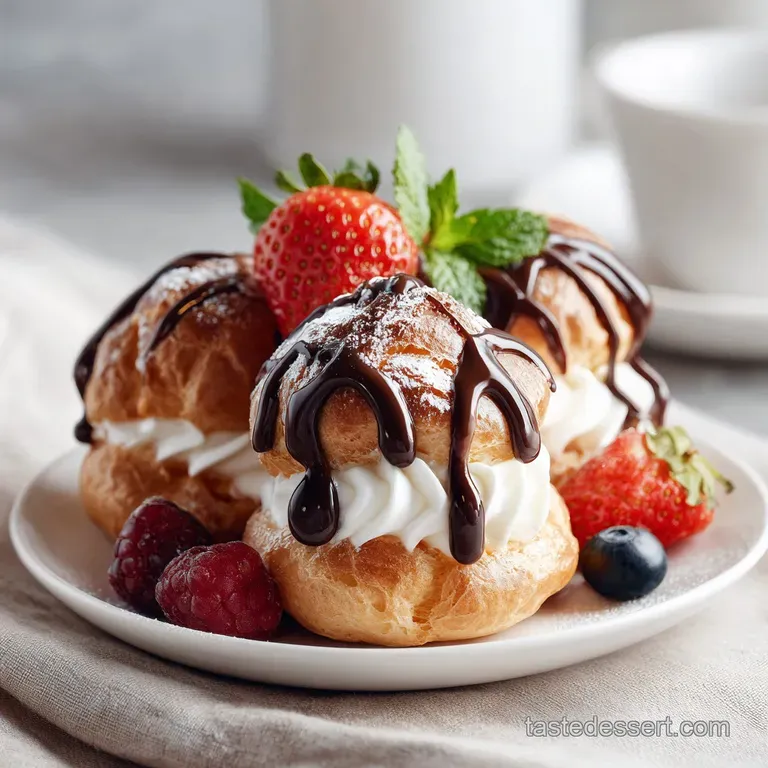
- Time: Active 15 minutes, Passive 25 minutes, Total 40 minutes
- Flavor/Texture Hook: Shatter crisp warm shells with velvety chocolate
- Perfect for: Impressing guests at a budget-friendly dinner party
- Make-ahead: Bake the shells up to 2 days early
- Creating Light and Airy French Profiteroles
- Understanding the Magic of Choux
- Choux Pastry Component Analysis
- Selecting Ingredients for Better Results
- Tools Every Home Baker Needs
- Step-by-Step Choux Pastry Instructions
- Solving Common Baking Problems
- Adjusting the Recipe Size
- Fun Ways to Mix Flavors
- Kitchen Myths Debunked
- Storing Your Homemade Pastries
- Best Ways to Serve Them
- Recipe FAQs
- 📝 Recipe Card
Creating Light and Airy French Profiteroles
The first time I tried making these, I was terrified. I stood over the stove, staring at a ball of dough that looked like lumpy mashed potatoes, wondering how on earth this was supposed to become a fancy dessert.
Then, I added the eggs, and suddenly, the mixture started to transform into a glossy, silky ribbon that smelled like toasted butter and comfort. When I peeked through the oven glass and saw them inflating like little golden balloons, I knew I was hooked.
There is nothing quite like the aroma of choux pastry filling a kitchen. It is a warm, yeasty, buttery scent that makes you feel like you have been transported to a sidewalk cafe in Paris.
When you pull them out, the shells are so light they almost feel like they might float away, and that first "shatter" sound when you bite into a freshly baked puff is pure magic. We are not just making a dessert here; we are mastering a technique that will make you feel like a pro baker without the professional price tag.
You might think you need expensive equipment or rare ingredients for French Profiteroles, but that is the biggest myth in baking. Honestly, we are mostly using water, flour, and eggs.
It is about the "how," not the "how much it costs." I have made these in tiny apartment kitchens with a wooden spoon and a dream, and they come out spectacular every single time. Let's get into the nitty gritty of why this works so well.
Understanding the Magic of Choux
The physics of these puffs is actually pretty cool once you see it in action. Since we don't use baking powder or yeast, we rely entirely on physical leavening to get that famous hollow center.
- Steam Power: The high water content in the dough evaporates rapidly in the hot oven, pushing the dough outward and upward.
- Protein Structure: The 4 large eggs provide the necessary protein to "set" the walls of the puff before the steam escapes.
- Starch Gelatinization: Cooking the 1 cup all purpose flour in the boiling water/butter mixture pre gelatinizes the starches, allowing the dough to hold more liquid (and So more steam).
- Maillard Reaction: The 1 tsp granulated sugar and the proteins in the eggs work together to create that deep, golden brown color and toasted flavor.
| Puff Size | Bake Time | Visual Cue | Yield |
|---|---|---|---|
| Mini (1 inch) | 18 minutes | Light golden, firm to touch | 30-35 puffs |
| Standard (2 inch) | 25 minutes | Deep golden, hollow sound | 20-24 puffs |
| Large (3 inch) | 32 minutes | Very firm, dark gold | 12-15 puffs |
The beauty of this recipe is how adaptable it is to your schedule. If you are in a rush, you can pipe smaller puffs to shave off nearly ten minutes of baking time. Just remember that the goal is a dry, crisp shell; if they feel soft or "squishy" when you pull them out, they will deflate faster than a popped tire once they hit the cool air.
Choux Pastry Component Analysis
| Ingredient | Science Role | Pro Secret |
|---|---|---|
| 4 Large Eggs | Structure & Emulsion | Add them one at a time to ensure the fat and water don't separate. |
| 1 cup AP Flour | Provides Body | Sift it first to prevent tiny flour "bombs" in your smooth dough. |
| 1/2 cup Butter | Tenderness & Flavor | Use unsalted so you can control the seasoning with your 1/2 tsp salt. |
| 1 cup Water | Steam Generation | Don't let it boil too long or you'll lose the volume needed for the rise. |
The relationship between these four items is delicate but forgiving if you know what to look for. For example, the 1/2 cup unsalted butter needs to be fully melted and the liquid boiling before you dump in the flour. This ensures the starch is hit with maximum heat immediately.
Selecting Ingredients for Better Results
You don't need a massive budget to make these feel like a luxury. I often use store brand flour and eggs, and the results are still delightful. The real trick is in the chocolate sauce using a decent bittersweet bar makes a world of difference compared to pre made syrup.
- 1 cup water: Provides the moisture for steam. Why this? It's neutral and allows the butter flavor to shine through. (Substitute: Whole milk for a richer, softer shell).
- 1/2 cup unsalted butter, cubed: The fat source for flavor. Why this? Cubing ensures it melts before the water evaporates too much. (Substitute: Salted butter, but omit the extra salt).
- 1 tsp granulated sugar: Aids in browning. Why this? A tiny amount provides a hint of sweetness without burning. (Substitute: Brown sugar for a caramel note).
- 1/2 tsp salt: Enhances all other flavors. Why this? It balances the sweetness of the ice cream and chocolate. (Substitute: Sea salt).
- 1 cup all purpose flour, sifted: The skeleton of the puff. Why this? AP flour has the right protein balance for a crisp but light shell. (Substitute: Bread flour for a slightly sturdier puff).
- 4 large eggs, room temperature: The binder and leavener. Why this? Room temp eggs incorporate much more smoothly than cold ones. (Substitute: 3 extra large eggs if that's all you have).
- 4 oz bittersweet chocolate (60% cacao): The base of our glossy sauce. Why this? 60% provides a sophisticated bitterness that cuts through the sugar. (Substitute: Semi sweet chocolate chips).
- 1/2 cup heavy cream: For a velvety sauce texture. Why this? High fat content keeps the sauce stable and shiny. (Substitute: Full fat coconut milk).
- 1 tbsp light corn syrup: The secret to a professional gloss. Why this? It prevents the chocolate from graining or dulling. (Substitute: Honey or agave).
- 1/2 tsp vanilla extract: Rounds out the chocolate profile. Why this? It bridges the flavor between the sauce and the ice cream. (Substitute: Vanilla bean paste).
- 1 pint vanilla bean ice cream: The classic filling. Why this? The cold contrast to the warm sauce is the hallmark of this dish. (Substitute: Salted caramel ice cream).
Chef's Tip: Freeze your butter for 10 minutes before cubing it. It sounds weird, but it keeps the butter from melting too fast while you're waiting for the water to boil, keeping your ratios exact.
Tools Every Home Baker Needs
You really don't need a fancy stand mixer for this, though it does save your arm some work. I’ve made these with just a sturdy wooden spoon and some elbow grease many times. If you have a hand mixer, that works perfectly too.
The most important tool is actually a heavy bottomed saucepan. Thin pots can scorch the flour during the "panade" stage, which gives the puffs a burnt popcorn taste that no amount of chocolate can hide.
You'll also want a large baking sheet and some parchment paper don't grease the pan directly, or the puffs will slide around and won't be able to "climb" the sides to get their height.
A piping bag with a large round tip is helpful for uniform shapes, but honestly, two spoons work just as well for a rustic look. If you decide to go the piping route and find yourself out of bags, a gallon sized freezer bag with the corner snipped off is a classic home cook hack that works every time.
step-by-step Choux Pastry Instructions
- Boil the base. Combine 1 cup water, 1/2 cup cubed butter, 1 tsp sugar, and 1/2 tsp salt in a saucepan over medium high heat. Note: Ensure the butter is fully melted before the water reaches a rolling boil.
- Incorporate the flour. Dump the 1 cup sifted all purpose flour into the boiling liquid all at once and stir vigorously with a wooden spoon. Cook until a film forms on the bottom of the pan.
- Cool the panade. Transfer the dough to a bowl and let it sit for about 3-5 minutes. Note: If the dough is too hot, you'll scramble the eggs in the next step.
- Add eggs slowly. Beat in the 4 large eggs one at a time, making sure each is fully absorbed before adding the next. Stop when the dough is glossy and hangs in a "V" shape from your spoon.
- Prep for baking. Preheat your oven to 400°F (200°C) and line a tray with parchment. Note: High heat is essential for that initial steam blast.
- Shape the puffs. Pipe or spoon 2 inch mounds onto the tray, leaving space for them to double in size. Smooth down any pointy "tails" with a wet finger so they don't burn.
- Initial over high heat bake. Bake for 15 minutes at 400°F (200°C) without opening the door. Wait until they have puffed and started to turn golden.
- Final drying bake. Drop the oven temp to 350°F (180°C) and bake for another 10 minutes until the shells are firm and sound hollow when tapped.
- Make the sauce. Heat 1/2 cup heavy cream and 1 tbsp corn syrup until simmering, then pour over 4 oz chopped chocolate. Whisk until velvety and add 1/2 tsp vanilla.
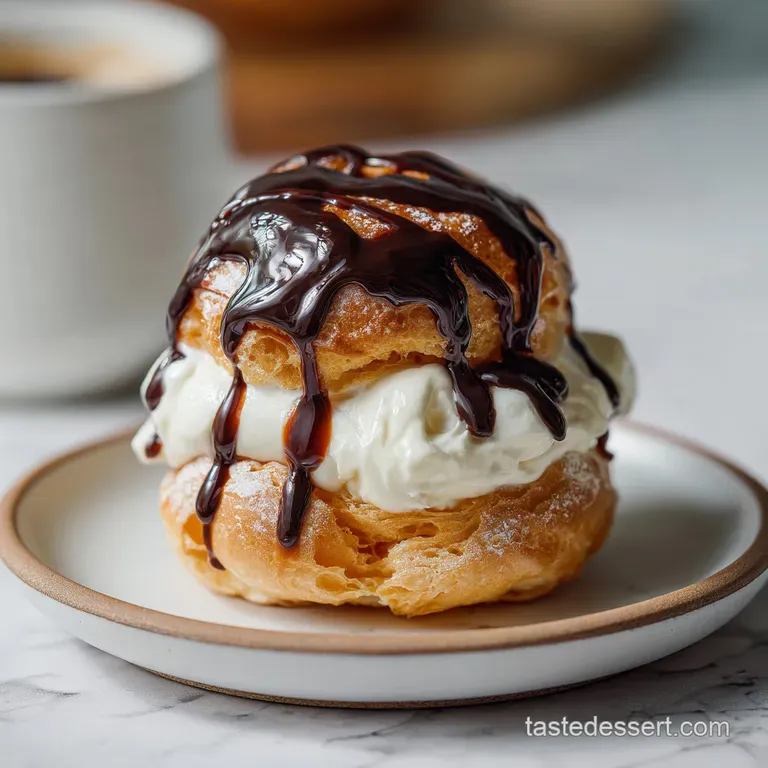
- Assemble and serve. Slice the cooled puffs in half, fill with a scoop of 1 pint vanilla ice cream, and pour the warm sauce over the top immediately.
Solving Common Baking Problems
The most frustrating thing that can happen with French Profiteroles is the "deflation." You see them looking gorgeous in the oven, then you pull them out and they turn into sad little pancakes. This usually happens because there's still too much moisture inside the shell.
Why Your Puffs Deflated
If your puffs look great then collapse, the steam inside turned back into water before the walls were strong enough to hold. This is why we do that second bake at a lower temperature. If you find they are still soft, try poking a tiny hole in the side of each puff with a toothpick during the last 5 minutes of baking to let the internal steam escape. This technique is similar to what I use in my Classic Homemade Éclairs recipe to ensure a crisp finish.
Why the Dough is Runny
If you added all the eggs at once, or if your eggs were particularly large, the dough might become too soup like to hold a shape. You want it to be thick enough that it holds its form when piped.
If it's too runny, you can't really "fix" it by adding raw flour you'd have to make a small half batch of the cooked flour paste (without eggs) and mix it in.
| Problem | Root Cause | Solution |
|---|---|---|
| Flat/Heavy Puffs | Water didn't boil | Ensure a rolling boil before adding flour to maximize steam. |
| Greasy Shells | Butter separated | Stir more vigorously during the panade stage to emulsify. |
| Burnt Bottoms | Oven rack too low | Bake on the middle rack and use a double baking sheet if needed. |
Common Mistakes Checklist
- ✓ Don't open the oven door during the first 15 minutes (you'll lose the steam pressure!).
- ✓ Make sure the "panade" (flour/water mix) is cooked until it smells slightly nutty.
- ✓ Use room temperature eggs so the dough stays warm and emulsifies properly.
- ✓ Sift your flour to avoid lumps that can cause the puffs to crack unevenly.
- ✓ Let the puffs cool completely before trying to slice them, or they will crumble.
Adjusting the Recipe Size
Scaling choux pastry is actually quite simple as long as you keep the ratios in mind. Since eggs are the variable factor, I always suggest weighing them if you're going for a massive batch, but for home use, the "V test" (seeing if the dough hangs in a V shape) is your best friend.
Scaling Down (Half Batch): This is perfect for a quiet date night. Use 1/2 cup water, 1/4 cup butter, and exactly 1/2 cup flour. Since you can't easily use half an egg, beat two eggs together in a cup and use roughly 3 tablespoons of the mixture at a time until you hit the right consistency.
Reduce your bake time by about 5 minutes.
Scaling Up (Double Batch): Making 40+ puffs for a party? Double everything, but be careful with the eggs. Sometimes a double batch only needs 7 eggs instead of 8 because of the way the moisture evaporates in a larger pot. Add the 8th egg only if the dough still looks dull and stiff.
You'll definitely want to work in batches for the baking, as overcrowding the oven will create too much steam and result in soggy shells.
For another great party dessert that uses similar techniques, you might enjoy my Classic French Crème recipe, which can also be easily scaled for crowds.
Fun Ways to Mix Flavors
While the vanilla ice cream and chocolate sauce combo is the gold standard for French Profiteroles, you can treat the puff like a blank canvas. I once did a savory version for a brunch where I filled them with a chive and lemon cream cheese mixture it was the hit of the morning!
- The Coffee Kick: Add 1 teaspoon of instant espresso powder to the chocolate sauce and use coffee flavored ice cream.
- The Fruit Twist: Fill with lemon curd instead of ice cream and dust the tops with powdered sugar instead of chocolate.
- The Salty Nut: Use dulce de leche instead of chocolate sauce and top with crushed toasted hazelnuts or pecans.
- The Tropical: Fill with coconut sorbet and top with a mango coulis for a lighter, dairy-free vibe (if you use a dairy-free puff recipe).
Kitchen Myths Debunked
One of the biggest myths is that you have to sift the flour three times. Honestly? Once is plenty, and if you’re using high-quality flour, you can sometimes skip it entirely if you whisk the flour in the bowl first to break up clumps. The goal is just to avoid "flour pockets" in the final dough.
Another common misconception is that the "film" on the bottom of the pan doesn't matter. It actually matters a lot! That film tells you that enough water has evaporated and the starch is properly cooked. If you stop before that film appears, your puffs will likely be dense and won't have that classic hollow center.
Finally,, people think you can't make these on a humid day. While humidity does affect the crispness, it shouldn't stop you. You just might need to bake them for an extra 2-3 minutes at the lower temperature to ensure they are truly dry.
Storing Your Homemade Pastries
Keeping French Profiteroles fresh is all about fighting moisture. Once they are filled with ice cream, they need to be eaten immediately, or the shell will turn into a soggy mess. However, you can absolutely prepare the components in advance.
Fridge Storage: Store unfilled, cooled shells in an airtight container at room temperature for up to 2 days. If they lose their crunch, just pop them in a 300°F (150°C) oven for 5 minutes to crisp back up.
The chocolate sauce will keep in the fridge for a week; just reheat it gently in the microwave in 15 second bursts.
Freezer Storage: These are the ultimate freezer hack! You can freeze the baked, unfilled shells for up to 3 months. Just bake them directly from the freezer at 325°F (160°C) for 5-8 minutes to thaw and crisp.
You can even freeze the unbaked piped dough rounds just bake them for an extra 5 minutes at the initial high temperature.
Zero Waste Tip: If you have leftover chocolate sauce, don't you dare throw it out. It’s essentially a ganache. Stir it into your morning coffee for a mocha, or dip apple slices into it for a quick snack.
If you have broken puff shells, crush them up and use them as a "crouton" for chocolate mousse or pudding.
Best Ways to Serve Them
Presentation is where you get to have some fun. The "classic" look is three puffs arranged in a triangle on a white plate, but I love the "mountain" style for a family dinner. Pile them high on a platter and let everyone drizzle their own sauce.
For a truly professional touch, serve the sauce in a small pitcher on the side. Pouring the warm, glossy chocolate over the cold ice cream right at the table is a sensory experience that never fails to get a few "oohs" and "aahs." It creates that perfect moment where the chocolate slightly hardens as it hits the ice cream but stays warm enough to melt into the puff.
If you want to go the extra mile, a light dusting of powdered sugar over the puffs before adding the chocolate sauce adds a beautiful contrast. It makes the golden shells pop and gives that authentic patisserie feel that we all crave.
Trust me, once you master this, you'll be looking for every excuse to whip up a batch. Enjoy the process it's just as delightful as the first bite!
Recipe FAQs
What is a French profiterole?
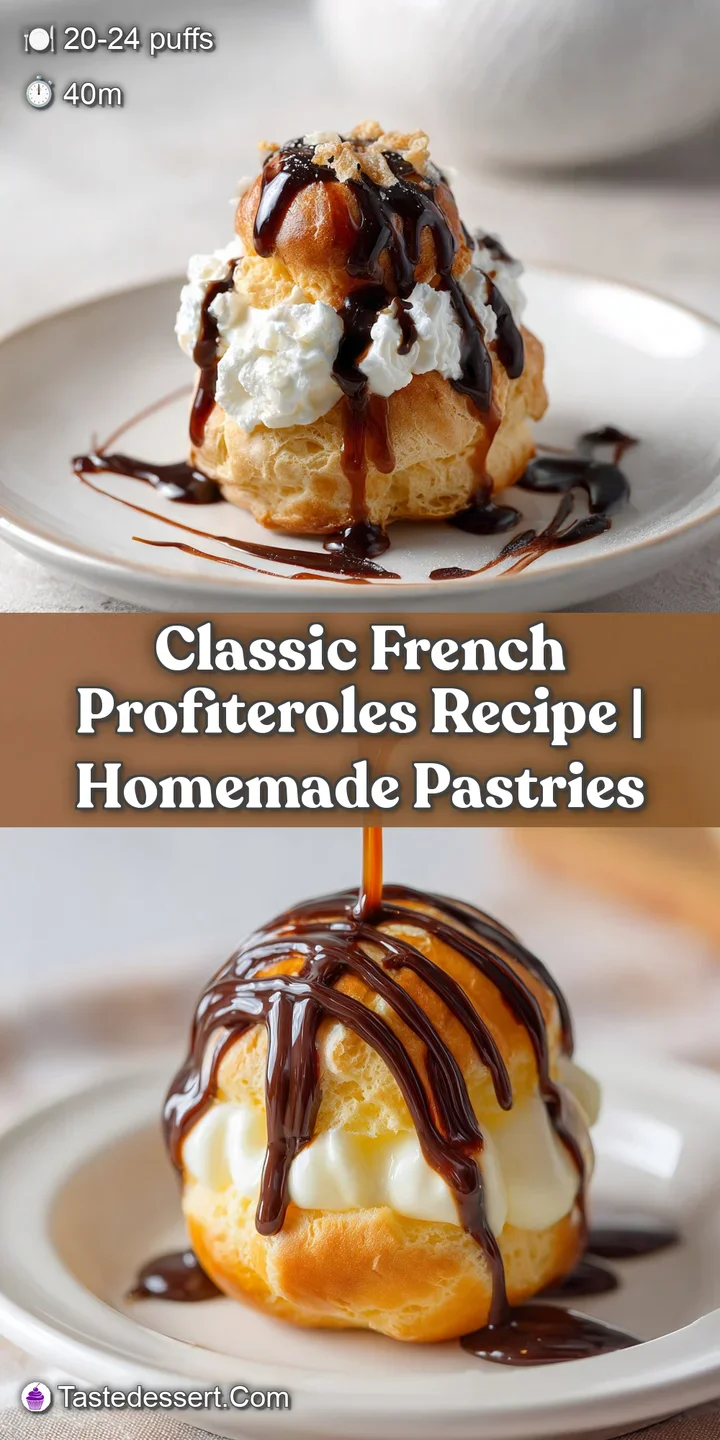
A French profiterole is a light, hollow puff of choux pastry. They are traditionally filled with ice cream or pastry cream and served drizzled with a warm chocolate sauce. This dessert relies entirely on steam leavening rather than chemical leaveners like baking powder.
What is the classic filling for profiteroles?
Vanilla bean ice cream is the classic filling. The contrast between the warm, shattering shell, the cold filling, and the rich chocolate sauce is what defines the authentic experience. A close second would be a lightened diplomat cream or vanilla pastry cream.
What's the difference between a profiterole and a cream puff?
Technically, they are the same pastry base, but serving style dictates the name. Profiteroles are typically smaller and served warm with chocolate sauce and ice cream, whereas a cream puff (or chou à la crème) is often larger and filled with whipped cream or pastry cream, served at room temperature or chilled. Mastering the choux base here relies on temperature control; if you enjoyed controlling the dough's hydration, see how the same precision works in our Classic Homemade Éclairs recipe.
What are common profiterole mistakes?
The most common mistake is under baking or opening the oven door too early. Under baking leaves too much internal moisture, causing the puffs to collapse when they cool. Always use the lower temperature second bake to dry the shells completely.
How do I ensure my choux pastry is glossy and smooth before adding eggs?
Cook the flour paste vigorously until a thin film forms on the bottom of the saucepan. This process cooks the starch and ensures the dough is dry enough to absorb the eggs without becoming runny. Keep stirring until the dough pulls away cleanly from the sides of the pot.
Can I substitute water with milk in the choux pastry base?
Yes, substituting water with whole milk will result in a richer, slightly softer shell. The milk adds extra fat and protein, which contributes to better browning but can slightly reduce the overall height achieved by pure steam expansion. For an adventurous flavor variation using a rich liquid base, try our Crème de Cassis recipe.
How do I get the chocolate sauce to stay warm and glossy over the ice cream?
Gently warm the heavy cream and always add a touch of corn syrup or glucose to the chocolate. The corn syrup is a key ingredient for emulsification, which prevents the sauce from seizing up or dulling its shine when hitting the cold ice cream.
Serve the sauce immediately after whisking for the best temperature contrast.
Classic French Profiteroles Recipe
Ingredients:
Instructions:
Nutrition Facts:
| Calories | 415 kcal |
|---|---|
| Protein | 7.1 g |
| Fat | 29.4 g |
| Carbs | 30.9 g |
| Fiber | 1.2 g |
| Sugar | 18.5 g |
| Sodium | 146 mg |
