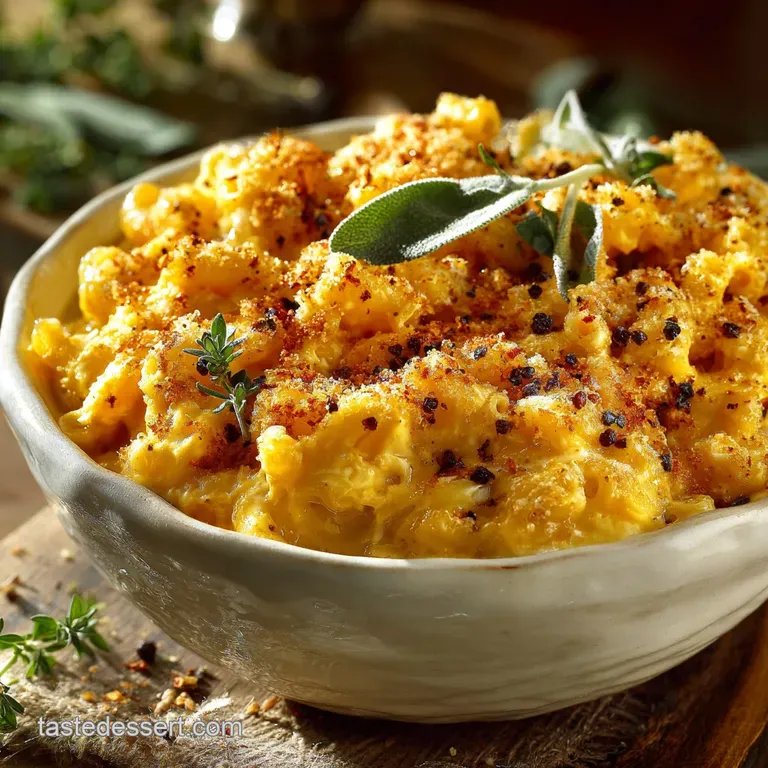
Golden Comfort Creamy Roasted Butternut Squash Mac and Cheese

- Why Roasting Butternut Squash Changes Everything
- Gathering Your Golden Components: Essential Ingredients
- Elevating Your Butternut Squash Mac and Cheese Base
- Phase I: Perfecting the Golden Squash Purée
- Phase II: Mastering the Velvety Cheese Sauce
- Phase III: Assembly and Baking for Crispy Edges
- Troubleshooting and Expert Tips for Your Next Batch of Butternut Squash Mac and Cheese
- Variations: Customizing Texture and Flavour
- Recipe FAQs
- 📝 Recipe Card
Why Roasting Butternut Squash Changes Everything
This Butternut Squash Mac and Cheese recipe transcends the simple comfort food category by adopting one crucial technique: roasting the squash instead of boiling it. Boiling adds water, diluting flavour and compromising the final texture of the sauce.
Roasting, however, concentrates the squash's natural sugars, transforming the pale, watery vegetable into tender cubes with a deeply caramelized edge. This Maillard reaction provides an unmatched sweetness and nutty depth, ensuring the final dish is rich, complex, and undeniably satisfying.
This technique is the foundation for making truly Easy Butternut Squash Recipes taste gourmet, setting this mac and cheese apart from any standard stovetop version.
The Hidden Nutritional Boost in Butternut Squash
Incorporating a whole roasted squash means you are transforming this indulgent dish into a surprisingly Healthy Mac And Cheese Recipe . Butternut squash is incredibly rich in Vitamin A (beta carotene) and Vitamin C, alongside a generous amount of dietary fiber.
By replacing a portion of the traditional high fat dairy base with naturally creamy vegetable purée, we boost the nutritional profile significantly. This makes the dish exceptionally appealing as a hidden vegetable meal, particularly for picky eaters or for parents looking for butternut squash mac and cheese toddler -friendly dinners.
It’s a guilt free way to enjoy a classic.
Achieving Ultimate Creaminess Without Heavy Cream
The natural starch and pectin within roasted butternut squash are the keys to achieving a luxuriously velvety sauce without relying solely on heavy cream or excessive butter. Once puréed, the squash acts as a powerful, stabilizing emulsifier and thickening agent.
When blended into the Béchamel, it provides that glorious, smooth mouthfeel and the vibrant golden hue we desire, ensuring your Butternut Squash Mac and Cheese is both hearty and exceptionally silky.
Gathering Your Golden Components: Essential Ingredients
Creating this sublime dish relies on quality ingredients and a careful balance of flavour profiles. We require a large butternut squash for the purée, a pound of pasta, and the elements for the Béchamel base: whole milk, butter, and all-purpose flour.
Crucial supporting ingredients include ground nutmeg, a whisper of cayenne pepper for warmth, and English mustard powder, which, while not making the dish taste "mustardy," is fundamental to activating and enhancing the sharp flavour of the cheese.
These components come together beautifully, perfect for Easy Fall Recipes Dinner .
Elevating Your Butternut Squash Mac and Cheese Base
Successful execution of this dish involves attention to detail before the actual mixing begins. Prep work, especially grating the cheese and chopping the squash, contributes significantly to a seamless cooking experience.
Selecting the Optimal Cheese Blend for Sharp Flavor
A single cheese rarely delivers the perfect balance of tang and melting quality required for premium mac and cheese. For this butternut squash mac and cheese recipe , we rely on the classic pairing of Sharp Cheddar and Gruyère.
Sharp Cheddar provides the necessary savory, tangy "bite" that cuts through the sweetness of the squash. Gruyère, a nutty and aromatic Swiss cheese, is renowned for its superior meltability, ensuring the final sauce remains homogenous and silky, never grainy.
Always grate your cheese from the block; pre-shredded varieties contain anti caking agents that hinder a smooth melt.
Pantry Staples and Must Have Kitchen Tools
Beyond the main fresh ingredients, ensure you have the necessary pantry elements for the roux (butter and flour) and the right tools. An immersion blender or a high powered stand blender is non-negotiable for achieving the silky purée needed.
A box grater speeds up cheese prep, and a sturdy 9x13 inch casserole dish is required for the final bake.
Expert Tips for Prepping the Squash Safely
Butternut squash can be notoriously tough to handle. To prep the squash safely and quickly, use a sharp vegetable peeler, taking care to stabilize the squash by cutting a small slice off the bottom to create a flat base. After deseeding, dice the squash into uniform 1 inch cubes.
Uniformity ensures even roasting, which is key to deep flavour extraction in this one of the best Fall Vegetarian Recipes . If the squash seems overly firm, you can microwave it briefly (1- 2 minutes) before peeling to soften the skin slightly.
Choosing the Right Pasta Shape for Maximum Sauce Cling
The richness of the sauce demands a robust pasta shape capable of capturing the golden purée. Elbow macaroni is classic, but larger shapes like large shells or the corkscrew shaped cavatappi work exceptionally well.
The ridges and hollows in these shapes cradle the thick, dense Butternut Squash Mac and Cheese sauce perfectly, guaranteeing a mouthful of comfort in every bite.
Phase I: Perfecting the Golden Squash Purée
Preheat your oven to 400° F ( 200° C). Toss the diced squash with olive oil, sea salt, and black pepper directly on a large baking tray. Spread the cubes into a single layer to ensure maximum exposure to the heat.
Roast the squash for approximately 20 to 25 minutes, or until the cubes are fork tender and the edges have begun to brown slightly. This crucial step is where the flavour concentrates, giving the final mac and cheese its golden depth.
Once roasted, the squash is ready to be incorporated into the Béchamel base.
Related Recipes Worth Trying
- Foolproof Spiced Pumpkin Roll with Cream Cheese Filling Recipe — Learn how to make this Traditional Pumpkin Roll recipe easy with our tips Get a moist crackfree pumpkin sponge rolled around a rich cream cheese filling...
- The Fastest Air Fryer Butternut Squash MapleThyme Crispy Edges — Achieve perfectly caramelized Air Fryer Butternut Squash cubes in under 20 minutes Forget long oven waits get tender centers and crispy edges with this easy...
- Ultimate Baked Broccoli Macaroni and Cheese Recipe with Panko Crunch — The ultimate comfort food This baked broccoli macaroni and cheese is elevated with a silky Gruyère Mornay sauce and a buttery Panko crust Pure cheesy goodness
Phase II: Mastering the Velvety Cheese Sauce
The heart of any great mac and cheese is a flawless Béchamel (white sauce), which we transform here into a velouté when blended with the squash. This stage requires careful attention to temperature and technique to prevent lumps or a split sauce.
The preparation begins with the roux foundation and finishes with the crucial cheese melt.
Techniques for Creating the Silkiest Purée
After removing the roasted squash from the oven, transfer it directly into your finished Béchamel sauce. This is the moment to utilize the immersion blender. Blend directly in the pot until the mixture is completely smooth and devoid of any squash lumps.
If, after blending, the sauce appears too thick remembering that it will thicken further upon adding cheese use the reserved half cup of starchy pasta water or vegetable stock to thin it down incrementally until you achieve a consistency that easily coats the back of a spoon.
Building a Foolproof Roux Foundation
The roux the mixture of fat (butter) and starch (flour) is the essential thickener. Start by melting 4 tablespoons of butter in a medium saucepan over medium heat. Once melted, whisk in 4 tablespoons of all-purpose flour. Continue whisking constantly for 1 to 2 minutes.
This cooking time is vital, as it eliminates the raw, floury taste. The mixture should resemble wet sand. Immediately begin gradually incorporating the warm whole milk, adding a splash at a time and whisking until smooth before adding more. This gradual process prevents lumps from forming.
Bring the sauce to a gentle simmer, stirring frequently, until it has thickened sufficiently. Remove it from the heat before proceeding.
The Correct Way to Incorporate Cheese (No Graininess!)
Once the puréed Béchamel is ready and removed from the heat, whisk in the flavour enhancers: the nutmeg, mustard powder, and cayenne. Now, add the finely grated Cheddar and Gruyère in handfuls, stirring continuously until each batch is fully melted and integrated before adding the next.
Crucially, do not return the pan to the heat while melting the cheese. High heat and rapid boiling after the cheese has been added will cause the milk proteins to seize and separate, resulting in an oily, grainy sauce.
Melting off-heat ensures a velvety, homogenous final result for your Butternut Squash Mac and Cheese .
Phase III: Assembly and Baking for Crispy Edges
With the sauce perfected, the final stages involve combining the components and adding the texture that elevates mac and cheese from a casserole to a masterpiece.
Combining the Sauce and Pasta Gently
After draining your chosen pasta shape, ensure it is set aside immediately. The pasta should be cooked to a firm al dente, approximately 1– 2 minutes less than the package directions suggest, as it will continue to absorb liquid and cook while baking.
Gently fold the undercooked pasta into the finished cheese sauce. Avoid aggressive stirring, which can break the delicate pasta. Ensure every piece is coated in the thick, golden sauce before transferring the mixture into the prepared casserole dish.
Roasting Temperature and Time for Deep Flavour
While the squash was roasted at 400° F ( 200° C), we utilize the same temperature for the final bake. The high heat ensures a quick, beautiful transformation of the topping and guarantees the sauce bubbles and sets without drying out the pasta below.
Bake for just 10 to 15 minutes, or until the topping is golden and the edges are aggressively bubbling. Letting the mac and cheese rest for 5 minutes after baking allows the sauce to fully set, preventing a runny result upon serving.
Achieving a Golden Brown Breadcrumb Topping
The perfect crisp contrast is achieved using Panko breadcrumbs, which are inherently crunchier than traditional crumbs. In a small bowl, combine one cup of Panko with a tablespoon of melted butter and two tablespoons of grated Parmesan cheese. This mixture should resemble wet sand.
Sprinkle this evenly over the top of the assembled pasta mixture. The butter helps the crumbs turn a deep, appealing golden brown during the quick bake time, adding a necessary textural counterpoint to the creamy interior.
Troubleshooting and Expert Tips for Your Next Batch of Butternut Squash Mac and Cheese
Don’t be intimidated by sauce making; most issues are easily remedied. If you find your cheese sauce struggling to maintain its smooth texture, remember the cold milk rule for the roux, and never add cold cheese to a hot liquid.
For maximum flavour extraction, avoid skipping the nutmeg and mustard powder they are the unsung heroes of traditional cheese sauce, providing balance against the richness of the dairy and sweetness of the squash.
This truly is one of the most rewarding Easy Fall Recipes Dinner options once you master the sauce.
Variations: Customizing Texture and Flavour
The beauty of the butternut squash mac and cheese recipe lies in its adaptability. While it’s delicious as a standalone Fall Vegetarian Recipes centerpiece, you can easily modify it.
Making This Recipe Ahead: Chill and Bake Later
This dish is ideal for prepping in advance. Complete all steps through combining the pasta and sauce, and transferring the mixture to the casserole dish. Skip the topping for now. Cover the dish tightly with foil or plastic wrap and refrigerate for up to 24 hours.
When ready to serve, sprinkle the prepared breadcrumb topping on, and bake from chilled. You will need to increase the oven time to approximately 30– 40 minutes, ensuring the internal temperature is piping hot before resting.
Quick Fixes if Your Sauce is Too Thin or Too Thick
If your sauce is too thick after adding the cheese, simply whisk in additional warmed whole milk or reserved vegetable stock, a tablespoon at a time, until the desired consistency is reached.
If the sauce is too thin, the easiest fix is a slurry: mix one tablespoon of flour or cornstarch with two tablespoons of cold milk, stir until dissolved, and whisk this mixture into the gently simmering sauce until it thickens.
Adding Protein: Bacon or Roasted Chicken Ideas
To turn this into a heartier meal, consider stirring in crispy, rendered bacon or pancetta immediately before baking. Alternatively, serve the mac and cheese alongside simple pan-seared pork chops or thinly sliced roasted chicken breast for added protein.
Freezing and Reheating Leftover Mac and Cheese
While freshly baked mac and cheese is always best, leftovers can be frozen. Once cooled, store servings in air-tight, freezer safe containers for up to three months. Be aware that the texture may become slightly less creamy upon thawing due to the starch content.
Reheat frozen portions slowly in the oven (covered with foil) or on the stovetop over very low heat, adding a splash of milk to rehydrate the sauce.
Nutritional Snapshot: Understanding the Macros
Thanks to the high vegetable content, this Butternut Squash Mac and Cheese offers significant dietary fiber and protein (especially with the Gruyère and Cheddar).
While it’s certainly not low-fat, the incorporation of squash provides complex carbohydrates and essential vitamins, contributing to a feeling of satiety and making it a more balanced and robust meal compared to traditional versions.
It’s truly a delicious and effective way to craft a butternut squash mac and cheese healthy approach to comfort food.

Recipe FAQs
I’m worried the squash will make the sauce watery. Any tips for achieving a proper velvety texture?
That's a cracking question! The secret here is roasting the squash, not boiling it, which drives out excess moisture and concentrates the flavour. Make sure you also nail the Béchamel base by cooking the roux (butter and flour) for a full minute to form a stable structure.
If the sauce seems too thick after blending, loosen it slowly with the reserved starchy pasta water, rather than adding standard milk or stock.
Does adding butternut squash to mac and cheese make it taste too sweet?
Not if you balance your flavours like a professional chef! The natural sweetness of the squash is intentionally offset by the sharp notes of the mature Cheddar and the traditional addition of English mustard powder and a pinch of nutmeg.
These classic Béchamel ingredients are crucial for giving the sauce depth and highlighting the cheesiness rather than letting the squash dominate the palette.
Can I make this Golden Comfort Butternut Squash Mac and Cheese ahead of time for Sunday lunch?
Absolutely, it's perfect for batch cooking! You can assemble the entire dish, including the topping, up to 24 hours in advance. Cover it tightly and store it in the fridge. When ready to bake, add a splash (about 1/4 cup) of milk or stock over the top before putting it in the oven, as the pasta will absorb the sauce while resting.
This ensures it stays creamy and doesn't dry out during the bake.
I can't find Gruyère cheese at my local supermarket what's a good swap that melts well?
Don't fret, there are plenty of smashing substitutes! The goal is a cheese with excellent melting qualities. Fontina or Provolone are brilliant options that will provide the same smooth, stretchy texture as Gruyère.
Remember to grate whatever cheese you use finely and ensure it’s at room temperature before adding it to the sauce off the heat; this is key to avoiding a grainy finish.
Is this technically "healthier" than the standard cheesy Mac?
While this is still a wonderfully indulgent dish it’s mac and cheese, after all it certainly offers some serious nutritional advantages. By incorporating the whole butternut squash, you are significantly boosting the fibre, Vitamin A, and Vitamin C content.
You can also reduce the overall amount of heavy cream or butter often used in traditional recipes, as the squash provides natural thickening and richness.
Creamy Butternut Squash Mac And Cheese

Ingredients:
Instructions:
Nutrition Facts:
| Calories | 2590 kcal |
|---|---|
| Protein | 28.5 g |
| Fat | 100.3 g |
| Carbs | 68.2 g |
| Fiber | 11.0 g |
| Sodium | 836 mg |
