Baked Sweet Potatoes with Crispy Crust Our Best Method for Rustic Skin
- Why Standard Baking Fails (And How We Fix It)
- Achieving the Perfect Baked Sweet Potatoes with Crispy Crust
- Pantry Staples and Tools for Ultra and Crispy Results
- Prepping Your Tubers for Maximum Crunch
- The over High heat Method: Step and by-Step Baking
- How to Guarantee That Signature Crispy Crust
- Troubleshooting Your Baked Sweet Potatoes with Crispy Crust
- Recipe FAQs
- 📝 Recipe Card
Why Standard Baking Fails (And How We Fix It)
We’ve all been there. You crave that fluffy, sweet baked potato, but what you pull out of the oven is a sad, wrinkled, soggy mess. Right? It happens because most standard recipes are designed for speed, not texture. They tell you to wrap the tuber in foil. Foil traps moisture. Trapped moisture turns into steam.
Steam gives you soft, sad skin. It’s simple physics, really.
I spent years making these steamed sweet potato halves, convinced that was just the way it had to be. My husband eventually called them "potato pouches." Mortifying. The fix is to ditch the foil, crank the heat, and, crucially, treat the skin like it’s the most important part of the vegetable.
Because for a truly rustic baked sweet potatoes experience, it absolutely is.
Achieving the Perfect Baked Sweet Potatoes with Crispy Crust
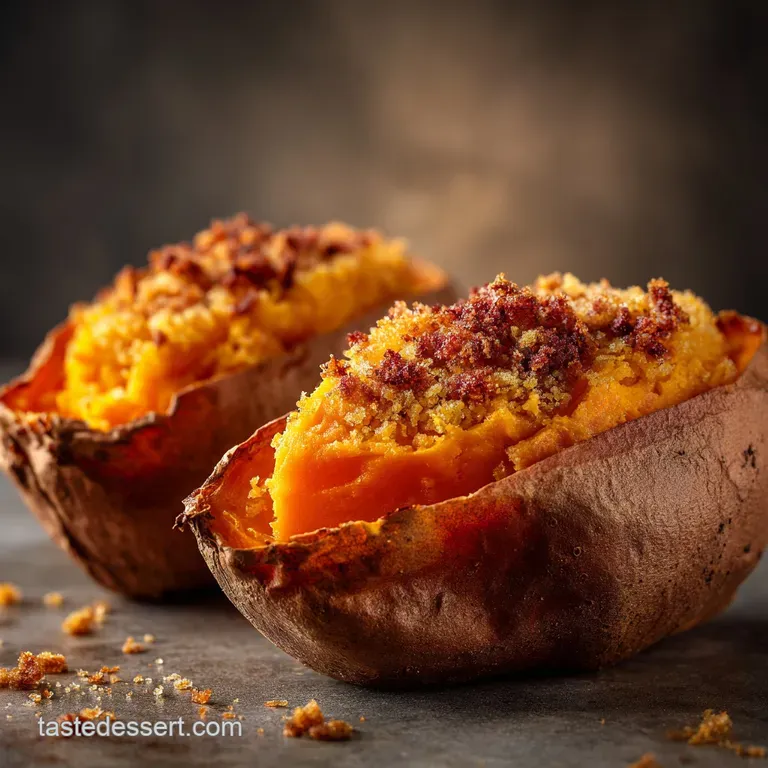
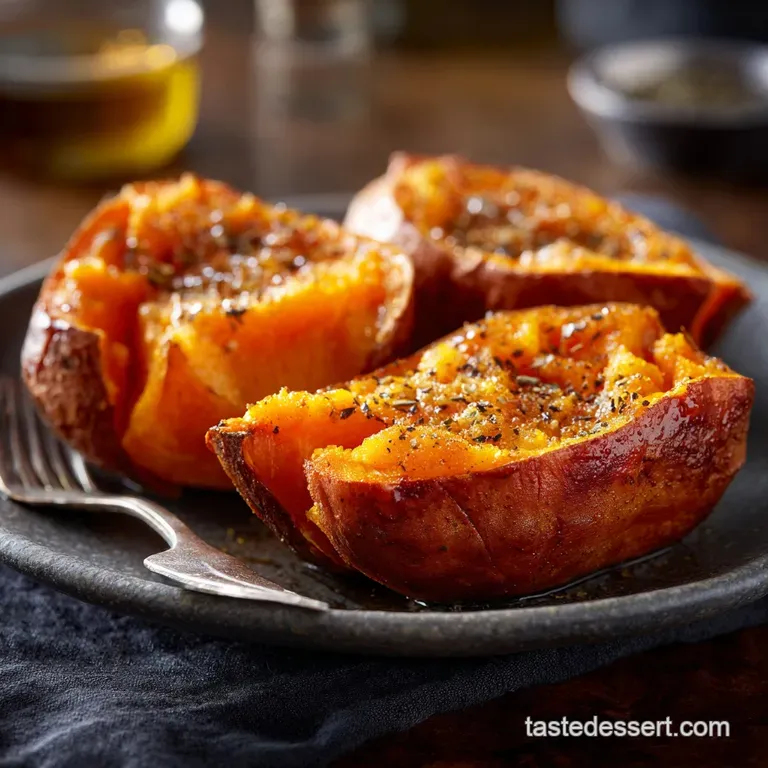
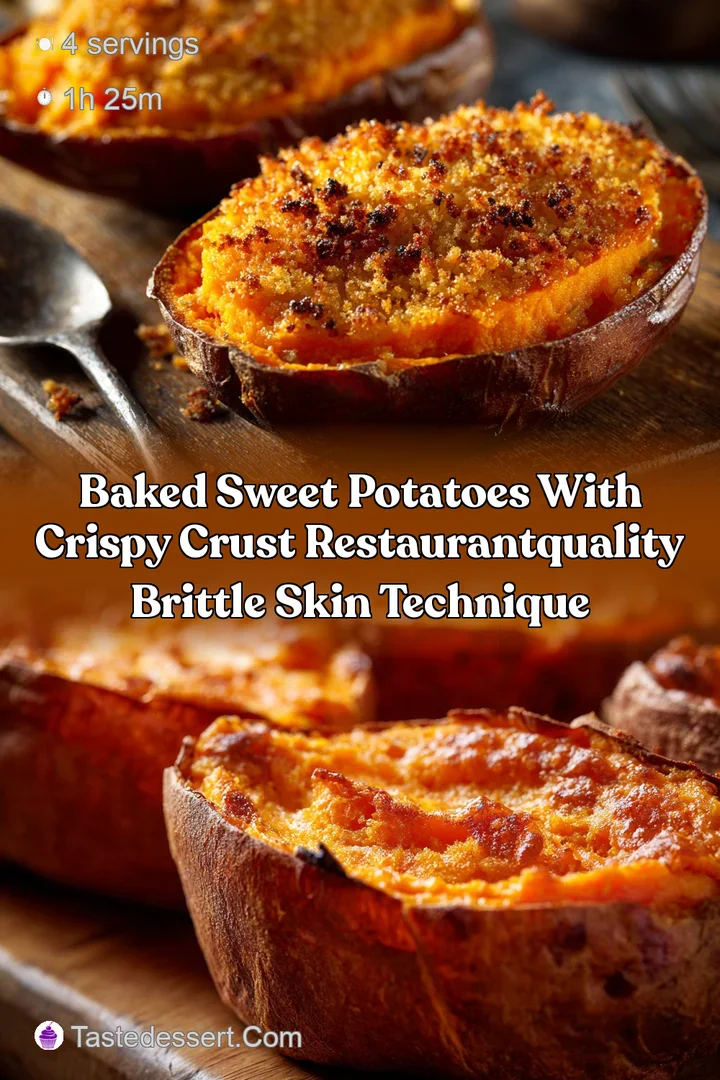
The goal here is a masterpiece of textural contradiction: a deeply caramelized, savory and crisp outer shell holding a hot, almost liquid and soft orange interior. When you press on the perfect baked sweet potato, the skin shouldn't give way like a deflated balloon; it should audibly crackle.
We are going over high heat, bare and sheet, and zero and compromise. This method is the secret to getting truly crispy skin sweet potatoes every single time.
The Science of Starch and Skin
Sweet potatoes, unlike their white counterparts, have fewer starches that break down completely, meaning they retain a lovely moisture when cooked. That moisture is our friend inside, but our enemy outside. When we use high heat, we force that surface moisture to evaporate extremely fast.
Simultaneously, the intense heat triggers the Maillard reaction (browning) on the sugars and proteins in the skin. This isn't just about cooking; it's about dehydrating the surface just enough to make it brittle, while the rapidly heating interior is steamed by its own internal juices, creating that signature fluffy center.
What Makes Our Crispy Crust Technique Unique?
It all boils down to two things: dryness and oil selection.
- Drying the Surface: We obsessively dry the skin post and wash. Seriously. If I see a drop of water, the whole mission fails.
- Oil Selection: We use an oil that can handle the heat. Forget your delicate extra virgin olive oil. It will smoke and taste bitter. We are going for a neutral, high and smoke point oil to create a thin, protective, and non and soggy barrier. This ensures we get that gorgeous baked sweet potatoes with crispy crust texture we’re after.
Pantry Staples and Tools for Ultra and Crispy Results
You don't need much for this which is why I love it. But the quality of two ingredients really matters.
| Ingredient | Why It Matters |
|---|---|
| Flaky Sea Salt | Texture! Essential for the final crunchy coating. |
| High Smoke Point Oil | Prevents smoking and ensures maximum crisping at 425°F (220°C). |
I also recommend using a good, heavy baking sheet. Thin, flimsy sheets often warp at high temperatures and can cause uneven cooking.
Related Recipes Worth Trying
- Kale Salad with Quinoa and Cranberries Best MapleDijon Vinaigrette — This Kale Salad with Quinoa and Cranberries recipe is a superfood champion Learn the key to zero bitterness and create a vibrant hearty kale grain bowl...
- Grilled Salmon Kebabs Mediterranean Skewers with LemonDill Glaze — Grilled Salmon Kebabs are perfect for a quick healthy weeknight dinner Try this vibrant grilled salmon skewer recipe featuring succulent fish and fresh...
- Stuffing Muffins CrispyEdged Sage Onion Recipe for Sides — Crispy edges and a tender center make these Stuffing Muffins the ultimate Easy Fast Thanksgiving Sides This best stuffing recipe Thanksgiving guarantees...
Prepping Your Tubers for Maximum Crunch
This is the most critical stage. If you mess up the prep, the oven can't save you.
Choosing the Right Sweet Potato Variety
I always reach for Jewel or Garnet varieties. They are deeply orange, moderately starchy, and high in sugar, which helps with that beautiful caramelization on the skin. Try to pick potatoes that are similar in size. If one is massive and one is tiny, the tiny one will be burnt before the giant one is tender.
That’s just sad.
Oil Selection: Smoke Point Matters
We need to cook these hot, around 425°F (220°C). Standard olive oil has a smoke point around 375°F (190°C), meaning it will start burning and tasting acrid before the sweet potatoes are done. Use rapeseed, grapeseed, or avocado oil. They can handle the heat and keep that delicious, clean flavor.
CRUCIAL WARNING: Do not skimp on the oil, but also do not drench the potato. It should be a very thin, even coating all over. Use a pastry brush if necessary to distribute it perfectly.
Necessary Prep Tools (Beyond the Knife)
You need a good vegetable brush (or just the rough side of a clean sponge) for scrubbing, and, most importantly, paper towels. Forget the knife for now; you just need a standard dinner fork. We use the fork to pierce the potato all over at least 8 to 10 deep holes. This is vital.
It’s the escape hatch for the steam building up inside. If the steam can't get out, it stays inside the potato, making the skin soft.
The over High heat Method: Step and by-Step Baking
We are cooking these babies hot and fast (well, fast for a baked potato). Preheat the oven to 425°F (220°C) with the rack in the center position. Don't preheat and then walk away to watch TV; we need that temperature accurate.
- The Scrub Down: Wash and scrub the sweet potatoes thoroughly.
- The Dry Down: Pat them completely, obsessively dry. I mean bone dry.
- The Piercing: Stab them all over with your fork. Stab aggressively.
- The Coating: Drizzle the high and smoke point oil, rub it in, and then season heavily with flaky salt and pepper.
- Initial Bake: Throw them on the baking sheet and into the hot oven for 30 minutes. Don't open the door during this phase. Let them crisp.
- The Flip: After 30 minutes, flip each potato gently. Bake for another 30 to 45 minutes. They should look deep, almost mahogany brown.
How to Guarantee That Signature Crispy Crust
The Key to Scrubbing and Drying the Skin
When I first learned how to make crispy baked sweet potato, I realized my mistake was being too gentle. The skin is where all the minerals and flavor are stored, so get in there with a brush. Once scrubbed, the drying step is your most valuable insurance policy.
Water on the skin will immediately turn to steam when it hits the oven, and that kills the crunch before it even starts. Dry it completely.
Seasoning Strategy for Maximum Flavor Penetration
I salt the skin immediately after oiling. The oil helps the salt stick right to the surface. And don't use fine table salt here. The flakes of sea salt not only taste better, but they also provide little pockets of intense salinity and a tiny burst of extra crunch when you bite into the skin.
When I’m making sweet potato recipes baked like this, I go heavy on the salt it balances the sweetness beautifully.
Initial Bake Phase: Getting the Inside Fluffy
The first 30 minutes at high heat are about sealing the deal on the crispness. The oven needs to be screaming hot to push the moisture out of the skin layer. Keep that oven door closed! If you open it, the internal temperature drops, and the skin starts to steam rather than crisp.
Patience is a virtue here.
The Flip and Finish Temperature Check
Flipping halfway through ensures that the bottom doesn’t get too scorched and that both sides get equal access to that delicious Maillard browning. How do you know they are done? The old squeeze test works (if they feel soft and ready to burst), but the foolproof method is the skewer test.
Take a metal skewer (or a thin knife) and push it into the thickest part. If it slides through like butter zero resistance you are done. If it snags, give it 5 more minutes.
Troubleshooting Your Baked Sweet Potatoes with Crispy Crust
Why Is My Skin Soft? Common Errors
Nine times out of ten, soft skin means residual moisture. Did you skip the drying step? Or maybe your oven temperature is inaccurate (it happens more than you think). Another potential culprit: Did you overcrowd the pan?
If you pile too many potatoes onto one sheet, they start steaming each other because the air circulation around them is blocked. Give them space.
Reheating Leftovers While Retaining the Crunch
Never, ever use the microwave. It turns the crust into rubber. If you have leftovers, store them whole. To reheat, slice them lengthwise, place them cut and side down on a foil and lined baking sheet, and blast them in a 375°F (190°C) oven or toaster oven for about 10 minutes.
This reactivates the crispness without drying out the interior.
Savory Toppings vs. Sweet Glazes
The beauty of the crispy skin is that it handles bold toppings brilliantly. Since we seasoned the crust purely with salt and pepper, it’s a perfect base for either direction.
-
Savory Winners:
- Feta, fresh dill, and a squeeze of lemon juice.
- Black beans, corn, chili powder, and sour cream.
- Crispy fried sage leaves and brown butter.
-
Sweet Sensations:
- A dollop of real butter mixed with maple syrup and cinnamon.
- Toasted pecans and a light drizzle of honey.
Adjusting the Recipe for Smaller or Larger Batches
Scaling this recipe for a crowd or just for yourself is easy, but you have to adjust the time, not just the temperature.
| Potato Size | Temperature | Time Adjustment |
|---|---|---|
| Small (6 oz) | 400°F (200°C) | Reduce cook time by 10- 15 minutes. |
| Medium (8 10 oz) | 425°F (220°C) | Standard time (60- 75 minutes). |
| Large (12+ oz) | 425°F (220°C) | Increase cook time by 15- 20 minutes. |
If you are cooking 8 potatoes instead of 4, use two separate baking sheets to prevent overcrowding. You need that hot air moving around every single surface for the perfect baked sweet potatoes with crispy crust. Go make a proper job of it!
Recipe FAQs
I followed the instructions, but my sweet potato skin wasn't perfectly crisp. What did I do wrong?
The number one culprit for a soft skin is residual moisture! Ensure you pat the sweet potatoes bone dry before oiling, and crucially, avoid the mistake of wrapping them in foil, as that guarantees a steamed, soggy mess.
How can I be sure the inside is perfectly fluffy without overcooking the crust?
The best indicator is the skewer test: the potatoes are ready when a metal skewer slides into the thickest part with zero resistance if it goes in like butter, Bob's your uncle and they are done.
I love this technique! What toppings or variations work well with these Baked Sweet Potatoes with Crispy Crust?
For a savoury twist, try mixing smoked paprika, thyme, and a pinch of cayenne into the oil before baking; alternatively, serve them split with crème fraîche and chives, or even turn them into a warming pudding with cinnamon butter.
Can I make a batch of these ahead of time, and how do I reheat them without losing that fantastic crust?
Store fully cooled leftovers in an airtight container for up to three days, but to revive the essential crunch, reheat them in a hot oven (400°F/200°C) or air fryer, as the microwave is a guaranteed route to sadness.
Do I have to use rapeseed oil, or can I just use my standard extra virgin olive oil?
It’s best to stick to an oil with a high smoke point, like rapeseed or sunflower oil, because the high oven temperature (425°F/220°C) needed for the crispy crust will likely cause standard extra virgin olive oil to smoke and burn.
Crispy Baked Sweet Potatoes Recipe
Ingredients:
Instructions:
Nutrition Facts:
| Calories | 626 kcal |
|---|---|
| Protein | 5.8 g |
| Fat | 24.2 g |
| Carbs | 96.4 g |
