Mediterranean Sea Bass with Ultra-Crispy Skin and Lemon-Herb Salsa Verde
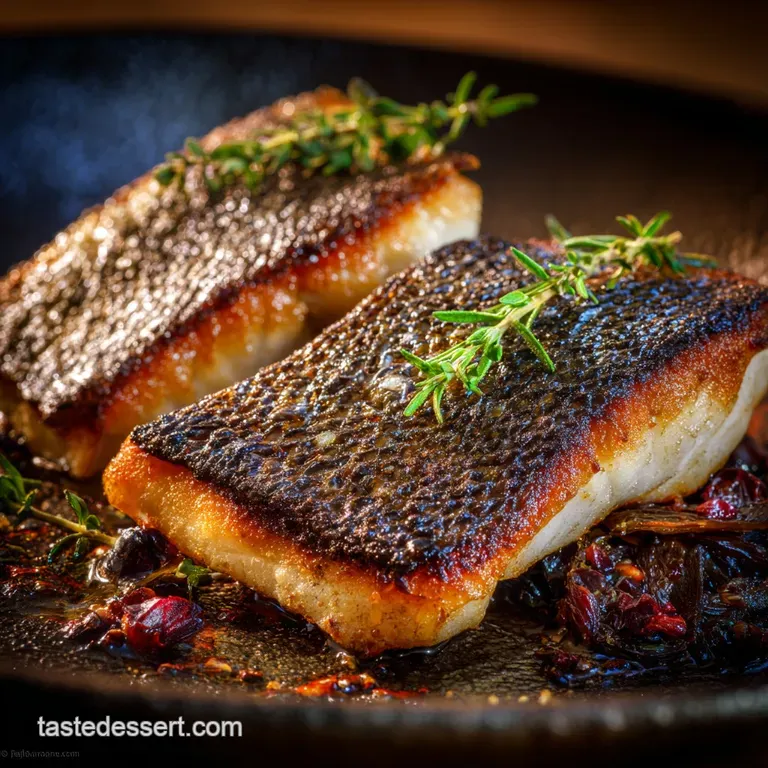
- Mastering Crispy Skin Mediterranean Sea Bass at Home
- The Science of Texture: Why This Mediterranean Sea Bass Recipe Stands Out
- Essential Ingredients for Your Mediterranean Sea Bass & Salsa Verde
- Step-by-Step Cooking: Achieving Flaky Fish and Vibrant Salsa
- Chef's Pro Tips for Sea Bass Mastery and Troubleshooting
- Storage, Reheating, and Meal Prep FAQ
- What to Serve with Mediterranean Sea Bass
- Recipe FAQs
- 📝 Recipe Card
Mastering Crispy Skin Mediterranean Sea Bass at Home
That CRUNCH, seriously. You know that incredible, almost shattering sound when you poke perfectly pan-seared sea bass skin? The aroma of lemon, garlic, and fresh herbs hits you way before the plate does, totally overwhelming your kitchen. It truly transports you straight to a seaside taverna in Greece or Italy.
This is not complicated chef nonsense, promise. It’s a 25 minute meal that looks totally gourmet, which is great for flexing on your friends or just making Tuesday feel special.
It’s light, healthy (hello, flexitarian diet!), and far cheaper than ordering Mediterranean fish recipes oven takeout that often results in soggy skin anyway.
We’re not just frying a white fish fillet, though. We are focusing intensely on mastering the exact technique needed for that sought after crispy skin, paired with a vibrant lemon herb salsa verde. Let's crack on with the real tips that make this [Mediterranean Sea Bass] recipe absolutely foolproof.
The Science of Texture: Why This Mediterranean Sea Bass Recipe Stands Out
A Taste of the Aegean: The Essential Flavor Profile
The key to any great Mediterranean dish is balancing the richness of the main ingredient with high acidity. Sea bass is a delicate, slightly oily white fish, so it needs a punchy counterpoint.
Our bright, vibrant salsa verde packed with capers and lemon cuts the fat brilliantly, ensuring the dish never feels heavy or greasy.
Is Sea Bass Difficult to Cook? Difficulty Level & Prep Time
People freak out about cooking fish, thinking it’s too fragile. Honestly? This is a medium difficulty dish because achieving the crispy skin requires focused, over high heat searing.
Prep time is only 15 minutes, cook time is 10 minutes, so it is super fast, but you need laser focus for those crucial 10 minutes to nail the timing.
The Secret Weapon: Building the Bright Lemon Herb Salsa Verde
Unlike a creamy pesto, salsa verde is aggressively textural and bright, relying entirely on high-quality olive oil for body, not nuts or cheese. We are using loads of fresh parsley and mint, not just for flavor, but for that gorgeous green color and incredible herbaceous aroma.
This simple sauce transforms a perfectly cooked piece of fish.
Achieving the Perfect Crisp: The Oil Temperature Sweet Spot
The biggest mistake people make is adding the fish to a cold or lukewarm pan. We need the oil shimmering and just about to smoke before the Mediterranean sea bass fillet goes in. When the heat is right, the initial contact immediately seals the skin, allowing moisture to evaporate quickly, which guarantees a non-soggy crust.
Salsa Verde: Balancing Acidity and Richness
Capers are mandatory here; they add a salty, briny depth that standard salt alone cannot achieve. This intense saltiness is balanced perfectly by the fresh lemon juice. This ensures the sauce is vibrant and doesn't just taste like plain olive oil and herbs.
Why Scoring the Fish Skin Matters for Maximum Flake
Scoring, which means making tiny shallow cuts into the skin, serves two crucial purposes. First, it prevents the fillet from curling up into a sad little lump when the skin contracts under the high heat.
Second, it allows the fat underneath the skin to render out evenly, leading to uniform crispiness across the entire fillet. This step is non-negotiable for success.
Crucial Chef’s Note: Never score deep enough to cut into the flesh; you just want to break the skin layer. A tiny, razor sharp knife works best.
Essential Ingredients for Your Mediterranean Sea Bass & Salsa Verde
Sourcing the Best Sea Bass Fillets: Skin-On vs. Skin Off
Always, always buy skin-on fillets for this specific recipe; skin off defeats the whole point of mastering the crisp! Check for bright, moist flesh and make sure the fishmonger has pin-boned them for you, or you’ll spend annoying extra minutes doing it yourself.
This is how you start any fantastic Mediterranean white fish dinner.
Fresh Herbs Spotlight: Parsley, Basil, and Mint Ratios
We need way more parsley than mint, otherwise the resulting salsa tastes distractingly like mouthwash. Trust me, that’s a culinary disaster I made early on when learning this recipe! The ideal ratio should be roughly two parts parsley to one part mint, giving you a fresh but balanced profile.
Pantry Staples: high-quality Olive Oil and Capers Selection
Use your best Extra Virgin Olive Oil for the salsa verde, because you are eating it raw, so the flavor really shines. Standard cooking olive oil is totally fine for searing, but the salsa needs that vibrant, fruity punch. Always rinse your capers quickly to remove excessive saltiness from the brine.
Ingredient Swaps: Alternative Fish Species and Acidic Additions
Life happens, and sometimes you just can’t find perfect sea bass. Don't worry! Here are my trusted swaps that still deliver a beautiful Mediterranean style fish dinner.
| Ingredient | Recommended Substitute | Why It Works |
|---|---|---|
| Sea Bass | Red Snapper or Branzino (filleted) | Both have excellent skin for searing and similar delicate flesh. |
| Mint | Fresh Basil or Fresh Dill | Basil keeps the flavor bright; Dill works for a more Greek/Nordic vibe. |
| Capers | Finely Chopped Green Olives | Provides the necessary brine and salty punch if capers are unavailable. |
step-by-step Cooking: Achieving Flaky Fish and Vibrant Salsa
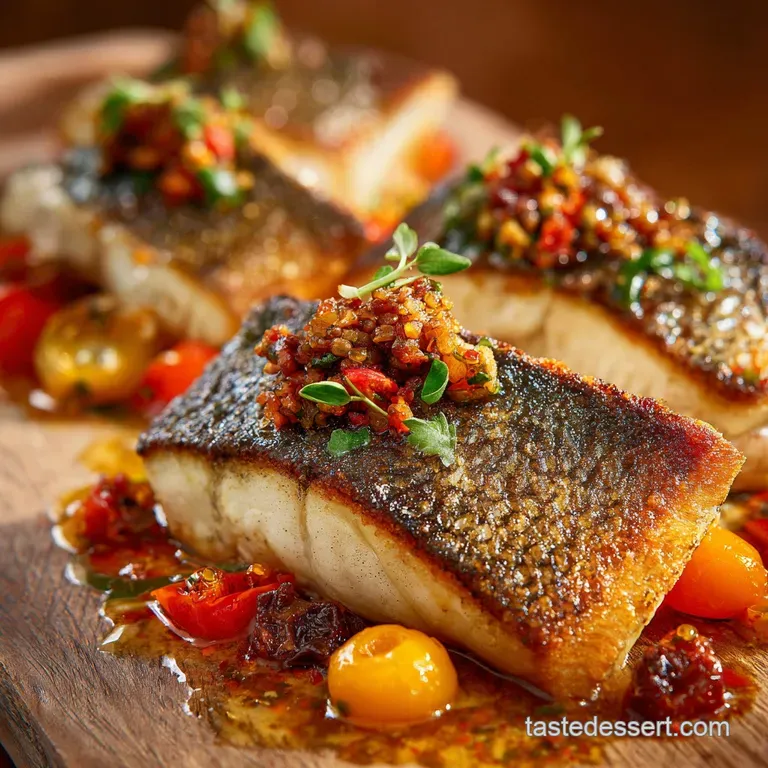
Preparation Phase: Curing the Skin and Chopping the Herbs
Listen up: Pat those fillets until they feel tacky, not just dry. Moisture is the enemy of the crisp, so go aggressive with the paper towels. Next, score the skin 3 4 times diagonally, then season the flesh side lightly and the skin side generously with salt and pepper.
While the fish is curing, combine your finely chopped parsley, mint, capers, garlic, and zest in a bowl.
Blending the Salsa Verde: Perfecting the Texture and Seasoning
We absolutely want a chunky sauce here, not a smooth paste, so mix it by hand in a bowl. Pour in your high-quality olive oil and lemon juice. Taste it immediately! Adjust the lemon or salt if needed, then let those flavors mingle at room temperature for a few minutes while the pan heats up.
The over High heat Searing Technique: Pressing and Resting the Fillets
Get your heavy bottomed pan screaming hot over high heat, then add the oil. Wait for the shimmering. Place the sea bass fillets skin side down and immediately use the back of your spatula to press firmly for 15 seconds.
This is how you guarantee perfect skin contact and prevent curling, a true sign of a good cook. Reduce the heat slightly and cook undisturbed for 3- 4 minutes.
Finishing the Fish: Quick Oven Transfer or Pan-Only Completion
Once the skin is deeply golden and crispy, and two-thirds of the fillet looks opaque, flip it quickly onto the flesh side. Drop in the butter and herb sprigs. Let the butter foam, then gently tilt the pan and baste the melted, fragrant mixture over the fish for 30 60 seconds.
This adds unbelievable richness and ensures the top stays moist. Remove immediately and let it rest for two minutes, crispy side up, before plating.
Chef's Pro Tips for Sea Bass Mastery and Troubleshooting
Avoiding the Dreaded Soggy Skin: Moisture Removal Protocols
Soggy skin is a tragedy, I cannot stress this enough. If you skip the aggressive drying step, the moisture trapped on the skin hits the hot oil and instantly turns to steam, effectively steaming the skin instead of searing it.
Dry the fish, then season it, and let it sit for 5 minutes before cooking.
Temperature Control: Knowing When Your Pan Is Ready
You should see a slight shimmer in the oil, and if you hover your hand over the pan, the heat should feel intense. If the oil is spitting violently, it's too hot, so pull it off the heat for 10 seconds. If it just looks liquid and flat, it's too cool and the fish will stick!
Fixing Over Salted Capers in the Salsa Verde
Rinsing the capers is mandatory, but if you still find your salsa too salty after mixing, don't panic. Simply add another splash of high-quality olive oil, or a squeeze more fresh lemon juice. Both fat and acid will help dilute and balance that overwhelming saltiness.
If you love speedy Mediterranean meals like this, you might also enjoy making a big batch of my Mediterranean Quinoa Salad: Easy, vibrant, and perfect for meal prep. .
Storage, Reheating, and Meal Prep FAQ
Storing Cooked Fish: Safety Guidelines and Shelf Life
Cooked sea bass is safe in an airtight container in the fridge for up to three days. After that, the texture really deteriorates, and nobody wants sad, dry fish. Because this dish is so quick, it's best eaten fresh.
Can I Make the Salsa Verde Ahead of Time?
You absolutely can! The salsa verde actually benefits from sitting, as the flavors mingle beautifully. Make it up to 24 hours in advance and store it covered in the fridge. Just pull it out 30 minutes before serving to bring it back to room temperature.
Best Practices for Reheating Crispy Skinned Fish
Never microwave crispy skin fish; that’s a culinary crime resulting in rubbery fish and wet skin. Reheat the fillets in a preheated oven (350°F / 175°C) or toaster oven on a rack for about 5- 7 minutes. This brings the crisp back without drying out the delicate flesh inside.
What to Serve with Mediterranean Sea Bass
This light, flaky fish pairs beautifully with sharp, vibrant sides that complement the lemon and herbs.
For a filling but healthy pairing, try serving it over my vibrant Lentil Salad: Vibrant Mediterranean Recipe for Easy Meal Prep . It’s protein packed and works wonderfully with the salsa.
If you are looking for a hot vegetable, simple buttery new potatoes with a sprinkle of sea salt and chives are always a win. Alternatively, if you want something lighter but equally zesty, make my quick Feta Eggs with Zucchini: Healthy Mediterranean Dinner in 25 Mins on the side for a vibrant mix.
- Simple side salad of rocket (arugula) with shaved Parmesan.
- Lemon infused risotto.
- Grilled asparagus tossed with a hint of balsamic vinegar.
Recipe FAQs
Why is my sea bass skin sticking to the pan or turning soggy?
The key to crispy, non-stick skin is moisture removal and proper heat control. Ensure the fish is completely patted dry before seasoning and place it skin side down in a sufficiently hot pan with medium high heat.
Do not move the fillet for the first 4 5 minutes, allowing the collagen to release and the skin to crisp up and naturally release from the pan surface.
Can I use a different type of fish, like cod or snapper, instead of sea bass?
Absolutely, you can substitute sea bass with any firm, white fleshed fish that holds up well to searing, such as red snapper, halibut, or rockfish. Since other types of fish might have different thicknesses, monitor the internal temperature carefully and adjust the total cooking time accordingly.
Avoid very thin or delicate fillets like sole if you intend to achieve crispy skin.
What is the best way to check if the sea bass is perfectly cooked through?
The simplest method is the fork test: insert a fork into the thickest part of the fillet and gently twist; the flesh should separate easily into opaque, moist flakes. For professional results, use an instant read thermometer, aiming for an internal temperature of 145°F (63°C) at the thickest part of the fillet.
How far ahead can I prepare the Lemon Herb Salsa Verde?
The salsa verde stores exceptionally well and benefits from being made ahead, allowing the flavours to fully meld together. You can prepare and refrigerate the salsa up to 3 days in advance in an airtight container. Allow it to come to room temperature briefly before serving for the best texture and aroma.
I only have frozen sea bass fillets. How should I handle these?
Always thaw frozen fish completely in the refrigerator overnight before cooking. The biggest enemy of crispy skin is residual moisture, so you must pat the fillets extremely dry with paper towels after thawing to remove any ice crystal moisture or liquid. Proceed with the recipe as usual once the fish is fully dry.
Can I bake or grill the sea bass instead of pan-searing?
Yes, you can bake the fish at 400°F (200°C) for 10 12 minutes or grill it, but you will not achieve the same level of crispy skin as pan-searing provides. If you choose to bake or grill, ensure you brush the fish lightly with olive oil to prevent drying out.
If you prefer, remove the skin completely before using these methods.
My salsa verde seems too liquidy. How can I fix the consistency?
A watery salsa verde usually results from incorporating too much residual moisture from the herbs or undrained capers. To quickly thicken the sauce, you can stir in a teaspoon of breadcrumbs, or add a small squeeze of Dijon mustard, which acts as a great emulsifier and adds depth of flavour.
Crispy Skin Mediterranean Sea Bass
Ingredients:
Instructions:
Nutrition Facts:
| Calories | 645 kcal |
|---|---|
| Protein | 28.0 g |
| Fat | 54.0 g |
| Carbs | 12.0 g |
