Charcuterie and Cheese Board Masterclass: Assemble a Visually Stunning Grazing Plank
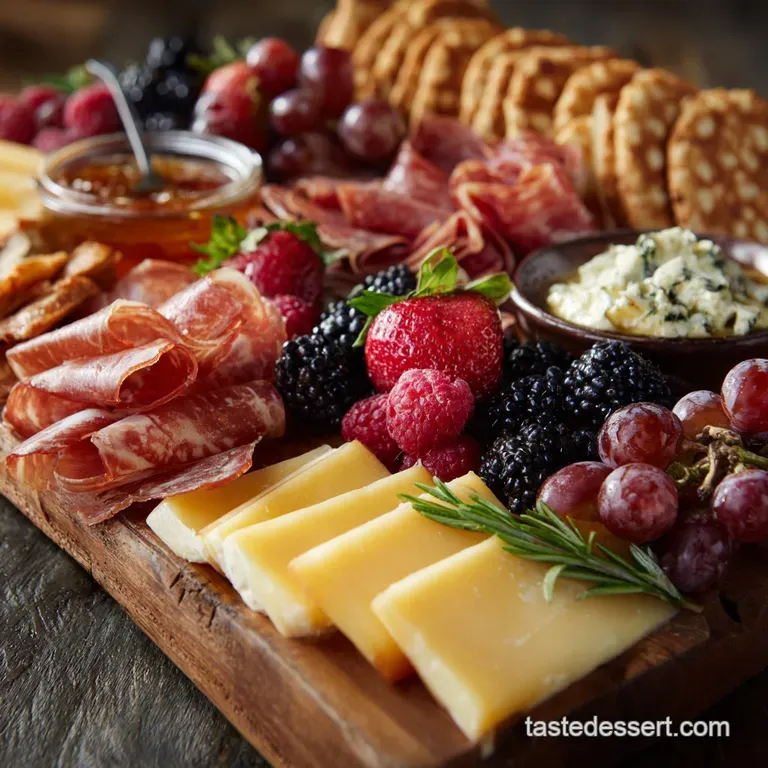
- The Glorious Art of the Charcuterie and Cheese Board: Effortless Entertaining Unlocked
- Achieving Synergy: The Science Behind Perfect Flavor Pairings
- Curating Your Selection: Essential Ingredients for the Ultimate Charcuterie and Cheese Board
- The Assembly Method: Step-by-Step Guide to Plating Your Grazing Board
- Masterclass Strategies: Chef's Tips for a Professional Finish
- Handling Leftovers: Safe Storage and Maximizing Freshness
- Elevating the Experience: Serving and Drink Pairings for Your Charcuterie and Cheese Board
- Recipe FAQs
- 📝 Recipe Card
The Glorious Art of the Charcuterie and Cheese Board: Effortless Entertaining Unlocked
There is nothing quite like walking into a room and seeing a massive, overflowing Charcuterie and Cheese Board; it instantly says, "Relax, we're feasting tonight." You get that immediate, deep, savory scent of aged Parmesan mingling with salty cured salami and the sharp tang of cornichons. It’s glorious.
Forget those complicated, 12 step appetizers that leave your kitchen looking like a disaster zone before the guests even arrive. This DIY Easy Charcuterie Board is the ultimate lifesaver for hosts who actually want to enjoy their own party.
It’s a zero cook strategy that provides maximal impact, making you look like a total culinary genius with only 30 minutes of effort.
This isn't just about throwing random food on a plank, darling; it's about strategy, balance, and flow. We are going to master the fundamental rules of the Meat Cheese and Fruit Charcuterie Board , ensuring every single bite offers a perfect flavour and texture contrast.
Let's crack on and build the best grazing board of your life.
Achieving Synergy: The Science Behind Perfect Flavor Pairings
Setting the Scene: Defining the Grazing Board Strategy
My philosophy for the Charcuterie and Cheese Board is simple: chaos with intent. The goal is to make it look abundant and effortless, but every element needs to serve a purpose. We are aiming for the "Rule of Three" synergy: three cheeses, three meats, and three main accompaniments no more, no less, unless you’re catering a wedding.
The Core Components of a Quintessential British Board
We might call it a grazing board or a meat and cheese platter, but in the UK, we often channel the spirit of a traditional Ploughman’s lunch. That means sturdy cheese, crusty bread, sweet pickles, and plenty of butter and mustard.
When designing your Assorted Cheeses On A Board , stick to the classics that people recognize and love; save the extremely experimental stuff for later.
Why the ‘Ploughman’s Plank’ Always Delivers
The "Ploughman’s Plank" concept relies heavily on robustness. It’s meant to be filling, satisfying, and deeply savory. This means selecting cheeses that can stand up to powerful companions, like a sharp cheddar or mature Gouda, which prevents the board from tasting overly fussy or delicate.
This is comfort food, elevated.
The Crucial Balance of Texture (Crunch vs. Cream)
A dull board is usually a soft board. You absolutely must include contrasting textures, otherwise, everything melts into mush. You need the crunch of toasted nuts and seeded crackers to cut through the richness of a gooey Brie or the smoothness of a pâté.
Mastering the Salt, Fat, Acid, and Sweet Profile
This is the secret sauce or, rather, the secret balance. Every great bite needs at least three of these four elements. The salt comes from the Charcuterie Board Meats (prosciutto, salami); the fat is the cheese; the acid is the cornichon or pickled onion; and the sweet is the honey or fig jam.
If you pair salty salami (Salt/Fat) with fig jam (Sweet), you get immediate complexity.
The Importance of Temperature in Cheese Presentation
I made this mistake for years: serving rock hard, flavorless cheese straight from the fridge. Stop doing this immediately. Cheese flavors are muted when cold.
Always remove hard and soft cheeses from the refrigerator at least 30 to 60 minutes before serving so they can temper and allow the volatile aromatic compounds to shine. It is a non-negotiable step.
Chef's Note: If you serve blue cheese cold, it tastes like vaguely salty plaster. If you serve it tempered, you taste the earthiness and the subtle sweetness. It changes everything.
Curating Your Selection: Essential Ingredients for the Ultimate Charcuterie and Cheese Board
The key to a visually striking and delicious Colorful Cheese And Meat Board is variety in color, shape, and intensity. Focus on diversity in texture and flavor profile.
The Five Pillars of Cheese: Soft, Hard, Blue, Aged, and Fresh
You only need three for a standard board, but having one from each major category ensures you hit all the flavor notes. Always have one firm cheese (easy to slice) and one spreadable cheese (fun to scoop).
Expert Cuts: Selecting and Slicing Cured Meats
When selecting your Charcuterie Board Meats , choose one fatty/spreadable (like pâté), one whole muscle (like Prosciutto or Jamón), and one hard/spicy sausage (like Chorizo or Salami).
Presentation is crucial here: ask the deli to slice hard salamis thinly, and for prosciutto, gently fold the slices into loose ruffles rather than laying them flat.
The Accompaniment Crew: Fruits, Nuts, Jams, and Carbs
These are the unsung heroes that provide the crunch and the palate cleanse. Use the sweetness of fresh grapes or dried apricots to balance the intensity of the cheese. I love using candied nuts like pecans or Marcona almonds because they add that perfect, satisfying crunch. If you want to get truly creative with the sweet element, try making a batch of my Pumpkin Granola Recipe for Max Crunch and Perfect Clumps and scattering those crunchy clumps on the board; the spice works amazingly with aged cheddar.
Smart Substitutions for Dietary Restrictions
If you are hosting, it's smart to offer one alternative for your dairy-free or gluten-free friends.
| Ingredient Type | Standard Selection | Viable Substitution |
|---|---|---|
| Blue Cheese | Stilton or Gorgonzola | Mature, crumbly Parmesan Reggiano |
| Prosciutto | Thinly Sliced Cured Ham | Smoked Salmon or high-quality Roast Beef |
| Fig Jam | Sweet, Sticky Jam | Spicy Pepper Jelly or Apple Chutney |
| Crackers | Water Biscuits | gluten-free Seeded Crackers (rice flour base) |
The Assembly Method: step-by-step Guide to Plating Your Grazing Board
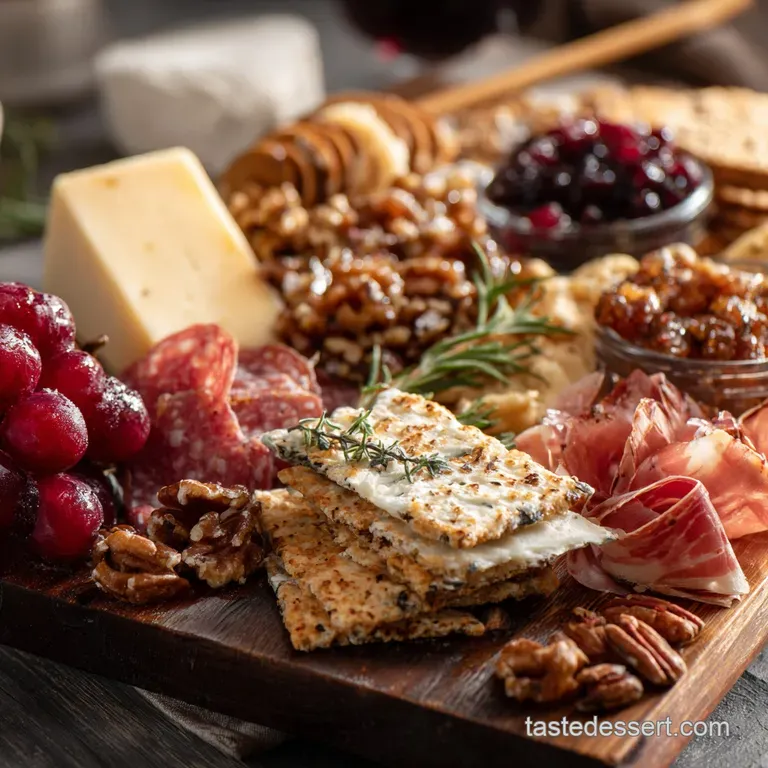
This is where the magic happens. We move from grocery shopping to Charcuterie and Cheese Board Ideas assembly. We are following a structured approach to make sure the board looks abundant, not messy.
Pre-Board Prep: Washing, Chopping, and Cooling
First, make sure your board is clean and dry. Wash and dry all fruit (wet fruit makes crackers soggy). Slice your baguette and place all jams, olives, and cornichons into their small, dedicated ramekins. Remember: get that cheese tempering 30 minutes before you start assembling.
Anchoring the Board: Placement Strategy for Meats and Cheeses
Start big. These are the anchors that define the map of the board. Place your three cheese blocks and your small bowls (ramekins) onto the board first. Spread them out evenly. Don't crowd them; you want to create negative space between them that you will fill later.
Creating Visual Flow: Arranging Cracker and Bread Varieties
Now, build bridges between your anchors. Place the crackers and bread slices in long, winding "rivers" leading toward the cheeses they are intended to pair with. Fan the crackers out in curved lines. Avoid just dumping a huge pile of crackers in one corner; that creates awkward congestion.
The Art of the 'Fill': Adding Garnishes and Texture
This is the fun part, often called the "fill." Take your folded cured meats and arrange them in small bunches around the bowls and cheese anchors, creating volume. Use grapes still on the vine to add height.
Fill every remaining gap even the tiny ones with nuts, dried fruit, or a scattering of fresh herbs like rosemary. The goal is for the board itself to disappear beneath the bounty.
Masterclass Strategies: Chef's Tips for a Professional Finish
Avoiding the Mush: Tips for Staggering Wet Ingredients
I learned this the hard way: if you place sliced cucumbers or fresh tomatoes directly on the board, they will leach water and turn everything soggy within an hour. Always contain anything wet olives, cornichons, mustards, or soft ripened tomatoes in a separate ramekin or small bowl.
The Power of Negative Space: Why Less Clutter is More
Wait, didn't I just tell you to fill every gap? Yes, but you must keep the space around the serving instruments clean. Ensure there is enough clear space around the cheese knives and serving spoons so guests can easily maneuver without knocking over a pile of nuts or dragging a piece of pâté.
Troubleshooting Dryness: Maintaining Freshness for Hours
If you know your board will sit out for several hours, particularly outdoors, misting the grapes or fruit lightly with water just before serving helps them stay hydrated and fresh looking.
For the Charcuterie and Cheese Board Set , lightly covering the board with a linen cloth when guests are momentarily away can also prevent the exposed edges of hard cheeses from drying out.
Handling Leftovers: Safe Storage and Maximizing Freshness
Deconstructing the Board: Separating Ingredients for Storage
You cannot just wrap the whole board in cling film; that’s a food safety disaster waiting to happen. Immediately separate and remove all components.
How Long is Too Long? Shelf Life of Cured Meats and Hard Cheeses
- Cheeses: Wrap hard and semi hard cheeses (Cheddar, Manchego) tightly in parchment paper (not plastic wrap, which traps moisture and encourages mold) and store them in the fridge. They’re good for 1 2 weeks. Soft cheeses (Brie, Goat) should be eaten within 3 4 days.
- Cured Meats: Transfer cured meats like salami and prosciutto to an airtight container. They should remain safe for consumption for about 3 5 days after assembly. If the meat was out at room temperature for over 4 hours, it must be discarded.
Elevating the Experience: Serving and Drink Pairings for Your Charcuterie and Cheese Board
Wine, Beer, and Spirit Pairings by Flavor Profile
Pairing drinks with a diverse Charcuterie and Cheese Board is tricky because you have so many competing flavors. The safest rule? Acid loves fat.
- For Rich/Creamy Cheeses (Brie, Goat): You need acidity and bubbles. Try a crisp, dry sparkling wine or a light, highly acidic Sauvignon Blanc.
- For Hard/Aged Cheeses (Cheddar, Manchego): These need a bit of backbone. A medium bodied, fruity red wine like a Beaujolais or a dry Spanish Rioja works wonders. If serving beer, go for a traditional English Pale Ale or a dry cider; the carbonation helps cut through the richness.
And hey, if you need a truly refreshing, palate cleansing finish after all that salt and fat, a scoop of intensely cold, sweet fruit dessert is perfect. May I suggest my vibrant Cherry Sorbet: Silky, Vegan, and Intensely Fruity Summer Scoop ? It’s the perfect end to a savory, rich evening.
Recipe FAQs
How far in advance can I prepare and assemble the Charcuterie board?
You can pre-slice and arrange hard, cured meats and dry items (like crackers or nuts) up to 2 hours ahead of time, covered tightly and refrigerated. Cheeses should ideally be added 30 60 minutes before serving to ensure they reach optimal room temperature for flavor, and wet items (like olives or jams) should be placed in their bowls just before guest arrival to prevent sogginess.
My cheese is starting to look oily or "sweaty" on the board. How can I prevent this?
Cheese sweats when it undergoes a rapid temperature change, typically moving directly from the cold refrigerator to a warm room. Always remove cheeses from the refrigerator about one hour prior to serving; this allows them to temper slowly and reach peak flavor and texture without releasing excess oil or moisture onto the board.
What is the safe limit for how long the assembled board can sit out at room temperature?
The "two-hour rule" is critical for food safety when serving dairy and cured meats, meaning the board should not sit out for longer than 4 hours total. If you are serving the board outdoors or in a warm environment above 90°F (32°C), limit the display time to just 1 hour and refrigerate or discard leftovers promptly.
I have vegan guests; can this grazing board be adapted for plant based diets?
Absolutely; creating a delicious plant based board is simple using artisanal vegan cheeses (often made from cashew or almond bases) and various dips like hummus or tapenade. Focus heavily on fresh and roasted vegetables, marinated artichokes, mixed nuts, dried fruits, and quality rustic bread to maintain texture and variety.
Should I slice all the meats and cheeses beforehand, or leave them whole?
While some hard cheeses and meats benefit from being partially pre-sliced for ease of serving, it is best practice to leave some blocks or whole wheels intact. This helps maintain moisture, slows drying and oxidation, and vastly improves the visual appeal and perceived abundance of the finished board.
I can't find the specific cheeses suggested. How should I choose suitable replacements?
When substituting cheese, focus on matching the texture profile and milk type to ensure balance; for instance, replace intensely aged cheddar with an aged Gouda, or fresh Brie with a creamy Camembert.
Similarly, match the intensity of cured meats: replace intensely salty prosciutto with a mild mortadella, or spicy chorizo with milder soppressata.
What is the recommended ratio of salty, savory, and sweet items?
Aim for a balanced 1:1:1 ratio focusing on Charcuterie/Cheese, Carbs (breads/crackers), and Accoutrements (sweet/acidic items). Ensuring a variety means every slice of salty meat or rich cheese has a sweet or tangy counterpart, such as fig jam, spiced honey, or acidic cornichons, readily available to cleanse the palate.
Easy Charcuterie And Cheese Board Masterclass
Ingredients:
Instructions:
Nutrition Facts:
| Calories | 642 kcal |
|---|---|
| Protein | 26.3 g |
| Fat | 40.8 g |
| Carbs | 42.5 g |
