The Ultimate Cinnamon Roll Casserole | Custard Soak
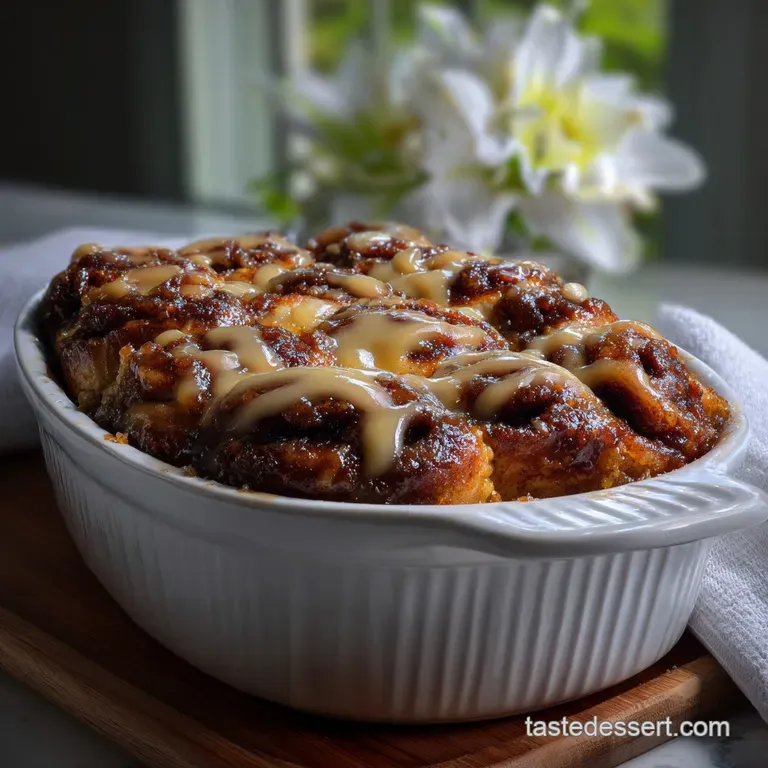
- Effort/Time: 15 minutes active prep; 50 minutes total.
- Flavor Hook: Buttery, maple-infused crumb with a shattering caramelized exterior.
- Perfect for: Low-stress holiday mornings or make-ahead brunch gatherings.
- Master the Ultimate Cinnamon Roll Casserole for Brunch
- The Culinary Physics Behind This Custard-Soaked Bake
- Thermal Efficiency and Timing for Optimal Texture
- The Alchemy of Sugar and Spice: Selecting Elements
- Precision Tools for Thermal Mass Control
- The Multi-Phase Protocol for Cinn-Sational Texture
- Solving the Soggy Center and Other Structural Failures
- Flavor Architecture and Alternative Infusions
- ⚗️ The Scaling Lab: Physics of Quantity
- Common Myths
- Preservation Logistics and Texture Recovery Strategies
- Aesthetic Presentation and Flavor Pairing Synergies
- Recipe FAQs
- 📝 Recipe Card
There is nothing worse than hosting a holiday brunch only to pull a dish out of the oven that is soupy in the middle and scorched on the edges. I’ve seen it happen too many times a $20 spread of ingredients ruined because the liquid-to-starch ratio was calculated poorly, leaving guests poking at gummy, undercooked dough.
Wasting money on premium ingredients only to end up with a texture failure is a frustration no home cook should endure.
I’ll be the first to admit I’ve messed this up; I once rushed a cinnamon roll casserole by not cutting the dough into small enough pieces, thinking the heat would penetrate regardless. The result was a mahogany colored top that masked a raw, doughy center that I had to toss in the bin.
That failure taught me the importance of surface area and the physics of heat distribution when working with dense, refrigerated doughs.
The secret to this "Masterclass" level bake isn't adding more sugar; it’s the science of starch gelatinization combined with a precise heavy cream soak. This technique allows the flour to absorb the custard without losing its structural integrity, resulting in a velvety interior and a top that provides a distinct, sugary shatter.
By the time you finish this guide, you’ll understand how to manipulate thermal mass to ensure every square inch of your Pyrex Glass 9x13-inch baking dish is cooked to a golden, springy perfection.
Master the Ultimate Cinnamon Roll Casserole for Brunch
A cinnamon roll casserole is more than just a convenience bake; it is a study in texture management. This recipe takes the foundational elements of a classic cinnamon roll and reconfigures them into a format that maximizes the Maillard reaction that chemical reaction between amino acids and reducing sugars that gives browned food its distinctive flavor.
Because we are cutting the rolls into sixths, we are exponentially increasing the surface area available for browning and custard absorption.
This specific cinnamon roll casserole recipe easy version relies on the high fat content of heavy cream to create a rich mouthfeel that whole milk simply cannot replicate. The heavy cream coats the starch molecules, slowing down the formation of a tough gluten network and ensuring the final product remains tender even after reheating.
Whether you are making this for a Christmas morning tradition or a lazy Sunday, the goal is a cohesive bake where the icing doesn't just sit on top but melds with the maple syrup to create a glossy, syrupy glaze.
The Culinary Physics Behind This Custard Soaked Bake
Understanding why this recipe works requires looking at the molecular interactions between the eggs, dairy, and pre-packaged dough.
- Starch Gelatinization: As the cinnamon roll casserole heats, the starch granules in the Pillsbury dough absorb the heavy cream and swell, creating a soft, custardy crumb.
- Protein Denaturation: The 3 large eggs provide a protein matrix that sets during baking, giving the casserole enough structure to be sliced without collapsing.
- Osmotic Pressure Management: Adding 2 tbsp (30ml) of maple syrup to the custard increases the sugar concentration, which helps draw moisture into the dough pieces while simultaneously lowering the freezing point if you choose to prep this ahead.
- Fat-Mediated Tenderness: The 1/4 cup (57g) of Land O’Lakes Unsalted Butter acts as a barrier to gluten development, ensuring the "roll casserole" stays flaky rather than bread like.
Thermal Efficiency and Timing for Optimal Texture
Precision timing is the difference between a velvety bake and a dry one. We follow a strict 50 minute timeline to ensure the center reaches a safe and structural 190°F (88°C) without over browning the sugar heavy exterior.
| Metric | Value | Technical Focus |
|---|---|---|
| Prep Time | 15 minutes | Surface area maximization via precise dough dicing |
| Cook Time | 35 minutes | Thermal mass penetration and protein setting |
| Total Time | 50 minutes | Complete hydration and starch swelling cycle |
| Yield | 9 servings | Calibrated for a standard 9x13-inch baking dish |
The Alchemy of Sugar and Spice: Selecting Elements
To achieve a masterclass result, you must use specific ingredients that provide the correct chemical reactions. Substituting low-fat alternatives often leads to a watery "cinnamon roll casserole" that lacks the signature "shatter" on the top layer.
Ingredient Chemistry Breakdown
| Ingredient | Chemical/Physical Role (Science) | The Pro Secret (Why This Matters) |
|---|---|---|
| 3 Large Eggs | Emulsification and structural protein matrix | Provides the "lift" and prevents the casserole from becoming a dense brick. |
| Heavy Cream | Fat-in-water emulsion for mouthfeel | High fat content (36%+) inhibits gluten, creating a velvety, non-rubbery crumb. |
| Maple Syrup | Hygroscopic sugar for moisture retention | Draws moisture into the dough and aids in the mahogany colored caramelization. |
| Ground Cinnamon | Hydrophobic aromatic compound | Adding extra cinnamon reinforces the volatile oils lost during the canning process. |
Components and Substitutions
- 2 cans (12.4 oz each) Pillsbury Cinnamon Rolls: These serve as our primary starch and leavening source. Why this? Pre-leavened dough ensures a consistent rise without proofing time.
- 1/4 cup (57g) Land O’Lakes Unsalted Butter, melted: Adds lipids for flavor and tenderness.
- 1/2 cup (120ml) Heavy Cream: You can substitute with whole milk, but the result will be less decadent.
- 1 tsp (5ml) Nielsen Massey Pure Vanilla Extract: Adds complex vanillin notes to balance the sharp cinnamon.
- 2 containers included icing: Used for the final glaze.
- 2 tbsp (30g) Philadelphia Cream Cheese (Optional): Whisk this into the icing for a tangy, professional grade finish.
Chef's Tip: Freeze your cinnamon roll cans for 10 minutes before cutting. This firms the fats in the dough, allowing for clean cuts without squishing the spiral layers.
Precision Tools for Thermal Mass Control
The equipment you choose significantly impacts the heat transfer rate.
- Pyrex Glass 9x13-inch Baking Dish: Glass is an insulator; it takes longer to heat up but retains heat steadily, which is ideal for egg-based custards to prevent curdling.
- KitchenAid Balloon Whisk: Essential for fully emulsifying the eggs and cream to avoid "streaky" cooked egg whites in your bake.
- Lodge Cast Iron Skillet (Optional Alternative): Use this if you want an extra crispy bottom crust, similar to the technique used in our Classic Pumpkin Roll recipe.
The Multi Phase Protocol for Cinn Sational Texture
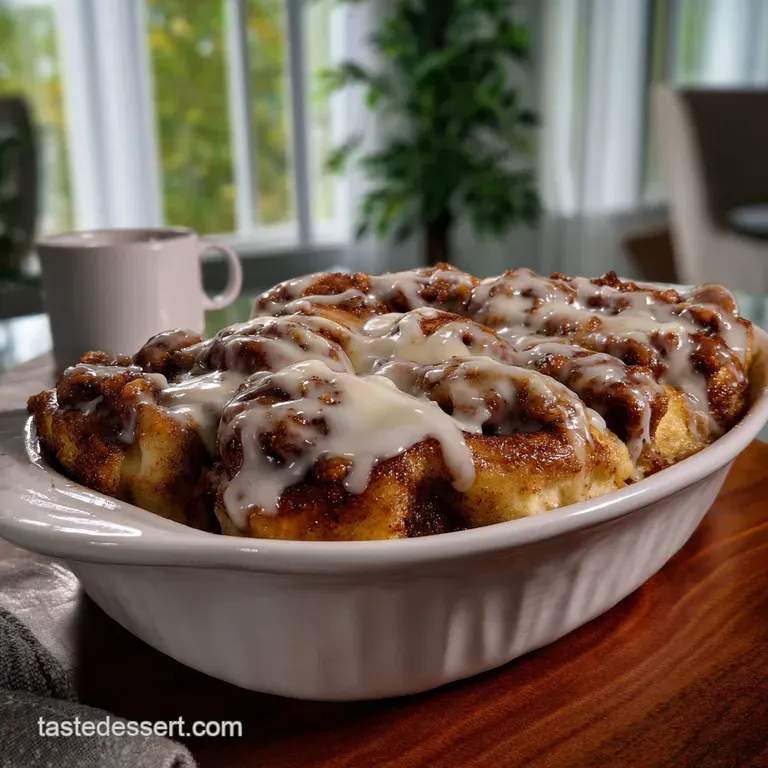
Follow these steps exactly to ensure the custard is evenly distributed and the dough is perfectly hydrated before the heat hits it.
- Preheat oven to 350°F (177°C). Note: Ensures immediate oven spring.
- Grease the Pyrex dish with butter. Note: Prevents sugar bonding to the glass.
- Cut each cinnamon roll into 6 equal pieces. Note: Increases surface area for maximum custard absorption.
- Distribute dough pieces evenly in the dish. Note: Prevents "cold spots" in the center.
- Whisk eggs, heavy cream, cinnamon, vanilla, and maple syrup until the mixture is a uniform pale tan and no egg streaks remain.
- Pour melted butter over the dough pieces. Note: Coats the starch to prevent immediate sogginess.
- Pour the custard mixture over the dough. Note: Ensure every piece is touched by liquid.
- Bake for 35 minutes until the center jiggles slightly but the top is mahogany brown.
- Remove from oven and cool for 5 minutes. Note: Allows the protein structure to finish setting via carryover heat.
- Whisk icing with cream cheese (if using) and drizzle over the warm casserole.
Solving the Soggy Center and Other Structural Failures
The most common complaint with a cinnamon roll casserole is a texture that feels "wet" or undercooked in the middle. This is usually a thermodynamic issue rather than a time issue.
Why Your Casserole Has a Soggy Bottom
If your "roll casserole" is wet, the starch gelatinization occurred without enough heat to set the egg proteins. This happens if the custard is too cold when it enters the oven or if the pan is too small, forcing the dough into thick layers that insulate the center from the heat.
| Problem | Root Cause | The Fix | Pro Protocol |
|---|---|---|---|
| Gummy center | Over crowding the pan | Use a 9x13 dish only | Spread dough in a single, loose layer. |
| Burnt top, raw middle | Oven temp too high | Tent with aluminum foil | Reduce temp to 325°F for the final 10 mins. |
| Dry/Tough crumb | low-fat dairy used | Use Heavy Cream | Never substitute cream with skim milk. |
Flavor Architecture and Alternative Infusions
While the base recipe is a classic, you can adjust the profile to suit different seasonal needs.
Cinnamon Roll Casserole with Apples
Fold in 1 cup of finely diced Granny Smith apples before pouring the custard. The malic acid in the apples cuts through the sugar, while the pectin adds a slight jammy texture. Much like the creamy profile found in Paula Deens Corn Casserole recipe, the fruit adds a structural contrast.
Cinnamon Roll Casserole Crock Pot Method
For a slow cooker version, layer the ingredients in a greased 6 quart Crock Pot. Cook on LOW for 3 hours. Note: You will lose the "shatter" on top as the slow cooker environment is moist, resulting in a more bread pudding-like texture.
Cinnamon Roll Casserole from Scratch
If you prefer to avoid canned rolls, use a standard brioche dough recipe. Cut the raw, risen dough into chunks and proceed with the custard steps. Increase baking time by 10 minutes as scratch made dough is often denser than commercial refrigerated versions.
⚗️ The Scaling Lab: Physics of Quantity
When you need to feed a crowd and decide to double this cinnamon roll casserole recipe, you cannot simply double the time and temperature.
- The Evaporation Paradox: If you double the recipe in two separate 9x13 pans, the timing remains the same. However, if you use one massive, deep catering pan, you must reduce the heavy cream by 10%. Why? The larger volume of dough traps more steam in the center, and a standard amount of liquid will result in a "soupy" bake.
- Thermal Mass & Thermodynamics: A doubled batch has a larger "cold core." To prevent the edges from burning while the center is raw, drop your oven temperature to 325°F (163°C) and extend the bake time by 15 20 minutes.
- Flavor Saturation: Scale spices (cinnamon/vanilla) at 1.5x rather than 2x. High concentrations of cinnamon can actually become astringent and "numb" the tongue when overused in large batches.
Common Myths
- Myth: You must soak the dough overnight.
- Truth: Overnight soaking actually leads to "gluten breakdown," making the casserole mushy. A 15 minute soak is the chemical "sweet spot."
- Myth: You don't need the eggs if you use heavy cream.
- Truth: Without the eggs, you have no protein structure to hold the "cinnamon roll casserole" together; it will simply be a pile of wet dough.
Preservation Logistics and Texture Recovery Strategies
Storage
Store leftovers in an airtight container in the refrigerator for up to 4 days. The high sugar and fat content act as natural preservatives, though the texture will firm up significantly as the starches undergo retrogradation (recrystallization).
Freezing
You can freeze the baked casserole for up to 2 months. Wrap individual slices in plastic wrap, then place them in a heavy duty freezer bag. To reheat, thaw in the fridge overnight.
Reheating
To recover that "shatter" on top, avoid the microwave. Reheat slices in a 350°F toaster oven for 5 8 minutes. This re-melts the fats and re-crisps the sugar crust.
Zero Waste: Transformation
- Stale Leftovers?Transform: Dice the leftovers and use them as a base for a decadent bread pudding or "cinnamon roll" French toast.
- Extra Icing?Transform: Whisk with a bit of milk to make a glaze for muffins or pancakes. Science: The stabilized sugars in the icing provide a professional sheen that homemade simple glazes lack.
Aesthetic Presentation and Flavor Pairing Synergies
When serving this cinnamon roll casserole, balance is key. Because the dish is high in sugar and fats, it pairs best with high acid or salty sides.
- The Contrast Plate: Serve alongside thick cut, crispy bacon. The salt and smoke cut through the maple syrup and cream cheese glaze.
- The Acid Balance: A side of fresh raspberries or citrus segments provides vitamin C and tartness to refresh the palate between bites of the rich "roll casserole."
- The Beverage: A dark roast coffee or an espresso is mandatory. The bitterness of the coffee beans provides a structural counterpoint to the sweetness of the "cinnamon roll casserole with heavy cream."
Trust me, once you see the way the custard transforms the canned dough into a velvety masterpiece, you'll never go back to basic rolls again. Let's crack on and get that oven preheated!
Recipe FAQs
how to make cinnamon roll casserole?
Cut refrigerated rolls into 6 pieces each, distribute evenly in a 9x13 dish, and pour a custard mix of eggs, heavy cream, and maple syrup over the top. Bake at 350°F (177°C) for 35 minutes until the center is set. Mastering this high moisture technique is similar to managing hydration when working with high hydration doughs, a key skill found in our Seriously Simple Homemade Cinnamon Rolls From Scratch.
how to make cinnamon roll bake?
Use heavy cream instead of milk. The high fat content slows gluten development, creating a velvety, bread pudding interior texture instead of a tough, chewy one. This fat barrier ensures the starch absorbs moisture slowly, allowing for a cohesive final bake.
how to make cinnamon roll french toast casserole?
Myth: Using bread cubes is mandatory for French toast casserole. Reality: Utilizing canned rolls introduces pre-existing leavening agents and built-in sugar/cinnamon, yielding a faster, richer result than plain bread cubes.
how long to cook cinnamon roll casserole?
Bake for 35 minutes at 350°F. Thermal penetration relies on the pan size; for a 9x13 dish, the internal temperature should reach 190°F (88°C). Over baking past 40 minutes risks drying out the high sugar glaze elements.
how to make cinnamon rolls to bake the next day?
Prepare and refrigerate overnight. Mix all components except the icing, pour custard over dough, cover tightly, and chill up to 12 hours. Cold cheese added to hot liquid causes protein clumping. Temperature shock denatures casein proteins, creating grainy texture instead of smooth emulsion.
- Remove pan from heat first
- Add cheese in small handfuls
- Use fresh grated Gruyère (pre-shredded has cellulose coating)
Can I use low-fat milk instead of heavy cream?
Heavy cream provides superior moisture retention. Whole milk lacks sufficient lipid content, which means the starches gelatinize too quickly, resulting in a structurally sound but dry and slightly rubbery casserole. Using cream results in a richer, silkier final mouthfeel, much like the desirable texture achieved in the sauce base for our Creamy Butternut Squash Lasagna Rolls with Sage Brown Butter Sauce.
Is it better to use store-bought or homemade rolls?
store-bought rolls offer superior consistency. Refrigerated commercial doughs are engineered for predictable leavening and uniform ingredient distribution. Homemade doughs require precise proofing, which can lead to under risen, denser results when submerged in custard.
Easy Cinnamon Roll Casserole
Ingredients:
Instructions:
Nutrition Facts:
| Calories | 383 kcal |
|---|---|
| Protein | 6g |
| Fat | 21g |
| Carbs | 44g |
| Fiber | 1g |
| Sugar | 22g |
| Sodium | 520mg |
