Easy Tiramisu: Creamy and Eggless
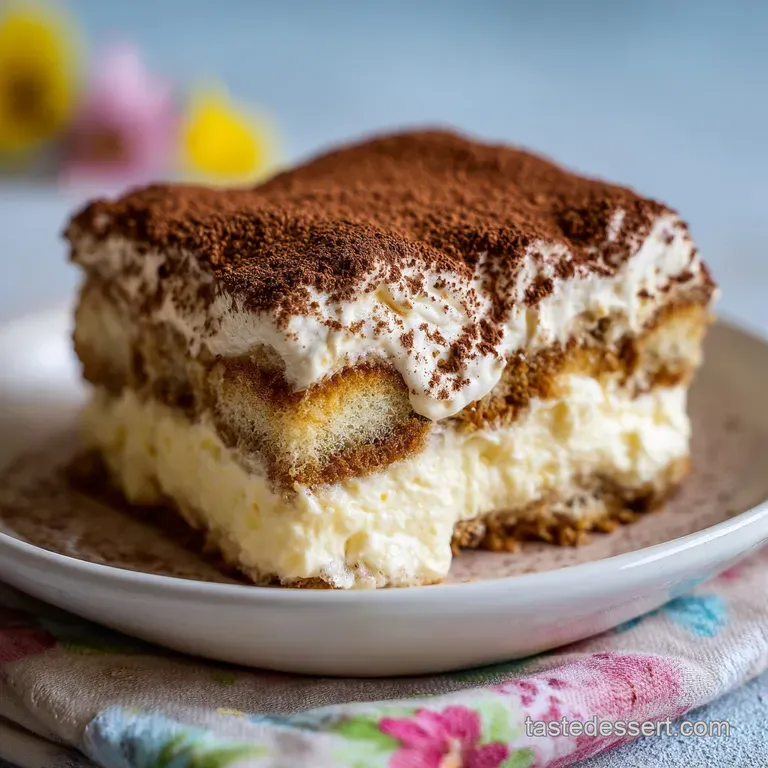
- Time: Active 20 minutes, Passive 240 minutes, Total 260 minutes
- Flavor/Texture Hook: Silky mascarpone cream meets espresso soaked, cake like layers
- Perfect for: Stress free dinner parties or a sophisticated weekend treat
- Create a Dreamy Easy Tiramisu Without the Fuss
- Understanding the Success Behind This Mascarpone Dessert
- Essential Components for a Silky Homemade Tiramisu
- Tools to Achieve Professional Layers at Home
- Step by Step Guide to Perfect No Bake Tiramisu
- Avoiding Sogginess and Solving Common Cream Issues
- Adapting This Recipe for Different Dietary Needs
- Keeping Your Dessert Fresh and Minimizing Kitchen Waste
- Finishing Touches to Wow Your Dinner Guests
- Recipe FAQs
- 📝 Recipe Card
Create a Dreamy Easy Tiramisu Without the Fuss
The first time I really understood the magic of this dish was in a tiny, dimly lit kitchen in Florence. The air smelled of burnt sugar and the deep, earthy hiss of a moka pot bubbling over on the stove.
I watched as the cook didn't bother with a complicated custard; instead, they whipped cold mascarpone and cream until it looked like a stiff, white cloud. When I took that first bite, the way the bitter cocoa hit the roof of my mouth before melting into the sweet, boozy cream was a total revelation.
It wasn't just a dessert; it was a textural symphony of soft, soaked biscuit and airy fat.
But let's be honest, we've all had that version of a "quick" tiramisu that ends up looking like a soup of soggy cookies and runny whipped cream. I spent years trying to figure out why my layers would collapse the moment the spatula touched them.
I realized I was over soaking the ladyfingers and not respecting the temperature of the dairy. This easy tiramisu recipe is my answer to all those soggy failures. It’s the version I make when I want the "wow" factor without spending three hours tempering egg yolks over a double boiler.
We’re going to focus on a few key things: the architectural stability of the cream, the precision of the espresso dip, and the patience of the chill. You don't need to be a pastry chef to get this right.
You just need to follow the cues look for the "stiff peaks" that stand up like little mountain ranges and listen for the slight "crunch" of the dry ladyfinger that tells you it's ready to absorb just enough coffee.
By the time we’re done, you’ll have a dessert that slices like a dream and tastes like you’ve been at it for days.
Understanding the Success Behind This Mascarpone Dessert
Most traditional recipes rely on a zabaglione an egg yolk custard which is beautiful but can be temperamental and frankly, a bit of a chore on a Tuesday night. This version works because we are creating a high fat emulsion that mimics that richness without the risk of scrambling eggs.
- Fat Matrix Stabilization: By whipping 16 oz mascarpone cheese with heavy cream, we create a dense network of fat globules that trap air. The mascarpone acts as a structural anchor, ensuring the cream doesn't deflate even after sitting in the fridge for 240 minutes.
- Starch Saturation Control: The ladyfingers (Savoiardi) are essentially dry sponges. A quick 1-2 second dip allows the exterior to soften while the core stays slightly firm. As it rests, the internal moisture redistributes, turning the biscuit into a cake like texture without it becoming a mushy puddle.
- Sugar Solute Balance: Using powdered sugar instead of granulated in the cream ensures a smooth, grit free mouthfeel. Because powdered sugar often contains a tiny bit of cornstarch, it also contributes a microscopic amount of extra stability to the whipped matrix.
| Feature | Fast Method (This Recipe) | Classic Method (Zabaglione) |
|---|---|---|
| Preparation Time | 20 minutes active | 45-60 minutes active |
| Skill Level | Beginner friendly | Intermediate (egg tempering) |
| Consistency | Thick, architectural, and stable | Rich, custard like, can be soft |
The beauty of the "fast" approach is that it is remarkably forgiving. While a classic custard can break if it gets too hot or stay too runny if it doesn't cook long enough, our whipped mascarpone method relies on cold temperatures.
As long as your bowl and your ingredients are chilled, the physics of the fat will do all the heavy lifting for you.
Essential Components for a Silky Homemade Tiramisu
Selecting the right ingredients is more than just a grocery run; it's about understanding how each element behaves under pressure. You want the highest fat content possible for the cream and the driest possible ladyfingers.
| Ingredient | Science Role | Pro Secret |
|---|---|---|
| Mascarpone Cheese | Provides the dense, buttery base and structural fat. | Keep it ice cold; warm mascarpone will break and turn grainy. |
| Savoiardi Ladyfingers | Acts as the "bone structure" of the dessert, absorbing moisture. | Never use the soft, sponge cake style ladyfingers; they will dissolve instantly. |
| Heavy Whipping Cream | Aerates the mixture and lightens the density of the cheese. | Use at least 36% milkfat to ensure the peaks hold their shape. |
| Dark Rum | Cuts through the fat with acidity and depth. | Adding this to the coffee creates a more complex flavor than adding it to the cream. |
Beyond these stars, the coffee itself is a critical player. You need a strong espresso or a very concentrated cold brew. If the coffee is too weak, the flavor will get lost behind the heavy wall of mascarpone and cream.
- 1.5 cups strong espresso, chilled: Why this? Provides the bold, bitter backbone to balance the sweet cream.
- 16 oz mascarpone cheese, cold: Why this? The high fat content is essential for a thick, sliceable texture.
- 1.5 cups heavy whipping cream: Why this? Must be 36% fat to maintain "architectural" stiff peaks.
- 0.5 cup powdered sugar, sifted: Why this? Dissolves instantly for a velvety finish without any graininess.
- 7 oz Savoiardi ladyfingers: Why this? Their dry, airy structure is designed specifically to soak up liquid.
- 2 tbsp dark rum: Why this? Adds a sophisticated warmth that elevates the espresso soak.
- 3 tbsp unsweetened cocoa powder: Why this? Provides a bitter contrast that prevents the dish from being cloying.
- 1 tbsp granulated sugar: Why this? Slightly sweetens the espresso to bridge the flavor gap.
- 1 tsp pure vanilla extract: Why this? Rounds out the dairy notes in the mascarpone mixture.
Tools to Achieve Professional Layers at Home
You don't need a pantry full of specialized gear, but a few specific items will make the process of making easy tiramisu much more successful. A large chilled mixing bowl is your best friend here. If you have a metal bowl, pop it in the freezer for 10 minutes before you start whipping.
Cold equipment keeps the fat in the cream from melting, which is the number one reason whipped mixtures fail to "build" height.
You'll also need a shallow bowl for the espresso soak. If the bowl is too deep, you’ll end up submerging the ladyfingers too far and they’ll get soggy before you can move them. A 9x9 inch square baking dish is the standard for this volume of ingredients, providing the perfect height for two distinct layers.
Finally,, a fine mesh sieve is non negotiable for that professional looking cocoa dust on top. Sifting prevents clumps and ensures a "velvety" appearance that looks like it came from a high end bakery.
step-by-step Guide to Perfect No Bake Tiramisu
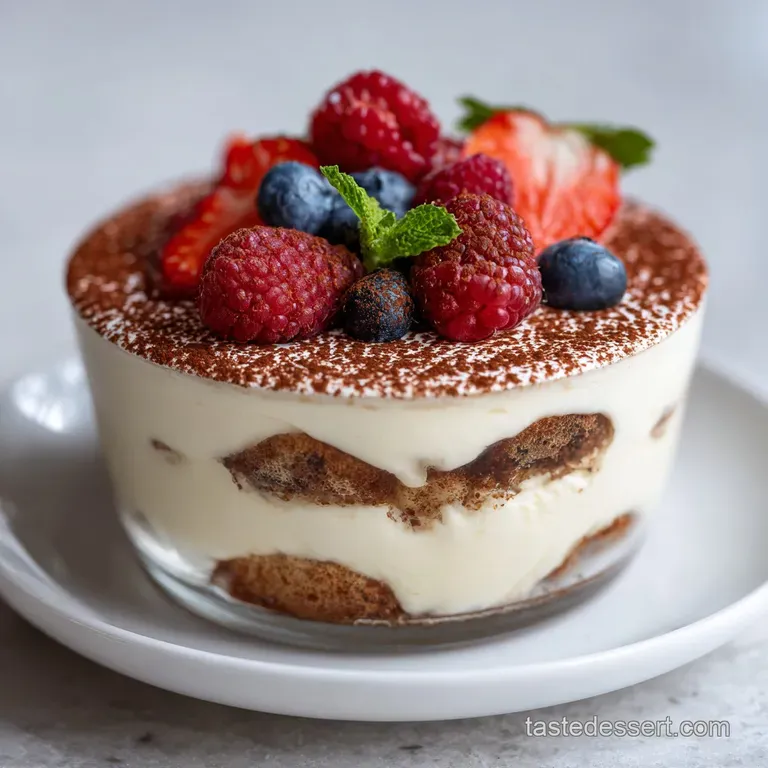
Step 1: Prep the Coffee Base
In a shallow bowl, whisk together the 1.5 cups chilled espresso, 1 tbsp granulated sugar, and 2 tbsp dark rum. Whisk until the sugar is fully dissolved. Note: Using chilled coffee prevents the ladyfingers from melting on contact.
Step 2: Build the Cream Foundation
In a large chilled mixing bowl, combine the 16 oz cold mascarpone, 1.5 cups heavy whipping cream, 0.5 cup sifted powdered sugar, and 1 tsp vanilla extract. Having everything cold is the secret to a fast setup.
Step 3: Achieve the Thick Texture
Using a handheld electric mixer, whip the mixture on medium high speed until stiff peaks form and the texture is thick and architectural. Note: You want it to hold its shape completely when you lift the beaters.
Step 4: The Precision Dip
Quickly dip each ladyfinger into the espresso mixture for no more than 1-2 seconds per side to prevent sogginess. Note: The center should still feel slightly firm; it will soften during the rest period.
Step 5: Start the First Layer
Arrange the dipped ladyfingers in a single, tight layer at the bottom of a 9x9 inch baking dish. You may need to trim a few to fit the edges perfectly.
Step 6: Apply the Mascarpone Filling
Spread half of the mascarpone cream over the ladyfinger layer. Use a spatula to smooth the top until it is level and reaches all the corners.
Step 7: Create the Second Tier
Repeat the dipping process with the remaining ladyfingers and place them on top of the cream layer. Press down very gently to ensure there are no air pockets.
Step 8: Top it Off
Spread the remaining mascarpone cream over the second layer of ladyfingers. Smooth it out for a clean finish or create little decorative peaks with the back of a spoon.
Step 9: The Cocoa Dusting
Using a fine mesh sieve, dust the top layer generously with 3 tbsp unsweetened cocoa powder until no white cream is visible.
Step 10: The Essential Rest
Refrigerate the dish for at least 4 hours (or overnight). Note: This allows the fat matrix to stabilize and the flavors to meld into a cohesive dessert.
Avoiding Sogginess and Solving Common Cream Issues
The most common heartbreak with an easy tiramisu recipe is the "puddle effect." If your dessert is sitting in a pool of liquid after a few hours, it usually comes down to the dipping technique. Much like mastering a perfectly fluffy Naan, getting the texture of your cream right is all about patience and understanding your ingredients.
Why Your Tiramisu Is Soupy
If the layers are sliding around, the mascarpone was likely too warm when you started, or the cream wasn't whipped to a true "stiff peak." Mascarpone is delicate; if over beaten once it's already reached its peak, it can actually "break" and release moisture.
Also, check your espresso if it was warm when you dipped the ladyfingers, it would have melted the sugar coating on the biscuits, leading to a structural collapse.
| Problem | Root Cause | Solution |
|---|---|---|
| Runny Filling | Over mixing or warm ingredients. | Chill the bowl and beaters; stop as soon as peaks stand up straight. |
| Soggy Ladyfingers | Dipping for more than 2 seconds. | Use a "blink and you'll miss it" dip; the biscuit should feel dry in the middle. |
| Grainy Cream | Using granulated sugar in the cream. | Always use sifted powdered sugar; it incorporates instantly without friction. |
Common Mistakes Checklist
- ✓ Ensure the espresso is completely chilled before dipping (prevents melting the biscuits).
- ✓ Sift the powdered sugar and cocoa powder to avoid unsightly lumps.
- ✓ Do not over whip once the mixture is thick; mascarpone can turn to butter quickly.
- ✓ Resist the urge to serve early; the 240 minutes of chill time is required for the "set."
- ✓ Use a sharp knife dipped in hot water to get those clean, restaurant style slices.
Adapting This Recipe for Different Dietary Needs
Scaling this recipe is straightforward because the ratios are quite stable. If you are hosting a larger gathering, you can easily double the ingredients. Just be sure to use two separate 9x9 dishes rather than one giant deep dish, as the weight of a triple layered tiramisu can cause the bottom layer to compress too much and lose its airy quality.
When scaling down for two people, you can make "tiramisu cups." Instead of a baking dish, layer the ingredients in wine glasses or small jars. This is actually a great way to save a batch if you realize you don't have enough ladyfingers for a full 9x9 dish.
For a half batch, use 8 oz of mascarpone and about 3.5 oz of ladyfingers. Since you can't really use half an egg in other recipes, this egg free version is actually much easier to scale than the classic version.
Chef's Tip: If you’re doubling the recipe, don't double the rum immediately. Start with 1.5x the amount and taste. Alcohol can thin out the cream if you aren't careful, so it's better to keep the potency in the coffee soak rather than the cream itself.
If You Want...
- A Kid Friendly Version: Replace the espresso with a strong decaf or a coffee substitute like chicory, and swap the rum for a teaspoon of almond extract.
- More Depth: Add a tablespoon of fine espresso powder directly into the mascarpone cream for a "double coffee" hit.
- A Fruit Twist: Dip the ladyfingers in a strawberry purée instead of espresso and layer with fresh sliced berries.
Keeping Your Dessert Fresh and Minimizing Kitchen Waste
Tiramisu is one of the rare desserts that actually tastes better the next day. The resting period allows the coffee to migrate into the very center of the Savoiardi, and the rum notes mellow out and become more aromatic.
Storage Guidelines:Fridge: Store in an airtight container for up to 4 days. The cocoa powder may start to look "wet" after 24 hours; if this happens, just give it a fresh light dusting before serving. Freezer: You can freeze tiramisu!
Wrap the dish tightly in plastic wrap and then foil. It will stay good for up to 2 months. Thaw it in the fridge overnight before eating. Do not thaw at room temperature or the cream will break.
Zero Waste Tips: If you have leftover espresso soak, don't pour it down the drain. It makes a fantastic base for an iced latte or can be used to soak a simple chocolate sponge cake.
If you have a few stray ladyfingers left in the bag, crush them up and use them as a crunchy topping for yogurt or vanilla ice cream. Even the cocoa powder that doesn't make it onto the cake can be saved in a small jar for your morning coffee.
Finishing Touches to Wow Your Dinner Guests
One of the biggest myths in the dessert world is that you must use raw eggs for an "authentic" taste. While eggs provide a certain sulfurous richness, the high-quality mascarpone we use here provides plenty of depth. Another common misconception is that the ladyfingers should be soft before they go into the dish.
If they are soft during assembly, they will be mush by the time you serve them. They should still have a "shatter" to them when you place them in the pan.
If you’re planning a full Italian inspired dinner, this Focaccia bread is the perfect salty counterpoint to serve earlier in the meal. When it comes time for dessert, presentation is everything. Instead of just a flat layer of cocoa, you can place a stencil (like a star or a leaf) on top of the cream before dusting to create a beautiful pattern.
For the cleanest slices, wipe your knife with a damp, warm cloth between every single cut. This prevents the cocoa powder from dragging through the white cream layers, keeping that "architectural" look sharp and professional.
Serve it with a small glass of Vin Santo or a simple shot of espresso to really lean into that Italian café vibe. Trust me, once you see how easy this "fast" method is, you’ll never go back to the stovetop custard version again.
Enjoy the process the whisking, the dipping, and especially that first, velvety bite.
Recipe FAQs
How to quickly make tiramisu?
Streamline the process by preparing your espresso and ingredients ahead of time. Once your components are chilled, the assembly involves only dipping the ladyfingers for 1-2 seconds and whipping the mascarpone, heavy cream, and powdered sugar until stiff peaks form.
What is the secret to good tiramisu?
The secret lies in the strict 240-minute chilling time. Allowing the dessert to set in the refrigerator is essential for the fat-matrix to stabilize and the flavors to fully meld. If you enjoyed mastering the structural stability of this creamy filling, the same principles of fat-based setting apply to our classic cannoli squares.
Is it true I can use sponge cake if I run out of ladyfingers?
No, this is a common misconception. Savoiardi ladyfingers are specifically designed to absorb liquid without losing their structural integrity, whereas sponge cake will turn into an unappealing mush.
What are some common mistakes when making tiramisu?
Over whipping the mascarpone mixture is a frequent error. If you continue to mix after stiff peaks form, the fat in the mascarpone can break, causing the cream to turn grainy or greasy like butter.
How to prevent the ladyfingers from becoming soggy?
Dip each ladyfinger for no more than 1-2 seconds per side. Quick submersion ensures the cookies absorb enough espresso for flavor while maintaining a firm texture within the dessert.
Is it necessary to sift the powdered sugar and cocoa powder?
Yes, always sift these ingredients. Sifting prevents unsightly lumps from forming in your mascarpone cream and ensures a smooth, professional looking dusting of cocoa on top.
How to get clean slices when serving?
Use a sharp knife dipped in hot water to cut through the layers. The heat from the blade melts through the chilled cream, resulting in clean, restaurant style slices every time.
Easy No Bake Tiramisu
Ingredients:
Instructions:
Nutrition Facts:
| Calories | 443 kcal |
|---|---|
| Protein | 4.7 g |
| Fat | 33.8 g |
| Carbs | 29.9 g |
| Fiber | 0.8 g |
| Sugar | 16.5 g |
| Sodium | 35 mg |
