Peanut Butter Balls: Salty-Sweet Truffle Perfection

- Effort/Time: 1 hour 30 mins (low effort, high-patience chilling).
- Flavor Hook: Salty-sweet roasted nut core encased in a snappy, dark chocolate shell.
- Perfect for: Holiday platters, grab-and-go energy bites, or "I need chocolate now" emergencies.
- Mastering the Ultimate Texture-Perfect Peanut Butter Balls
- Thermodynamic Specs and Precision Timing for Success
- Molecular Structure: Selecting Elements for a Velvety Finish
- Essential Tools for Precision Shaping and Tempering
- Step-by-Step Protocol for Achieving the Perfect Snap
- Structural Integrity and Surface Tension: Solving Common Failures
- Flavor Engineering through Strategic Ingredient Swaps
- Preservation Physics: Storage and Humidity Control
- ⚗️ The Scaling Lab: The Physics of Quantity
- Serving Suggestions and Sensory Presentation
- Recipe FAQs
- 📝 Recipe Card
There is nothing more frustrating than spending thirty dollars on high-quality ingredients only to have your confections turn into a greasy, slumped mess on the tray. I’ve seen beautiful holiday spreads ruined because the fats in the center weren’t properly stabilized, leading to "sweating" sweets that leave an oily residue on everything they touch.
It’s a texture failure that feels like a total waste of both time and money when the results aren't gift worthy.
I’ll admit, I destroyed three batches of these early on because I thought I could skip the chilling steps or swap in "natural" oils without consequences. I ended up with dough that stuck to my palms like cement and chocolate that seized because I didn't respect the physics of moisture contamination.
It was a humbling lesson in the difference between "mixing things in a bowl" and actually managing a lipid sugar matrix.
The secret to the perfect snap isn't just the sugar; it’s the capillary action of the graham cracker crumbs working alongside the fat-binding properties of the protein in the peanut butter.
We are essentially building a reinforced structural network that traps oil molecules, preventing them from migrating to the surface. When you hit that right balance, you get a velvety interior that shatters against a crisp chocolate coating a sensory payoff that is pure science.
Mastering the Ultimate Texture Perfect Peanut Butter Balls
The physics of a peanut butter balls recipe easy enough for beginners actually involves complex lipid management. To get that signature texture, we have to control how the fats from the butter and nut butter interact with the dry solids.
If the ratio is off by even 10%, the balls will either be too crumbly to roll or too soft to dip.
Achieving a professional grade finish requires understanding the hygroscopic nature of your sweeteners. Powdered sugar doesn't just add sweetness; it absorbs moisture from the butter and vanilla, creating a pliable dough.
When you introduce peanut butter balls no bake style, you're relying entirely on mechanical binding rather than heat induced protein setting, which makes the choice of ingredients paramount.
Using a high-quality brand like Skippy Creamy Peanut Butter provides the necessary stabilizers to ensure a consistent result. Natural peanut butters, while great for toast, often lack the emulsifiers needed to keep these treats from separating.
We want a smooth, homogenous mixture that provides a velvety mouthfeel without the graininess often found in rushed batches.
Thermodynamic Specs and Precision Timing for Success
When we talk about peanut butter balls, timing is everything because we are working with temperature sensitive fats. The butter must be softened to approximately 68°F (20°C) to emulsify properly with the peanut butter.
If the butter is too cold, you’ll get pockets of fat; if it’s melted, the sugar will dissolve into a syrup rather than staying as a structural component.
Precision chilling is the "cook time" here. You need at least 1 hour of total cold exposure to ensure the lipids have crystallized. This prevents the centers from melting when they hit the warm chocolate bath. It’s a thermal hurdle that separates amateur kitchen experiments from masterclass level treats.
The chocolate coating requires its own set of rules. We use semi sweet chips combined with coconut oil to lower the melting point and increase the fluidity. This creates a thinner, snappier shell that doesn't overwhelm the delicate peanut center.
By the time you’re done, you’ll have 27 servings of precision engineered joy.
Molecular Structure: Selecting Elements for a Velvety Finish
| Ingredient | Chemical/Physical Role (Science) | The Pro Secret (Why This Matters) |
|---|---|---|
| Skippy Creamy Peanut Butter | Emulsified lipid base | Provides consistent viscosity and prevents oil separation during the rolling process. |
| Powdered Sugar | Hygroscopic structural agent | Fine particles provide surface area for fat binding without the grit of granulated sugar. |
| Graham Cracker Crumbs | Capillary reinforcement | Absorbs excess oils and provides a "skeleton" for the dough to hold its spherical shape. |
| Coconut Oil | Viscosity reducer | Thins the chocolate coating for a professional grade "snap" and glossy finish. |
For the best results, use Honey Maid Graham Crackers and pulse them in a Cuisinart Food Processor until they are a fine powder. If the crumbs are too large, the balls will have "points of failure" where they can crack or crumble.
The goal is a dense, uniform interior that offers zero resistance to the tooth but total resistance to gravity.
Essential Tools for Precision Shaping and Tempering
To execute this peanut butter balls recipe easy and efficiently, you need the right kit. A KitchenAid Hand Mixer is superior to a whisk here because the dough becomes incredibly dense as you add the sugar. You need that mechanical power to force the fats and solids into a stable emulsion.
For shaping, a small cookie scoop (1 tablespoon size) ensures every ball is exactly the same mass. This isn't just for aesthetics; uniform size means they chill at the same rate and take up the same amount of chocolate.
If you have varying sizes, your coating-to-filling ratio will be inconsistent, which ruins the flavor balance.
Finally, use a heavy bottomed glass bowl for your chocolate. Glass retains heat better than plastic, giving you a longer working window before the chocolate begins to thicken.
A dipping tool or a simple fork with the middle tines bent slightly can help you achieve that "shuttering" thin coat without leaving huge clumps of chocolate at the base.
step-by-step Protocol for Achieving the Perfect Snap
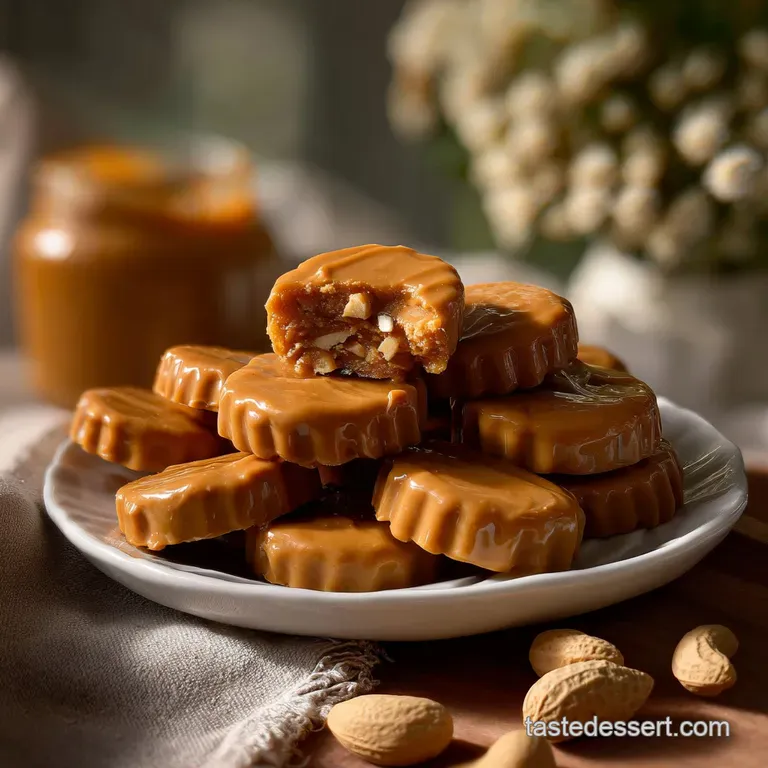
- Cream 1/4 cup (57g) Land O'Lakes Unsalted Butter and 1 cup (250g) Skippy Creamy Peanut Butter in a KitchenAid bowl. Note: Establishes the lipid emulsion base.
- Incorporate 1/2 tsp Nielsen Massey Vanilla Extract and 1/4 tsp Diamond Crystal Kosher Salt until fragrant and streak free.
- Sift 2 cups (240g) Domino Powdered Sugar into the bowl. Note: Prevents lumps that cause structural weak points.
- Fold in 1 cup (85g) Honey Maid Graham Cracker Crumbs until the dough feels like damp sand but holds a squeeze.
- Scoop 1 tablespoon portions and roll between palms until the surface is smooth and matte.
- Arrange on a Nordic Ware Baking Sheet lined with parchment. Chill for 30 minutes until firm to the touch.
- Melt 1.5 cups (255g) Ghirardelli Semi Sweet Chocolate Chips and 1 tbsp (15ml) Viva Labs Coconut Oil in 30 second bursts until glossy and fluid.
- Dip each chilled ball using a fork, tapping the handle against the bowl until the excess chocolate shears off.
- Place back on parchment and refrigerate for 35 minutes until the shell shatters when pressed.
- Seal in an airtight container once the chocolate is completely set and no longer tacky.
Structural Integrity and Surface Tension: Solving Common Failures
Why your peanut butter balls might fail often comes down to the temperature of your workspace. If your kitchen is over 75°F, the fats will begin to soften before you can even get them into the chocolate. This leads to "flat bottoming," where the sphere collapses under its own weight.
Similarly, if you see "sweat" on the chocolate after it sets, it’s usually due to thermal shock. Taking the balls from a freezing cold freezer directly into a warm room causes condensation to form on the surface.
This moisture can actually dissolve the sugar in the chocolate, leading to a sticky, dull finish.
Why Your Centers Are Too Soft
If the dough feels more like a frosting than a moldable clay, your fat-to-solid ratio is skewed. This often happens when measuring peanut butter by volume instead of weight. Peanut butter is dense; 1 cup should be exactly 250g.
If you under measure the dry ingredients, the lipids will dominate, and the balls will slump.
| Problem | Root Cause | The Fix | Pro Protocol |
|---|---|---|---|
| Dough too sticky | Excess lipid ratio | Add 2 tbsp graham crumbs | Pulse crumbs to "flour" consistency for better absorption. |
| Chocolate seizing | Water contamination | Discard and start over | Never cover melting chocolate; steam creates water droplets. |
| Grainy texture | Un-sifted sugar | Sift through fine mesh | Use "10x" powdered sugar for the smallest particle size. |
Flavor Engineering through Strategic Ingredient Swaps
While the classic peanut butter balls with graham crackers are the gold standard, you can alter the "flavor architecture" by swapping the inclusions. If you want a more "crunchy" experience, consider peanut butter balls with rice krispies.
The puffed rice provides air pockets that change the density and offer a lighter, snappier mouthfeel.
For a deeper, more complex profile, you might want to try adding a touch of salt. Much like how a Peanut Milk recipe benefits from a pinch of salinity to highlight the nuttiness, a flake of sea salt on top of the chocolate shell can transform these from a childhood snack into a sophisticated dessert.
| Original Ingredient | Substitute | Why It Works |
|---|---|---|
| Graham Crumbs (1 cup) | Rolled Oats (ground, 1 cup) | Provides a chewier, heartier structure; good for peanut butter balls healthy variations. |
| Semi Sweet Chips | Dark Chocolate (70% cacao) | Increases the "bitter" contrast to the sweet center; use for a more adult palate. |
| Powdered Sugar | Maple Sugar (finely ground) | Adds woodsy, autumnal notes but slightly more moisture; may need extra crumbs. |
Preservation Physics: Storage and Humidity Control
Storing these is about managing lipid oxidation and moisture migration. Because peanut butter contains unsaturated fats, it can go rancid if exposed to too much oxygen or light over time.
Always store your peanut butter balls in an airtight container, preferably in a single layer or separated by parchment paper to prevent the chocolate shells from scuffing each other.
- Fridge: Store for up to 2 weeks. The cold keeps the butter stabilized and the chocolate snappy.
- Freezer: These are incredible frozen. They'll last 3 months. The high fat content prevents them from becoming rock hard, making them a "straight from-the-freezer" treat.
- Reheating: Do not "reheat." If they've been in the fridge, let them sit at room temperature for 10 minutes to let the center soften slightly while keeping the shell crisp.
If you find yourself with extra chocolate after dipping, don't toss it. Much like the base for an English Toffee Sauce recipe, leftover melted chocolate and coconut oil can be drizzled over fruit or hardened into barks. It's a zero waste win.
⚗️ The Scaling Lab: The Physics of Quantity
When you decide to double this batch for a party, you aren't just doubling the ingredients you're doubling the thermal mass. This is where many home cooks fail. A double batch of dough takes significantly longer to chill to the core.
If you only give it 30 minutes, the center of the mass will still be warm, leading to unstable balls that fall apart during the dipping process.
- The Evaporation Paradox: While this is a no-bake recipe, the vanilla extract provides a tiny amount of moisture. In a doubled batch, that moisture is more "trapped." You might find you need 5% more graham crumbs to achieve the same matte finish.
- Pan Crowding: Do not try to chill 54 balls on one tray. If they are touching, they create a single thermal block that slows down the cooling process. Space them out to allow airflow to reach all sides of the sphere.
- Chocolate Tempering: Melting 3 cups of chocolate at once increases the risk of scorching the bottom. Use a double boiler method rather than a microwave for large quantities to maintain a steady, gentle 110°F (43°C).
Serving Suggestions and Sensory Presentation
Presentation is the final step in flavor perception. If you want to lean into the "handmade" aesthetic, leave a small "peak" of chocolate on top of each ball as you pull the dipping tool away. This visual cue tells the eater that these were crafted by hand, not a machine.
- The Contrast Plate: Serve on a white marble slab. The cold stone helps keep the chocolate from melting if they are sitting out at a party.
- The Textural Duo: Pair with something crisp and acidic, like sliced Granny Smith apples. The acid cuts through the heavy lipids of the peanut butter.
- The Beverage Bridge: These are phenomenal with a dark roast coffee or a glass of cold milk. The tannins in the coffee interact beautifully with the semi sweet chocolate, while the milk provides a creamy "wash" for the palate.
Trust me, once you master the ratio of these peanut butter balls, you’ll never go back to the store-bought versions. You’re not just making a snack; you’re managing a delicate balance of fats and sugars to create a masterpiece of texture. Let's crack on and get rolling!
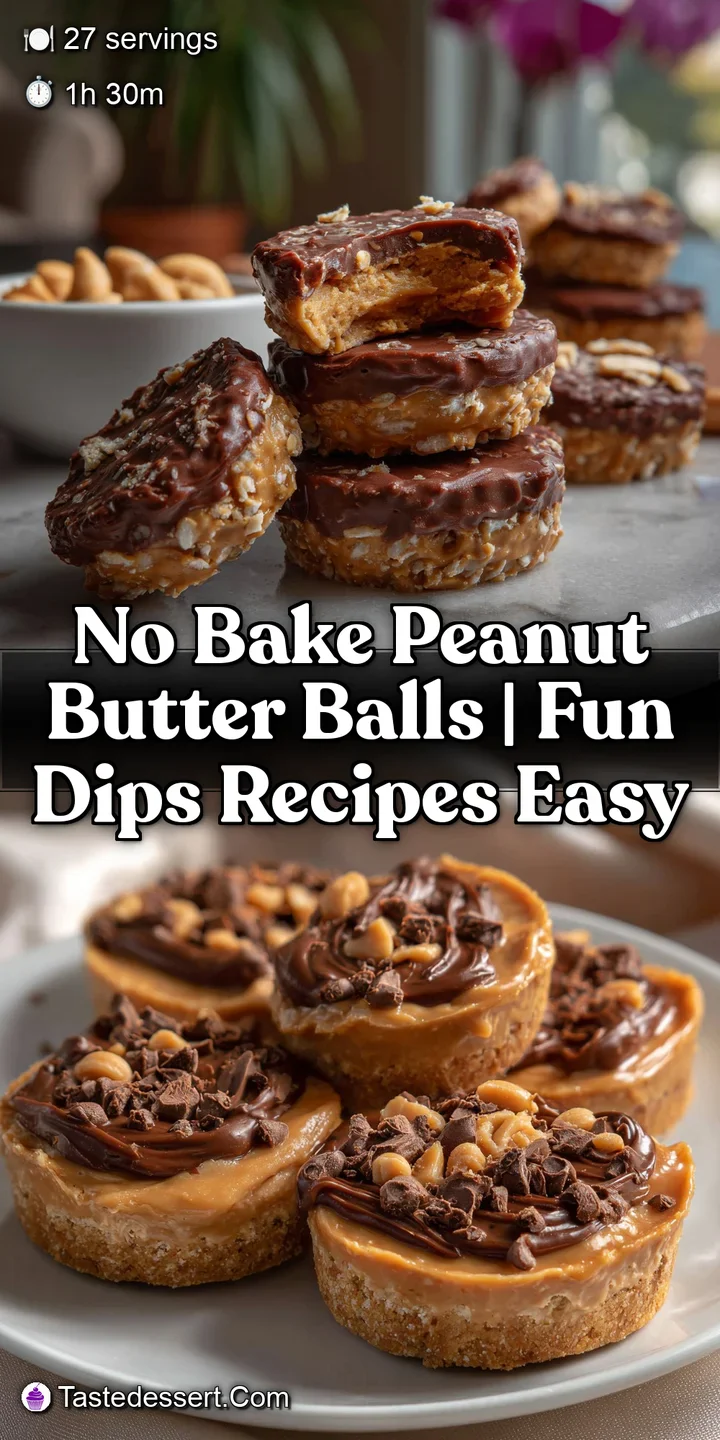
Recipe FAQs
how to make peanut butter balls?
Combine peanut butter, butter, powdered sugar, and crumbs, then chill and dip in melted chocolate. Proper chilling stabilizes the lipid matrix, allowing the center to hold its sphere shape before entering the warm chocolate coating.
If you enjoyed mastering fat-to-solid ratio control here, see how the same principle works in Proper Job Chewy Peanut Butter Cookies The Best Classic Recipe.
how to make peanut butter balls without chocolate?
Roll them in finely ground nuts, cocoa powder, or sprinkles instead of dipping. This swaps the snappy lipid shell for a drier exterior coating that still prevents sticking. These coatings absorb surface oil efficiently, achieving a similar sealed texture.
how to make peanut butter balls for dogs?
Omit all sugar and chocolate; use whole wheat flour and unsweetened applesauce as binders. Animal digestion requires zero refined sugars or xylitol; focus on high protein binders like oats or plain pumpkin puree.
If you wish to improve your baking with fat structure, the logic of balancing ingredients here is also key to our Apple Pie Recipe: Best Homemade Flaky Crust (Butter Shortening).
how to make peanut butter balls with oats?
Substitute half the graham cracker crumbs with finely ground or quick oats. Ground oats absorb moisture well but create a slightly chewier interior texture compared to the fine structure of crumbs. This substitution shifts the final product toward an energy bite profile.
how to make peanut butter balls with powdered sugar?
Use powdered sugar as the primary dry structural agent in the filling base. Powdered sugar’s fine particle size binds fat efficiently by maximizing surface area contact, creating a smooth, pliable dough.
This contrasts with granulated sugar, which introduces grit and requires more liquid to dissolve.
Can I use natural peanut butter?
No, natural peanut butter destabilizes the mixture’s structure. Natural peanut butter separates into oil and solids, making it difficult to achieve the stable emulsion needed for rolling. The emulsifiers in commercial brands prevent the mixture from becoming overly greasy.
How long do peanut butter balls need to chill?
Chill centers for 30 minutes before dipping. Insufficient chilling means the center will melt upon contact with warm chocolate, causing the shell to crack or the ball to deform.
- Use plastic wrap when storing dough
- Do not chill immediately after rolling
- Ensure an internal temperature near 40°F
Easy Peanut Butter Truffles
Ingredients:
Instructions:
Nutrition Facts:
| Calories | 168 kcal |
|---|---|
| Protein | 2.9 g |
| Fat | 10.1 g |
| Carbs | 18.9 g |
| Fiber | 1.4 g |
| Sugar | 14.2 g |
| Sodium | 108 mg |
