Pecan Pie Bark: Buttery and Crisp
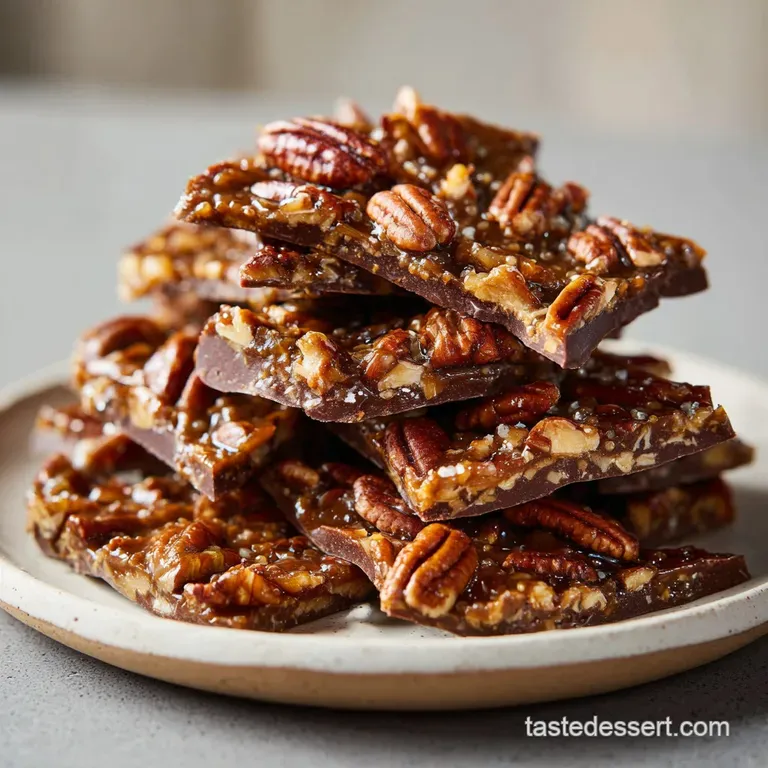
- Time: Active 5 minutes, Passive 12 minutes, Total 17 minutes
- Flavor/Texture Hook: A buttery, shatter crisp toffee topped with toasted, nutty pecans.
- Perfect for: Holiday gifting, last minute party platters, or satisfying a serious sweet tooth.
- The Best Quick and Easy Pecan Pie Bark Recipe
- Why This Toffee Treat Works So Well
- Components Analysis for Toffee Success
- Simple Ingredients for Your Homemade Candy
- Essential Tools for Success in the Kitchen
- Mastering the Steps for Perfectly Crunchy Bark
- How to Avoid Common Candy Making Mistakes
- Scaling for Large Gatherings
- Fun Ways to Change Your Flavor Profile
- Keeping Your Bark Fresh and Crunchy
- Beautiful Ways to Gift Your Sweets
- Myths About Toffee Making
- Recipe FAQs
- 📝 Recipe Card
The Best Quick and Easy Pecan Pie Bark Recipe
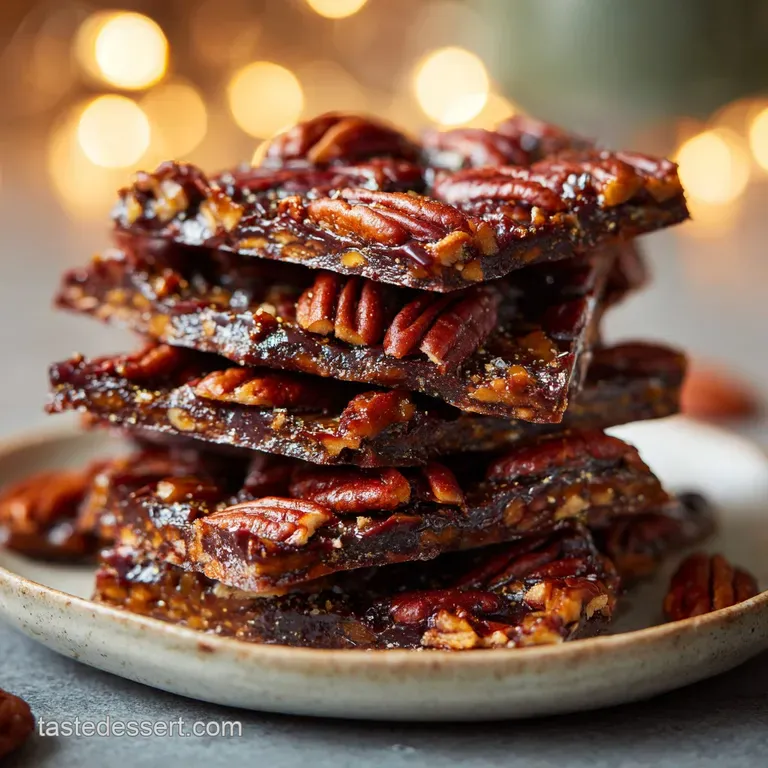
The first time I pulled a tray of this bark out of the oven, the aroma hit me like a warm hug from a Southern grandmother. It was that specific, heady scent of light brown sugar melting into unsalted butter, swirling with the woody fragrance of toasted pecans.
As the tray cooled on the counter, I heard that faint, musical "ping" of the toffee setting against the saltine crackers. It is a sound every home baker learns to love because it means the texture is going to be exactly right.
When I finally broke off a corner, the snap was loud enough to turn heads in the next room. It wasn't just sweet, it had that incredible balance of salt from the crackers and the deep, caramelized notes of the toffee.
Honestly, I used to spend hours fussing over traditional pies, but this pecan pie bark recipe gives me all those same cozy vibes with about ten percent of the effort. We have all had those moments where we need a "wow" dessert but only have twenty minutes before the guests arrive, and this is the secret weapon you have been looking for.
This isn't just another sugar laden candy; it's a texture focused experience. You get the crunch of the toasted nut, the velvety melt of the toffee, and the light, airy shatter of the cracker. It is dangerous to keep on the counter because you'll find yourself "leveling off" the edges until half the tray is gone.
Trust me, I have been there, and I regret nothing.
Why This Toffee Treat Works So Well
Understanding the physics of sugar is what separates a sticky mess from a professional grade snap. This recipe works because we are essentially performing a controlled crystallization of sugar and fat. It is a beautiful process that happens right on your stovetop in just a few minutes.
- The Hard Crack Snap: Boiling the butter and sugar for exactly two minutes allows the mixture to reach a temperature that drives off enough moisture to create a brittle, "hard crack" structure once cooled.
- Emulsification Stability: Continuous stirring during the boil ensures the milk solids in the butter stay suspended within the sugar syrup, preventing the toffee from separating into an oily layer.
- Starch Foundation: Saltine crackers provide a porous, stable base that absorbs just enough of the hot toffee to bond, while the air pockets inside the crackers keep the overall bite light rather than dense.
- Fat Induced Tenderness: The high fat content from the cup of unsalted butter coats the sugar crystals, which results in a toffee that is crisp enough to break but tender enough to chew without hurting your teeth.
Achieving the Perfect Snap
The secret to that clean break is all in the boil. If you pull it off the heat too early, you end up with a chewy caramel that sticks to your molars. If you go too long, you risk burning the sugar.
Two minutes is the "sweet spot" where the water has evaporated, and the sugar molecules are ready to lock into a glass like state.
Maximizing the Maillard Reaction
While the toffee provides the sweetness, the oven time is where the magic happens for the pecans. As they bake on top of the bubbling sugar, the proteins and sugars in the nuts undergo a transformation. This creates that deep, savory sweet flavor that defines a Southern Pecan Pie.
| Cooking Method | Cook Time | Texture Result | Best Use Case |
|---|---|---|---|
| Stovetop Only | 15 minutes | Chewy and Soft | Immediate snacking |
| Oven Finished | 12 minutes | Shatter Crisp | Gifting and platters |
| Microwave | 8 minutes | Inconsistent | Small batch testing |
The oven finish is non negotiable for me. It ensures the pecans are toasted through and the toffee fully permeates the crackers, creating a singular, cohesive piece of candy rather than just toppings sitting on a base.
Components Analysis for Toffee Success
To get the most out of your ingredients, you have to treat them with a bit of respect. We aren't just throwing things in a bowl; we are building layers of flavor and structural integrity.
| Ingredient | Science Role | Pro Secret |
|---|---|---|
| Unsalted Butter | Fat & Emulsion | Use high-quality butter with low water content for a richer, more stable toffee. |
| Light Brown Sugar | Caramelization | Pack it tight to ensure the molasses ratio is high enough for that signature "pie" flavor. |
| Saltine Crackers | Structural Base | Ensure they are fresh; stale crackers won't absorb the toffee correctly and will stay soggy. |
| Chopped Pecans | Texture & Oil | Chop them into varied sizes to create more surface area for the toffee to grab onto. |
Every single one of these items plays a part in the final mouthfeel. For instance, the light brown sugar contains molasses, which adds acidity. This acidity helps break down some of the sucrose into glucose and fructose, which makes the toffee smoother. If you want to compare this to the traditional version, my Pecan Pie recipe uses many of the same flavor profiles but in a much more custard like environment.
Simple Ingredients for Your Homemade Candy
Before you start, clear your counter and have everything measured out. Sugar moves fast, and once that toffee hits the boil, you won't have time to go hunting in the pantry for the vanilla extract.
- 40 saltine crackers (approx. 126g): Why this? They provide the essential salty crisp foundation and stay firm under hot sugar.
- 1 cup unsalted butter (225g): Why this? Provides the fat needed for a rich, velvety toffee that doesn't break.
- 1 cup light brown sugar, firmly packed (200g): Why this? The molasses content creates the deep, caramel like pecan pie flavor profile.
- 1 tsp pure vanilla extract: Why this? Rounds out the sweetness and adds a floral, bakery style aroma.
- 0.25 tsp fine sea salt: Why this? Dissolves into the toffee to brighten the buttery notes.
- 1.5 cups chopped pecans (170g): Why this? The star of the show; they provide a nutty, earthy crunch.
- 1 tsp flaky sea salt: Why this? Provides a final burst of salt that cuts through the intense sugar.
| Original Ingredient | Substitute | Why It Works |
|---|---|---|
| Saltine Crackers | Graham Crackers | Adds a honey sweetness; slightly softer but very classic for desserts. |
| Light Brown Sugar | Dark Brown Sugar | Higher molasses content; yields a deeper, more bitter sweet toffee. |
| Pecans | Walnuts | Similar fat content; slightly more bitter but holds up well to the heat. |
I have tried using Ritz crackers before, and while they are buttery, they can sometimes be a bit too crumbly for a clean bark. Saltines are the gold standard here because they have that structural "grid" that helps the toffee stay put.
Essential Tools for Success in the Kitchen
You don't need a candy thermometer for this, which is one of the reasons I love it, but you do need the right vessel for the heat.
For the Foundation
A 10x15 inch rimmed baking sheet is the perfect size for exactly 40 crackers. If you use a larger sheet, the toffee might spread too thin and burn. If it's too small, the crackers will overlap and you won't get that even coating. You also want to use high-quality parchment paper or a silicone baking mat.
Do not skip this, or you will be chiseling sugar off your pan for three days.
For the Praline Toffee
A medium, heavy bottomed saucepan is your best friend here. Cheap, thin bottomed pans have "hot spots" that can scorch the sugar before the rest of the mixture even gets to a boil. I prefer a stainless steel or enameled cast iron pot so I can see the color of the toffee changing as it cooks.
For the Nutty Topping
An offset spatula is the secret tool that makes this look professional. It allows you to spread the molten toffee right to the edges of the crackers without burning your fingers or dragging the crackers out of their neat rows.
If you don't have one, the back of a large spoon works in a pinch, but the spatula gives you much better control.
Mastering the Steps for Perfectly Crunchy Bark
- Preheat your oven to 350°F (175°C). Line a 10x15 inch rimmed baking sheet with parchment paper. Note: This ensures easy cleanup and prevents the sugar from sticking.
- Arrange the 40 saltine crackers in a single, tight layer on the sheet. Ensure there are no large gaps between them. The crackers should look like a solid floor of saltiness.
- Combine 1 cup unsalted butter and 1 cup light brown sugar in your saucepan over medium heat.
- Stir the mixture constantly until it reaches a full, rolling boil.
- Allow the mixture to bubble for exactly two minutes. Look for a thick, foamy texture like molten lava.
- Take the pan off the heat and quickly stir in 1 tsp vanilla extract and 0.25 tsp fine sea salt. Note: The mixture may hiss or sputter, which is normal.
- Immediately pour the hot toffee over the crackers and spread it to the corners with your spatula.
- Sprinkle 1.5 cups chopped pecans evenly over the bubbling toffee layer.
- Bake for 10-12 minutes until the topping is dark amber and aggressively bubbling.
- Remove from the oven and immediately sprinkle with 1 tsp flaky sea salt.
- Let the tray cool completely at room temperature until the toffee is hard and set.
- Break the bark into 24 irregular shards by hand or with a knife.
How to Avoid Common Candy Making Mistakes
Even with a recipe this simple, sugar can be a bit of a diva. The most common issue people face is the toffee separating. This usually happens because the temperature changed too quickly or the ratio of fat to sugar was slightly off. If you see a layer of oil sitting on top of your sugar, don't panic.
Usually, a vigorous stir before pouring can pull it back together.
Why Your Toffee Separated
This usually happens if you aren't stirring enough during the initial melt. Butter and sugar are like two people who don't want to hold hands; you have to force them to cooperate with constant movement.
Once they reach the boil, they usually stay together, but those first few minutes are critical for building that emulsion.
Avoiding the "Soggy Bottom"
If your crackers feel damp or soft instead of crispy, it's likely because the oven wasn't fully preheated or the bark didn't bake long enough. That 10-12 minute window is where the crackers basically get "fried" in the butter and sugar, which is what gives them that incredible snap.
| Problem | Root Cause | Solution |
|---|---|---|
| Grainy Toffee | Sugar didn't dissolve | Melt butter and sugar slowly before bringing to a boil. |
| Chewy/Sticky Bark | Under boiled toffee | Ensure a full rolling boil for the full 120 seconds. |
| Burnt Pecans | Oven too hot | Check oven calibration and move rack to the middle position. |
Common Mistakes Checklist
- ✓ Stir the butter and sugar constantly to prevent the fat from separating.
- ✓ Use a timer for the two minute boil; "eyeballing" it often leads to a sticky result.
- ✓ Make sure your baking sheet has a rim, otherwise, hot toffee will leak into your oven.
- ✓ Let the bark cool at room temperature before moving it to the fridge to prevent condensation.
- ✓ Don't skip the salt; it is what makes the sugar flavor feel complex rather than flat.
Scaling for Large Gatherings
If you are making this for a big holiday party, you might be tempted to double the recipe. While the math is easy, the physics is a bit trickier.
Making a Double Batch
If you double the ingredients, do not try to cook them all in one small pot. The increased volume takes longer to reach a boil, which can mess with the "two minute" rule. Use a larger pot and be prepared to stir even more vigorously. When baking, you will need two separate baking sheets.
If your oven has hot spots, rotate the pans halfway through the 12 minute bake time to ensure the pecans toast evenly on both trays.
Smaller Portions
For a small craving, you can halve the recipe using a 9x9 inch square pan. Since there is less mass, the toffee might reach the boil faster, so stay alert. Reduce the baking time by about 2 minutes, as the smaller surface area can cause the edges to darken more quickly.
Fun Ways to Change Your Flavor Profile
Once you have the base method down, you can start getting creative with the toppings. The saltine and toffee foundation is incredibly versatile.
Making a Pecan Praline Bark (Chocolate Twist)
If you want to make this even more decadent, sprinkle 1 cup of semi sweet chocolate chips over the bark as soon as it comes out of the oven. Let them sit for two minutes until melted, then spread them into a smooth layer over the pecans. The combination of chocolate and pecan is a classic for a reason.
Creating a gluten-free Version
You can easily swap the saltine crackers for your favorite gluten-free round or square crackers. Look for ones that are relatively sturdy and not too thin. Some rice based crackers might be too delicate, so a gluten-free "entertainment" cracker usually works best to maintain that snap.
Spiced Pecan Variation
Before sprinkling the pecans on the toffee, toss them in a small bowl with a pinch of cayenne pepper and cinnamon. This adds a "Mexican Chocolate" or "Spiced Praline" vibe that is absolutely incredible during the winter months. The heat from the cayenne cuts through the sugar in a really sophisticated way.
Keeping Your Bark Fresh and Crunchy
Sugar is hygroscopic, which is a fancy way of saying it loves to soak up moisture from the air. If you leave this bark out on a humid day, it will eventually become sticky and lose its snap.
- Storage: Store the broken shards in an airtight container at room temperature for up to 5 days. For the best texture, place a piece of parchment paper between layers to prevent them from sticking together.
- Freezing: This bark freezes beautifully. Wrap it tightly in plastic wrap and then place it in a freezer bag. It will stay fresh for up to 3 months. The best part? You can eat it straight from the freezer for an extra cold, extra crunchy treat.
- Zero Waste: If you end up with "crumbs" or small bits at the bottom of the container, don't throw them away. Those toffee pecan cracker bits are incredible as a topping for vanilla bean ice cream or folded into a batch of brownie batter.
Beautiful Ways to Gift Your Sweets
Because this pecan pie bark recipe is so sturdy, it is the perfect candidate for holiday gifting. It doesn't melt as easily as pure chocolate and it looks beautiful when stacked.
Packaging Ideas
I love using clear cellophane bags tied with a piece of rustic twine and a sprig of fresh rosemary. The green of the rosemary looks stunning against the amber toffee and dark pecans. You can also use decorative tins lined with parchment paper.
Just make sure whatever you use is airtight so the person receiving the gift gets that satisfying "snap" when they take their first bite.
Serving at a Party
When serving at a gathering, don't worry about making the pieces uniform. The charm of bark is in the irregular, jagged shards. Pile them high on a wooden serving board or a white ceramic platter.
I usually place a small bowl of extra flaky sea salt nearby for those guests who like that extra punch of savory with their sweet.
Myths About Toffee Making
There is a lot of misinformation out there about working with sugar, and it often intimidates home cooks. Let's clear some of that up so you can bake with confidence.
- You need a candy thermometer for toffee: While thermometers are great for precision, this specific recipe relies on the visual cue of the "rolling boil" and a strict timer. The ratio of butter to sugar is forgiving enough that the two minute rule works every time.
- You can't make candy on a rainy day: Humidity does affect sugar, but because we are baking this bark in the oven after the stovetop boil, we are driving out any excess moisture. This makes it much more stable than traditional stovetop only fudge or divinity.
- Brown sugar and white sugar are interchangeable: In this recipe, the brown sugar is vital. The molasses not only provides flavor but also affects the pH of the mixture, which helps prevent the sugar from recrystallizing into a grainy mess. Stick with the light brown sugar for the best results.
This bark is one of those rare recipes that feels like a triumph every single time. It is quick, it is relatively inexpensive, and the payoff in flavor is enormous. Whether you are making it for a holiday party or just because it is Tuesday and you need a treat, it never fails to deliver that perfect, buttery crunch.
Happy baking!
Recipe FAQs
Does pecan pie bark need to be refrigerated?
No, it is best stored at room temperature. Keeping the bark in an airtight container at room temperature preserves the crisp texture of the crackers, whereas refrigeration often causes condensation that makes the toffee layer soft or sticky.
What is the secret ingredient in pecan pie bark?
Fine sea salt is the secret to balancing the sweetness. Incorporating a small amount of salt into the butter and brown sugar mixture creates a complex flavor profile, much like the velvety classic notes achieved through careful ingredient balancing in other no-bake desserts.
What are common pecan pie mistakes?
Failing to boil the mixture for exactly two minutes is the most frequent error. This precise timing is required to develop a proper hard crack toffee structure; "eyeballing" the boil time usually results in a sticky bark that refuses to harden correctly.
What size pan for pecan pie bark?
Use a 10x15 inch rimmed baking sheet. The rim is essential to prevent hot toffee from leaking into your oven while the crackers are being topped and baked.
How to achieve the perfect toffee consistency?
Stir the butter and brown sugar constantly while heating over medium heat. Consistent movement prevents the fat from separating from the sugar, ensuring a smooth, emulsified toffee layer that sets firmly after baking.
How to ensure the crackers do not shift?
Arrange the saltine crackers in a single, tight layer across the pan. Eliminating large gaps ensures the toffee mixture anchors the crackers in place, creating a uniform foundation that is easy to break into shards once cooled.
How to finish the bark for the best presentation?
Sprinkle flaky sea salt immediately after removing the pan from the oven. Adding the salt while the topping is still bubbly allows the crystals to adhere properly to the warm, toasted pecans and toffee surface.
Easy Pecan Pie Bark
Ingredients:
Instructions:
Nutrition Facts:
| Calories | 171 kcal |
|---|---|
| Protein | 1.2g |
| Fat | 13.3g |
| Carbs | 12.7g |
| Fiber | 0.7g |
| Sugar | 8.5g |
| Sodium | 74mg |
