Garlic Herb Parmesan Sourdough Bread
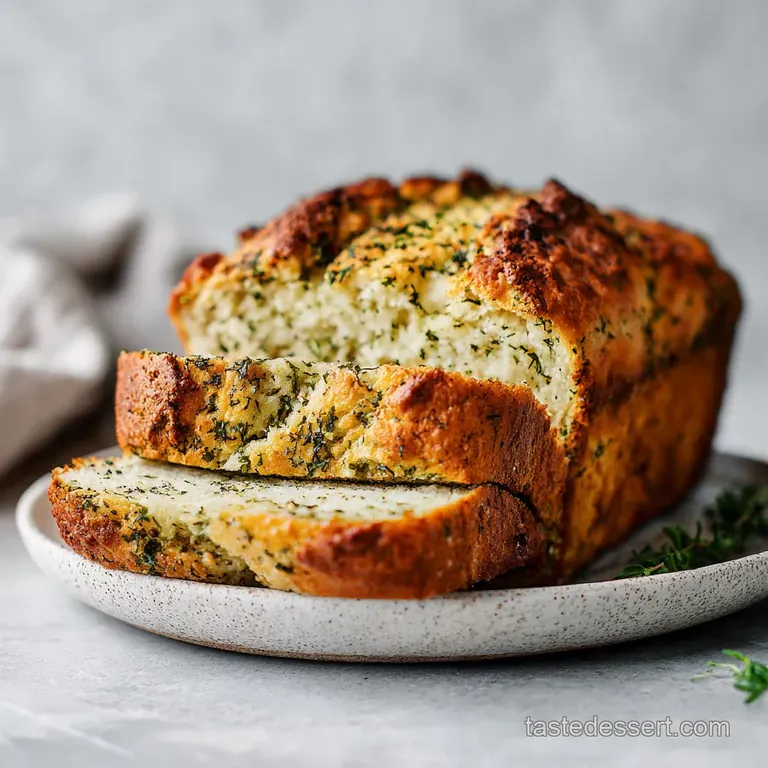
- Time: Active 15 minutes, Passive 50 minutes, Total 65 minutes
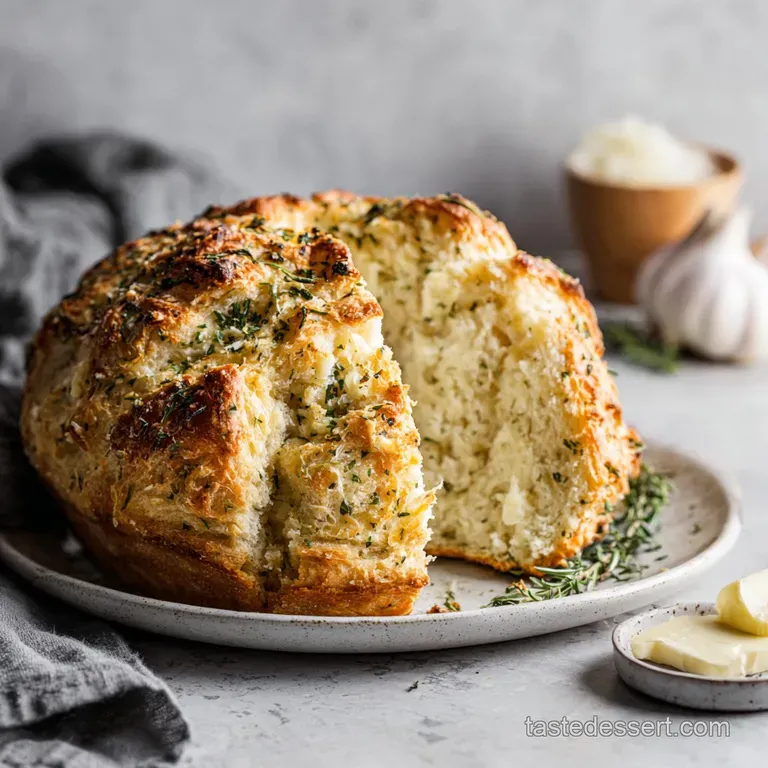
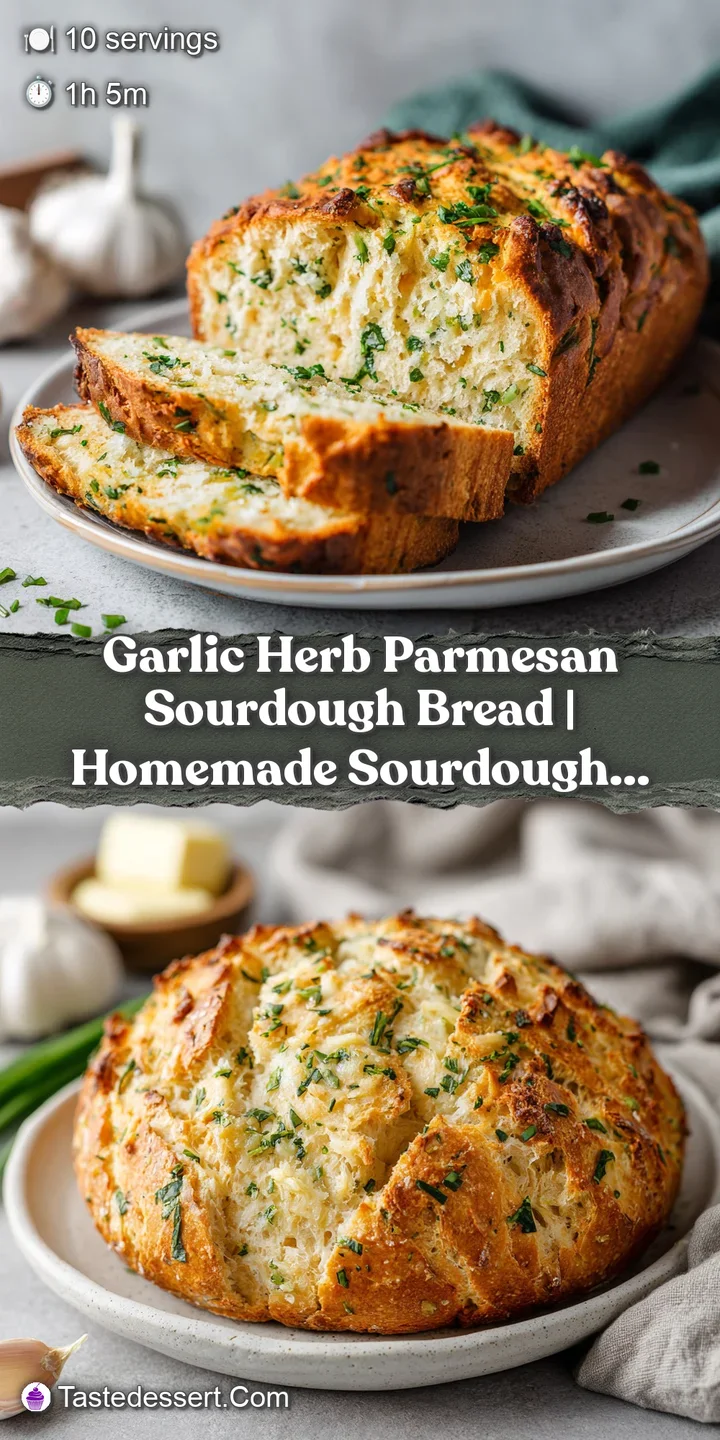
- Flavor/Texture Hook: A shatter crisp Parmesan crust covering a moist, buttery garlic crumb.
- Perfect for: Weekend brunch, soup nights, or making use of a neglected sourdough starter.
- Bake This Garlic Herb Parmesan Sourdough Bread
- Essential Recipe Specs for Success
- Components for the Perfect Crumb
- Professional Tools for Better Baking
- Components and Smart Substitutions
- Detailed Step-By-Step Baking Guide
- Avoiding Common Savory Baking Disasters
- Creative Ways to Customize Flavor
- Best Storage and Reheating Methods
- Beautiful Presentation and Serving Ideas
- Common Myths
- Recipe FAQs
- 📝 Recipe Card
Bake This Garlic Herb Parmesan Sourdough Bread
Have you ever looked at that jar of sourdough discard sitting in the back of your fridge and wondered if it actually has a personality? We often treat discard like a chore, but in this specific recipe, it’s the secret ingredient that provides a tangy, complex depth that no plain flour and water mix could ever mimic.
The first time the scent of garlic blooming in melted butter hit my kitchen tiles, I knew I’d never look at my "waste" starter the same way again. Discover the ultimate Garlic Herb Parmesan Sourdough Discard Quick Bread Recipe with this one remarkable creation.
We aren't just making bread here; we are creating a sensory experience that fills the house with the aroma of a high end Italian bistro. The magic happens the moment that cold, bubbly starter meets the fat of the sour cream and the warmth of the garlic butter.
It’s a chemical dance that results in a loaf that is dense enough to hold a thick swipe of salted butter but light enough to disappear in one sitting.
What I love most about this process is how forgiving it is. You don't need a stand mixer, you don't need to knead until your arms ache, and you certainly don't need to wait twelve hours for a rise.
This is the "get it in the oven and get on with your life" kind of bread, yet it tastes like you’ve been fermenting it for days. Trust me, once you see that Parmesan crust turn into a golden, bubbly landscape, you’ll be hooked.
Essential Recipe Specs for Success
When we talk about "success" in savory baking, we are looking for a specific set of markers: a crumb that doesn't crumble into dust the second a knife touches it and a top that has a distinct, audible crunch.
This loaf relies on the heavy lifting of chemical leaveners baking powder and soda rather than the slow work of yeast. This makes it a "quick bread," but the sourdough discard provides the soul.
Acidic Activation: The sourdough discard isn't just for flavor; its natural lactic acid reacts with the baking soda to create immediate carbon dioxide bubbles. This gives us that initial lift the moment the heat hits the batter.
Fat Saturation: Using both melted butter and sour cream ensures the gluten strands are well coated. This prevents the bread from becoming "bready" or tough, keeping it closer to the texture of a savory pound cake.
The Herb Bloom: We don't just toss the herbs into the flour. By letting them sit in the warm melted butter for five minutes, we "bloom" the fat soluble compounds in the rosemary and thyme, ensuring every bite carries the garden's aroma.
| Method | Cook Time | Texture Outcome | Best For |
|---|---|---|---|
| Standard Oven | 50 minutes | Even crumb, golden top | Traditional loaf slices |
| Stovetop Dutch Oven | 60 minutes | Thicker, darker crust | Rustic, campfire style |
| Mini Loaf Pans | 30 minutes | Crispier edges per bite | Gifting or portion control |
The choice of vessel matters. While a standard 9x5 inch loaf pan is the gold standard for this recipe, using a heavy duty cast iron pan inside the oven can yield a crust that is almost fried in the butter and Parmesan, giving you a completely different sensory experience.
Components for the Perfect Crumb
Understanding why we use specific ingredients is the difference between a cook and a baker. In this Garlic Herb Parmesan Sourdough Bread, every element plays a structural or flavor based role. If you find yourself with even more starter left over, these garlic herb crackers are another fantastic way to use it up without letting a single gram go to waste.
| Ingredient | Science Role | Pro Secret |
|---|---|---|
| Sourdough Discard | Acidic Tenderizer | Use "old" discard for a sharper, more distinct tang. |
| Sour Cream | Moisture & Fat | Full fat is non negotiable for a velvety, rich mouthfeel. |
| Baking Soda | pH Balancer | Neutralizes starter acid to allow the bread to brown deeply. |
| Parmesan Cheese | Protein & Salt | Use freshly grated; pre shredded has cellulose that prevents melting. |
The interaction between the sourdough discard and the sour cream is where the "velvety" texture comes from. Sour cream contains about 18-20% butterfat, which acts as a barrier to gluten development.
This means even if you accidentally stir the batter a couple of extra times, the bread remains tender rather than turning into a rubbery brick.
Professional Tools for Better Baking
You don't need a kitchen full of gadgets, but a few specific items will make your life significantly easier. I always reach for a heavy, light colored aluminum loaf pan. Darker pans tend to absorb too much heat, which can lead to the bottom of your loaf burning before the center is fully set.
A silicone spatula is your best friend here. Because the batter is thick and somewhat sticky, you need something that can scrape the bowl clean and fold in the Parmesan without deflating the air we’ve worked so hard to incorporate. I also highly recommend a digital kitchen scale.
Measuring flour by volume (cups) is notoriously inaccurate; a "cup" can vary by 30 grams depending on how packed it is, which can lead to a dry, heavy loaf.
Finally,, parchment paper isn't just for preventing sticks it’s your "sling." By leaving an inch of overhang on the long sides, you can lift the entire loaf out of the pan once it’s cooled slightly.
This prevents the "shatter crisp" crust from being damaged as you try to wedge a knife around the edges.
Components and Smart Substitutions
Before we get into the mixing, let’s look at our palette. This recipe uses 250g of all purpose flour as the base. If you want a slightly toothier, more rustic texture, you can swap 50g of that for whole wheat flour, but don't go much further or the bread will lose its "quick bread" lightness.
- 250g All purpose flour: Standard white flour provides the softest structure.
- 240g Sourdough discard: This should be unfed starter from the fridge. Why this? Provides moisture and the signature fermented tang without needing rise time.
- 100g Sour cream: Greek yogurt is a viable swap. Why this? Adds fat for tenderness and acid to react with leaveners.
- 115g Unsalted butter: Melted and slightly cooled.
- 1/2 cup Parmesan cheese: Divided for inside the batter and the topping.
- 3 cloves Garlic: Finely minced, not pressed.
- Fresh Herbs: 2 tbsp of rosemary, thyme, and chives.
- 1 tsp Honey: Just enough to balance the salty Parmesan.
| Original Ingredient | Substitute | Why It Works |
|---|---|---|
| Sour Cream | Full fat Greek Yogurt | Similar acidity and fat content. Note: Result is slightly tangier. |
| All purpose Flour | Bread Flour | Higher protein. Note: Creates a much chewier, less cake like crumb. |
| Parmesan | Pecorino Romano | Hard sheep's milk cheese. Note: Much saltier; reduce added salt by half. |
When substituting, keep in mind that sourdough discard varies in hydration. If your starter is very runny (like pancake batter), you might need an extra tablespoon of flour. If it’s thick like paste, a splash of milk might be necessary to get the batter to a "droppable" consistency.
Detailed step-by-step Baking Guide
- Preheat your oven to 350°F (175°C). Line a 9x5 inch loaf pan with parchment paper, leaving an overhang on the sides for easy removal.
- In a small bowl, combine the melted butter, minced garlic, and fresh herbs. Let the mixture sit for 5 minutes until the butter smells intensely fragrant and green. Note: This blooms the herbs' oils.
- In a large mixing bowl, whisk together the flour, baking powder, baking soda, salt, and black pepper.
- In a medium bowl, whisk together the sourdough discard, sour cream, eggs, honey, and the herb butter mixture until the texture is smooth and uniform.
- Pour the wet ingredients into the dry ingredients. Use a silicone spatula to fold the mixture gently until no dry streaks of flour remain. Note: Overmixing will lead to a tough, gummy bread.
- Gently fold in 1/4 cup of the grated Parmesan cheese.
- Transfer the batter to the prepared loaf pan and smooth the top. Sprinkle the remaining 1/4 cup of Parmesan cheese over the surface.
- Bake for 50 minutes until the top is a deep golden brown and the cheese has formed a crisp crust.
- Test with a toothpick in the center; it should come out clean or with just a few dry crumbs.
- Cool in the pan for 15 minutes before using the parchment sling to lift the loaf onto a wire rack.
Avoiding Common Savory Baking Disasters
The most common heartbreak with Garlic Herb Parmesan Sourdough Bread is the "gummy center." This usually happens because quick breads are dense, and the transition from wet batter to solid bread takes time. If you pull it out too early, the residual steam collapses the internal structure.
Why Your Bread is Too Dense
If your loaf looks like a brick rather than a beautiful bread, check your leaveners. Baking powder and soda lose their potency over time. Also, ensure your eggs are truly at room temperature. Cold eggs can cause the melted butter to seize up into tiny clumps, which ruins the emulsification and prevents an even rise.
To Stop the Garlic from Burning
Garlic has a high sugar content and burns easily at 350°F. By mixing the minced garlic into the butter and then folding it into the batter, we protect it from the direct heat of the oven.
Only the garlic on the very surface is at risk, which is why we top it with Parmesan the cheese acts as a heat shield for the bits of garlic underneath.
| Problem | Root Cause | Solution |
|---|---|---|
| Sunken Center | Overmixing or underbaking | Fold until just combined; use a thermometer to check for 200°F. |
| Bitter Taste | Burnt garlic or old soda | Bloom garlic in butter; replace baking soda every 6 months. |
| Crumbly Texture | Too much flour | Measure flour by weight (250g) rather than using a measuring cup. |
Common Mistakes Checklist
- ✓ Always whisk your dry ingredients thoroughly to prevent "soda pockets" (bitter spots).
- ✓ Do not skip the 5 minute bloom time for the herbs in the warm butter.
- ✓ Ensure the sourdough discard is completely whisked into the wet ingredients before adding to the dry.
- ✓ Resist the urge to slice the bread while it’s piping hot; the internal structure needs to set.
Creative Ways to Customize Flavor
Once you've mastered the base version of this Garlic Herb Parmesan Sourdough Bread, the variations are endless. For those who prefer a more doughy, pull apart vibe, my cheesy garlic breadsticks use a similar flavor profile but in a yeast risen format. But sticking with this quick bread, let's look at some swaps.
If you want a spicy kick, try adding half a cup of diced pickled jalapeños and swapping the Parmesan for a sharp white cheddar. The acidity of the peppers plays beautifully with the sourdough tang.
For a "Mediterranean" vibe, swap the rosemary for dried oregano and fold in 1/4 cup of chopped sun dried tomatoes (oil packed and drained).
Decision Shortcut
- For a lighter, airier loaf: Use 260g of discard and reduce sour cream to 80g.
- For a deeper crust: Bake in a preheated cast iron loaf pan.
- For a vegan friendly base: (Note: Results vary) Use vegan butter and coconut yogurt, but expect a much denser crumb.
Best Storage and Reheating Methods
Because this bread is high in fat (butter, sour cream, and cheese), it actually stores remarkably well. Most yeast breads go stale within 24 hours, but this loaf stays moist for up to 3 days at room temperature if wrapped tightly in plastic wrap or kept in an airtight container.
For long term storage, slice the bread before freezing. Wrap each slice in parchment paper and then place them all in a heavy duty freezer bag. You can pull out a single slice and pop it directly into the toaster. It will last in the freezer for up to 3 months.
Zero Waste Tip: If you find yourself with the last two dry ends of the loaf, don't toss them! Cut them into cubes, toss with a little extra olive oil, and bake at 300°F for 10 minutes. They make the most incredible sourdough croutons for a Caesar salad.
You can also use any leftover fresh herbs to make an herb infused oil or butter for your next bake.
Beautiful Presentation and Serving Ideas
To truly make this loaf pop, we use a color balance strategy. The target is to have three distinct color accents that signal "freshness" and "flavor."
- Vibrant Green: Sprinkle freshly chopped chives over the loaf after it comes out of the oven. The residual heat will release their scent without turning them brown and dull.
- Golden Amber: The Parmesan topping should be baked until it reaches a deep, toasted amber. This provides a visual contrast to the paler sides of the loaf.
- Deep Crimson: A light dusting of smoked paprika or a few red pepper flakes added to the herb butter mixture adds a tiny pop of color and a hint of warmth.
When serving this for a brunch board, I like to slice it thick and serve it alongside a bowl of whipped honey butter. The sweetness of the honey against the sharp Parmesan and garlic is a combination that people will talk about for weeks.
It’s also the ultimate sidekick for a bowl of tomato basil soup; the bread is sturdy enough to be dipped without falling apart, soaking up the soup like a savory sponge.
Common Myths
"Sourdough discard is dead and has no leavening power." This is only partially true. While discard doesn't have the active yeast strength to lift a heavy dough on its own, its acidity is a powerful chemical tool.
When paired with baking soda, it creates a massive amount of lift, making it an "active" participant in the structural success of the bread.
"You must knead quick bread to get a good rise." Actually, the opposite is true! Kneading develops gluten. While you want some gluten for structure, too much will turn your quick bread into a tough, rubbery loaf.
The goal here is "minimal agitation." You want to stir just until you can no longer see white flour, then stop immediately. The lumps are your friend; they indicate that you haven't over worked the dough.
"Fresh herbs and dried herbs are interchangeable in equal amounts." No! Dried herbs are far more concentrated. If you don't have fresh rosemary and thyme, use only 2 teaspoons of dried herbs instead of the 2 tablespoons of fresh.
However, for this specific loaf, fresh herbs provide a "brightness" that dried versions simply cannot match.
Recipe FAQs
How to ensure the garlic flavor is evenly distributed?
Combine the minced garlic with the melted butter and let it sit for five minutes. Allowing the mixture to bloom ensures the garlic's essential oils are fully integrated into the butter before you whisk it into the sourdough discard and sour cream.
Is it necessary to use room temperature eggs?
Yes, use room temperature eggs. They incorporate more easily into the cold sourdough discard and sour cream, creating a uniform, velvety batter that rises evenly in the oven.
How to avoid a dense, gummy texture in the loaf?
Fold the wet and dry ingredients gently until just combined. If you enjoyed mastering this delicate folding technique, you can apply the same principle to achieve a light structure in our creamy potato leek soup when incorporating base ingredients without losing aeration.
Can I bake this in a circular cake pan instead of a loaf pan?
No, sticking to a 9x5 inch loaf pan is recommended. Using a different size or shape will drastically alter the bake time and may prevent the center from setting properly while the exterior browns.
How to tell when the bread is perfectly finished?
Insert a toothpick into the center of the loaf. The bread is ready when the top is golden brown and the toothpick comes out clean after 50 minutes of baking at 350°F.
Can I store the herb butter mixture for later?
Yes, prepare the butter, garlic, and herb mixture up to two days in advance. Keep it sealed in the refrigerator and allow it to soften slightly before whisking it into your wet ingredients.
Is it true I can use any type of starter for this recipe?
No, this is a common misconception. You must use sourdough discard as specified, as its specific acidity and hydration levels are required to react with the baking soda and baking powder to provide the necessary rise.
Garlic Herb Parmesan Bread
Ingredients:
Instructions:
Nutrition Facts:
| Calories | 276 kcal |
|---|---|
| Protein | 7.1 g |
| Fat | 13.9 g |
| Carbs | 29.2 g |
| Fiber | 1.1 g |
| Sugar | 0.8 g |
| Sodium | 410 mg |
