Ina Garten Chocolate Brownie Pudding Recipe
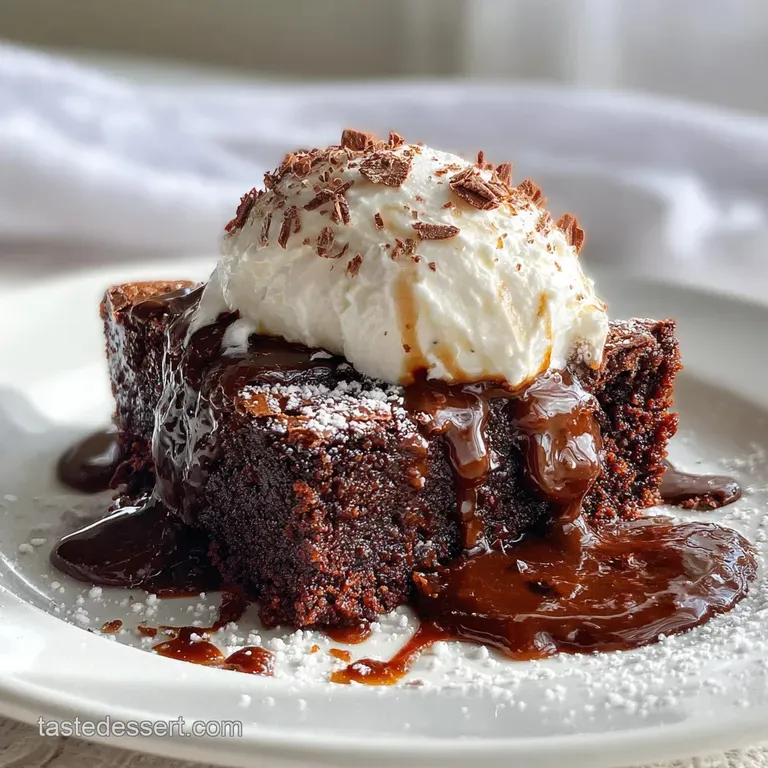
- Time: Active 15 minutes, Passive 45 minutes, Total 1 hours
- Flavor/Texture Hook: A velvety, liquid gold center hidden beneath a delicate sugar shatter crust.
- Perfect for: Impressive dinner parties where you want maximum impact with minimal last minute effort.
- Secrets of the Ina Garten Chocolate Brownie Pudding Recipe
- The Physics of Fudgy Textures
- Timing and Yield Guidelines
- Pantry Staples and Substitutions
- Essential Baking Gear
- Steps to Liquid Chocolate Gold
- Solving Baking Disasters
- Modern Dietary Adjustments
- Storage and Leftover Hacks
- Finishing Touches and Pairings
- Chocolate Baking Myths
- Recipe FAQs
- 📝 Recipe Card
Secrets of the Ina Garten Chocolate Brownie Pudding Recipe
I'll never forget the first time the aroma of this dish hit me. I was at a friend's place, and the kitchen smelled like a high end chocolatier’s workshop deep, dark, and slightly fruity from the Framboise.
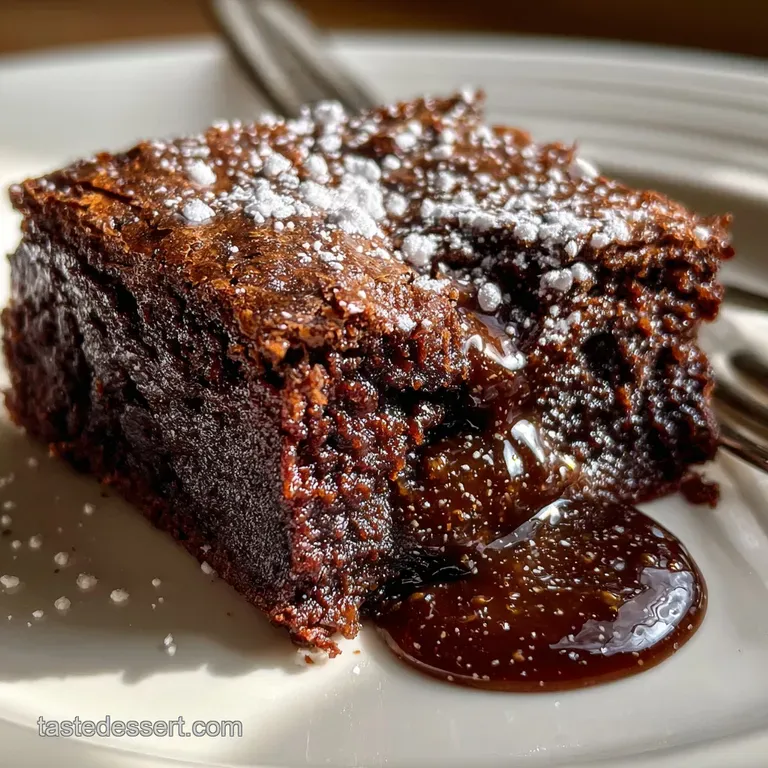
When she pulled that dish out of the oven, it looked like a standard brownie, but the moment the spoon hit the surface, it made this satisfying "shatter" sound. Underneath that crisp shell was a pool of molten, velvety chocolate that honestly changed my life.
I went home and made it three times that week just to get the texture exactly right.
It's one of those recipes that feels like magic. You aren't just making a cake; you're creating a structural masterpiece using basic pantry staples. I used to think a "pudding" meant something from a box or a stovetop custard, but this is different.
It’s an old-fashioned technique that relies on the physics of heat and air. If you’ve ever felt intimidated by soufflés, this is your new best friend. It gives you that same "wow" factor without the fear of a tragic collapse.
We've all been there trying to find a dessert that feels fancy but doesn't require a degree in pastry arts. This recipe is the answer. It’s forgiving, it’s rich, and it uses techniques that once learned, will make you a better baker overall.
Let's look at why this specific method works so well and how we can make it happen in your kitchen without breaking the bank.
The Physics of Fudgy Textures
Aeration Stability: Beating the eggs and sugar for a full five minutes creates a thick foam that provides the only "lift" in the recipe, resulting in a light top and dense base.
Thermal Buffering: The water bath (bain marie) surrounds the dish with a constant 100°C (212°F) environment, preventing the eggs from curdling and keeping the center liquid.
| Method | Total Time | Resulting Texture | Best For |
|---|---|---|---|
| Classic Water Bath | 1 hours | Silky, molten center with a crisp top | Dinner parties |
| Fast Bake (No Water) | 35 minutes | Uniformly cakey, more like a dense brownie | Quick cravings |
| Cold Start Prep | 1 hours 15 mins | Extra thick, fudgy, almost truffle like | make-ahead events |
The difference between the classic method and the fast bake is all about moisture retention. Without the water bath, the edges will dry out and turn into a standard cake. While still tasty, you'd miss out on that signature "pudding" gooeyness that makes this recipe famous. If you're looking for something with a bit more structure, you might enjoy the texture of a German Chocolate Cake recipe which uses different fat ratios to stay moist.
Timing and Yield Guidelines
| Component | Metric Measurement |
|---|---|
| Butter | 225g (Melted and cooled) |
| Eggs | 4 Extra large (Room temp) |
| Sugar | 400g (Granulated) |
| Cocoa | 75g (Dutch processed) |
| Flour | 65g (All purpose) |
The total yield for this recipe is 8 generous servings. Because it is so incredibly rich, you can easily stretch it to 10 people if you serve it with a side of tart raspberries or a light whipped cream.
For the best results, you need to hit three specific precision checkpoints: ensure your eggs reach room temperature (about 20°C/68°F), beat the egg sugar mixture until it falls in "ribbons," and pull it from the oven when the center still has a slight jiggle.
Why Does the Water Bath (Bain Marie) Matter?
The water bath is your insurance policy. Chocolate and eggs are both heat sensitive. If you blast them with direct, dry heat, the proteins in the eggs tighten up too quickly, pushing out moisture and leaving you with a rubbery mess.
The water acts as a heat sink, absorbing the oven's intensity and gently steaming the pudding from the outside in. This ensures the edges don't overcook before the middle has reached that perfect, lava like consistency.
How Do Beaten Eggs Create That Crackly Crust?
When you whip eggs and sugar together vigorously, you’re creating a foam. As the pudding bakes, the air bubbles in that foam expand, and the sugar migrates to the surface. This creates a thin, meringue like layer on top. It’s the same science behind why the Fudge Brownie recipe gets that shiny, papery top we all crave.
Pantry Staples and Substitutions
| Ingredient | Science Role | Pro Secret |
|---|---|---|
| Dutch Cocoa | Provides deep color and low acidity | Sift it twice to prevent "cocoa bombs" (unmixed dry lumps) |
| Extra Large Eggs | Emulsifier and structural support | Use room temp eggs to maximize volume during the beating phase |
| Framboise | Flavor enhancer | Adds a floral note that cuts through the heavy fat of the butter |
- Unsalted Butter (225g): This is the fat base. Why this? Using unsalted allows you to control the seasoning precisely with the kosher salt.
- Substitute: Salted butter (just omit the 1/4 tsp salt from the recipe).
- Extra Large Eggs (4): These provide the lift and richness. Why this? The high protein to water ratio creates a stable foam.
- Substitute: 5 large eggs if you can't find extra large.
- Granulated Sugar (400g): Stabilizes the egg foam and creates the crust. Why this? It dissolves slowly to form that meringue top.
- Substitute: Caster sugar for an even finer crust.
- Dutch Processed Cocoa Powder (75g): The heart of the flavor. Why this? It has been neutralized of acidity, giving a darker, smoother taste.
- Substitute: Natural cocoa powder plus 1/8 tsp baking soda to mimic the pH.
- All Purpose Flour (65g): Provides just enough structure to hold it together. Why this? Low protein keeps the texture tender, not chewy.
- Substitute: 1 to-1 gluten-free baking flour.
- Pure Vanilla Extract (1 tbsp): Aromatic backbone. Why this? Real vanilla contains compounds that intensify the perception of sweetness.
- Substitute: 1 tsp vanilla bean paste.
- Framboise or Cognac (1 tbsp): Adds complexity. Why this? Alcohol carries flavor molecules across the palate more effectively than water.
- Substitute: Strong brewed coffee or espresso for a mocha vibe.
Essential Baking Gear
You don't need a professional kitchen for this, but a few specific tools will make your life much easier. First, a stand mixer or a powerful hand mixer is non negotiable. You’re going to be beating those eggs for five minutes, and doing that by hand is a workout nobody wants.
I recommend a glass or ceramic oval baking dish (about 2 quart capacity). These materials hold heat more steadily than metal pans, which can cause the edges to cook too fast.
You’ll also need a larger roasting pan to act as the water bath. It needs to be deep enough that you can pour water halfway up the sides of your pudding dish. Finally, grab a fine mesh sieve.
Sifting the cocoa and flour together is the only way to guarantee you won't find a dry pocket of flour in the middle of your velvety pudding. It’s a small step that makes a huge difference in the final mouthfeel.
Steps to Liquid Chocolate Gold
- Prep the oven. Preheat to 160°C (325°F) and grease your baking dish lightly with butter.
- Cream the base. Beat the 4 room temperature eggs and 400g sugar in a stand mixer for 5 minutes until thick and pale yellow. Note: This is the "ribbon stage" where the mixture falls back into the bowl in slow, distinct folds.
- Add flavorings. Turn the mixer to low and pour in the 225g melted (but cooled!) butter, 1 tbsp vanilla, and 1 tbsp Framboise.
- Sift dry ingredients. Combine 75g cocoa powder, 65g flour, and 1/4 tsp salt in a separate bowl.
- Combine gently. Sift the dry ingredients directly into the wet mixture and fold by hand or on the lowest mixer setting until just combined. Note: Over mixing here will deflate the air you worked so hard to get into the eggs.
- Transfer the batter. Pour the mixture into the prepared baking dish and smooth the top.
- Set up the bath. Place the baking dish inside a larger roasting pan and set it on the oven rack.
- Add the water. Pour boiling water into the roasting pan until it reaches halfway up the sides of the dish until it looks like a floating island.
- Bake the pudding. Bake for 45 minutes. The top will be firm and crackly, but the center will still have a slight wobble.
- Cool and set. Remove the dish from the water bath and let it rest for at least 15 minutes before serving until the center thickens slightly.
Solving Baking Disasters
The most common issue I hear about with the ina garten chocolate brownie pudding recipe is the center being "too raw." Remember, this isn't a cake. It’s supposed to be gooey. If you can stick a toothpick in and it comes out clean, you've actually overcooked it!
The residual heat while the dish rests for 15 minutes is what finishes the "cooking" process. It transforms from a liquid to a thick, spoonable fudge.
Why Is My Center Too Liquid?
If the pudding is actually soup after cooling, your oven temperature might be running low, or your water bath was too cold to start. Always use boiling water for the bath. This jump starts the heat transfer.
Also, make sure you aren't using a dish that is too deep; an oval dish with more surface area allows the heat to penetrate the center more efficiently than a deep, narrow bowl.
Why Did My Crust Sink?
A little bit of "deflation" is normal as the pudding cools it’s the nature of an egg based foam. However, if it craters significantly, you likely over beat the eggs or used cold eggs. Cold eggs don't hold air as well, creating a brittle foam that snaps under the weight of the chocolate as it cools.
| Problem | Root Cause | Solution |
|---|---|---|
| Rubbery Edges | No water bath used | Always bake inside a larger pan with boiling water |
| Gritty Texture | Sugar didn't dissolve | Beat eggs and sugar for the full 5 minutes until pale |
| Grainy Chocolate | Butter was too hot | Let melted butter cool to room temperature before adding |
Common Mistakes Checklist - ✓ Ensure eggs are at room temperature to achieve maximum volume. - ✓ Sift the cocoa powder; it is notorious for having hard lumps that won't dissolve in the batter.
- ✓ Use boiling water for the bain marie to maintain a consistent temperature from the start. - ✓ Don't open the oven door repeatedly; the sudden drop in temp can cause the crust to crack prematurely. - ✓ Let it rest!
The pudding needs those 15 minutes to set into its final fudgy glory.
Modern Dietary Adjustments
Scaling this recipe down is actually quite easy. If you're cooking for a smaller household, you can make an Ina Garten brownie pudding half recipe by using 2 extra large eggs, 112g butter, 200g sugar, 38g cocoa, 32g flour, and half the flavorings.
Use an 8x8 inch square baking dish or a small 1 quart oval dish. The baking time will usually decrease to about 30-35 minutes, so start checking for that "wobble" early.
If you need to scale up for a big party, you can double the recipe, but I recommend using two separate 2 quart dishes rather than one massive pan. Large batches in a single pan take much longer to cook in the center, which often leads to the edges becoming overcooked and dry before the middle is set.
Storage and Leftover Hacks
This pudding is best served warm, but the leftovers are a secret treasure. You can store them in the fridge for up to 3 days. When cold, the pudding firms up into something resembling a thick chocolate truffle. It's incredible eaten straight from the fridge with a spoon!
For a more "fresh" experience, microwave a portion for 15-20 seconds until the center gets gooey again.
If you find yourself with scraps or a batch that didn't quite set right, don't throw it out! You can scoop the pudding into glasses, layer it with whipped cream and crushed cookies, and turn it into a decadent trifle. You could even use it as a base for an easy brownie sundae. For long term storage, you can freeze individual portions in airtight containers for up to 2 months. Thaw overnight in the fridge and reheat gently.
Finishing Touches and Pairings
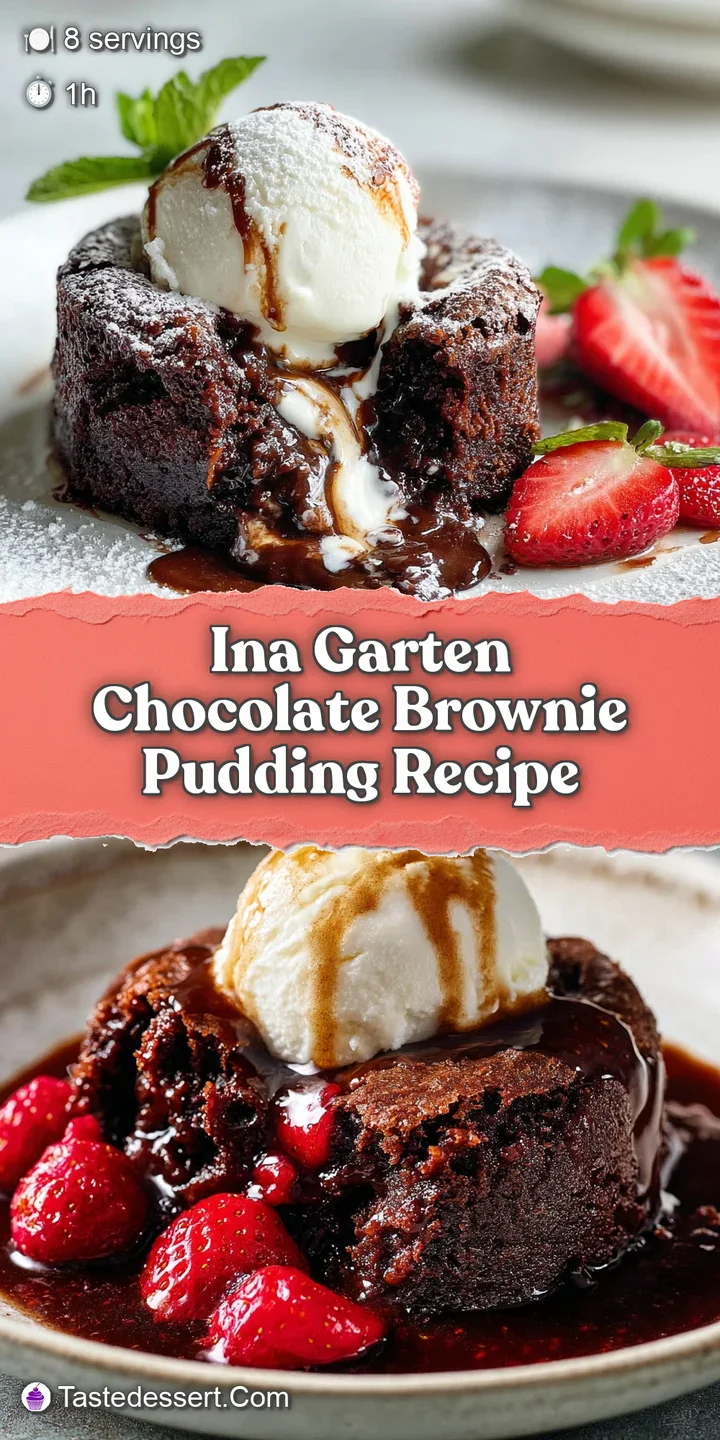
Presentation is where you can really have some fun. Since the pudding is so dark and rich, it looks stunning with a light dusting of powdered sugar. I like to serve it with a big scoop of high-quality vanilla bean ice cream. The cold cream melting into the warm chocolate creates a "sauce" that is absolutely divine.
If you're feeling adventurous, a dollop of crème fraîche adds a nice tang that balances the 400g of sugar.
Chef's Note: To get that perfect "restaurant look," use two large spoons to create a "quenelle" of whipped cream or ice cream to perch on top of the warm pudding.
For a budget friendly pairing, skip the expensive berries and make a quick raspberry coulis by simmering frozen raspberries with a spoonful of sugar and a splash of lemon juice. The acidity of the berries is the perfect foil for the heavy chocolate. Honestly, even a simple glass of cold milk works perfectly here.
It’s a comfort dessert at its core, so don't feel like you have to get too fancy to enjoy it.
Chocolate Baking Myths
One common myth is that you need the most expensive chocolate bars to make a good pudding. While quality matters, a good Dutch processed cocoa powder often provides a more intense, consistent chocolate flavor in baked goods than melted bars.
The cocoa solids are more concentrated, giving you that deep color without the added fats and emulsifiers found in bar chocolate.
Another myth is that "more flour equals a better cake." In this pudding, the flour is actually the enemy of the texture. We only use 65g for the whole recipe because we want the eggs and butter to do the heavy lifting.
If you add too much flour, you'll end up with a standard brownie tasty, but you'll lose that magical, spoonable center that makes this dish viral. Trust the small amount of flour; it's all you need!
Recipe FAQs
Is Ina Garten brownie pudding sweetened or unsweetened cocoa powder?
Use Dutch processed cocoa powder. This variety is chemically treated to lower acidity, resulting in a darker color and a smoother, less bitter chocolate flavor, which is crucial for the pudding’s richness.
How long do you bake Ina Garten brownie pudding?
Bake for 45 minutes in a water bath. The pudding requires this specific time at 160°C (325°F) to set the outside crust while ensuring the center remains liquid; check for a slight wobble before removing.
Which Ina Garten cookbook has the brownie pudding recipe?
The specific recipe is from her Barefoot Contessa cookbooks. While she features many chocolate desserts, this particular preparation is known for its signature molten center, distinct from her standard brownie recipes.
What makes Ina Garten's brownie pudding special?
The dual texture is its defining feature: a crisp, crackly crust over a molten interior. This is achieved by beating the eggs thoroughly to create foam and baking it gently in a water bath, a technique similar to making a delicate custard.
Can I skip the water bath (bain marie) for this pudding?
No, skipping the water bath is strongly discouraged for the pudding texture. The water acts as a thermal buffer, preventing the delicate egg proteins from setting too quickly, which keeps the center liquid and velvety.
How do I ensure the signature crackly top forms correctly?
Beat the eggs and sugar vigorously until the ribbon stage. This process incorporates essential air that expands during baking, and the sugar migrates to the surface to form that delicate shatter, a technique also vital in achieving the perfect top on our Fudgy Chewy Brownies recipe.
What is the purpose of adding Framboise or Cognac?
The alcohol enhances and carries the deep chocolate flavor notes. It adds a subtle complexity that cuts through the richness, much like how acid brightens the sweetness in a dessert, a principle we use in our Amish Peanut Butter recipe to balance creaminess.
Ina Garten Brownie Pudding
Ingredients:
Instructions:
Nutrition Facts:
| Calories | 495 kcal |
|---|---|
| Protein | 6.5g |
| Fat | 27g |
| Carbs | 62g |
| Fiber | 3.1g |
| Sugar | 50g |
| Sodium | 69mg |
