Lemon Lavender Thumbprint Cookies: Tender and Aromatic
- Time: Active 25 minutes, Passive 15 minutes, Total 40 minutes
- Flavor/Texture Hook: A velvety citrus center nestled in a buttery, floral scented crumb
- Perfect for: Elegant garden parties, weekend baking, or a sophisticated tea time treat
- Creating the Ultimate Lemon Lavender Thumbprint Cookies
- Understanding the Balance of Floral and Citrus Tones
- Breaking Down the Essential Cookie Specifications and Times
- Selecting the Finest Botanical and Pantry Ingredients
- Essential Kitchen Tools for Crafting Professional Thumbprint Cookies
- A Detailed Guide From Prep to the Final Plate
- Solving Common Baking Hurdles with Professional Troubleshooting
- Smart Scaling Techniques and Simple Dietary Adaptations
- Practical Preservation Secrets and Smart Storage Solutions
- Creative Serving Suggestions and Visual Presentation Strategies
- Recipe FAQs
- 📝 Recipe Card
Creating the Ultimate Lemon Lavender Thumbprint Cookies
The moment you open the oven door, a cloud of citrus scented steam meets the calming, earthy aroma of dried lavender. It is a scent that fills the kitchen with a wonderful sense of peace, transforming a simple afternoon of baking into something truly special.
I remember the first time I tried these- I was worried the lavender might taste like soap, but when you pair it with the bright zing of fresh lemon juice, it creates a flavor profile that is nothing short of sophisticated.
These cookies are not your standard, sugary sweet bakery fare. They have a certain homemade charm, with a texture that is a cross between a soft cookie and a classic, crumbly shortbread.
The addition of almond flour gives them a delicate, sandy quality that melts away, while the raw honey provides a floral sweetness that sugar just can't replicate. It is a recipe that feels intentional and artisanal, yet it is surprisingly simple to pull together.
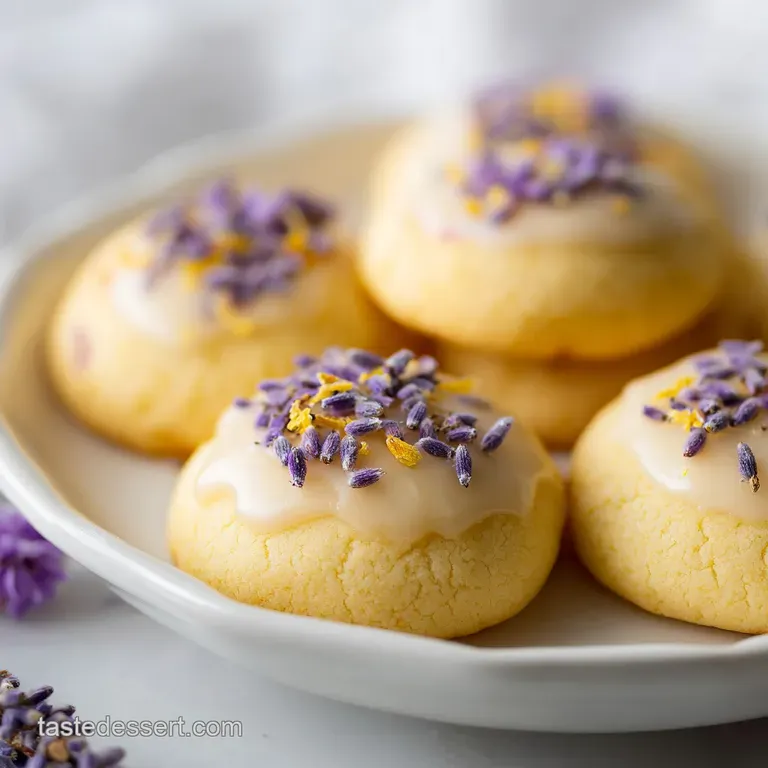
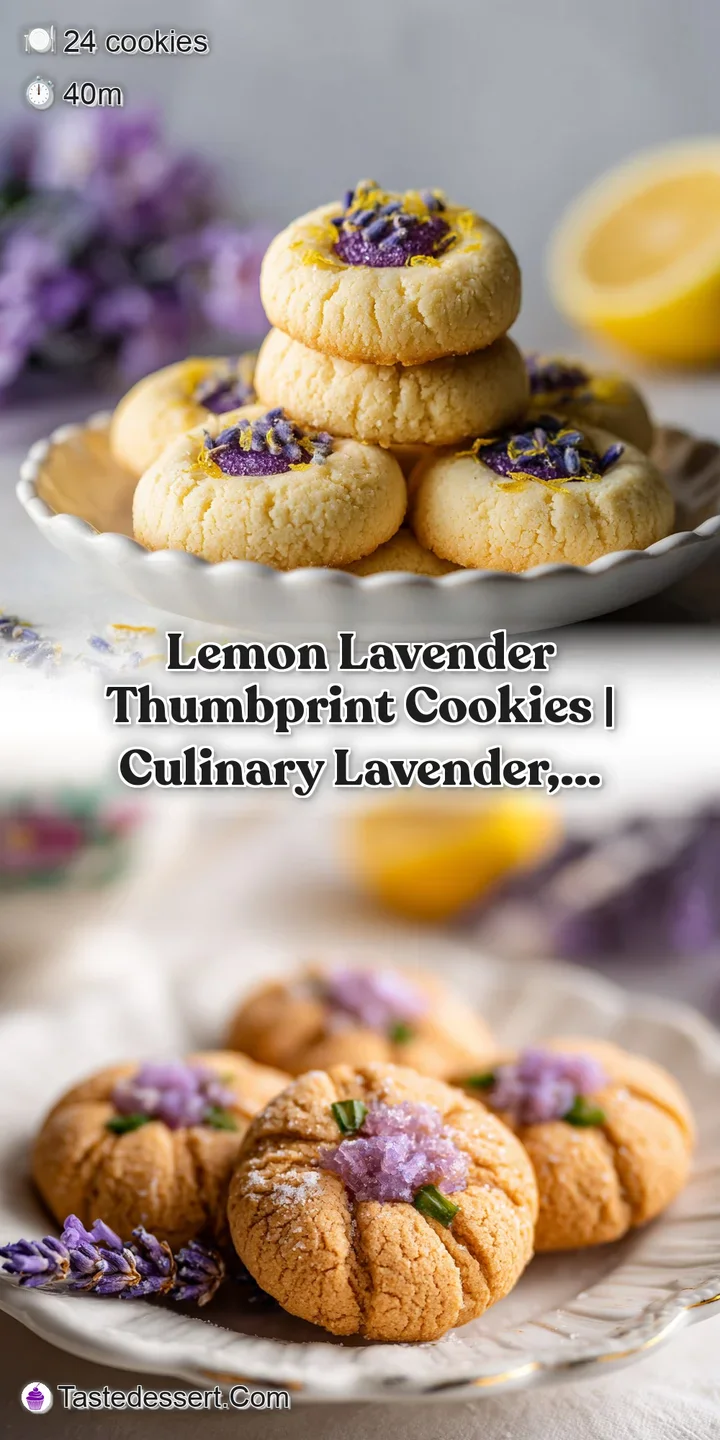
We are going for a look that is just as delightful as the taste. Each cookie features a bright yellow center that glows like a little gemstone, surrounded by a pale, golden edged base flecked with tiny purple lavender buds.
Whether you are hosting a brunch or just want a treat that feels a bit more "grown up," these thumbprints are going to be your new favorite way to celebrate the seasons. Let's crack on and get these into the oven.
Understanding the Balance of Floral and Citrus Tones
The magic of these cookies isn't just in the ingredients, but in how we treat them. Most people just toss dried lavender into the dough and hope for the best, but that often results in a "potpourri" flavor that is a bit too intense.
By rubbing the lavender buds into a small amount of flour and lemon zest, we are essentially bruising the botanicals. This physical action breaks the cell walls of the lavender, allowing the essential oils to seep out and coat the flour, which then carries that flavor evenly throughout the entire batch.
Another reason this recipe works so well is the interaction between the honey and the almond flour. Honey is hygroscopic, meaning it draws in moisture, which keeps the centers of these cookies from becoming rock hard. Meanwhile, the almond flour provides a high fat content that interferes with gluten development. This ensures that the texture remains tender and "short" rather than tough or bread like. It is a similar principle I use when making butter cookies, where the fat to flour ratio is the key to that signature melt in-your mouth feel.
Oil Suspension: Fat in the butter traps the aromatic compounds from the lavender, preventing them from evaporating during the bake.
Starch Gelatinization: The lemon curd thickens as the egg yolk proteins bond together, creating a stable, jam like texture that doesn't run.
Moisture Retention: Almond flour adds healthy fats that keep the crumb moist even after the cookies have cooled completely.
| Method | Time | Texture | Best For |
|---|---|---|---|
| Traditional Bake | 15 minutes | Soft crumb, set curd | Maximum floral aroma and classic look |
| Toasted Almond | 18 minutes | Nutty, darker edges | A more savory, rustic flavor profile |
| No Bake Curd | 12 minutes | Crispy base, runny curd | If you prefer a very sharp, fresh citrus punch |
When you are looking for that perfect floral balance, you might also enjoy experimenting with botanical infusions in other ways. For instance, my homemade syrup uses a similar logic of extracting color and scent from delicate petals, which is a great skill to have in your back pocket for summer drinks or drizzling over these very cookies.
Breaking Down the Essential Cookie Specifications and Times
| Component | Science Role | Pro Secret |
|---|---|---|
| Culinary Lavender | Aromatic botanical | Always bruise with flour first to avoid a soapy aftertaste. |
| Almond Flour | Texture modifier | Provides the "short" crumb and keeps the cookie gluten light. |
| Egg Yolks | Emulsifying agent | Creates the velvety, rich structure of the lemon curd filling. |
| Raw Honey | Natural humectant | Keeps the cookies soft for days longer than granulated sugar would. |
The relationship between the lemon juice and the egg yolks in the curd is vital. The acidity of the lemon helps to denature the proteins in the yolks, allowing them to thicken at a lower temperature. This prevents the curd from tasting "eggy" and instead gives it that sharp, clean finish we are looking for.
Trust me on this: taking the extra two minutes to strain the curd through a fine mesh sieve is the difference between a "good" cookie and a "professional" one. It removes any tiny bits of cooked egg, leaving you with a filling that is perfectly silky.
Selecting the Finest Botanical and Pantry Ingredients
To get the best lemon lavender thumbprint cookies, you really need to start with high-quality ingredients. I always reach for grass fed butter because it has a higher fat content and a richer color, which really shows through in a simple shortbread style dough.
- 1.5 cups (180g) all purpose flour: The structural backbone of our cookie.
- Substitute: 1 to-1 gluten-free baking flour. Why this? Maintains structure without altering the flavor profile significantly.
- 0.5 cup (50g) super fine almond flour: For that delicate, nutty crumble.
- Substitute: Oat flour. Why this? Offers a similar soft texture and mild, earthy sweetness.
- 0.75 cup (170g) unsalted grass fed butter, softened: The source of flavor and richness.
- Substitute: Refined coconut oil (solid). Why this? Provides the necessary fat, though the flavor will be more tropical.
- 0.33 cup (65g) raw honey: Our primary sweetener for the dough.
- Substitute: Maple syrup. Why this? Adds a different depth of sweetness; may make dough slightly stickier.
- 1 tbsp culinary grade dried lavender buds: The star botanical.
- Substitute: 1 tsp lavender extract. Why this? Provides flavor without the physical texture of the buds.
- 1 tsp pure vanilla extract: Enhances the floral notes.
- 0.5 tsp fine sea salt: Balances the sweetness.
- 0.25 cup (60ml) fresh lemon juice: For the sharp, tangy curd.
- 1 tbsp lemon zest: Adds bright citrus oils to the dough and curd.
- 3 large egg yolks: Thickens the curd and adds richness.
- 3 tbsp raw honey: Sweetens the curd naturally.
- 2 tbsp cold unsalted butter, cubed: Whisked in at the end for a glossy curd finish.
Essential Kitchen Tools for Crafting Professional Thumbprint Cookies
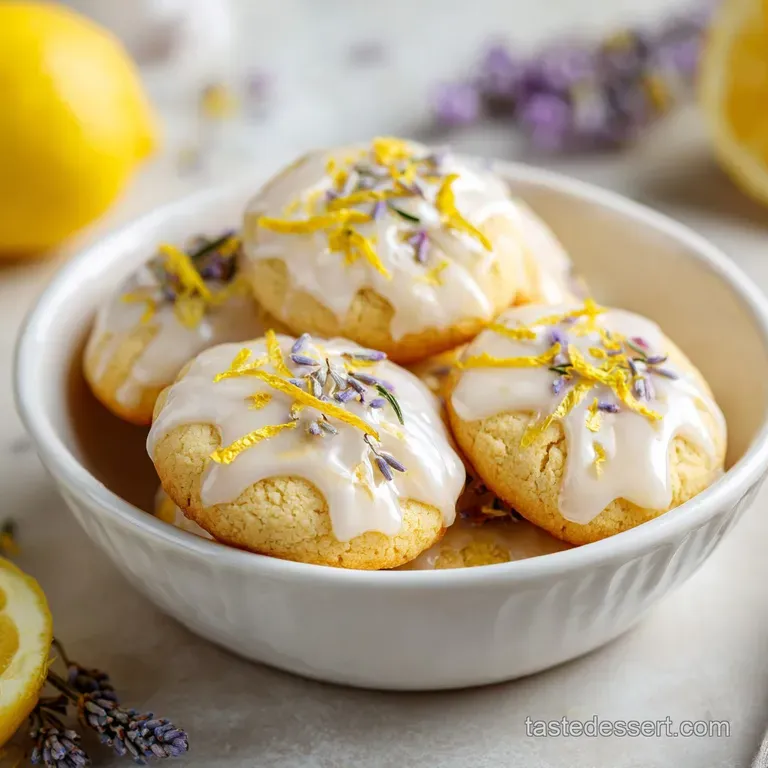
You don't need a professional pastry kitchen to make these, but a few specific tools will make your life much easier. A stand mixer (like a KitchenAid) is wonderful for creaming the honey and butter until they are truly aerated, which gives the cookies a lighter bite.
If you don't have one, a sturdy hand mixer works just as well.
For the curd, a small heavy bottomed saucepan is essential. You want even heat distribution so the egg yolks don't scramble on the bottom of the pan. I also highly recommend using a fine mesh sieve.
Straining the curd might feel like an annoying extra step, but it ensures that velvety, glossy texture that makes these cookies look so high end. Finally, a small cookie scoop (about 1 tablespoon size) ensures that all 24 cookies are the same size, which means they will all bake evenly in those 15 minutes.
A Detailed Guide From Prep to the Final Plate
Phase 1: Creating the Botanical Base
Bruise the aromatics. In a small bowl, combine the 1 tablespoon of culinary lavender and 1 tablespoon of lemon zest with one tablespoon of the measured all purpose flour.
Use the back of a spoon to firmly rub the buds against the side of the bowl until the scent is fragrant and the flour looks slightly damp. Note: This releases the essential oils directly into the flour.
Cream the fats. In your mixer, combine the 0.75 cup of softened butter and 0.33 cup of honey. Beat on medium high until the mixture is pale, fluffy, and aerated.
Incorporate the flavor. Add the lavender lemon flour mixture and the vanilla extract into the creamed butter. Mix until the botanicals are evenly suspended in the fat.
Form the dough. Gradually add the remaining all purpose flour, the 0.5 cup of almond flour, and the sea salt. Mix on low until a stiff, non sticky dough forms and pulls away from the sides.
Phase 2: Forming the Perfect Well
Shape the spheres. Scoop 1 tablespoon portions of dough and roll them between your palms into smooth spheres. Place them 2 inches apart on a parchment lined baking sheet.
Create the thumbprint. Use your thumb or the back of a rounded measuring spoon to press a deep well into the center of each ball. If the edges crack, gently pinch them back together to keep the curd contained.
Phase 3: The Precision Bake & Fill
Cook the curd. In a small saucepan over low heat, whisk the 0.25 cup lemon juice, remaining zest, 3 egg yolks, and 3 tablespoons of honey. Whisk constantly until the mixture thickens enough to coat the back of a spoon.
Finish the filling. Remove from heat and whisk in the 2 tablespoons of cold cubed butter until the curd is glossy and smooth. Strain through a fine mesh sieve into a clean bowl.
Fill the wells. Spoon about a teaspoon of the warm curd into the center of each cookie.
The final bake. Place the tray in the oven at 350°F (175°C). Bake for 15 minutes until the edges are lightly golden and the curd is set. Allow them to cool completely on the pan so the curd firms up.
Solving Common Baking Hurdles with Professional Troubleshooting
| Issue | Solution |
|---|---|
| Why Your Cookies Spread Too Much | If your thumbprints look more like flat pancakes than neat little cups, the butter was likely too warm when the cookies went into the oven. Honey based doughs can be a bit more sensitive to temperatur |
| Why the Lavender is Overpowering | This usually happens if you use "ornamental" lavender instead of "culinary" lavender. Ornamental varieties are much higher in camphor, which is what gives that medicinal, soapy taste. Always look for |
| Why the Curd is Bubbling Over | If the curd is escaping the well during the bake, you might have filled them a bit too high, or the well wasn't deep enough. As the curd heats up, it expands slightly. Always leave a tiny bit of "head |
Smart Scaling Techniques and Simple Dietary Adaptations
When it comes to scaling this recipe, you have to be careful with the honey and the eggs. If you want to double the batch to make 48 cookies, you can't just double everything and expect it to work perfectly.
For the spices and the lavender, I recommend only going up to 1.5x the original amount (so about 1.5 tablespoons of lavender for a double batch). Botanical flavors can become very aggressive when doubled exactly.
For the liquids in the curd, if you are making a giant batch, reduce the total lemon juice by about 10% to ensure it still thickens properly in a larger pot. If you are scaling down to 12 cookies, it can be tricky to use "half" of three egg yolks.
In that case, I recommend using two small egg yolks and slightly reducing the honey to maintain the right consistency.
If you are looking to make these vegan, you can swap the butter for a vegan butter stick (look for one with a high oil content) and replace the honey with agave nectar. For the curd, a "lemon curd" made with cornstarch and coconut milk can work, though it won't have that same velvety shatter that the egg yolks provide.
Practical Preservation Secrets and Smart Storage Solutions
To keep these cookies tasting fresh, you need to account for the moisture in the curd. Because the center is essentially a jam, these cookies don't stay crispy forever. Store them in an airtight container in the refrigerator for up to 5 days.
I actually think they taste even better on day two, as the lavender flavor has more time to settle into the crumb.
If you want to freeze them, I suggest freezing the baked cookie bases without the curd. They will last for up to 3 months. When you are ready to serve, make a fresh batch of curd, fill the frozen bases, and pop them in the oven for about 5 minutes to warm through and set the filling.
Zero Waste Tip: Don't throw away those egg whites! Since this recipe uses 3 yolks for the curd, you have 3 whites left over. These are perfect for making a small batch of meringues or adding to your morning omelet.
You can also freeze egg whites in an ice cube tray for future use in royal icing or silver cakes.
Creative Serving Suggestions and Visual Presentation Strategies
When it comes to the presentation of your lavender thumbprint cookies, color balance is everything. We want to emphasize the "botanical garden" theme without making it look cluttered. To achieve that professional look, focus on three specific color accents:
- Bright Yellow: The lemon curd itself is the star. Ensure it is strained so it looks like a clear, sunny pool in the center.
- Soft Purple: After the cookies have cooled, sprinkle a few fresh (unbaked) lavender buds over the top of the curd. The vibrant purple against the yellow is a classic complementary color pairing.
- Crisp White: A very light dusting of powdered sugar over the edges of the cookie (avoiding the curd center) creates a "frosted" look that makes the yellow center pop even more.
The Great Baking Myths
One big myth is that you should "seal" the lavender by heating it in butter first. While this works for savory herbs like rosemary, lavender is very delicate. High heat can actually turn the floral oils bitter. The "bruising in flour" method is much more effective for a clean flavor.
Another myth is that thumbprint cookies must be filled before baking. While some recipes do this, our honey lemon curd benefits from being partially cooked on the stove and then "finished" in the oven.
This ensures the curd is perfectly set and glossy, rather than becoming rubbery or dull from a long bake time.
Right then, you have all the secrets to making the most wonderful, floral treats. These cookies are a joy to share, and I promise that the first time you see that vibrant curd sparkling in the sunlight, you'll be just as obsessed as I am. Happy baking!
Recipe FAQs
How to ensure the lavender flavor is potent without tasting soapy?
Bruise the lavender buds against the bowl with lemon zest and one tablespoon of flour. This releases the essential oils directly into the fat, ensuring a balanced, aromatic flavor rather than a perfumed, soapy one.
Is it true I can use regular sugar instead of raw honey?
No, this is a common misconception. Raw honey provides a specific floral depth and moisture level essential for this recipe's texture; substituting sugar would result in a drier, less cohesive shortbread base.
How to fix cracks in the dough when pressing the center well?
Gently pinch any cracks at the edges back together immediately after pressing. If the dough feels too crumbly to hold its shape, ensure the butter was properly creamed until aerated before adding the dry ingredients.
How to achieve the perfect glossy finish on the lemon curd?
Whisk in the two tablespoons of cold cubed butter only after the curd has thickened on the stove. This emulsification technique creates a stable, professional sheen, similar to the process we use for a homemade whipped spread.
Can the lemon curd be made ahead of time?
Yes, you can prepare and chill the curd up to two days in advance. Keep it stored in an airtight container in the refrigerator and give it a quick stir before spooning it into the cookie wells.
How to tell when the thumbprint cookies are finished baking?
Look for lightly golden edges after 12-15 minutes in the oven. Because the center contains the delicate lemon curd, rely on the visual cue of the edges rather than the center, which should remain soft.
Why is almond flour necessary for this cookie base?
It provides a delicate, sandy texture that prevents the cookie from becoming too dense. This specific balance of almond and all-purpose flour creates the signature shortbread like melt-in-your mouth quality.
Lemon Lavender Thumbprint Cookies
Ingredients:
Instructions:
Nutrition Facts:
| Calories | 123 kcal |
|---|---|
| Protein | 1.6 g |
| Fat | 8.4 g |
| Carbs | 10.8 g |
| Fiber | 0.5 g |
| Sugar | 5.3 g |
| Sodium | 50 mg |
