Velvety Smoky Black Eyed Peas Recipe
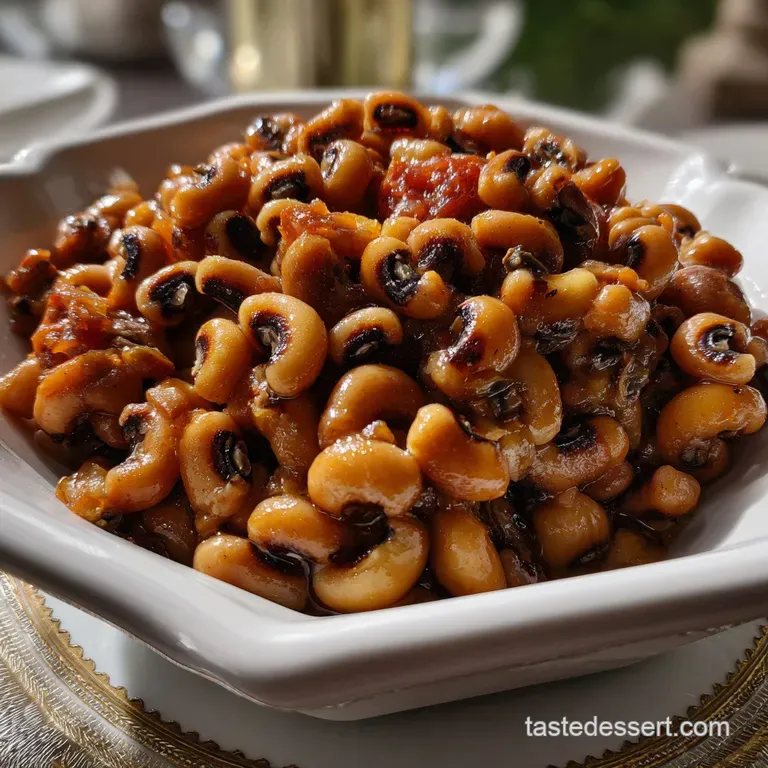
- Effort/Time: 1 hour 45 mins
- Flavor Hook: Smoky-earthy depth with a bright, aromatic finish.
- Perfect for: Soulful-Sunday-dinners, New-Year-traditions, and batch-cooking-prep.
- Master the Ultimate Classic Southern Black Eyed Peas
- The Science of Legume Hydration and Flavor Infusion
- Precision Metrics for This Southern Black Eyed Peas Recipe
- The Alchemy of Umami: Selecting Your Elements
- Essential Tools for Achieving Velvety Bean Texture
- Strategic Braising Protocol for Maximum Nutrient Extraction
- Why Your Peas Turn Mushy: Pro Fixes
- Flavor Architecture for Creative Adaptations
- ⚗️ The Scaling Lab: The Physics of Quantity
- Common Myths
- Thermal Preservation and Zero Waste Strategies
- Artistic Pairings for the Joyful Table
- Recipe FAQs
- 📝 Recipe Card
Master the Ultimate Classic Southern Black Eyed Peas
There is nothing more heartbreaking than spending two hours hovering over a stockpot only to serve a bowl of "crunchy centered" pebbles swimming in a thin, flavorless gray water. I once ruined a $40 New Year's dinner for ten people because I rushed the heat, resulting in peas that had literally exploded their skins while remaining raw and chalky inside.
That emotional tax the feeling of failing a tradition is exactly why we focus on the physics of the simmer.
I spent years over complicating this process with vinegar soaks and various "secret" spices before realizing that the art of transformation lies in the chemistry of the pot liquor.
I used to think more heat meant faster cooking, but I only succeeded in toughening the proteins and scorching the delicate sugars in the aromatics. It took destroying several batches of legumes to understand that the "low and slow" mantra isn't a suggestion; it is a thermal requirement for the starch granules to hydrate evenly.
The scientific revelation here is all about the Starch Gelatinization process and the Pectin Breakdown in the bean skins. When you maintain a gentle 190°F (88°C) simmer, you allow the internal starches to swell and soften without the violent agitation that shatters the exterior.
The result isn't just a cooked bean; it’s a velvety, mahogany colored pot of joy that creates its own thick, luxurious gravy.
The Science of Legume Hydration and Flavor Infusion
- Pectin Solubility: Heat gradually breaks down the calcium bridges in the bean's cell walls, turning a rigid structure into a buttery texture.
- Collagen Hydrolysis: The 1 lb smoked ham hock releases gelatin over 90 minutes, providing a tongue coating richness that water alone cannot achieve.
- Osmotic Equilibrium: Rinsing the 1 lb dried black eyed peas before cooking prevents surface dust from interfering with the hydration of the bean’s hull.
- Maillard Synergy: Sautéing the 200g yellow onion and 150g green bell pepper creates foundational flavor compounds that bond with the smokiness of the paprika.
Precision Metrics for This Southern Black Eyed Peas Recipe
| Metric | Value | Purpose |
|---|---|---|
| Simmer Temperature | 185°F - 195°F | Prevents skin rupture while ensuring starch softens |
| Liquid Ratio | 6:1 (6 cups stock to 1 lb peas) | Accommodates evaporation and starch thickening |
| The "Yield" Weight | Approx. 3 lbs cooked | Total volume after the peas absorb 2x their weight in liquid |
The Alchemy of Umami: Selecting Your Elements
Selecting your components is where the art truly begins. We aren't just tossing things into a pot; we are building a flavor architecture that balances earthiness with smoky, bright notes.
- 1 lb dried black eyed peas, picked over and rinsedWhy this? Dried legumes offer superior texture control and a richer pot liquor than canned versions.
- 1 tbsp vegetable oil or bacon drippingsWhy this? Fat acts as a solvent for the fat-soluble compounds in the paprika and cayenne.
- 1 lb smoked ham hockWhy this? Provides the essential collagen and smoky depth required for a traditional mouthfeel.
- 1 large yellow onion, finely diced (approx. 200g)
- 1 green bell pepper, diced (approx. 150g)
- 2 stalks celery, diced (approx. 100g)
- 4 cloves garlic, minced
- 6 cups high-quality chicken stockWhy this? Adds a foundational savory layer that water lacks; use Low-Sodium for better salt control.
- 1 tsp dried thyme
- 2 bay leaves
- 1/2 tsp smoked paprika
- 1/4 tsp cayenne pepper
- Salt and Black pepper to taste
Ingredient Chemistry Breakdown
| Ingredient | Chemical/Physical Role (Science) | The Pro Secret (Why This Matters) |
|---|---|---|
| Dried black eyed peas | Starch gelatinization and hydration | Older beans take longer to cook; buy from high turnover bins for even softening. |
| Smoked Ham Hock | Collagen-to-gelatin conversion | The bone-in hock provides structural body to the liquid that boneless cuts lack. |
| Chicken Stock | Glutamic acid delivery | Acts as a natural flavor multiplier for the earthy notes of the legumes. |
| Yellow Onion | Sugar caramelization | Provides the "back-of-the-throat" sweetness that balances the smoky paprika. |
Essential Tools for Achieving Velvety Bean Texture
To master this black eyed peas recipe, your choice of vessel is non-negotiable. You need a Lodge 6 quart Enameled Cast Iron Dutch Oven or a similar heavy bottomed pot. The thermal mass of cast iron ensures that once you reach a simmer, the temperature stays rock steady even if your stove fluctuates.
You will also need a Mercer Culinary Stainless Steel Slotted Spoon for skimming any foam that rises during the first 20 minutes of simmering. This foam consists of denatured proteins and starches that can cloud your pot liquor.
Finally, a Thermoworks Thermapen is my secret weapon; checking that your liquid stays between 185°F and 195°F is the only way to guarantee the beans don't turn to mush.
Strategic Braising Protocol for Maximum Nutrient Extraction
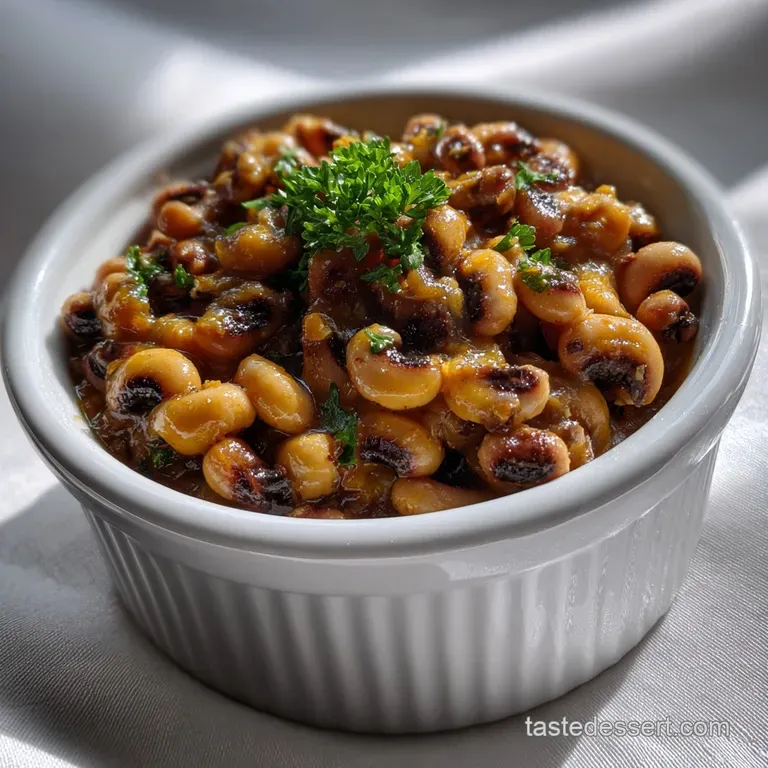
1. Preparation and The Quick Soak
Place the 1 lb dried black eyed peas in a large bowl. Pick through them carefully to remove small stones or shriveled legumes. Rinse under cold water for 30 seconds until the water runs clear and bubbles stop forming.
2. Building the Aromatic Foundation
Heat 1 tbsp vegetable oil in your Dutch oven over medium heat for 2 minutes until the oil shimmers and a drop of onion sizzles instantly. Add the 200g yellow onion, 150g green bell pepper, and 100g celery.
3. Sautéing the Holy Trinity
Sauté the vegetables for 6 minutes until the onions turn translucent and the sharp, pungent aroma shifts to a mellow sweetness. Do not let them brown; we want softness, not the bitterness of burnt edges.
4. Releasing the Aromatics
Stir in the 4 cloves of minced garlic. Sauté for exactly 60 seconds until the garlic becomes intensely fragrant but remains pale golden.
5. Incorporating the Spices
Add the 1/2 tsp smoked paprika, 1/4 tsp cayenne, and 1 tsp dried thyme. Stir for 30 seconds until the spices bloom and the oil in the pan turns a vibrant mahogany.
6. Introducing the Braising Liquid
Pour in the 6 cups of chicken stock and add the 1 lb smoked ham hock and 2 bay leaves. Bring the mixture to a boil until large, vigorous bubbles break the surface and the hock begins to release its smoky scent.
7. Adding the Legumes
Slide the 1 lb black eyed peas into the boiling liquid. Allow the temperature to return to a boil for 2 minutes until the peas are jumping slightly in the current.
8. The Low and Slow Simmer
Reduce the heat to low. Cover the pot partially and simmer for 1 hour 15 minutes until the peas are tender to the bite but still hold their distinct kidney shape.
9. Texture Refinement
Using a heavy spoon, mash a small handful of peas against the side of the pot. Stir them back in until the liquid thickens into a creamy, opaque gravy.
10. Finishing and Seasoning
Taste the liquid. Add salt and black pepper until the flavors pop and the smokiness of the hock is balanced by the brightness of the spices. Remove the bay leaves and ham hock before serving.
Why Your Peas Turn Mushy: Pro Fixes
Tough or "Crunchy" Peas
When your black eyed peas refuse to soften even after 2 hours, it’s usually a matter of Hard Water Chemistry. High mineral content (calcium and magnesium) reinforces the pectin in the bean skins, making them nearly indestructible.
Thin or Watery Broth
This occurs when the Starch Release is insufficient. If your liquid looks like tea rather than gravy, you haven't agitated the starches enough or the simmer was too cold to break down the legumes' cell walls.
| Problem | Root Cause | The Fix | Pro Protocol |
|---|---|---|---|
| Skins bursting | Boiling too violently | Lower heat to a "lazy" simmer | Maintain 190°F (88°C) exactly |
| Peas stay hard | Acid added too early | Add vinegar/lemon ONLY at the end | Acid prevents pectin breakdown |
| Lack of depth | Under sautéed aromatics | Sauté until translucent | Use bacon drippings for extra fat |
Chef's Tip: If you're in a rush, use the "Quick Soak" method: boil the peas for 2 minutes, turn off the heat, and let them sit for 1 hour. This hydrates the skins faster, cutting the final simmer time by 20%.
Flavor Architecture for Creative Adaptations
While this is a Hoppin John recipe base, you can easily pivot based on your pantry.
| Original Ingredient | Substitute | Why It Works |
|---|---|---|
| Smoked Ham Hock | Smoked Turkey Wing | Lower fat, but provides identical smoky collagen notes. |
| Chicken Stock | Vegetable Broth + 1 tsp Soy Sauce | Soy sauce provides the missing umami (glutamates) found in meat. |
| Vegetable Oil | Bacon Drippings | Enhances the "homemade" smoky profile through rendered animal fat. |
Decision Shortcut
- If you want a creamy texture, mash 1/2 cup of the cooked peas and stir them back into the pot liquor.
- If you want a smoky kick, double the smoked paprika and add a diced chipotle in adobo.
- If you want a bright finish, stir in a teaspoon of apple cider vinegar right before serving.
Fresh vs Shortcut Comparison
| Method | Texture | Flavor Depth | Time |
|---|---|---|---|
| Dried (This Recipe) | Firm yet buttery | Complex, developed pot liquor | 1 hour 45 mins |
| Canned (Shortcut) | Often mushy/blown out | Flat, metallic notes | 15 minutes |
| Frozen | Consistent, middle ground | Good, requires high-quality stock | 30 minutes |
⚗️ The Scaling Lab: The Physics of Quantity
When you decide to double this black eyed peas batch for a large gathering, the physics of the pot changes drastically.
- The Evaporation Paradox: If you double the ingredients to 2 lbs of peas and 12 cups of stock, do NOT use a pot with twice the surface area. If you use the same diameter pot, reduce the added stock by 10% (use about 10.5 cups instead of 12). Surface area dictates evaporation; doubling the volume in the same pot means less liquid escapes per minute, potentially leading to a watery result.
- Flavor Saturation: Scale your spices (thyme, paprika, cayenne) by 1.5x only. Capsaicin and dried herbs intensify non-linearly in large volumes of liquid.
- Thermal Mass: A double batch of cold stock and peas takes significantly longer to reach a simmer. This extended "warm-up" period can lead to over softening of the vegetable aromatics. Fix: Bring the stock to a boil before adding the peas to minimize the time spent in the "danger zone" where vegetables turn to mush.
Common Myths
- Myth: You must soak dried black eyed peas overnight.
- Truth: Unlike kidney beans, black eyed peas have relatively thin skins and hydrate quickly. An overnight soak often leads to a "mushy" exterior before the center is cooked.
- Myth: Salt makes beans tough if added early.
- Truth: Modern food science shows that salting early actually seasons the bean to the core and can help the skins soften by displacing magnesium ions in the pectin.
Thermal Preservation and Zero Waste Strategies
Storage and Reheating
- Fridge: Store in an airtight container for up to 5 days. The flavors actually improve on day two as the starches continue to marry with the aromatics.
- Freeze: These freeze beautifully. Place cooled peas and liquid in freezer bags, removing as much air as possible. Valid for 3 months.
- Reheating: Reheat on the stove over medium low. Add 1/4 cup of stock or water to loosen the "gel" formed by the ham hock's collagen.
💡 ZERO WASTE PHILOSOPHY
Don't discard those herb stems or onion skins. Transform: Simmer the thyme stems and onion skins with your chicken stock before starting the recipe.
Science: These "scraps" contain high concentrations of essential oils and flavonoids that deepen the foundational broth without adding cost.
Artistic Pairings for the Joyful Table
The beauty of these black eyed peas lies in the contrast of textures. Serve them over a bed of fluffy white rice to soak up the smoky pot liquor. For a vibrant contrast, pair this dish with a crisp Pea Salad with recipe to provide a cold, snappy counterpoint to the warm, velvety braise.
The transformation from a dry, hard seed into a tender, smoke kissed delight is the ultimate joy of homemade cooking. Whether you're making this for a holiday or a simple Tuesday night, the art is in the patience of the simmer.
Let the aromas fill your kitchen, trust the science of the starch, and enjoy the soulful result of your masterclass effort. Each spoonful is a celebration of flavor architecture and the simple, profound joy of a meal made from scratch.
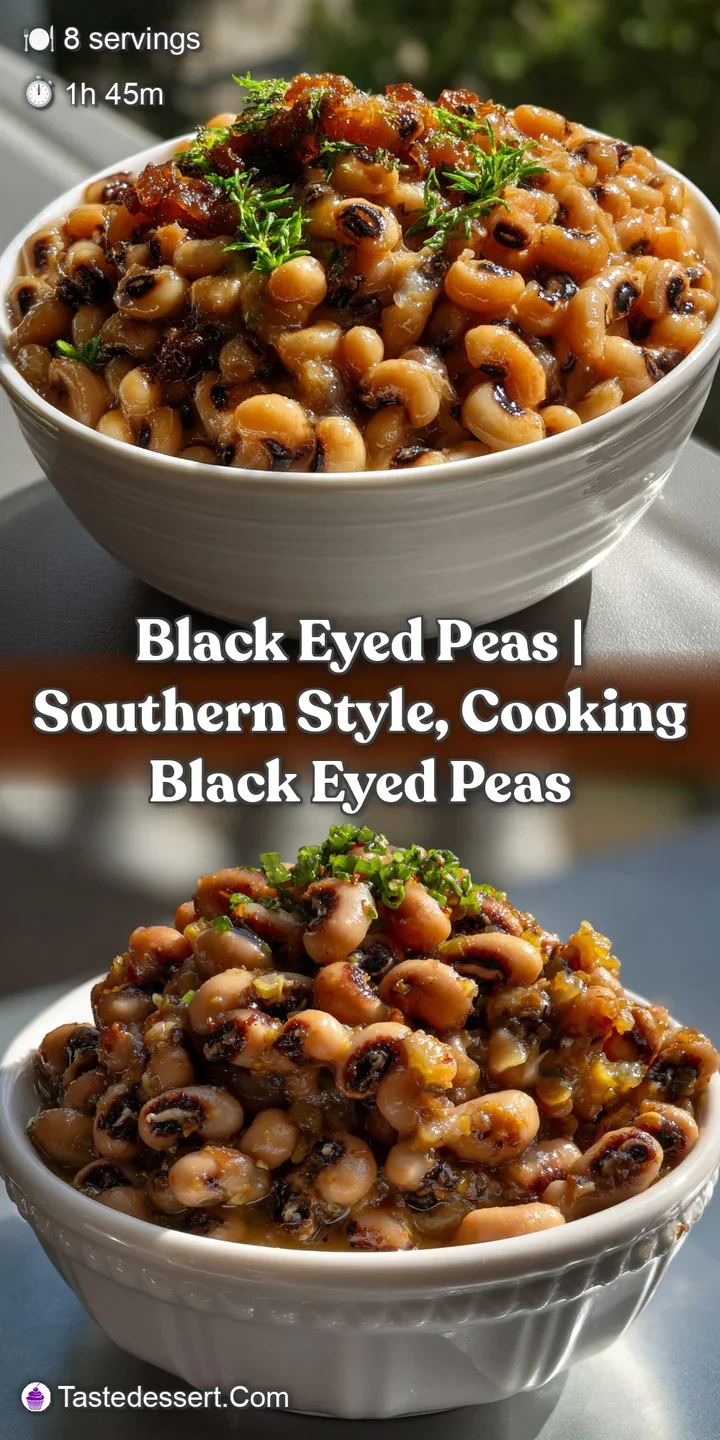
Recipe FAQs
How to make black eyed peas?
Simmer slowly between 185°F and 195°F for 1 hour 15 minutes. Use smoked meat like a ham hock for deep flavor infusion during the gentle simmer. This low heat prevents skin rupture while allowing starches to fully hydrate.
How to make black eyed peas in a crock pot?
Cook on low for 6-8 hours after sautéing aromatics on a separate pan. For best results mimicking the stove top depth, briefly sauté vegetables and spices before transferring them to the slow cooker vessel.
How to make black eyed peas taste good?
Bloom spices in fat, use quality stock, and finish with acid. The initial sauté builds the flavor foundation by maximizing the Maillard reaction in the vegetables. If you enjoyed mastering the fat-soluble flavor extraction here, see how the same principle works in the Cuban Style Black Beans: The Velvety Gold Standard Frijoles Negros.
How to make black eyed peas in instant pot?
Use the Sauté function first, then pressure cook on High for 15 minutes with a 15-minute natural release. Pressure cooking is superior for texture control when using dry legumes, as it rapidly achieves the necessary internal temperature for gelatinization.
How to make black eyed peas with smoked turkey?
Substitute the ham hock volume with a smoked turkey wing or leg quarter. The smoked turkey provides the necessary collagen and smoky compounds for the pot liquor richness.
Do I need to soak black eyed peas before cooking?
No. Soaking often leads to skins that burst prematurely. Black eyed peas possess thin skins that readily absorb water, so a quick rinse is generally sufficient for even cooking.
Why are my black eyed peas tough after simmering?
Acid added too early inhibits starch gelatinization, leading to tough skins. Acidic ingredients like vinegar or lemon juice prevent the pectin in the cell walls from dissolving properly, locking the starches inside.
- Add acid only after peas are tender
- Ensure your simmer temperature is below boiling
- Use low-sodium stock for better salt control
Master Black Eyed Peas
Ingredients:
Instructions:
Nutrition Facts:
| Calories | 281 kcal |
|---|---|
| Protein | 17 g |
| Fat | 6 g |
| Carbs | 38 g |
| Fiber | 7 g |
| Sugar | 3 g |
| Sodium | 565 mg |
