Corned Beef and Cabbage Soup: the Big Comforter Recipe
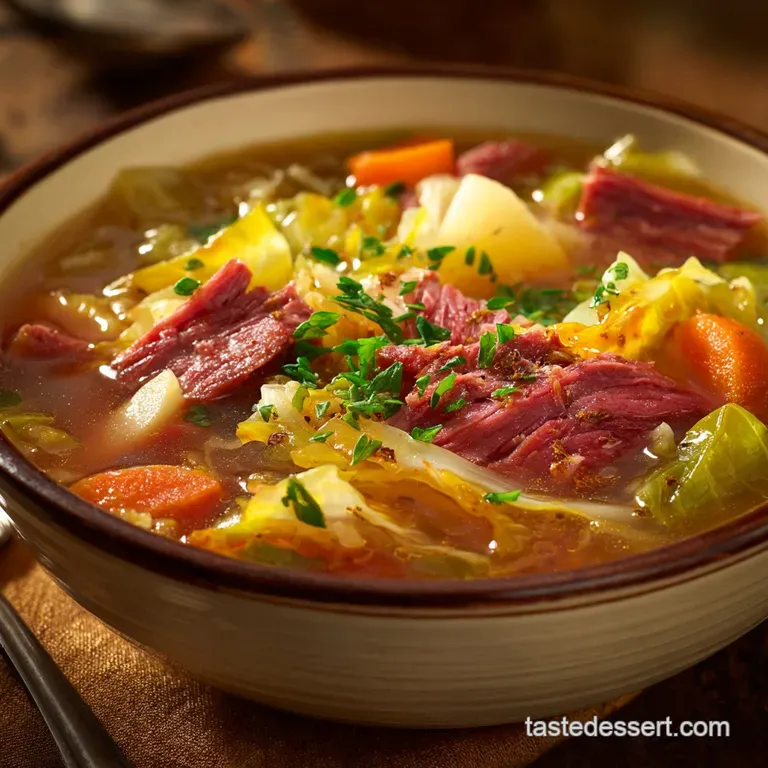
- Introducing The Big Comforter: Proper Corned Beef and Cabbage Soup
- Achieving Depth: The Secret to a Flavorful Corned Beef Soup Broth
- Essential Ingredients and Flavor Notes for Your Corned Beef and Cabbage Soup
- How to Make The Best Corned Beef and Cabbage Soup: Detailed Steps
- Troubleshooting and Expert Chef's Tips for Corned Beef and Cabbage Soup Success
- Storing, Freezing, and Reheating Your Big Comforter Soup
- Complementary Sides and Pairing Suggestions
- Recipe FAQs
- 📝 Recipe Card
Introducing The Big Comforter: Proper Corned Beef and Cabbage Soup
When that first big spoonful hits your nose, you immediately know you’re in for a treat. This isn't just broth; it's liquid, savoury gold, rich with slowly cooked carrots and the deep, meaty essence of corned beef.
The texture is key, offering tender potatoes, soft but-not-mushy cabbage, and satisfying chunks of brisket.
Forget the struggle of making a huge, complicated dinner; this Corned Beef and Cabbage Soup is surprisingly simple to pull together. It’s an absolutely genius way to use up that Saint Patrick's Day brisket, stretching one big cut of meat into two incredible, budget friendly meals.
Honestly, it's so good, it’s well worth cooking the corned beef brisket just for this recipe.
We are definitely skipping the watery, flavourless version your grandma might have served, bless her heart. We’re laser focused on maximum depth and richness here, using a few simple tricks to balance the salt and elevate the whole dish.
Let's crack on and make the absolute best bowl of hearty comfort you’ll ever spoon up.
Achieving Depth: The Secret to a Flavorful Corned Beef Soup Broth
The Anatomy of a Hearty Soup Base
Every single great soup must start with patience. We invest a good ten minutes slowly coaxing the deep, sweet flavor from the diced onions, carrots, and celery, which is the necessary foundational aromatic base. This isn't a race; it's a flavour investment that totally pays off later.
Moving Beyond the St. Patrick’s Day Leftover
While this recipe is brilliant for using up leftover corned beef, the final result is rich enough to warrant cooking a brisket specifically for this soup. That means we don't just rely on the existing brine flavours. We layer in fresh thyme and bay leaves right at the start to build beautiful complexity and warmth.
Why This Soup is "The Big Comforter"
It earns its title because we use starchy potatoes (like Russets) that slightly break down during the simmer, thickening the broth naturally without needing a flour slurry. The chunky cut of the corned beef ensures every single spoonful is robust and satisfying.
It truly warms you from the inside out and keeps you full for hours.
Rendering the Fat for Maximum Flavor Release
We start the soup base using a mix of neutral oil and unsalted butter for the initial sautéing of the vegetables. The butter adds a wonderful richness and depth that oil alone simply cannot touch. This small amount of initial fat infusion sets the stage for a truly luxurious, savoury broth later on.
The Crucial Role of the Pickling Spices
If you cooked your own corned beef, those residual pickling spices (like allspice and peppercorns) infused the meat beautifully during the slow cook. If you're using store-bought pre-cooked beef, we must compensate by adding robust dried thyme and bay leaves early into the soup base.
Do not skimp on the thyme.
Balancing Saltiness with Acidity
Corned beef is, by definition, quite salty because of the brining process. If you skip the necessary splash of apple cider vinegar at the very end, your soup will inevitably taste flat and heavy.
That final bit of acidity is the genius trick; it totally brightens everything up and makes the overall flavour profile truly pop.
Essential Ingredients and Flavor Notes for Your Corned Beef and Cabbage Soup
Choosing the Best Cut of Corned Beef Brisket
You want the flat cut or the "point cut," whichever has been slow cooked until it’s perfectly fork tender. Before dicing the meat, you absolutely must trim off the tough, rubbery exterior fat cap. Trust me, nobody enjoys chewing on that tough layer once it’s in the soup.
Selecting the Right Cabbage and Root Vegetables
I always prefer standard green cabbage for its reliably traditional flavour and great structural integrity. Use Russet or Yukon Gold potatoes; they hold their shape well but still give off enough starch to thicken the broth beautifully.
Make sure you don't dice the potatoes too small, or they’ll instantly dissolve into the broth.
Strategic Substitutions for Broth and Aromatics
I once ran out of beef stock mid-simmering and foolishly tried to compensate with only water and sad little bouillon cubes. The resulting soup tasted like pure sadness. Always use good quality stock!
| Ingredient | Viable Substitution | Notes |
|---|---|---|
| Corned Beef | Cooked Pastrami or Deli Ham | This will absolutely change the flavour profile, but works for the heartiness. |
| Beef Stock | high-quality Chicken Stock | Results in a lighter flavour, but still retains a lovely savoury warmth. |
| Russet Potatoes | Turnips or Sweet Potato | Turnips add density; sweet potatoes will lend a touch of sweetness. |
| Apple Cider Vinegar | Fresh Lemon Juice | Use slightly less of this; it's sharper but provides that crucial acidic lift. |
How to Make The Best Corned Beef and Cabbage Soup: Detailed Steps
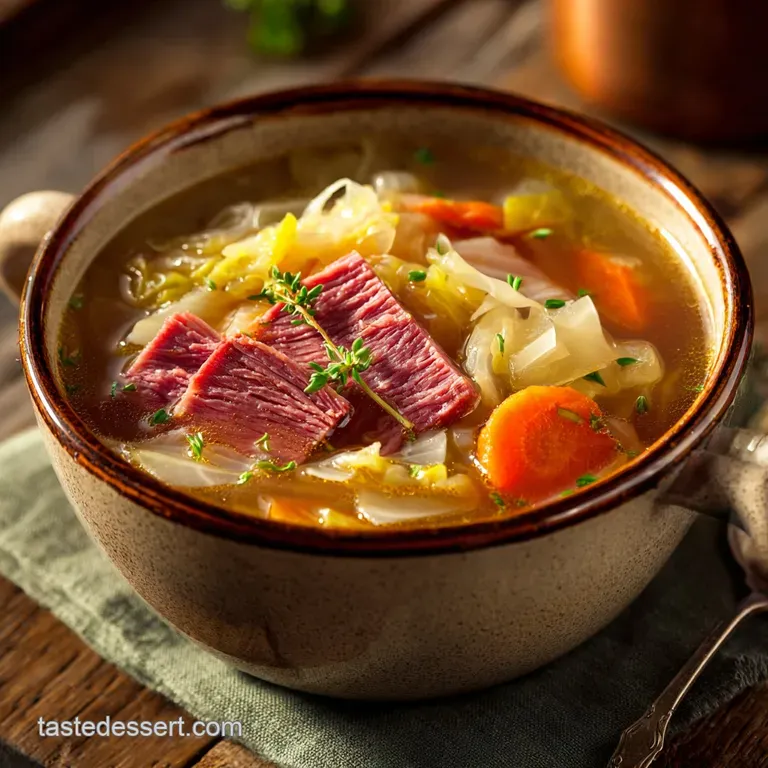
Step 1: Building the Aromatic Foundation
Heat the oil and butter in your large Dutch oven or stockpot over medium heat. Add the finely diced onion, celery, and carrots. Cook slowly for 8 to 10 minutes, stirring often, until the onions become translucent and the carrots soften slightly.
Now, stir in the dried thyme and bay leaves and cook for just 1 minute until you smell a robust, nutty aroma.
Step 2: Simmering and Flavor Extraction
Pour in the 2 quarts of low-sodium beef stock and bring the liquid up to a gentle simmer. Add the cubed potatoes to the pot. Reduce the heat immediately to maintain a steady, gentle bubble; simmer uncovered for about 15– 20 minutes, or until those potatoes are tender when pierced with a fork.
Step 3: Integrating the Corned Beef and Cabbage
Now, add the cubed, cooked corned beef and the tougher outer cabbage leaves to the pot. Simmer gently for 10 minutes to allow the rich beef flavours to thoroughly meld into the broth. Then, stir in the more tender inner cabbage leaves.
Continue simmering for only 5– 7 minutes, just until the cabbage is wonderfully wilted but still tender crisp.
Step 4: Final Adjustments and Resting Time
Remove the bay leaves from the soup. Stir in the necessary Dijon mustard and freshly ground black pepper. Taste the soup now. Since corned beef saltiness varies wildly, only add salt if it is absolutely necessary at this stage.
Stir in the required tablespoon of apple cider vinegar, which lifts the heavy flavours. Allow the soup to rest off the heat for 5 minutes before serving, then garnish heavily with fresh chopped parsley.
Crucial Chef's Note: When dicing the cooked corned beef, always cut against the grain . This ensures the meat remains perfectly tender in the soup rather than becoming stringy or annoyingly tough.
Troubleshooting and Expert Chef's Tips for Corned Beef and Cabbage Soup Success
Preventing Mushy Cabbage Syndrome
The number one failure point for cabbage soups is cooking the cabbage until it turns grey and mushy. The fix is simple: timing. Add the tender inner leaves right at the very end and cook them for only 5– 7 minutes. They must retain a bit of bite.
Set a timer if you tend to get distracted.
Handling Excess Saltiness from the Brine
You tasted the soup and realized it’s a total salt bomb we have all been there! If you used overly salty stock, drop in one peeled, halved potato and simmer it for 15 minutes; the starch absorbs some of the excess salt.
Then, definitely double up on the vinegar or fresh lemon juice to mask the remaining salinity.
Maximizing Tenderness in the Corned Beef
If your corned beef feels tough even after simmering, it likely wasn't sliced properly against the grain or simply wasn't cooked long enough initially. Once the tender meat is in the soup, limit its simmering time to just 10 minutes, only enough to warm it through.
Over simmering will cause the muscle fibres to seize up again, making it tough.
Storing, Freezing, and Reheating Your Big Comforter Soup
Safe Storage Duration in the Refrigerator
This robust soup holds up beautifully in the fridge. Store the cooled soup in an airtight container for up to 4 days. I promise, the rich flavours actually deepen overnight, making the soup on day two taste even better than the first time.
Best Practices for Freezing the Broth Base
Yes, Corned Beef and Cabbage Soup does freeze well, though be warned that the potatoes might become a little mealy upon thawing. For the absolute best texture retention, freeze the broth before adding the potatoes and the cabbage. The broth base will keep wonderfully for up to 3 months in the freezer.
Reheating Without Sacrificing Texture
Always reheat this soup gently on the stovetop over medium low heat. Avoid boiling the liquid aggressively. If the texture seems too thick the next day, add a quick splash of extra stock or water to loosen it up before serving. High heat truly kills the wonderfully crisp tender texture of the cabbage.
Complementary Sides and Pairing Suggestions
This Easy Corned Beef and Cabbage Soup is so hearty and rich it could easily be a meal all by itself. However, sometimes you really need a little contrast or a satisfying carb companion.
Serve it alongside thick slices of warm, crusty bread (Irish Soda Bread is perfect) for soaking up that deeply savoury broth. For a surprisingly sophisticated appetizer to serve beforehand, this robust soup goes perfectly with a lighter, slightly sweet bite like a [Fig Caramelized Onion and Goat Cheese Pizza: Restaurant Quality Gourmet Pizza].
If you’re looking for another kind of delicious, comforting soup for your next rainy Sunday, you should definitely try my [OldFashioned Vegetable Beef Soup: The Proper Sunday Comfort Recipe] it’s brilliant too!

Recipe FAQs
Why is my Corned Beef and Cabbage Soup turning out too salty?
The inherent saltiness comes from the meat’s brine. To mitigate this, always rinse the corned beef thoroughly under cold running water before cooking to remove excess surface salt. Furthermore, use low-sodium beef broth or plain water instead of highly salted stock as your primary liquid base.
How can I prevent the potatoes and cabbage from becoming mushy during cooking?
Mushy vegetables are generally caused by overcooking or adding them too early. Ensure the corned beef is nearly fork tender before adding the denser root vegetables like potatoes and carrots. The cabbage should only simmer until tender crisp, typically within the last 15 to 20 minutes of cooking time, and no longer.
Can I use fresh beef brisket instead of pre-brined corned beef?
While you can use fresh brisket, it will require significant flavor adjustments to resemble corned beef. You would need to add a generous blend of pickling spices, bay leaves, and possibly a dash of vinegar during the cooking process to mimic the traditional brine flavor profile.
Note that the texture will also differ slightly.
What is the best way to thicken the broth if I prefer a heartier consistency?
If the broth is too thin, you can mash some of the cooked potatoes against the side of the pot to release their starch, naturally thickening the liquid. For a more immediate solution, prepare a slurry by mixing one tablespoon of cornstarch with cold water and stirring it into the simmering soup until the desired body is achieved.
Is it possible to prepare this entire recipe using a slow cooker?
Absolutely, the slow cooker method works beautifully, especially for tenderizing the corned beef. Cook the rinsed meat and broth on low for 6 7 hours, adding the carrots and potatoes during the final 2 hours. Incorporate the cabbage only during the last 30 minutes to maintain its texture.
How long can I store leftover Corned Beef and Cabbage Soup?
Properly cooled and stored in an airtight container, the soup will keep well in the refrigerator for 3 to 4 days. When reheating, be mindful that the cabbage and potatoes may soften further, so heat only until warmed through, avoiding a prolonged second boil.
Does freezing the soup negatively affect the texture of the ingredients?
The soup freezes well for up to three months, but freezing slightly changes the texture of starchy vegetables. Both the potatoes and the cabbage may become a little softer and sometimes slightly mealy upon thawing and reheating. If you know you plan to freeze portions, slightly undercook the potatoes initially.
Proper Corned Beef And Cabbage Soup
Ingredients:
Instructions:
Nutrition Facts:
| Calories | 171 kcal |
|---|---|
| Protein | 12.2 g |
| Fat | 11.7 g |
| Carbs | 2.2 g |
