Red White and Blueberry Trifle: the Great British Summer Showstopper

- Introducing the Ultimate Summer Showstopper: Red White and Blueberry Trifle
- The Perfect Equilibrium: Balancing Flavour and Texture in Your Trifle
- Essential Components for the Layered Red White and Blueberry Trifle
- Master the Layers: A Step-by-Step Guide to Assembling the Trifle
- Achieving Trifle Perfection: Troubleshooting and Expert Preparation Tips
- Storage Solutions: Keeping Your Trifle Fresh (And Can You Freeze It?)
- Presentation and Pairings: How to Serve the Finished Dessert
- Recipe FAQs
- 📝 Recipe Card
Introducing the Ultimate Summer Showstopper: Red White and Blueberry Trifle
Can you smell that? It’s the scent of pure summer vacation mingling sweet vanilla from the custard, bright sharp berries, and a hint of boozy raspberry. This Red White and Blueberry Trifle is my absolute favorite thing to make when the weather gets warm.
It looks complicated, like something an actual pastry chef made, but the reality is wonderfully simple.
This recipe is the ultimate lifesaver for any huge summer celebration, especially the Fourth of July or a big family reunion. You do 90% of the work days ahead of time, and then you just pull the glorious bowl out of the fridge when your guests arrive.
It’s cheap, incredibly festive, and requires absolutely zero oven time when you use a quality store-bought cake base.
We are not just stacking ingredients here; we are building a masterpiece of contrasting textures and flavors. I am going to walk you through all the real world tricks I’ve learned especially how to get that custard silky smooth and how to make sure the whipped cream doesn't deflate before dinner.
Let’s get stacking!
The Perfect Equilibrium: Balancing Flavour and Texture in Your Trifle
The Timeless Appeal of the British Trifle
The trifle is a dessert that demands respect. It’s a centuries old British tradition, built on a structure of soaked sponge, rich custard, fruit, and cream. When you nail the layers, the result is wonderfully nostalgic and deeply satisfying.
This specific recipe uses the classic framework but features those bold, beautiful summer colors.
Choosing Your Trifle Bowl: Vessel Aesthetics and Layer Visibility
A trifle lives or dies by its presentation. You simply must use a clear glass bowl for this dessert. Why hide all that vibrant red, white, and blue goodness? Look for a bowl that is tall and slightly wider at the top to really show off the definition between the cream, berries, and custard.
Why Red, White, and Blue is the Perfect Summer Palette
Beyond the obvious patriotic appeal for American holidays, the pairing of strawberries (red) and blueberries (blue) is pure genius for a dessert. Both fruits are perfectly ripe and intensely flavorful in the summer months.
Their inherent tartness actually works perfectly to cut through the richness of the creamy layers, giving the dessert a necessary brightness.
The Role of the Sharp Soak (Lemon/Raspberry) in Cutting Sweetness
This is where the magic happens and where most people get lazy, just using plain simple syrup. A great trifle needs a slightly sharp element to balance the heavy custard and cream. Using a mix of tart lemon juice and raspberry liqueur ensures the sponge is saturated with flavor, not just sugar.
Trust me: that acid is essential for preventing the whole dessert from tasting flat and overwhelmingly sweet.
Achieving the Silky Smooth Custard Layer
The custard is the heart of the trifle, and it must be flawless. I once skipped straining the custard, and let me tell you, finding those tiny rubbery bits of overcooked egg yolk was utterly miserable. We temper the eggs to slowly raise their temperature, preventing curdling.
The essential step is to strain the hot custard immediately after cooking through a fine mesh sieve into a clean bowl. This catches any stray lumps and guarantees that luxurious, silky mouthfeel.
Preventing a Soggy Sponge: Timing the Soak
The word "soggy" sends shivers down my spine when it comes to desserts. Your cake base should be saturated and moist, but still hold its shape. We use cubes of sturdy pound cake here, which resist turning to mush immediately.
Drizzle the soak slowly and give it 10– 15 minutes to fully absorb the liquid before piling on the heavy custard. This ensures structural integrity.
Essential Components for the Layered Red White and Blueberry Trifle
Sponge Cake Options: From store-bought to Homemade Ladyfingers
I am a home cook, and I am not afraid to cheat where it counts. I almost always use a good quality store-bought Madeira or pound cake because it’s dense and holds up beautifully to the heavy soak without falling apart.
If you want to go full traditionalist, ladyfingers (Savoiardi) are excellent but definitely need a more restrained hand with the soaking liquid.
Detailed Notes on Dairy: Cream vs. Stabilized Whipped Topping
We are using real heavy whipping cream because nothing compares to the flavor and richness. However, real cream can weep or deflate after sitting for hours, especially in a humid room.
To prevent this, a simple stabilizer like a half teaspoon of cream of tartar, added while whipping, gives the cream incredible structure. This small step ensures your gorgeous cloud topping stays tall and proud for hours on the table.
Berry Prep: Getting the Most Flavor from Fresh Strawberries and Blueberries
Use fresh berries; frozen ones weep too much moisture as they thaw, which ruins the layers. For the strawberries, hull them and slice them vertically into thin strips. This allows you to stand the slices up against the glass bowl, creating that stunning visual impact we discussed.
Save the most pristine blueberries for the final garnish.
Substitutions: Making the Trifle Non-Alcoholic
If you’re serving kids or folks who don't drink, skipping the alcohol is easy. Just swap the liqueur entirely for equal parts fresh orange juice and extra simple syrup. The recipe still retains great flavor and moisture!
| If you don't have... | Use this instead... |
|---|---|
| Cream Sherry/Liqueur | Equal parts good quality orange juice and simple syrup. |
| Madeira Cake | Stale pieces of Angel Food Cake or good quality vanilla Swiss roll. |
| Cornstarch | All-purpose flour (use 1.5 times the amount, and cook longer). |
| Fresh Blueberries | Blackberries or raspberries (just remember they will bleed color more easily). |
Master the Layers: A step-by-step Guide to Assembling the Trifle
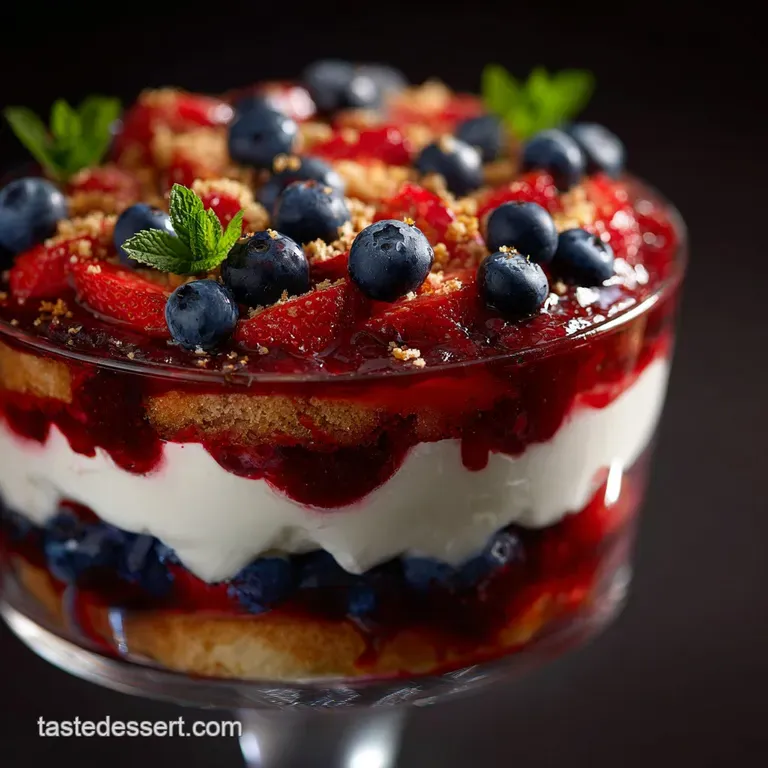
Step 1: Preparing the Foundation Layer and Alcoholic Soak
Start by cutting your cake into roughly 1 inch cubes. Press the cubes snugly into the base of your clean trifle bowl, making sure they fill the gaps. Combine your liqueur, lemon juice, and simple syrup, then slowly drizzle it over the cake base. You should hear a satisfying sizzle as the liquid soaks in.
Let it stand for 15 minutes before touching it again.
Step 2: Setting the Custard and Arranging the Middle Berries
This is the visual step. Take your prepared, sliced strawberries and gently stand them up against the interior sides of the glass, pressing them slightly into the soaked cake layer. Scatter about half of the fresh blueberries across the base.
Now, take your completely chilled and thickened vanilla custard and spoon it over the cake and fruit. Gently smooth the top layer with a spatula, making sure it seals the sides of the bowl.
Step 3: Piling High the Stabilized Whipped Cream Cloud
Once the custard layer is set, pull out your electric mixer and whip your very cold heavy cream with the sugar and stabilizer until stiff peaks form. You want this cream to be sturdy, not sloppy. Spoon or pipe the cream generously on top of the custard layer, forming a tall, dramatic mound.
This is your thick, glorious white layer.
The Critical Chill Time: Allowing Flavors to Marry
The layers need to meet and get to know each other intimately. This step cannot be rushed. Once fully assembled, cover the bowl and chill the trifle for a minimum of four hours. Ideally, you should chill it overnight to allow the liquids to fully seep into the cake and the custard to completely firm up.
Chef’s Note: Do not add the final berry garnish until right before serving. Berries can release moisture and bleed color, which will streak down the pristine white cream if added too early.
Achieving Trifle Perfection: Troubleshooting and Expert Preparation Tips
Common Mistake: Why Your Custard Isn’t Setting
If your custard is still runny after chilling, you did one of two things: you didn't cook it long enough, or you used too much milk relative to the cornstarch. Cornstarch requires boiling (or close to it) temperatures to fully activate its thickening power.
You must keep whisking until you see it genuinely thicken up and hear it bubble gently even after tempering the eggs. Don't be afraid of the heat!
The Best Time to Assemble (Overnight vs. Same Day)
Assemble it the day before you plan to serve it, hands down. While you can assemble it the same day, resting overnight improves the depth of flavor dramatically. The sponge needs that time to truly absorb the alcoholic soak, making the layers taste far more cohesive and integrated.
Stabilizing Whipped Cream for Presentation (A Pro Tip)
Using that tiny pinch of cream of tartar, or even a tablespoon of instant vanilla pudding mix powder (dry), will stabilize the cream perfectly. This trick means your gorgeous whipped peaks will stay sharp and defined for up to 12 hours, even in a warm room.
This is a crucial professional technique for any dessert you plan to transport.
Storage Solutions: Keeping Your Trifle Fresh (And Can You Freeze It?)
Refrigerator Lifespan: How Long Will the Trifle Last?
A properly chilled and covered trifle will last beautifully for 3 to 4 days in the refrigerator. After the fourth day, the sponge starts to get a little too mushy, and the berries might begin to weep excessively. Keep it covered tightly with plastic wrap to prevent it from picking up any stray odors (like that leftover White Chicken Chili: The Proper Creamy One-Pot Wonder Recipe you made earlier in the week).
The Problem with Freezing Trifle Layers
This dessert absolutely does not freeze well . Custard, when frozen and thawed, separates and becomes grainy. Whipped cream becomes watery and spongy, and the soaked cake base turns into frozen sludge.
If you need a make-ahead dessert, plan on refrigerating it, but never, ever stick a completed trifle in the freezer.
Presentation and Pairings: How to Serve the Finished Dessert
Best Practices for Transporting the Dessert to a Party
If you are taking this magnificent bowl to a gathering, ensure the cream is completely stabilized and the trifle has had its required chill time. Place the trifle bowl securely in a deep box or cooler, surrounded by towels or non-slip mats to prevent shifting. This is much easier to transport than those tricky warm casseroles! For a lighter appetizer before this impressive dessert, try prepping a batch of Mediterranean Quinoa Salad: Easy, vibrant, and perfect for meal prep.
Use a large, deep serving spoon that can scoop down through all the layers in one movement. Every person needs a bite of sponge, custard, and cream to truly appreciate the balance. Serve it with a cold glass of sparkling wine or a classic summer lemonade. Enjoy!

Recipe FAQs
How far in advance should I assemble the trifle, and how do I prevent it from becoming watery?
While the sponge and soaking liquid need at least 4 hours to meld and develop flavor, the trifle is best assembled no more than 12 to 18 hours before serving. Wait until the final two hours before adding the whipped cream and delicate garnishes to prevent the cream layer from weeping or becoming soggy.
I prefer to make my own custard, but how do I ensure it doesn't split when cooling?
The key to smooth, rich custard is gentle, consistent heating; never allow the mixture to boil vigorously, or the eggs will scramble and separate. If you notice it starting to split (look for small, fatty beads), immediately whisk in a tablespoon of cold milk or heavy cream off the heat to help re-emulsify the mixture.
I need a non-alcoholic option for the soaking liquid. What works best instead of the lemon raspberry soak?
A simple syrup infused with vanilla bean and lemon zest works beautifully and ensures the sponge retains moisture without the booze. Alternatively, you can steep a strong batch of sweet, concentrated raspberry or blackcurrant tea, cool it, and drizzle it generously over the sponge.
What are the best alternatives if I cannot find or bake a classic sponge cake?
Ladyfingers (Savoiardi biscuits) are the traditional European substitute and offer a firm yet absorbent texture ideal for trifle soaking. You may also use pre-made plain pound cake slices or even crushed shortbread cookies for a slightly crunchier base layer, depending on your desired texture.
My strawberry layer sometimes bleeds red color into the white custard. How can I prevent this for a cleaner look?
Ensure your custard layer is fully chilled and completely set before placing any wet fruit on top, as warmth encourages color transfer. For maximum color barrier, you can brush a very thin layer of neutral flavored gelatin or clear fruit glaze over the chilled custard before arranging the fresh berries.
Can I freeze leftover trifle, and how long does it last in the refrigerator?
Trifle does not freeze well, as the custard and whipped cream components will separate and become grainy upon thawing due to their high water content. It should be stored tightly covered in the refrigerator and is best consumed within 2 to 3 days of assembly for peak freshness and texture.
Red White Blueberry Trifle Spectacle
Ingredients:
Instructions:
Nutrition Facts:
| Calories | 168 kcal |
|---|---|
| Protein | 2.0 g |
| Fat | 10.0 g |
| Carbs | 20.0 g |
