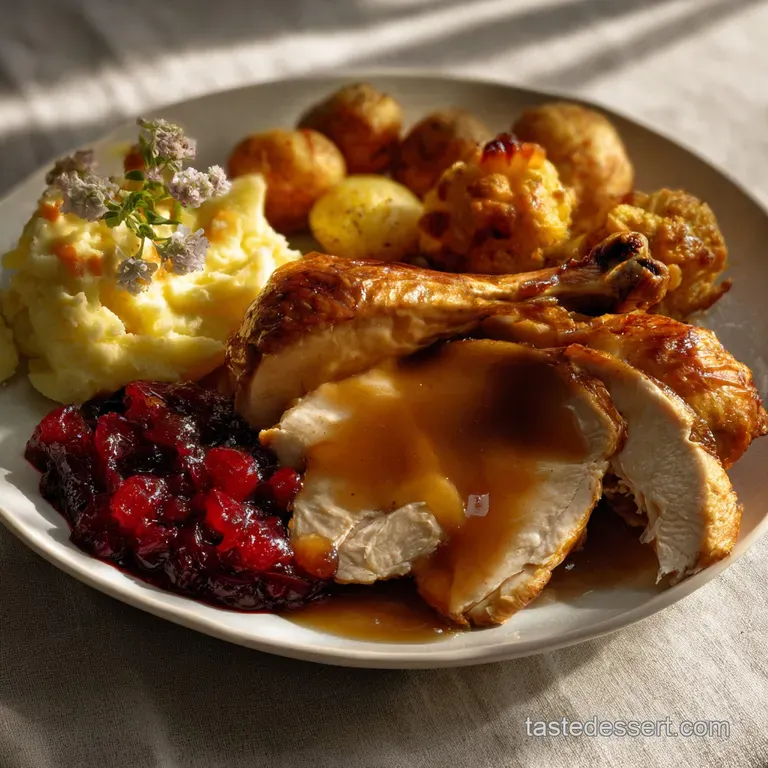
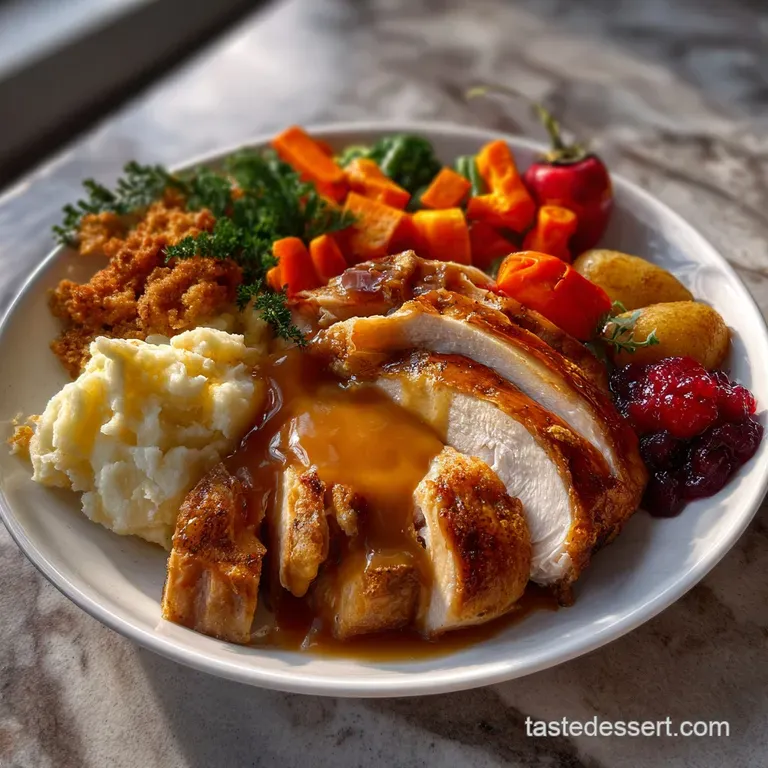
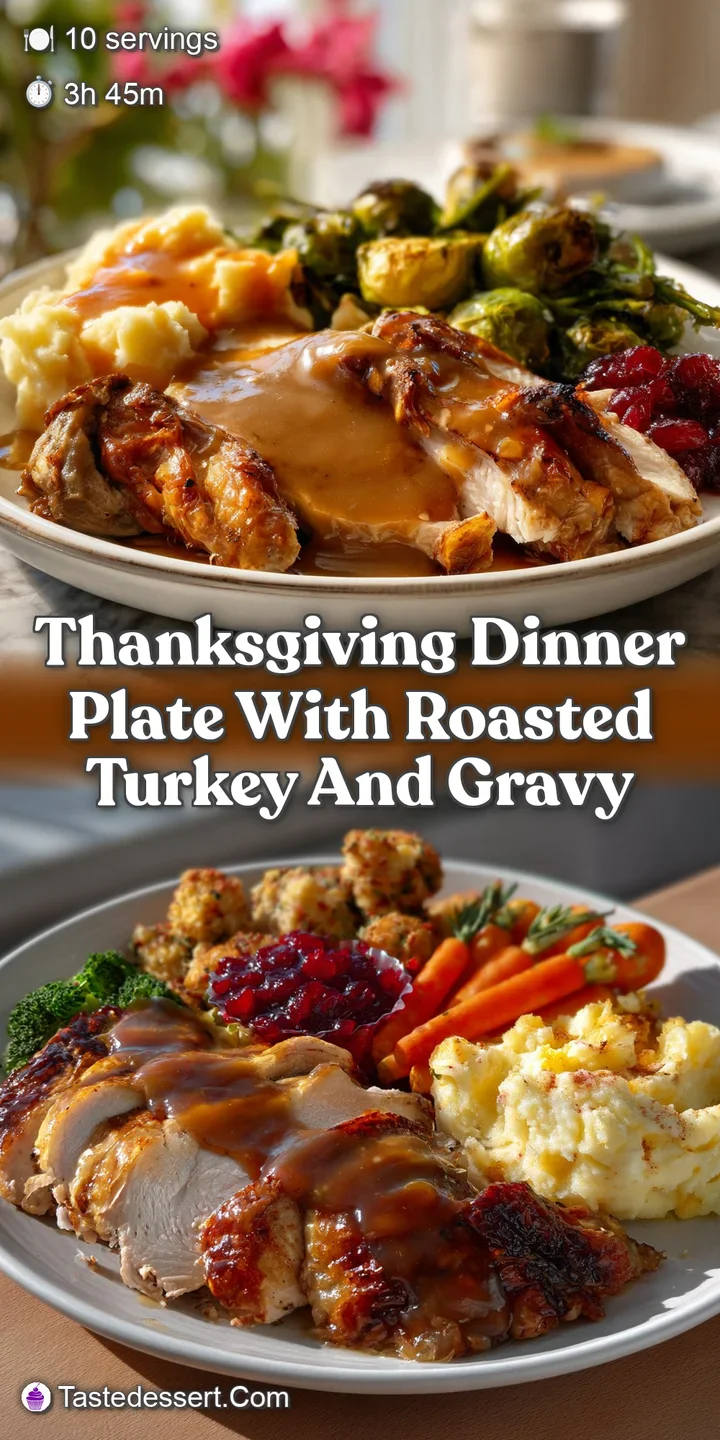
Thanksgiving Dinner Plate with Roasted Turkey and Gravy
- Time: Active 45 minutes, Passive 3 hours, Total 3 hours 45 minutes
- Flavor/Texture Hook: Shatter-crisp golden skin meets velvety, butter-rich potatoes.
- Perfect for: A classic holiday gathering where the art of traditional roasting takes center stage.
- Mastering the Architecture of a Thanksgiving Dinner Plate with Roasted Turkey and Gravy
- The Molecular Physics of Moisture and Crispness
- Chemical Function Table: The Role of Each Element
- Component Selection and Intelligent Substitutions
- Functional Breakdown: Precision Engineering Your Feast
- The Step-by-Step Evolution of Flavor Layers
- Proportional Adjustments and Batch Size Guidelines
- The Truth Behind Seasonal Kitchen Folklore
- Preservation Protocols and Zero-Waste Transformations
- Decision Shortcut: Choosing Your Roast Method
- Presentation Tips for the Ultimate Dinner Plate
- Troubleshooting the Perfect Plate
- Common Questions
- 📝 Recipe Card
Mastering the Architecture of a Thanksgiving Dinner Plate with Roasted Turkey and Gravy
Have you ever wondered why some holiday birds emerge from the oven looking like a mahogany colored work of art while others remain pale and uninspiring? The secret isn't just in the heat; it is in the transformation of moisture and the strategic layering of aromatics.
Get ready to savor a complete Thanksgiving Dinner Plate with Roasted Turkey and Gravy. We are going to bypass the "wet brine" mess and focus on the precision of a dry brine to ensure every slice is a joy to serve.
Creating this feast is about more than just a meal; it is an act of homemade love. I remember my first attempt where I forgot to let the bird rest, and all those precious juices flooded the carving board. That mistake taught me the physics of protein denaturation and the importance of patience.
By following this method, we ensure the bird remains succulent while the skin reaches a level of crispness that provides an audible "shatter" with every bite. The resulting Thanksgiving Dinner Plate with Roasted Turkey and Gravy will impress even the toughest critics.
We will focus on the harmony between the herbed butter, the roasted aromatics, and the smooth, emulsified finish of the potatoes. This isn't just cooking; it is the art of building layers.
From the first sprinkle of Diamond Crystal Kosher salt to the final whisk of the soy-enriched gravy, every step is designed to maximize the sensory delight of your table, resulting in the quintessential Thanksgiving Dinner Plate with Roasted Turkey and Gravy.
The Molecular Physics of Moisture and Crispness
- Osmotic Diffusion: Salt draws moisture out of the bird, dissolves into a concentrated brine, and is then reabsorbed into the muscle fibers to season deeply.
- Protein Denaturation: The dry-brining process breaks down tight protein strands, allowing the bird to retain more liquid during the over high heat roasting phase.
- The Maillard Reaction: By keeping the skin dry and applying fat (butter), we catalyze a chemical reaction between amino acids and reducing sugars, creating that signature mahogany crust.
- Starch Gelatinization: Boiling the Yukon Gold potatoes causes starch granules to swell and burst, which, when combined with warm heavy cream, creates a velvety, non-gummy texture.
Chemical Function Table: The Role of Each Element
| Ingredient | Chemical/Physical Role (Science) | The Pro Secret (Why This Matters) |
|---|---|---|
| Kosher Salt | Denatures proteins and controls osmotic pressure | Ensures the bird stays juicy even if slightly overcooked. |
| Unsalted Butter | Provides the lipid medium for the Maillard reaction | Creates the golden brown color and carries herb flavors into the skin. |
| All-purpose Flour | Acts as a starch thickener through gelatinization | Provides the structural viscosity needed for a glossy, pourable gravy. |
| Soy Sauce | Provides glutamates for umami enhancement | Deepens the color of the gravy and adds a "hidden" depth of flavor. |
Component Selection and Intelligent Substitutions
- 1 whole Turkey (13 lbs): The foundation of our feast. Why this? Smaller birds (12 14 lbs) roast more evenly than massive 20 lb alternatives.
- Substitute: Two large roasting chickens. (Reduces cooking time by 50%).
- 3 tbsp Kosher salt: Vital for the dry brine. Why this? Flaky texture adheres better to skin than fine table salt.
- Substitute: 2 tbsp Sea salt. (Denser grains mean you need less volume).
- 1/2 cup Unsalted butter: Used for the herb rub and the potatoes. Why this? Controls total sodium levels while providing essential fats.
- Substitute: Ghee. (Higher smoke point prevents the butter solids from burning).
- 5 lbs Yukon Gold potatoes: The gold standard for mashing. Why this? High starch-to-sugar ratio creates a naturally buttery, creamy texture.
- Substitute: Russet potatoes. (Yields a fluffier, airier mash but requires more butter).
- 1/4 cup All-purpose flour: The thickening agent for our gravy.
- Substitute: Cornstarch (use half the amount). Note: Result will be more translucent and jelly like.
- 3 cups Turkey stock: The liquid base for the gravy.
- Substitute: Chicken bone broth. (Adds similar gelatinous body and depth).
Functional Breakdown: Precision Engineering Your Feast
To achieve professional results, your equipment must facilitate even heat distribution and airflow. Using a heavy duty roasting pan with a rack is non-negotiable; it elevates the bird so the heat can circulate underneath, preventing a soggy bottom.
For the potatoes, a stainless steel potato ricer is the secret to a lump free, velvety consistency that mimics high end bistro standards.
Accurate temperature monitoring is your best defense against dryness. I highly recommend a ThermoWorks Thermapen for instant readings. You will also need a fine mesh chinois or strainer for the gravy to ensure it is perfectly smooth, removing any charred bits of onion or garlic.
For the mashing process, a heavy bottomed 6 quart saucepan ensures the cream and butter heat evenly without scorching. Achieving this final product the Thanksgiving Dinner Plate with Roasted Turkey and Gravy—is all about precision tools.
The step-by-step Evolution of Flavor Layers
Phase 1: The 24 Hour Foundation
- Pat the 13 lbs Turkey completely dry using paper towels. Note: Surface moisture is the enemy of crispy skin.
- Rub 3 tbsp Kosher salt and 1 tbsp Black pepper over every inch of the bird, including the cavity.
- Refrigerate uncovered for 12 24 hours on a wire rack over a baking sheet. Note: This air-chilling dehydrates the skin for maximum crunch.
Phase 2: The Aromatic Transformation
- Preheat oven to 325°F (165°C) and position the rack in the lower third.
- Mix 1/2 cup softened butter with 2 tbsp minced sage and 2 tbsp rosemary.
- Loosen the skin over the breast and slide half of the herb butter underneath.
- Stuff the cavity with 1 quartered yellow onion and 1 halved head of garlic.
- Brush the remaining herb butter over the exterior of the bird.
Phase 3: The Precision Roast
- Roast for approximately 2 hours 45 minutes to 3 hours, basting every 45 minutes with pan drippings.
- Monitor internal temperature until the thickest part of the thigh reaches 165°F (74°C).
- Remove from oven and transfer the bird to a carving board.
- Rest for 30 45 minutes uncovered. Note: Resting allows muscle fibers to reabsorb juices; cutting too soon leads to dry meat.
Phase 4: The Gravy Alchemy
- Strain the pan drippings into a measuring cup, discarding the solids.
- Whisk 1/4 cup All-purpose flour into 1/4 cup of the reserved turkey fat in a saucepan over medium heat for 2 minutes until it smells nutty and looks like blonde sand.
- Slowly pour in 3 cups Turkey stock while whisking constantly until the liquid thickens and coats the back of a spoon.
- Stir in 1 tsp Soy sauce for a deep mahogany hue and umami boost. This crucial step elevates the gravy component of the Thanksgiving Dinner Plate with Roasted Turkey and Gravy.
Phase 5: The Velvet Potatoes
- Boil 5 lbs Yukon Gold potatoes in salted water for 15 20 minutes until a knife slides through with zero resistance.
- Drain and return to the hot pot for 1 minute to cook off excess steam.
- Mash or rice the potatoes while adding 1 cup warmed heavy cream, 1/2 cup cubed butter, and 2 tsp sea salt until a smooth, glossy texture forms.
Proportional Adjustments and Batch Size Guidelines
Scaling a holiday meal requires an understanding of the "Square Cube Law" and pan crowding. If you are doubling this recipe, do not simply double the seasonings, as some flavors can become overwhelming.
Preparing the perfect Thanksgiving Dinner Plate with Roasted Turkey and Gravy for a crowd requires scaling adjustments.
- Scaling Up (2x):
- Flavor (Salt/Spices): Use 1.5x the amount of salt and herbs to avoid an over seasoned profile.
- Roasting: Never put two birds in one pan. Work in batches or use two separate ovens to ensure proper airflow and browning.
- Gravy: Reduce the stock by 10% initially. Larger volumes evaporate slower, and you can always add more liquid later to reach the desired viscosity.
- Scaling Down (1/2):
- Turkey: Use a 6 7 lb turkey breast instead of a whole bird.
- Cooking Time: Reduce the roasting time by approximately 40%. Start checking temperatures after 1 hour 15 minutes.
- Pans: Use a smaller roasting pan or a cast iron skillet to prevent the drippings from burning on a large, empty surface.
The Truth Behind Seasonal Kitchen Folklore
Myth: You must baste every 15 minutes to keep the bird moist. Truth: Opening the oven door every 15 minutes drops the temperature significantly, extending the cook time and actually drying out the bird.
The moisture comes from the internal fat and the dry brine, not the liquid you pour over the skin.
Myth: Washing the bird in the sink removes bacteria. Truth: Washing poultry actually spreads bacteria up to three feet via water droplets. The heat of the oven is the only thing that safely kills pathogens.
Patting the bird dry with paper towels is the safer, more effective prep method.
Myth: The "pop-up" timer that comes with the bird is accurate. Truth: Those timers are often set to 180°F (82°C), which is far past the point of dryness.
Use a digital probe thermometer for a precise 165°F reading to ensure a succulent result when assembling your Thanksgiving Dinner Plate with Roasted Turkey and Gravy.
Preservation Protocols and Zero Waste Transformations
Storage: Store the turkey and potatoes in airtight containers in the fridge for up to 4 days. The gravy will last 2 days but may need a splash of stock when reheating to restore its emulsion. You can freeze the sliced bird in gravy for up to 3 months to prevent freezer burn.
Zero Waste: Don't discard the carcass! The bones are rich in collagen and marrow. Simmer the bones with herb stems and vegetable scraps for 4 hours to create a high-quality stock. Even the cheese rinds from your holiday platter can be thrown into the stock pot for extra depth. If you have leftover potatoes, they are the perfect base for a shepherd's pie, perhaps paired with the same savory notes found in our Pork Chops with recipe.
Transformation: Leftover turkey is famously great for sandwiches, but consider dicing it into a creamy pasta dish. The velvety sauce in our Spicy Butternut Squash Pasta recipe pairs beautifully with the roasted poultry for a quick weeknight meal that honors the primary flavors of the original Thanksgiving Dinner Plate with Roasted Turkey and Gravy.
Decision Shortcut: Choosing Your Roast Method
| If You Want... | Do This... | Why? |
|---|---|---|
| Ultra Crispy Skin | Dry-brine for 24 hours uncovered. | Maximum evaporation of surface moisture. |
| Fastest Cook Time | Spatchcock the bird (remove backbone). | Flattens the surface area for rapid, even heat. |
| Richest Gravy | Add 1 tsp Soy sauce and pan scrapings. | Intensifies umami and builds a deep color for your Thanksgiving Dinner Plate with Roasted Turkey and Gravy. |
Presentation Tips for the Ultimate Dinner Plate
The visual appeal of your Thanksgiving dinner plate relies on contrast and height. Start by placing a generous, flat topped mound of the creamy mashed potatoes on the side of the plate.
Rest two or three slices of the turkey against the potatoes ideally one slice of breast and one piece of dark meat to show off the different textures.
Pour the glossy gravy only over the lower half of the meat, allowing the golden brown skin of the top half to remain visible and crispy. If you are serving a sweet finish, like a Classic Pumpkin Roll recipe, keep the plate garnishes simple a single sprig of fresh sage or rosemary is enough to signal the herbs used in the roast, completing the stunning Thanksgiving Dinner Plate with Roasted Turkey and Gravy.
Troubleshooting the Perfect Plate
Why did my turkey skin turn out soft instead of crispy?
Soft skin is usually the result of trapped steam. This happens if you cover the bird with foil for the entire roast or if you don't dry the skin sufficiently before applying the butter. The moisture on the surface turns into steam rather than evaporating, preventing the Maillard reaction from crisping the lipids.
This is a key failure point in achieving an excellent Thanksgiving Dinner Plate with Roasted Turkey and Gravy.
| Problem | Root Cause | The Fix | Pro Protocol |
|---|---|---|---|
| Lumpy Gravy | Flour added too fast to hot liquid | Whisk vigorously or use a blender | Always add liquid in a slow, steady stream while whisking. |
| Dry Breast Meat | Overcooked while waiting for thighs | Use a foil "shield" on the breast | Pull the bird when the breast hits 160°F; carryover will take it to 165°F. |
| Gummy Potatoes | Over working the starch | Stop mixing once combined | Use a ricer instead of a food processor to prevent starch cell damage. |
How do I prevent my gravy from forming a skin?
A skin forms on gravy when the surface proteins and starches dehydrate upon contact with air. To prevent this, place a piece of plastic wrap directly on the surface of the gravy while it sits, or stir in a tiny knob of butter just before serving to create a thin, protective lipid layer.
What if the bird is done 2 hours before dinner?
Do not panic. A whole turkey is a massive thermal mass and will stay warm for a long time. Wrap the bird tightly in heavy duty foil, then wrap that in several thick towels and place it in an insulated cooler (without ice). It will stay at a safe serving temperature for up to 3 hours without drying out. For more holiday inspired ideas, you might enjoy the flavors in our Greek Turkey Meatballs recipe for a smaller, festive gathering that echoes the deep flavors of a full Thanksgiving Dinner Plate with Roasted Turkey and Gravy.
Common Questions
What is the most crucial step for crispy turkey skin?
Dry-brine the bird uncovered in the refrigerator for 24 hours. Air circulation pulls surface moisture away, which is necessary for the Maillard reaction to crisp the fat. If you skip this, the steam generated will soften the crust.
Can I substitute chicken stock for turkey stock in the gravy?
Yes, chicken stock is an acceptable substitute for turkey stock. Both provide the necessary gelatin and foundational flavor for the roux base. Ensure the stock is high-quality, as it comprises most of the gravy's volume.
Why are my mashed potatoes grainy and not smooth?
Over mashing the potatoes denatures the starch structure, causing a gluey texture. Excessive mixing shears the swollen starch granules, releasing too much amylose, which thickens aggressively. This structural failure is permanent once it occurs.
- Use a ricer over a mixer
- Ensure liquids are warm before adding
- Do not overwork the potato mash
Should I roast the turkey at a high or low temperature?
A moderate 325°F (165°C) temperature yields the best balance. Very high heat causes the breast to cook much faster than the dark meat, leading to dryness near the bone. This medium temperature allows the internal muscle groups to approach doneness simultaneously.
Is it better to use salted or unsalted butter for the rub?
Unsalted butter for precision control. Salted brands vary widely in sodium content, meaning the flavor balance of your herb rub becomes unpredictable. Unsalted butter ensures you control all added sodium via the dry brine measurement.
What is the correct internal temperature for pulling the bird?
Pull the bird when the thickest thigh registers 165°F (74°C). The temperature will rise 5 10 degrees while resting due to carryover cooking, reaching the safe zone without drying out the breast meat. If you master this temperature cue here, you can apply the same principle to achieve perfect roasting results in our Salmon Wellington.
Myth: Resting the turkey for 15 minutes is enough time.
Myth: Resting the turkey for 15 minutes is enough time. Reality: A 13lb bird requires at least 30 45 minutes of rest. This time allows contracted muscle fibers to relax and reabsorb juices, preventing them from flooding the carving board.
Roasted Turkey And Gravy Plate
Ingredients:
Instructions:
Nutrition Facts:
| Calories | 728 kcal |
|---|---|
| Protein | 49g |
| Fat | 38g |
| Carbs | 41g |
| Fiber | 4g |
| Sugar | 3g |
| Sodium | 1840mg |
