Scallops with Parmesan Risotto: Achieving the Perfect Sear and Creamy Texture

- Elevate Dinner: Mastering Scallops with Parmesan Risotto
- The Science Behind Perfect Textures: Why This Recipe Works
- Essential Ingredients for Scallops with Parmesan Risotto & Expert Notes
- Smart Ingredient Swaps and Dietary Modifications
- Phase One: Preparing the Ultra-Creamy Parmesan Risotto
- Phase Two: Achieving the Perfect Sear on Your Scallops
- Mastering the Technique: Chef’s Tips and Common Mistakes
- Storing and Reheating Scallops with Parmesan Risotto Safely
- Presentation and Pairing: Elevated Serving Suggestions
- Recipe FAQs
- 📝 Recipe Card
Elevate Dinner: Mastering Scallops with Parmesan Risotto
That sound when you drop a dry scallop onto a screaming hot skillet? It’s pure culinary poetry. The aroma of nutty, caramelized crust mixing with rich, bubbling Parmesan risotto is a sensory hook that immediately signals a spectacular dinner. This isn't just a meal; it's a statement.
People usually assume this dish belongs only in a fancy restaurant, costing forty dollars a plate. But I’m here to tell you, it's totally achievable at home and surprisingly quick. While risotto demands attention, the total active cooking time is under an hour.
It’s my go-to when I want maximum wow factor with minimum effort.
We are going to focus on the two main technical hurdles that scare most cooks: achieving that signature creamy, al dente risotto texture, and getting a deep golden sear on the scallops. Trust me on every single step here.
Let’s get you that perfect scallops with Parmesan risotto recipe .
The Science Behind Perfect Textures: Why This Recipe Works
What Makes This Dish Sophisticated (Yet Simple)?
The genius of this dish lies in contrast. We pair the sweet, delicate brine of the sea scallops with the earthy, rich comfort of the creamy rice. It feels sophisticated because you've nailed the texture of both components, something many cooks fail to do.
We keep the flavours clean: just lemon, thyme, and good quality butter.
A Quick Overview of the Dual Cooking Process (Risotto vs. Scallops timing)
Timing is the absolute key here; you can’t make them both simultaneously and hope for the best. Risotto requires continuous, moderate heat for about twenty minutes straight. The scallops need intense, high heat for four minutes, tops.
We get the risotto 95% finished, take it off the heat, and use that window to execute the perfect sear.
The Maillard Reaction: Achieving the Golden Scallop Crust
This is the holy grail. The Maillard Reaction is just a fancy term for browning, which creates hundreds of complex, delicious flavour compounds. This reaction only happens effectively if there is no moisture present.
If your scallops are wet, they steam instead of sear, resulting in a rubbery gray mess. That's why we spend serious time drying them.
Starch Release: Creating Velvety, Al Dente Risotto
The creaminess of true risotto comes entirely from the starch naturally present in the Arborio rice. We don't use heavy cream, thank goodness. By stirring the rice constantly and adding hot stock slowly, we gently encourage the starch granules to rub off and dissolve into the liquid.
This creates a luxurious, thick emulsion that is absolutely heavenly.
Balancing Brine, Creaminess, and Acidity (Lemon/Thyme integration)
Risotto is rich. The Parmesan, the butter, the starchy rice it’s intense. We need a counterbalance. That's where the fresh lemon zest and the subtle, earthy note of fresh thyme come in.
They cut through the fat and highlight the natural sweetness of the seared scallops and risotto . Do not skip the acid; it keeps the dish feeling light and bright.
Essential Ingredients for Scallops with Parmesan Risotto & Expert Notes
I’m giving you the exact list, but here’s the thing: use ingredients you actually like. If you wouldn't drink the white wine, don't cook with it.
Ingredients We Absolutely Need
- Jumbo Sea Scallops (Dry Pack): U/10 or U/12 count are best.
- Arborio or Carnaroli Rice: Non-negotiable for true risotto texture.
- Hot Stock: Low-sodium chicken or vegetable stock.
- Dry White Wine: Pinot Grigio or Sauvignon Blanc.
- Parmigiano Reggiano: Freshly grated.
- Butter and Olive Oil: For searing and sautéing.
- Shallots, Thyme, Lemon Zest: Our core aromatics.
Smart Ingredient Swaps and Dietary Modifications
Selecting the Best Sea Scallops (Wet vs. Dry Pack Distinction)
This is the biggest secret. Avoid "wet-packed" scallops. Wet-packed scallops are soaked in sodium tripolyphosphate to preserve them and make them weigh more (sneaky!). This chemical makes them hold onto water like tiny sponges. You'll never get a deep sear.
Always ask for dry-packed scallops. If you can only find wet-packed, soak them in a bowl of cold saltwater for 30 minutes, drain, and then pat them aggressively dry.
Choosing the Right Rice: Arborio vs. Carnaroli
Arborio is readily available and works great. If you can find Carnaroli, grab it; it's often called the "King of Risotto Rice." It’s slightly pricier, but it holds its shape better and releases a creamier starch, making the whole process more forgiving if you get distracted by your lemon butter scallops recipe .
Quality Matters: Parmesan, Wine, and Stock Selection
I know, grated cheese is easy, but it often contains cellulose (wood pulp) to prevent caking. Use a block of real Parmigiano Reggiano and grate it yourself. The flavour difference is night and day. Also, make sure your stock is hot, and I mean steaming hot, the entire time.
dairy-free Alternatives for Creamy Risotto
You can absolutely make a dairy-free risotto that still delivers on creaminess.
- For the Butter: Substitute unsalted dairy butter with a high-quality plant based butter (like Miyoko’s or Earth Balance sticks).
- For the Parmesan: Nutritional yeast adds a cheesy, savoury flavour without the dairy. Start with half the measure the recipe calls for and adjust to taste at the very end.
Finding Suitable Substitutes for White Wine
The wine provides crucial acidity that helps balance the richness. If you are avoiding alcohol, do this substitution:
| Ingredient to Replace | Substitute | Ratio/Tip |
|---|---|---|
| Dry White Wine | Hot Stock + Vinegar | Use ½ cup hot stock mixed with 1 tsp white wine vinegar or apple cider vinegar. |
Phase One: Preparing the Ultra Creamy Parmesan Risotto

Building the Flavor Base (Soffritto and Toasting the Rice)
First things first: get your stock simmering in a separate pot. It must be hot! Now, melt your olive oil and butter in the main pot over medium heat. Sauté your minced shallots and thyme until they are soft and translucent, about four minutes.
This is called the soffritto ; it's the delicious foundation.
Next, add your Arborio rice. Stir constantly for two minutes until the edges of the grains become clear. This tostatura phase is super important. It seals the outside of the rice, helping it cook evenly and preventing mushiness later on. Now pour in the wine; stir until every drop is absorbed.
The Critical Stirring Technique for Maximum Creaminess
Time for the workout! Add one full ladle of hot stock. Stir, stir, stir until it’s almost completely absorbed. Don’t rush this. Then, add the next ladle. Repeat this process for about 18 to 20 minutes.
I know it’s tedious, but that constant friction releases the starch, yielding the perfect al dente core and creamy exterior.
Finalizing the Mantecatura (Adding Fat and Cheese off-heat)
When the rice is just right creamy but still offering a slight bite remove the pot from the heat. This is the moment for mantecatura , the finishing step. Stir in the remaining cold butter and the grated Parmesan cheese vigorously.
The cold butter helps everything emulsify into that beautiful, slightly runny consistency known as all'onda (like a wave). Stir in the lemon zest, taste, and season with salt and pepper. Cover the pot lightly while you focus on the scallops.
Chef's Note: The risotto will thicken quickly once you add the cheese. It should look slightly too loose when you take it off the heat; this is exactly how we want it.
Phase Two: Achieving the Perfect Sear on Your Scallops
Prepping Scallops for Maximum Dryness (The Key to Searing)
I cannot stress this enough: they must be dry. Take your scallops, remove that tiny, tough side muscle if it's there (it looks like a little tag), and place them on paper towels. Press firmly with more paper towels. Right before they hit the pan, season them generously with salt and pepper.
Temperature Control: When to Add the Scallops to the Pan
Use a cast iron or heavy bottomed stainless steel pan. Put it over high heat. Let it sit there for a good three minutes until it's just smoking slightly. Then add your neutral oil. When the oil shimmers, you are ready. The pan must be incredibly hot.
Time Management: Synchronizing the Risotto and Scallops
This is the grand finale, so make sure your risotto is finished and resting. Place the scallops gently into the screaming hot pan, making sure they don’t touch each other. If you crowd the pan, the temperature drops, and they will steam. Sear in batches if necessary.
Do not touch them for 2– 3 minutes. Once a deep golden crust forms, flip them. Add the final two tablespoons of butter and baste them quickly with the foaming butter until they are just cooked through, about 90 seconds more.
Mastering the Technique: Chef’s Tips and Common Mistakes
Troubleshooting Sticky or Mushy Risotto
Did you rinse the rice? Don't do that next time! Rinsing removes that essential surface starch. The main culprit, though, is usually overcooking. You need to pull the rice off the heat when it still has a firm bite (the al dente core).
If you finish the cooking on the stove after adding the cheese and butter, it will definitely turn to sticky paste.
Preventing Scallops from Sticking or Overcooking
People often fail here for two reasons: low heat or wet scallops. Use HIGH heat and D-R-Y scallops. If your pan is hot enough and you've used a high smoke point oil (like grapeseed or canola), they will release from the pan naturally once the crust has formed.
Trying to pry them off too early ruins the crust.
Utilizing Residual Heat (The Carry Over Cooking Factor)
Just like steak, scallops keep cooking after they leave the pan. They are done when they are opaque on the sides and just barely translucent in the very center. Take them off the heat and transfer them directly to a warm plate or serving platter.
Storing and Reheating Scallops with Parmesan Risotto Safely
Fridge Storage Guidelines for Cooked Risotto
Risotto is always best eaten immediately, but leftovers are fine! Store the leftover risotto separately from the scallops in an airtight container for up to three days.
Reheating Risotto Without Sacrificing Texture
When risotto gets cold, it seizes up into a firm disc. Reheating it requires patience and liquid. Place the risotto in a small saucepan over low heat. Add a splash (maybe ¼ cup per serving) of water or stock. Stir gently until it softens and relaxes back into a creamy consistency.
You may need another small cube of butter or a dusting of Parmesan to revive the richness.
Warning: Why Freezing Scallop Risotto is Not Recommended
I love meal prepping, but this is not the dish for it. Do not freeze leftover scallop risotto. The rice starch will separate, and upon thawing, the texture becomes grainy and mushy. Scallops also take on an unpleasantly rubbery texture when frozen and reheated.
This dish is meant to be devoured immediately.
Presentation and Pairing: Elevated Serving Suggestions
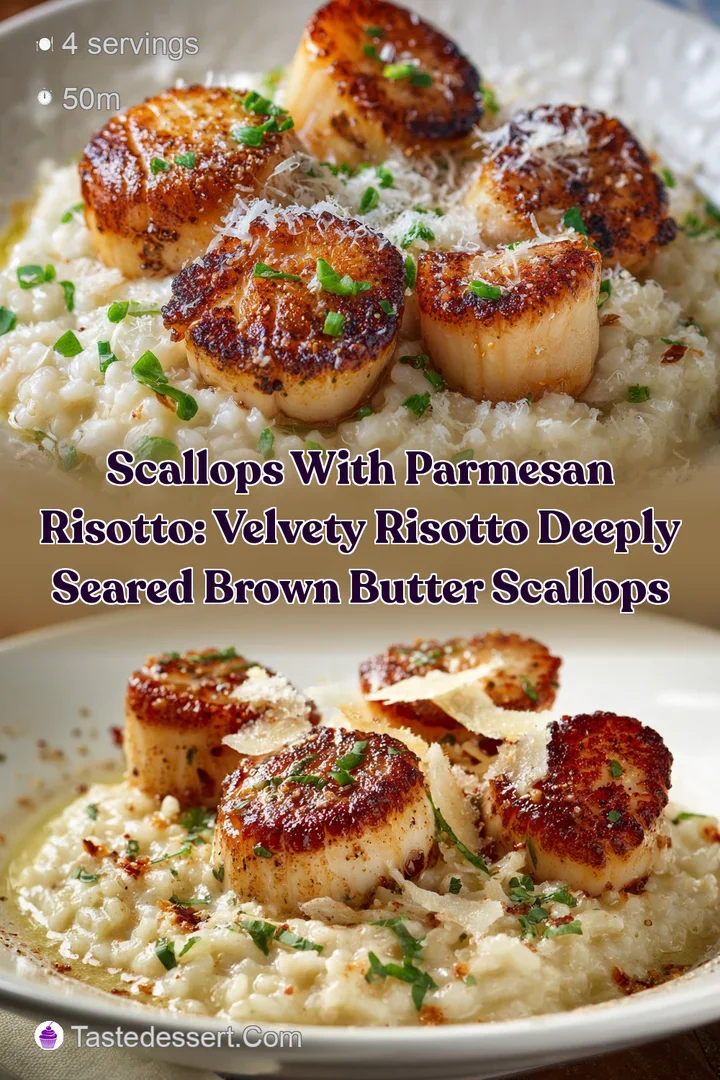
This dish deserves a beautiful presentation. Ladle the creamy risotto into warm, shallow bowls, creating a clean bed for the seafood. Arrange the golden brown brown butter scallops with risotto artfully on top.
Finish with a small drizzle of high-quality olive oil or a squeeze of fresh lemon juice, plus a few tiny sprigs of thyme.
For a fresh appetiser before this decadent meal, I often recommend something lighter, like my Coconut Broth Clams with Lemongrass: Quick Fragrant Asian Steamer . It keeps the seafood theme going but offers a bright, palate cleansing contrast. For a wine pairing, a dry, crisp Italian white, like Vermentino or Soave, is perfect for cutting through the richness of the Parmesan.
Recipe FAQs
How can I ensure my scallops develop a perfect golden crust without overcooking them?
The key to a perfect sear is dryness; vigorously pat the scallops with paper towels immediately before cooking, as any moisture is the enemy of crust formation. Use high heat and ensure the pan (preferably cast iron or stainless steel) is searing hot with a thin layer of oil before placing them down.
Cook for 90 seconds per side maximum, and crucially, do not crowd the pan, which lowers the temperature and causes the scallops to steam.
My risotto is gluey and sticky instead of being beautifully creamy. What went wrong?
A sticky texture usually results from stirring too vigorously or adding too much stock at once, which releases excess starch too quickly and unevenly. Ensure you add the stock gradually, waiting until the previous addition is nearly absorbed before adding more, and stir just enough to prevent sticking.
The goal is an "al dente" rice grain swimming in a creamy liquid, not a solid mass.
Can I substitute Arborio rice for another type of grain in the risotto?
While Arborio is highly recommended for its high starch content and resistance to overcooking, Carnaroli rice is an excellent and often preferred substitute that yields an even creamier result.
You should avoid standard long grain rice or basic short grain rice, as they do not possess the necessary starch structure to achieve the signature velvety emulsion required for true Italian risotto.
What is the main difference between the Gordon Ramsay and Jamie Oliver approaches to Scallop Risotto?
Gordon Ramsay's method often emphasizes technical precision, demanding maximum crust development on the scallops and perfectly uniform risotto consistency, usually relying on simple, elegant ingredients like shallots and white wine.
Jamie Oliver’s approach tends to be more rustic and accessible, sometimes incorporating playful additions like chili or bacon to build deeper, quicker flavor profiles suitable for the home cook.
Why must the stock be kept hot when adding it to the risotto?
Adding cold stock significantly drops the overall temperature of the rice, which stops the crucial cooking process and disrupts the continuous friction needed to release the starch gradually.
Keeping the stock simmering hot ensures the rice maintains a constant cooking temperature, allowing for even absorption and consistent starch release, which is vital for that final creamy texture.
Can I prepare the risotto ahead of time, or should it always be made fresh?
Risotto should ideally be served immediately upon completion, as it continues to tighten and lose its creamy wave like texture ("all'onda") as it cools. If prep ahead is absolutely necessary, undercook the rice by about five minutes, rapidly chill it, and then reheat it slowly with extra hot stock or butter right before you are ready to plate and serve.
How do I know if my scallops are "dry-packed" and why does it matter for this dish?
Dry-packed scallops are natural and untreated, whereas wet-packed scallops are typically soaked in a phosphate solution to retain water, making them heavier but causing them to weep moisture during cooking.
It matters immensely because wet-packed scallops will release liquid immediately upon hitting the hot pan, preventing the necessary maillard reaction and making a golden, crispy crust nearly impossible to achieve.
Scallops Parmesan Risotto Recipe

Ingredients:
Instructions:
Nutrition Facts:
| Calories | 961 kcal |
|---|---|
| Protein | 41.2 g |
| Fat | 68.2 g |
| Carbs | 50.7 g |
