Candied Salmon: the Ultimate Sticky-Sweet Delight
- Unlocking the Secret to Ultimate Candied Salmon
- The Science Behind the Mahogany Glaze and Jerky-Edge Texture
- Essential Ingredients for the Cure and Glaze
- Mastering the Slow-Baked Process: Step-by-Step
- Troubleshooting and Chef's Expert Tips for Success
- How to Store and Preserve Your Delicacy
- Showcasing Your Candied Salmon: Serving Pairings
- Recipe FAQs
- 📝 Recipe Card
Unlocking the Secret to Ultimate Candied Salmon
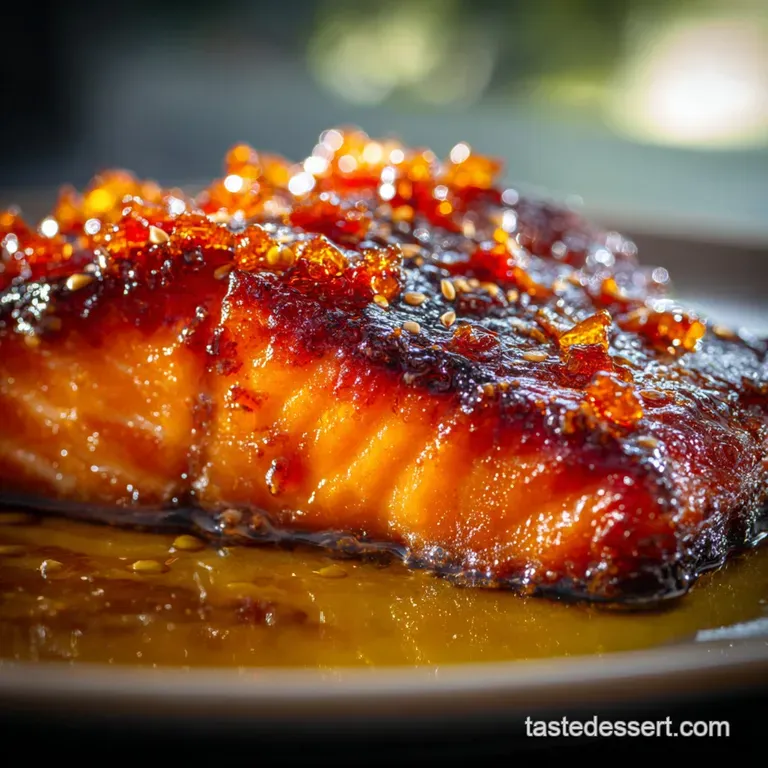
That smell, man. It hits you when you open the oven door during the final glaze: sticky, smoky, deeply sweet. That rich, mahogany brown hue and the way the edges just start to crisp up that’s the signature of truly incredible Candied Salmon .
We aren’t making just baked fish here; we are engineering a flavour bomb.
People mistakenly think achieving this level of complex texture requires a massive industrial smoker or some complicated, all-day process. Absolutely not! This recipe uses simple ingredients and the low and slow heat of your home oven.
The process is mostly passive waiting time, which means you look like a kitchen wizard while you are actually just chilling on the sofa. This specific slow baked Candied Salmon is a total lifesaver for appetizers or brilliant, hearty snacking.
I have ruined enough beautiful fillets over the years trying to rush the cure or blast the glaze. I’ve learned the hard lessons so you don't have to. I am handing you the no-fail, precise method right here.
Let’s stop talking and make the best, most intensely flavoured Candied Salmon you have ever laid eyes on.
The Science Behind the Mahogany Glaze and Jerky Edge Texture
Why bother with a two-day process when you could just throw a glaze on and bake it quickly? Because you want Candied Salmon , not just sweet salmon. The texture is everything.
The deep, jerky like edge that gives way to a moist, succulent interior is the goal, and that texture is built during the initial curing phase.
The History and Tradition of Fish "Candy"
Historically, this technique, often referred to as ‘salmon candy,’ was a preservation method. Indigenous communities, particularly in the Pacific Northwest, cured and lightly smoked salmon to make it shelf stable for long periods.
We are borrowing that wisdom now, using salt and sugar not only for flavor but also to drastically reduce the moisture content. The resulting Sticky Sweet Candied Salmon is truly different from standard smoked fish.
Why the Dry Cure is Essential for Preservation and Flavor
The cure isn't just a seasoning rub. It's a fundamental moisture extractor. By packing the fish in a mix of salt and sugar, we use osmosis to draw out water from the cells. Less water means the fish will firm up during cooking and, crucially, it inhibits spoilage.
Trust me on this: do not skip the 12 24 hour cure if you want authentic, high-quality Candied Salmon .
Defining the Sticky Sweet Texture
The "candy" part comes from the interplay of brown sugar and maple syrup, combined with low heat. When the sugar hits a low temperature (around 225°F/105°C) over a long period, it caramelizes slowly, concentrating the flavors and creating that deep, viscous glaze.
It’s this slow caramelization that gives the Candied Salmon bites their characteristic stickiness.
Achieving the Perfect Firm Yet-Moist Consistency
The mistake most people make is baking too hot. If you crank the heat, the internal water boils out too fast, leaving you with dry fish. Our low temperature (225°F/105°C) gently cooks the salmon while allowing the external glaze to form a hard, chewy layer.
You want firmness, but you need the centre to still feel luxurious.
The Osmosis of the Cure: Drawing Out Moisture
As the salt pulls water out, the sugar and spices penetrate the fish, seasoning it right down to the middle. This infusion of flavor during the long cure is what makes this Candied Salmon recipe stand out. We're building flavor complexity long before it even sees the oven.
Utilizing Low Heat for Maximum Caramelization
Low heat is critical. If your oven is too hot, the sugars will burn before the fish is cooked through. We are aiming for a slow, deliberate browning, creating the characteristic mahogany hue without that harsh, acrid burnt sugar taste.
We want deep, complex caramel flavor in every piece of this delightful Candied Salmon .
Essential Ingredients for the Cure and Glaze
You don't need exotic ingredients to make fantastic Candied Salmon . You need good quality staples and, perhaps most importantly, a commitment to precision when measuring the salt-to-sugar ratio. This ratio determines the final texture and seasoning balance.
Selecting the Best Cut of Salmon (Skin-On vs. Skin Off)
Always choose skin-on salmon. The skin acts as a barrier, protecting the delicate underside of the fish from over drying during the long bake. I prefer King or Sockeye salmon because their higher fat content handles the extensive curing and cooking time beautifully.
If you must use a thinner cut, like Coho, reduce your curing time to prevent it from becoming overly dense and salty.
Breakdown of the Sweet and Salty Cure Ratio
Our cure is predominantly sweet, but the salt content is necessary to draw out the moisture. My ideal ratio is 2 parts brown sugar to 1 part kosher salt by volume.
| Ingredient | Purpose | Substitution Tip |
|---|---|---|
| Dark Brown Sugar | Sweetness, flavor depth, color | Use half molasses and half granulated white sugar if no brown sugar is available. |
| Kosher Salt | Moisture extraction, preservative | IMPORTANT: If using standard table salt or fine sea salt, reduce the amount by 20 30%. |
| Smoked Paprika | Adds complexity, depth of color | Use a pinch of chipotle powder for a smoky heat, or skip entirely if you prefer pure maple flavor. |
| Maple Syrup | Final, sticky, glossy glaze | Honey or agave works, but the flavor won’t be as earthy or rich. |
Adjusting the Glaze for Intensity (Smoke vs. Spice)
You can seriously upgrade your glaze. Sometimes I swap the smoked paprika for cayenne if I want a sweet heat that builds on the tongue. Or, if I’m feeling fancy, I’ll add a tiny splash of good quality Scotch whiskey to the maple syrup before the final brush. This yields a wonderfully smoky, adult Candied Salmon appetizer. If you want something quick with heat, try my Honey Sriracha Salmon: The Best Quick Baked Glaze Recipe sometime for a different flavor profile.
Mastering the Slow Baked Process: step-by-step
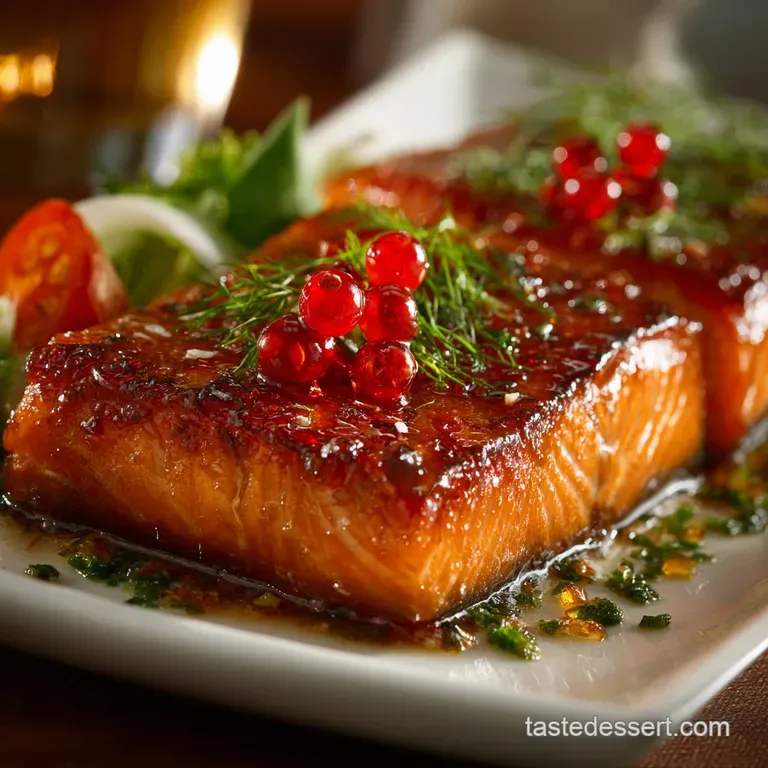
This isn't hard work; it's a process that demands attention to detail. Skipping a step here will ruin the texture of your Candied Salmon .
Preparing and Applying the Rigorous Dry Cure
First, pat your salmon fillets dry. Make sure you use a non-reactive container, like glass or plastic. Mix all the cure ingredients thoroughly in a bowl no clumps allowed. Lay the salmon skin side down and cover the flesh completely with the cure mixture, patting it firmly. You want a thick, even crust of cure.
Cover it and forget about it in the fridge for 12– 24 hours. You will see a dark, sludgy liquid form; that’s the moisture leaving the fish. Brilliant, right?
Rinsing and Drying the Salmon (The Pellicle Formation)
This is the most critical step after the cure itself. Remove the salmon and rinse it very thoroughly under cold water. If you leave salt or sugar residue, your final Candied Salmon will be unbearably salty or sticky gooey rather than chewy sticky.
Once rinsed, pat the fish absolutely dry with paper towels.
Chef's Note: The Pellicle is mandatory. Place the salmon pieces on a wire rack over a baking sheet, uncovered, in the fridge. Leave it there for 2– 4 hours. The surface should feel tacky and look shiny, almost like leather. This tacky film, the pellicle, is what allows the glaze to adhere properly and gives the exterior its fantastic texture. Seriously, don’t skip this stage for perfect Slow Baked Candied Salmon .
Sequential Glazing During the Low-Temperature Bake
Preheat your oven to 225°F (105°C). Ensure the oven thermometer is accurate; don't rely on the built-in dial. Place the salmon rack assembly into the preheated oven and bake for one hour undisturbed. We are starting to cook, but mostly we are drying it out further.
After the first hour, pull it out and brush liberally with half of the maple syrup. Return it to the oven. Continue baking until the internal temperature hits 135°F 140°F (57°C 60°C), checking after the second hour.
Brush with the remaining maple syrup during the final 15 minutes of cooking. This last glaze sets up into that beautiful, deep coat you expect from professional Smoked Candied Salmon .
Troubleshooting and Chef's Expert Tips for Success
Every home cook messes up a recipe the first time they try it, and I’m no exception. I’ve made salty jerky and runny messes. Here are the fixes for the common fails when making Candied Salmon .
How to Prevent Over Curing (Too Salty)
If you cure the fish for longer than 24 hours or if you used thin fillets, the final product can taste intensely salty. The fix? Reduce the salt content slightly in the cure next time. If you’ve already cured it, soak the rinsed fillets in fresh cold water for 15 minutes before the pellicle stage to draw out excess surface salt. If you’re worried about high salt content, consider trying a recipe like my Blackened Salmon: Restaurant Quality Pan-Seared Fillets which uses a salt free seasoning blend instead.
Identifying and Fixing a Runny Glaze
A runny glaze means one of two things: either your temperature was too low, or you skipped the air-drying/pellicle stage. Without that tacky surface, the glaze just runs off. If your glaze is runny after 2.
5 hours, increase the oven temperature slightly (to 250°F / 120°C) for the last 15 minutes to help the sugars dry and solidify. A perfect Candied Salmon has a glaze that adheres completely.
The Critical Importance of Rest Time Post Bake
Do not cut into your beautiful Candied Salmon right out of the oven! The texture is soft, and the glaze is still liquid hot. As it cools slowly on the rack, the sugars contract and harden, and the interior firms up. Allow it to cool for at least two hours at room temperature.
This rest time is absolutely mandatory for achieving that desirable chewy, firm edge on the Salmon Candy Recipe .
How to Store and Preserve Your Delicacy
One of the great things about this curing and baking process is that it significantly extends the shelf life of the fish. This is why it makes such a fantastic appetizer to prepare ahead of time.
Optimal Refrigeration Techniques for Glazed Fish
Store fully cooled Candied Salmon in an airtight container in the refrigerator. Because of the curing process and the high sugar content acting as a preservative, it holds up beautifully for 7 to 10 days .
I recommend placing parchment paper between layers of fish if you stack the pieces, as that sticky glaze will grab onto anything it touches.
Can You Freeze Candied Salmon? (Best Practices)
Yes, you can freeze it, and it holds up remarkably well! Once completely cooled, wrap individual Candied Salmon Strips tightly in plastic wrap, then place them inside a heavy duty freezer bag or vacuum seal them. Label with the date. It will maintain peak quality for up to 3 months.
Thaw it slowly overnight in the refrigerator do not try to thaw it at room temperature, as the high sugar content can sweat.
Reheating Methods That Maintain Texture
The best way to enjoy preserved Candied Salmon is cold, flaked over cream cheese or straight from the fridge. However, if you must serve it warm, avoid the microwave! That will destroy the texture and turn the glaze gooey.
Instead, place the pieces on a wire rack and bake them in a 300°F (150°C) oven for just 8– 10 minutes, until just warmed through. This maintains the glossy glaze and firm edges.
Showcasing Your Candied Salmon: Serving Pairings
This rich, sweet, and complex delicacy deserves stellar partners. While a chilled piece of Candied Salmon Appetizer is a snack unto itself, serving it properly turns it into a show stopping dish.
For a sophisticated starter, cube the chilled salmon and serve it alongside whipped goat cheese on a crostini with a drizzle of balsamic glaze. The richness of the Sticky Sweet Candied Salmon is perfectly balanced by the tartness of the cheese. I also love to flake the cold pieces into a light, lemon dressed salad for lunch; it turns a boring green salad into a Healthy Recipes Crispy Salmon Chickpea Bowl in 27 Mins level meal.
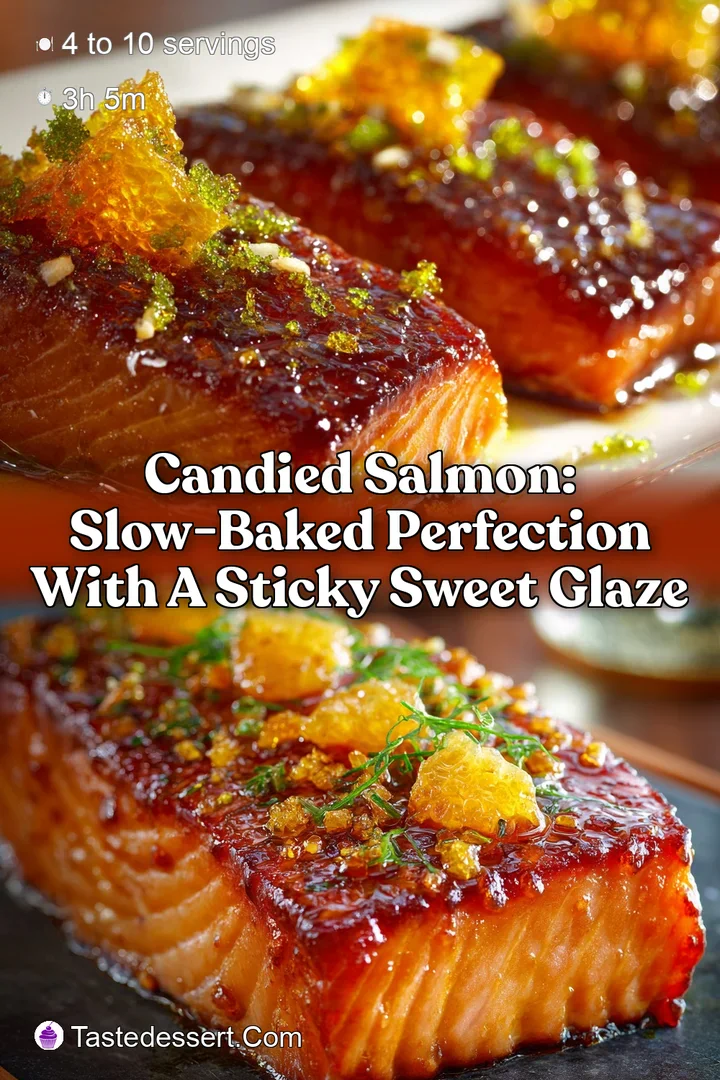
Don't be afraid to serve this as a main course, either. Pair it with wild rice pilaf and some roasted asparagus for a hearty, beautiful plate. Whether served warm or chilled, the deep mahogany colour and intense flavor of this amazing Candied Salmon will always impress your friends.
Recipe FAQs
Why is the dry cure step necessary, and how long is too long?
The dry cure is critical for two reasons: flavor infusion and moisture reduction. The salt and sugar pull excess water from the fish, firming up the flesh so it holds its shape and prevents it from flaking apart during the slow bake.
Curing for longer than 8 hours is generally too much, as the resulting texture can become overly salty and dense.
My Candied Salmon isn't developing that signature sticky, mahogany glaze. What went wrong?
This usually means the glaze didn't reduce enough or the oven temperature was too high, causing the fish to cook faster than the sugars could caramelize. To achieve the signature sticky texture, the sugars require time to break down slowly at a low heat, typically between 225°F and 250°F.
If the glaze is watery during the last 30 minutes, brush on an extra layer of reserved marinade.
Can I use liquid smoke if I don't have access to smoked paprika?
Yes, liquid smoke can be a potent substitute, but it must be used very sparingly as a little goes a long way. Mix a single drop into your wet marinade rather than the dry curing rub, as excessive dryness is critical for the initial cure.
Smoked paprika or chipotle powder is generally preferred for a deep, natural smokiness that is easier to control.
Why did my salmon turn out dry and tough instead of moist and succulent?
Dryness is primarily a result of over curing or over baking the fish. If you cured the salmon for too long (over 6 hours), too much moisture was extracted before cooking even began.
Always monitor the internal temperature closely; pull the salmon when it hits 145°F, as the slow baked fish will continue cooking slightly as it rests.
How should I store leftover Candied Salmon, and can it be frozen?
Candied Salmon keeps excellently in an airtight container in the refrigerator for up to 5 days, maintaining its moist texture. For long term storage, wrap individual portions tightly in plastic wrap followed by aluminum foil; it maintains quality in the freezer for up to 3 months.
Thaw frozen salmon overnight in the refrigerator before serving.
Can I use a different type of fish, like trout or cod, for this recipe?
This method works best with oily, firm fish that can withstand the rigorous curing and slow baking process without falling apart. Steelhead trout is an excellent substitute, offering a similar fat content and texture to salmon.
Avoid overly delicate white fish, such as cod or flounder, as they tend to crumble when subjected to such an intense cure.
What are the best ways to serve Candied Salmon cold or warm?
Candied Salmon is incredibly versatile, and the best way to serve it depends on your intention. It is traditionally served cold as a robust appetizer alongside crackers and soft cheese, or flaked onto bagels.
For a show stopping main course, serve it slightly warmed over a bed of rice or crumbled into a sharp, textural winter salad.
Sticky Sweet Candied Salmon Recipe
Ingredients:
Instructions:
Nutrition Facts:
| Calories | 736 kcal |
|---|---|
| Protein | 50.9 g |
| Fat | 23.8 g |
| Carbs | 81.7 g |
