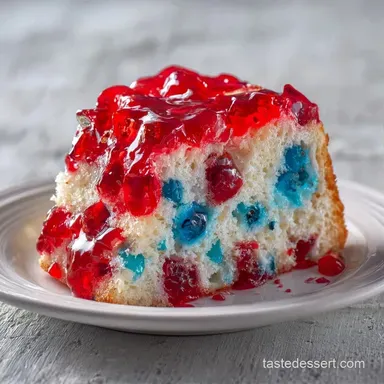
4Th of July Poke Cake: Velvety and Fruity
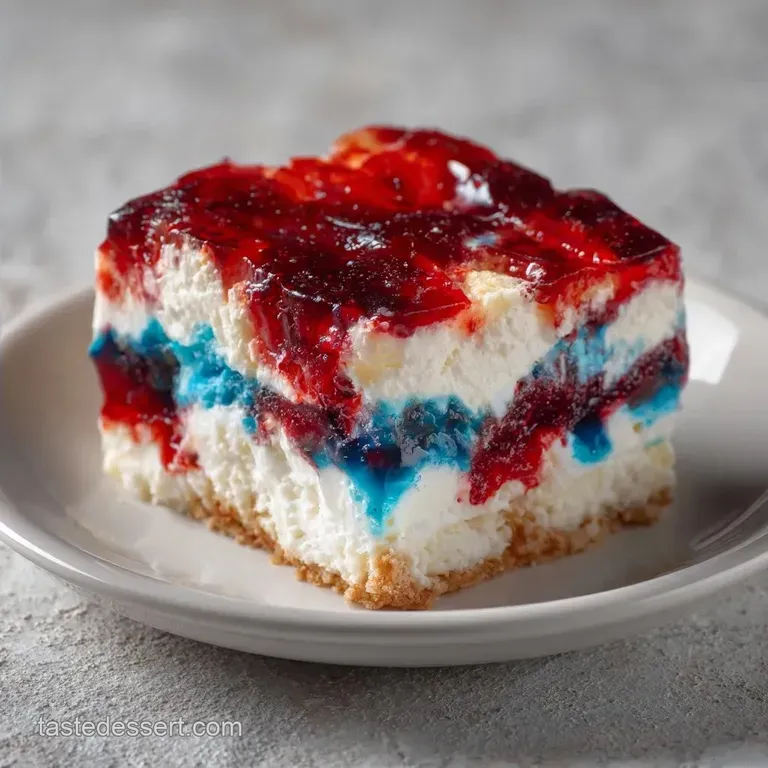
- Time:15 minutes active + 4 hours chilling
- Flavor/Texture Hook: Velvety cream topping with juicy, fruit infused cake layers
- Perfect for: Family picnics and festive holiday parties
The scent of a vanilla cake baking in the oven always takes me back to my grandmother's kitchen in July. I can still hear the screen door slamming and the sound of kids running through the sprinkler while the humidity hung heavy in the air.
We always had a "showstopper" dessert, and for years, it was a simple sheet cake, but then we discovered the magic of the poke method.
It’s all about that first bite where the cake isn't just a sponge, but a reservoir of flavor. The way the bright red and blue colors peek through the white frosting is just nostalgic. It’s a timeless treat that feels like a celebration before you even taste it.
This 4th of July Poke Cake is designed for the home cook who wants the wow factor without spending the entire holiday stuck in the kitchen. We're going to focus on a plan that lets the cake do the hard work while you relax with a cold drink.
4th of July Poke Cake
To get this right, we need to think about the timeline. You can't rush the chilling process, or the gelatin will just leak out the bottom, leaving you with a soggy mess. The goal is a cake that's moist and juicy, but still holds its shape when you slice it into those twelve generous pieces.
I've found that the biggest mistake people make is waiting for the cake to cool completely before poking. If the cake is cold, the gelatin doesn't penetrate as deeply. You want that cake warm, almost steaming, so the pores are open and ready to soak up the liquid. Trust me, the difference in texture is massive.
Since this is a party dish, I recommend a three phase approach. First, the bake and poke. Second, the long nap in the fridge. Third, the final dress up with the velvety frosting and fresh berries. If you follow this flow, you'll be the hero of the picnic without the stress.
Why These Flavors Work
Getting the balance of sweet and tart is the real trick here. We're using a neutral white cake as a canvas, which allows the strawberry and blue raspberry notes to stand out without competing.
Gelatin Absorption: Poking holes in a warm cake creates channels that pull the liquid in via capillary action. This ensures the moisture is evenly distributed throughout the sponge.
Thermal Setting: Using boiling water to dissolve the gelatin and then chilling it locks the liquid into a semi solid state. According to the guides at Serious Eats, the temperature shift is what allows the gelatin proteins to form a stable mesh, trapping the flavor inside the cake.
Fat to Sugar Ratio: The cream cheese and butter in the frosting provide a necessary fat barrier. This cuts through the sugar of the gelatin, preventing the dessert from feeling cloying.
Contrast Pairing: The fresh blueberries and strawberries on top add a natural acidity. This brightness wakes up the palate after the richness of the cake and frosting.
Planning Your Bake
Depending on how much time you have, you can approach this in two ways. Some people prefer the classic, slow set method, while others need a faster turnaround.
| Feature | Fast Method | Classic Method |
|---|---|---|
| Chill Time | 2 hours (Flash chill) | 4 hours (Slow set) |
| Texture | Slightly looser gelatin | Firm, clean slices |
| Best For | Last minute guests | Planned parties |
If you're in a rush, you can put the cake in the freezer for 30 minutes before moving it to the fridge, but the classic 4 hour chill is where the magic happens. The flavors have more time to meld, and the cake becomes more cohesive.
Right then, let's look at the timeline. Spend 15 minutes on the prep and 45 minutes on the cooking and poking. Then, let it sit for 4 hours. The final frosting takes about 20 minutes. It’s a low effort, high reward sequence.
Ingredient Analysis
Choosing the right ingredients ensures the cake doesn't collapse under the weight of the gelatin. I always stick to a standard white mix because it provides the most consistent crumb.
| Ingredient | Science Role | Pro Secret |
|---|---|---|
| White Cake Mix | Structural Base | Use room temp eggs for a better rise |
| Gelatin | Flavor Infusion | Use boiling water for full dissolution |
| Cream Cheese | Emulsion Stability | Must be fully softened to avoid lumps |
| Whipped Topping | Aeration | Fold in gently to keep the frosting fluffy |
For those wondering about the cake mix, King Arthur Baking often discusses how the leavening agents in mixes provide a reliable structure. In this recipe, that structure is what prevents the cake from turning into pudding when we add the liquids.
Tools for Success
You don't need a professional kitchen for this, but a few specific tools make the process much smoother. I've learned the hard way that using a knife to poke holes just tears the cake.
- 9x13 inch baking pan: The standard size for a sheet cake.
- Wooden skewer: This is the best tool for poking because it's thin and creates clean holes.
- Offset spatula: Essential for getting that velvety frosting smooth across the top.
- Hand mixer: To beat the cream cheese and butter into a smooth paste.
- Measuring cups/spoons: Precision helps, especially with the boiling water.
How to Assemble
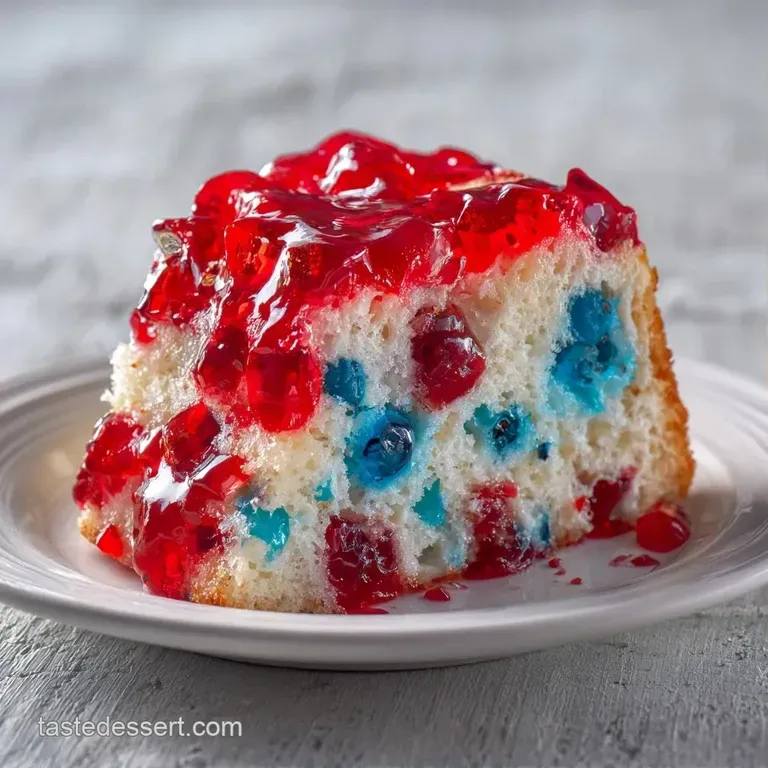
Let's crack on with the actual process. Remember to keep your temperature checks in mind as you go.
Phase 1: Baking and Poking
- Preheat your oven to 350°F (175°C). Mix the white cake mix, 1 cup water, 1/3 cup vegetable oil, and 3 eggs. Beat until the batter is smooth and no clumps remain.
- Pour the batter into your pan and bake for 30-35 minutes until the center springs back lightly and the edges just start to pull away from the sides.
- While the cake is still warm, take your wooden skewer and poke holes about 3/4 of the way down. Space them evenly in three distinct columns. Note: Don't go all the way to the bottom or the gelatin might leak.
Phase 2: Infusing the Color
- Boil 2 cups of water. Dissolve the strawberry gelatin in 1 cup of boiling water, then stir in 1/4 cup of cold water.
- Dissolve the blue raspberry gelatin in the remaining 1 cup of boiling water, then stir in 1/4 cup of cold water.
- Slowly pour the red gelatin into the first column and the blue gelatin into the third column. The middle column stays white.
- Place the cake in the fridge for 4 hours until the gelatin is firm to the touch.
Phase 3: Frosting and Decorating
- Beat your softened cream cheese and 1/2 cup unsalted butter together until the mixture is completely smooth.
- Mix in 3 cups of powdered sugar and 1 tsp vanilla extract. Beat on high until it looks fluffy.
- Gently fold in the 8 oz of thawed whipped topping. Use a spatula here so you don't deflate the air.
- Spread the topping evenly over the chilled cake using your offset spatula.
- Garnish the top with 1 cup of fresh blueberries and 1 cup of sliced strawberries.
Chef's Note: If you want the colors to be even more vibrant, try adding a tiny drop of gel food coloring to the gelatin, but usually, the boxes are bright enough for a classic look.
Fixing Cake Mishaps
Even the best of us hit a snag now and then. Most issues with a 4th of July Poke Cake come down to temperature or timing.
Troubleshooting Common Issues
| Issue | Solution |
|---|---|
| Why Your Cake is Too Soggy | If the cake feels like pudding, you likely poked the holes too deep or didn't chill it long enough. The gelatin needs those four hours to set the structure. |
| Why Your Frosting is Lumpy | This happens when the butter or cream cheese is too cold. You'll see small white beads of fat in the frosting. |
| Why Your Gelatin Didn't Sink In | If the gelatin is sitting on top of the cake, the cake was too cold when you poked it. The pores were closed, and the liquid couldn't penetrate. |
Common Mistakes Checklist
- ✓ Butter and cream cheese are room temperature (not melted).
- ✓ Cake was poked while still warm.
- ✓ Gelatin was fully dissolved in boiling water.
- ✓ Whipped topping was completely thawed.
- ✓ Cake chilled for at least 4 hours before frosting.
Creative Flavor Swaps
If you want to change things up, this recipe is very flexible. You can keep the patriotic theme or move in a different direction for other holidays.
For a different fruit profile, try using lime gelatin for the blue section and orange for the red. This gives it a citrusy, tropical vibe. If you're looking for more inspiration, you might like a Homemade Flag Cake from Scratch for a more traditional sponge.
For dietary needs, you can swap the white cake mix for a gluten-free version. Just be aware that GF cakes often absorb liquid differently, so you might need to poke a few more holes to get the gelatin to sink in.
For the topping, you can use a dairy-free cream cheese and vegan butter, though the texture will be slightly less velvety.
For a lighter texture, reduce the powdered sugar by half a cup. The gelatin is already quite sweet, so the frosting doesn't need to be a sugar bomb. If you want something even more decadent, try my Classic White Flag Cake for a more traditional buttercream experience.
| Original Ingredient | Substitute | Why It Works |
|---|---|---|
| White Cake Mix | GF Cake Mix | Maintains structure. Note: May require extra poking |
| Blue Raspberry Gelatin | Blue Berry Gelatin | Similar color. Note: Slightly more natural taste |
| Whipped Topping | Stabilized Whipped Cream | Lighter feel. Note: Less stable for long parties |
Storage and Freshness
Because of the cream cheese and gelatin, this cake must be kept refrigerated. It doesn't do well at room temperature for more than an hour or two, as the frosting can start to soften and the gelatin can weep.
Fridge Guidelines: Keep the cake in an airtight container or tightly wrapped in plastic wrap. It will stay fresh and velvety for up to 3 days. Any longer than that and the cake may start to absorb too much moisture from the frosting, losing its structure.
Freezing Tips: I generally don't recommend freezing a poke cake once the gelatin is added. The freezing and thawing process breaks the gelatin bonds, which can leave you with a watery cake. However, you can freeze the baked cake base (before poking) for up to 2 months.
Just thaw it and warm it slightly in the oven before starting the infusion process.
Zero Waste Tips: If you have leftover whipped topping, fold in some of the leftover berries and serve it as a side dip for fruit. If you have a few scraps of cake left, crumble them into a glass and layer them with fresh cream and berries for a quick patriotic trifle.
Best Serving Pairings
A 4th of July Poke Cake is quite rich and sweet, so you want to pair it with things that offer a contrast in flavor and temperature.
I love serving this alongside something salty, like a platter of smoked nuts or a sharp cheddar cheese board. The salt helps reset the palate between bites of the sweet cake. For a drink, a tart lemonade or an iced tea with a squeeze of lime is the way to go.
The acidity cuts through the cream cheese frosting perfectly.
If you're doing a full dessert spread, keep the other items light. A fresh watermelon salad with mint and feta is a brilliant companion because it's hydrating and refreshing, balancing out the density of the cake.
Decision Shortcut
- If you want a cleaner slice, do Y: Chill for the full 4 hours.
- If you want a fruitier taste, do Y: Double the fresh berries on top.
- If you want less sweetness, do Y: Reduce powdered sugar in the frosting.
Recipe FAQs
How long does poke cake have to sit in the fridge?
Chill for at least 4 hours. This allows the strawberry and blue raspberry gelatin to fully set, ensuring the cake maintains its structure.
How do I prevent a soggy poke cake?
Poke holes only 3/4 of the way down. Pushing the skewer too deep or failing to chill the cake for the full four hours can make the base feel too soft.
Do I let the cake cool before adding the gelatin?
No, poke the holes while the cake is still warm. This keeps the pores open so the liquid penetrates the sponge rather than sitting on top.
How to prepare the strawberries for the garnish?
Slice fresh strawberries thinly. This ensures they lay flat on the cream frosting and look professional for the holiday presentation.
How long can I store this cake in the refrigerator?
Keep it for up to 3 days. Store the cake in an airtight container to prevent it from absorbing excess moisture or losing its velvety texture.
Why is my cream cheese frosting lumpy?
The butter or cream cheese was too cold. Ensure both are fully softened before beating them together to avoid small white beads of fat in the topping.
Can I use this same layering technique for other desserts?
Yes, this method works for many treats. If you enjoyed mastering the assembly of this cake, see how the same principle of layered textures works in our classic British trifle.
4th of July Poke Cake for 12 Slices