Quick and Easy Crepe Recipe in a Blender with Vanilla
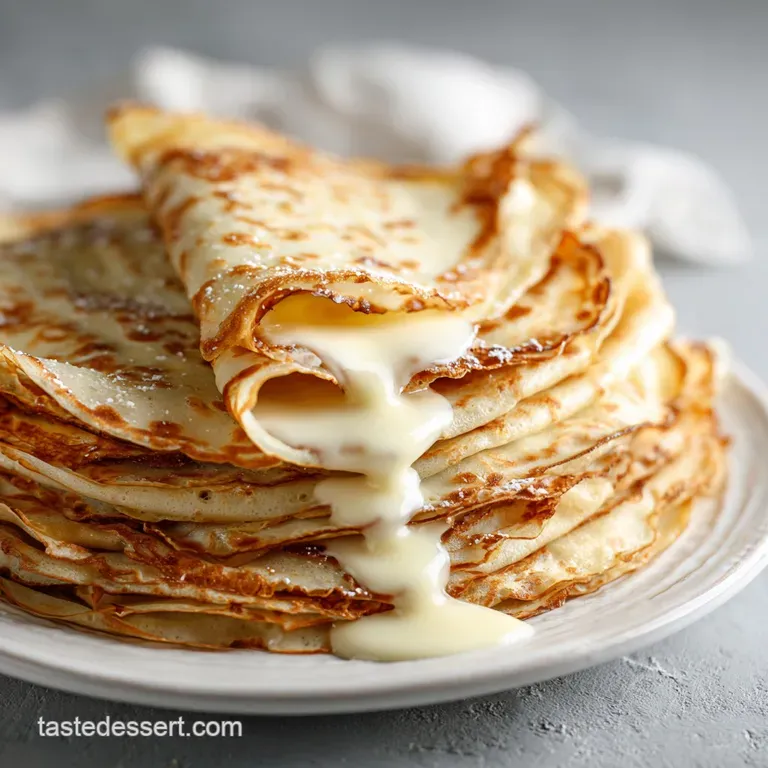
- Time: Active 25 minutes, Passive 15 minutes, Total 40 minutes
- Flavor/Texture Hook: Velvety centers with shatter crisp golden edges
- Perfect for: Weekend brunch or a quick, impressive dessert
- Quick and Easy Crepe Recipe in a Blender with Vanilla
- Scientific Secrets for Achieving a Velvety Smooth Texture
- Performance Comparison of Stovetop and Oven Cooking Methods
- Component Analysis of Key Ingredients for Success
- Primary Ingredients and Smart Budget Friendly Substitutions
- Essential Tools for Flipping Thin French Pancakes Properly
- Step by Step Guide for Perfectly Golden Results
- Fixing Common Mistakes with This Simple Checklist
- Healthy Adaptations for Different Dietary Preferences
- Preserving Freshness with Proper Freezing and Reheating Storage Methods
- Flavorful Pairings to Serve Alongside Your Warm Vanilla Crepes
- Recipe FAQs
- 📝 Recipe Card
Quick and Easy Crepe Recipe in a Blender with Vanilla
The smell of melting butter hitting a hot pan is basically my love language. I remember the first time I tried making these; I was so intimidated by those fancy street vendors in Paris who flip them with such nonchalance.
I thought I needed a specialized stone griddle and a wooden spreader, but honestly, my trusty blender and a non stick skillet did the job just as well, if not better.
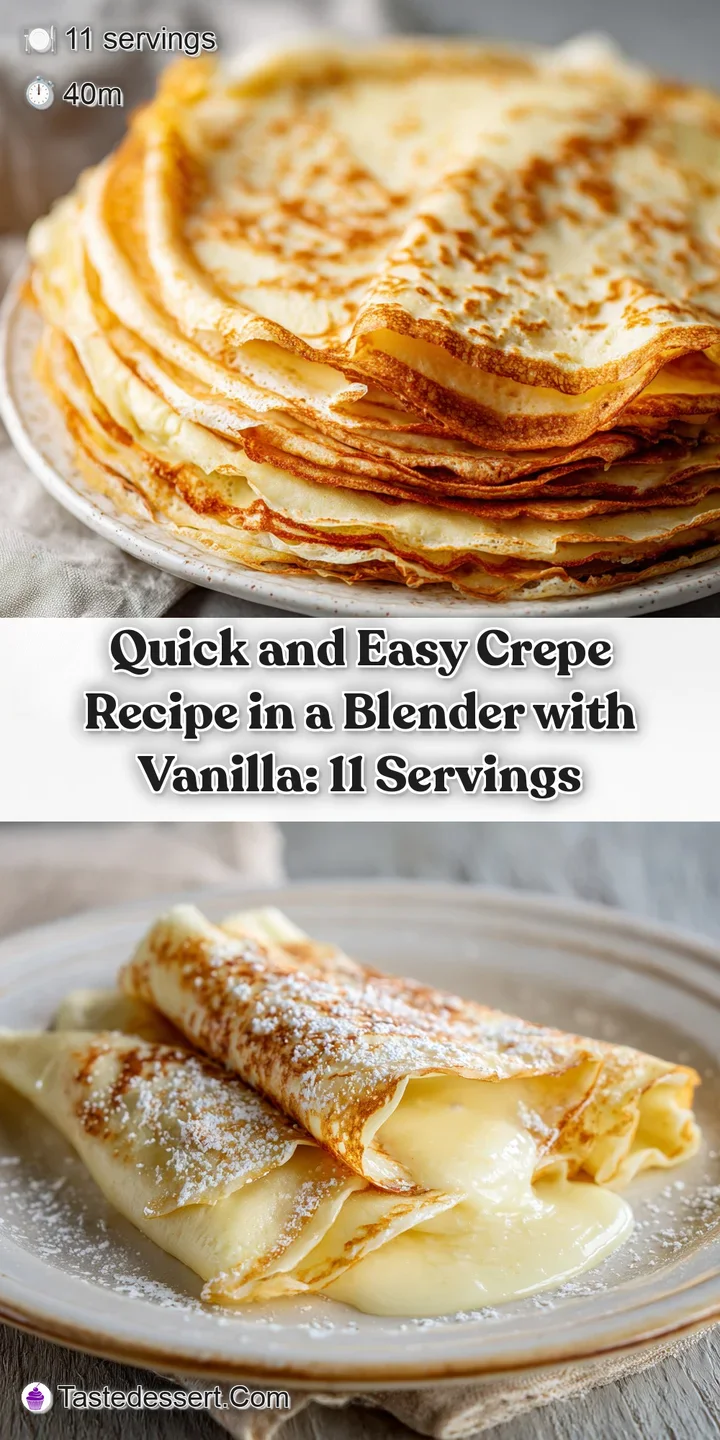
Whip up this Quick and Easy Crepe Recipe in a Blender with Vanilla for a delightfully simple and flavorful dish. It's the kind of breakfast that feels like a massive celebration but actually takes less effort than making a stack of pancakes.
We've all been there, whisking furiously and still ending up with those annoying little flour lumps. This blender method completely eliminates that stress, leaving you with a batter so smooth it looks like silk.
Right then, let's talk about what makes this specific recipe a winner. We aren't just tossing things in a jar and hoping for the best. We are using the physics of high speed blades to transform basic pantry staples into something elegant.
You'll get those signature "leopard spots" on the surface and edges that slightly shatter when you bite into them. Trust me on this, once you see how easy it is to get consistent results, you'll be making these every single Saturday.
Scientific Secrets for Achieving a Velvety Smooth Texture
Getting that thin, flexible structure requires a bit of understanding about what happens inside that blender jar. It isn't just about mixing; it's about transforming the molecular structure of your ingredients.
- High Speed Emulsification: The blender blades force the fat from the melted butter into the milk and eggs, creating a stable emulsion that prevents the crepes from feeling greasy.
- Starch Hydration: While we blend quickly, the 15 minute rest allows the flour particles to fully absorb the liquid, which prevents a grainy mouthfeel.
- Protein Relaxation: Resting the batter gives the gluten a chance to relax after the mechanical stress of blending, ensuring your crepes are tender rather than rubbery.
- Air Bubble Management: Small micro bubbles created during blending expand slightly when they hit the heat, giving the crepe its characteristic light as-air feel.
Performance Comparison of Stovetop and Oven Cooking Methods
While crepes are traditionally a stovetop affair, some people try to bake them for large crowds. However, there are significant trade offs in texture and appearance depending on which heat source you choose for this recipe.
| Method | Cook Time | Final Texture | Best For |
|---|---|---|---|
| Traditional Stovetop | 2 minutes per crepe | Lacey edges, tender center | Authentic French texture |
| Oven (Sheet Pan) | 15 minutes | Chewy, similar to a Dutch Baby | Feeding 6+ people at once |
| Oven (Crepe Maker) | 3 minutes | Uniformly golden, very soft | Large batches with less flipping |
Choosing the right pan makes a massive difference here. A heavy bottomed non stick skillet is your best friend because it holds heat steadily. If you find your crepes are sticking, it's often a temperature issue rather than a lack of oil.
You want a medium heat that makes a drop of water dance but doesn't cause the butter to smoke instantly.
Component Analysis of Key Ingredients for Success
Understanding why we use these specific ratios helps you troubleshoot on the fly. This isn't just a random list; it's a balanced formula designed for the perfect flip.
| Ingredient | Science Role | Pro Secret |
|---|---|---|
| Whole Milk | Provides the liquid base and essential fats | Room temperature milk blends into the eggs more easily |
| Large Eggs | Act as the primary binder and structural support | Using cold eggs can cause your melted butter to seize up |
| All Purpose Flour | Creates the delicate "web" that holds the crepe | Sift it before measuring to ensure it's not packed too tight |
| Pure Vanilla Extract | Adds depth and masks the "eggy" aroma | Use double strength vanilla for a truly gourmet scent |
The beauty of the Homemade Vanilla Bean recipe is how well it pairs with these crepes. If you have any leftover vanilla beans from making ice cream, you can even scrape the seeds into this batter for those gorgeous little black flecks.
Primary Ingredients and Smart Budget Friendly Substitutions
You likely have everything you need in your kitchen right now. I’ve included some budget friendly swaps that keep the flavor high without breaking the bank.
- 1.5 cups whole milk: Why this? Provides richness and fat. (Swap: 1:1 ratio of water and heavy cream)
- 2 large eggs: Why this? Essential for structure and lift. (Swap: 0.25 cup unsweetened applesauce per egg note: will be denser)
- 2 tbsp unsalted butter: Why this? Adds flavor and prevents sticking. (Swap: Neutral oil like canola note: loses some nutty flavor)
- 2 tsp pure vanilla extract: Why this? The signature aromatic component. (Swap: 1 tsp almond extract for a cherry like twist)
- 1 cup all purpose flour: Why this? The perfect protein content for flexibility. (Swap: Pastry flour for an even more delicate bite)
- 1 tbsp granulated sugar: Why this? Aids in browning (Maillard reaction). (Swap: Honey or maple syrup)
- 0.25 tsp fine sea salt: Why this? Enhances all other flavors. (Swap: Table salt, but use slightly less)
- 1 tsp neutral oil: Why this? High smoke point for greasing the pan.
| Original Ingredient | Substitute | Why It Works |
|---|---|---|
| Whole Milk | Oat Milk (Full Fat) | Similar viscosity. Note: Adds a slight toasted grain flavor to the batter |
| Unsalted Butter | Coconut Oil (Refined) | Provides necessary fat. Note: Use refined to avoid a strong coconut taste |
| Granulated Sugar | Coconut Sugar | Similar sweetness. Note: Will turn the batter a darker, caramel color |
When you are looking for a topping that won't cost a fortune, a simple fruit compote is brilliant. I often use my Simply Spectacular Strawberry recipe because it uses frozen berries which are much cheaper than fresh ones out of season, and the syrup soaks into the crepe beautifully.
Essential Tools for Flipping Thin French Pancakes Properly
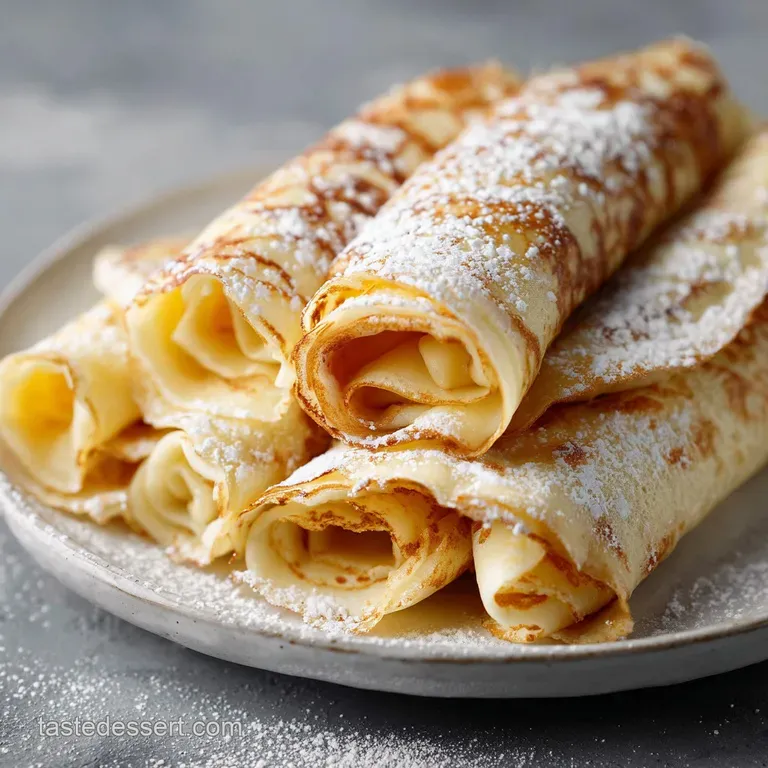
You don't need a professional kitchen, but a few specific items will make your life much easier. The blender is the star of the show here, but the pan is the supporting actor that determines the final look.
For the Liquid Base
A high powered blender is ideal, but even a standard countertop model works perfectly. The goal is to create a vortex that pulls the flour down into the liquid. If you only have an immersion blender, use a deep, narrow jar to prevent splashing and ensure every bit of flour is incorporated.
For the Pan
A 10 inch non stick skillet is the gold standard for home cooks. You want something with sloped sides, which makes it much easier to get a spatula underneath the edges. Cast iron can work, but it requires much more finesse and a very well seasoned surface to prevent the delicate batter from tearing.
step-by-step Guide for Perfectly Golden Results
Follow these steps closely, especially the resting period. It might feel like a waste of time, but it’s the difference between a "pancake like" crepe and a true French masterpiece.
- Combine liquids. Pour 1.5 cups whole milk, 2 large eggs, 2 tbsp melted (and cooled) butter, and 2 tsp vanilla extract into the blender. Note: Adding liquids first prevents flour from sticking to the bottom.
- Add dry ingredients. Tip in 1 cup all purpose flour, 1 tbsp sugar, and 0.25 tsp sea salt.
- Pulse and blend. Pulse 5 times to break up the flour, then blend on high for 20 seconds until the batter is completely smooth and bubbly.
- Rest the batter. Pour the mixture into a bowl and let it sit for 15 minutes at room temperature. Note: This allows the gluten to relax for a tender texture.
- Heat the pan. Place your skillet over medium heat and lightly grease with 1 tsp neutral oil. Wait until the pan is hot enough that a drop of water sizzles.
- Pour and swirl. Pour about 3 tbsp (roughly 1/4 cup) of batter into the center. Immediately tilt and swirl the pan until the batter covers the entire bottom.
- Cook the first side. Heat for about 1 minute until the edges start to brown and curl away from the pan.
- The golden flip. Carefully slide a thin spatula under the edge and flip.
- Finish the crepe. Cook for 30 seconds on the second side until small golden brown spots appear.
- Stack and cover. Slide the finished crepe onto a plate and cover with a clean kitchen towel to keep it soft and warm.
Chef's Tip: If you find the first crepe looks like a mess, don't panic. The first one is traditionally the "sacrificial crepe" used to calibrate the pan's temperature and seasoning. It almost always looks a bit wonky, but the second one will be gorgeous!
Fixing Common Mistakes with This Simple Checklist
Even with a blender, things can go sideways if the heat or timing is off. Here is how to handle the most common issues without tossing the whole batch.
Why Your Crepes are Rubbery
This usually happens if you skipped the resting phase or over blended the batter. When you mix flour and liquid, gluten starts to develop. If you cook it immediately while the gluten is still "tight," the resulting crepe will be tough and chewy.
Why the Batter is Tearing
If your crepes fall apart when you try to flip them, the pan might not be hot enough, or the batter might be too thin. Ensure you are using the full cup of flour. If the batter seems like water, whisk in one extra tablespoon of flour and let it rest for 5 more minutes.
| Problem | Root Cause | Solution |
|---|---|---|
| Lumpy Batter | Adding liquid to flour | Always put liquid in the blender first to create a vortex |
| Crepes are Greasy | Too much oil in the pan | Use a paper towel to wipe out excess oil; you only need a thin film |
| Edges are Dry/Brittle | Heat is too high | Lower the flame slightly and cover the cooked crepes with a towel immediately |
Common Mistakes Checklist
- ✓ Don't skip the rest; 15 minutes is the minimum for a silky, tender crumb.
- ✓ Ensure the melted butter is cooled before adding to eggs to prevent curdling.
- ✓ Use a "scentless" oil like grapeseed or canola for greasing; olive oil is too heavy.
- ✓ Swirl the pan fast! You only have about 3 seconds before the batter sets.
- ✓ Keep your spatula clean; any dried batter on the edge will cause the next crepe to catch and tear.
Healthy Adaptations for Different Dietary Preferences
You can easily tweak this recipe to suit various needs without losing that signature French flair. Because this is a budget friendly recipe, these swaps use common items rather than expensive specialty flours where possible.
For a Healthier, Low Sugar Version
You can completely omit the granulated sugar if you plan on using sweet fillings like fruit or honey. The sugar mainly helps with browning, so your crepes might look a bit paler, but they will still taste fantastic.
For an extra boost, replace 1/4 cup of the all purpose flour with whole wheat flour; it adds a nutty depth that is quite delightful.
For a gluten-free Alternative
If you need to avoid gluten, a 1:1 gluten-free flour blend (the kind with xantham gum already included) works surprisingly well in the blender. The texture will be slightly more "starchy" and less "lacey," but once you load them with toppings, most people won't even notice the difference.
For a dairy-free Option
Unsweetened soy milk or almond milk are excellent substitutes for whole milk. Since they have less fat, I recommend adding an extra teaspoon of neutral oil to the batter to maintain that velvety mouthfeel we're after.
Preserving Freshness with Proper Freezing and Reheating Storage Methods
Crepes are surprisingly sturdy and actually store better than pancakes or waffles. If you are meal prepping, this is a fantastic option.
In the Fridge: Stack the cooled crepes with a small piece of parchment paper or wax paper between each one. This prevents them from sticking together into a giant block. Wrap the whole stack tightly in plastic wrap or place in an airtight container. They will stay fresh and flexible for up to 3 days.
In the Freezer: Follow the same stacking method with parchment paper, then slide the stack into a heavy duty freezer bag. Squeeze out as much air as possible. They will keep their quality for up to 2 months. To use, just thaw the whole bag in the fridge overnight.
Reheating: Avoid the microwave if possible, as it can make the edges rubbery. Instead, place a single crepe in a dry skillet over medium heat for 30 seconds per side. This restores that slight crispness to the edges while keeping the center soft.
Zero Waste Tip: If you have leftover crepes that have started to dry out, don't throw them away! Stack them, slice them into thin ribbons (like fettuccine), and toss them in a pan with a little butter and cinnamon sugar. It makes a "crepe pasta" that kids absolutely adore.
You can also use savory scraps as a topping for French Onion soup instead of bread.
Flavorful Pairings to Serve Alongside Your Warm Vanilla Crepes
While a squeeze of lemon and a dusting of sugar is the classic Parisian way, there are so many ways to turn these into a full meal.
The Classic Parisian
Spread a thin layer of high-quality butter and sprinkle generously with granulated sugar. Fold into quarters and serve with a wedge of lemon. The acidity of the lemon cuts through the richness of the butter in a way that is simply spectacular.
The Modern Indulgence
Fill the center with sliced bananas and a dollop of hazelnut spread. If you want to go all out, top it with a scoop of The Homemade Banana recipe style cream. The contrast between the warm crepe and the cool, creamy filling is a total crowd pleaser.
If You Want a Savory Twist
Believe it or not, this vanilla batter is subtle enough to work with savory fillings like ham and swiss cheese. Just reduce the sugar to a tiny pinch and omit the extra vanilla. The hint of sweetness in the batter actually complements salty ham perfectly.
- Decision Shortcut
- If you want X, do Y
- For Crispier Edges
- Use a stainless steel pan and slightly more butter for frying.
- For Softer Crepes
- Stack them while hot and keep them covered with a lid or towel to steam.
- For a Lighter Feel
- Substitute 1/4 cup of the milk with sparkling water just before cooking.
Whatever you choose, remember that the best crepes are the ones eaten while they're still warm from the pan. Don't worry about making them look "perfect" the little imperfections are what show they're truly homemade and made with love. Happy flipping!
Recipe FAQs
Can I make this crepe batter ahead of time?
Yes, up to 24 hours in advance. Prepare the batter fully in the blender, then cover and chill; letting it rest overnight allows the starches to hydrate completely, resulting in even more tender crepes.
How to prevent those annoying flour lumps in the batter?
Place the liquids into the blender first, then the dry ingredients. The high speed of the blades will pull the flour down into the vortex immediately, achieving a smooth emulsion without manual whisking.
Why are my crepes tearing when I try to flip them?
The pan temperature is likely too low or the batter lacks sufficient structure. Ensure the pan is hot enough that a water droplet sizzles immediately, and confirm you used the full amount of eggs as they act as the primary binder.
How much thinner is a crepe batter compared to standard pancake batter?
Significantly thinner, closer to heavy cream. The goal is a pourable liquid that coats the pan instantly; if your batter is too thick, the crepes will be cakey instead of delicate.
Can I substitute the whole milk for a lower fat dairy option?
Yes, but you should adjust the fat content elsewhere. If using skim milk or a low-fat alternative, whisk in an extra teaspoon of neutral oil to compensate for the lost richness and maintain a good texture.
How can I make sure my crepes are flexible enough for rolling and folding?
The 15-minute rest period is crucial for gluten relaxation. If you skip resting, the gluten proteins remain tight from the blending stress, making the resulting crepes stiff and prone to cracking when handled.
What is the best way to reheat leftovers to restore the original texture?
Reheat them quickly in a dry skillet over medium heat. This short burst of direct heat re-crisps the edges slightly without drying out the center, similar to how we crisp the edges in the initial steps of this recipe.
Blender Crepe Recipe With Vanilla
Ingredients:
Instructions:
Nutrition Facts:
| Calories | 103 kcal |
|---|---|
| Protein | 3.4 g |
| Fat | 4.6 g |
| Carbs | 11.5 g |
| Fiber | 0.3 g |
| Sugar | 2.7 g |
| Sodium | 68 mg |
