Master Sugar Cookies: Sharp Edges & Velvety Crumb
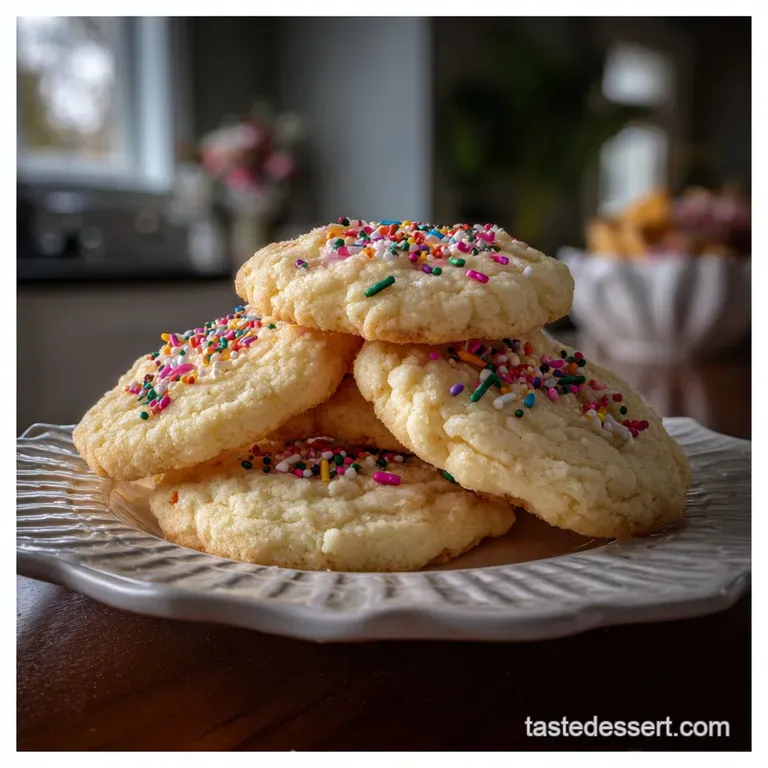
- Effort/Time: Moderate / 1 hour 30 mins
- Flavor Hook: Rich Madagascar vanilla fused with a subtle, nutty almond undertone.
- Perfect for: Holiday-decorating, high-detail royal icing, and make-ahead gifting.
The Architecture of the Ultimate Buttery Sugar Cookies
There is nothing more frustrating than spending hours cutting out intricate stars and snowflakes only to watch them melt into amorphous, buttery blobs in the oven. I once ruined a three tier cookie tower for a wedding because I rushed the chilling stage, resulting in a structural collapse that cost me both my pride and forty dollars in premium European butter.
It was a greasy, heartbreaking lesson in the thermodynamics of fats when baking sugar cookies.
I spent months destroying batches of dough some too tough, others too brittle trying to find the exact balance of protein to lipid ratios. I finally realized that the secret isn't just the ingredients; it's the mechanical manipulation of the gluten network and the temperature of the fats before they hit the heat.
This recipe solves the "spread" problem by utilizing a specific hydration balance that locks the shape in place before the leavening agents can push the boundaries of these perfect sugar cookies.
The scientific revelation came when I treated the dough like a laminated pastry rather than a standard drop cookie. By controlling the Starch Gelatinization and ensuring the butter molecules are encapsulated by flour before the egg provides moisture, we create a cookie with a "chewy snap." You get a shattering exterior that gives way to a velvety, dense center the holy grail of sugar cookies.
Hydration Balance Protocol: Why These Cookies Excel
- Cold Fat Encapsulation: Keeping the butter at a specific "cool room temperature" (65°F) allows it to cream without aerating too much, which prevents the sugar cookies from puffing and distorting.
- Gluten Relaxation: The mandatory 1 hour chill time allows the hydrated flour proteins to relax, ensuring the dough doesn't shrink or "snap back" during the rolling process.
- Hygroscopic Synergy: Using granulated sugar provides the structural "crunch," while the corn syrup in the icing creates a non-shattering, flexible glaze that holds sprinkles securely on the final sugar cookies.
- Almond Vanilla Bridge: The 1/2 tsp of almond extract acts as a flavor "intensifier" for the vanilla, creating a complex olfactory profile that smells like a professional patisserie when you bake these sugar cookies.
Precision Metrics and Yield for Consistent Results
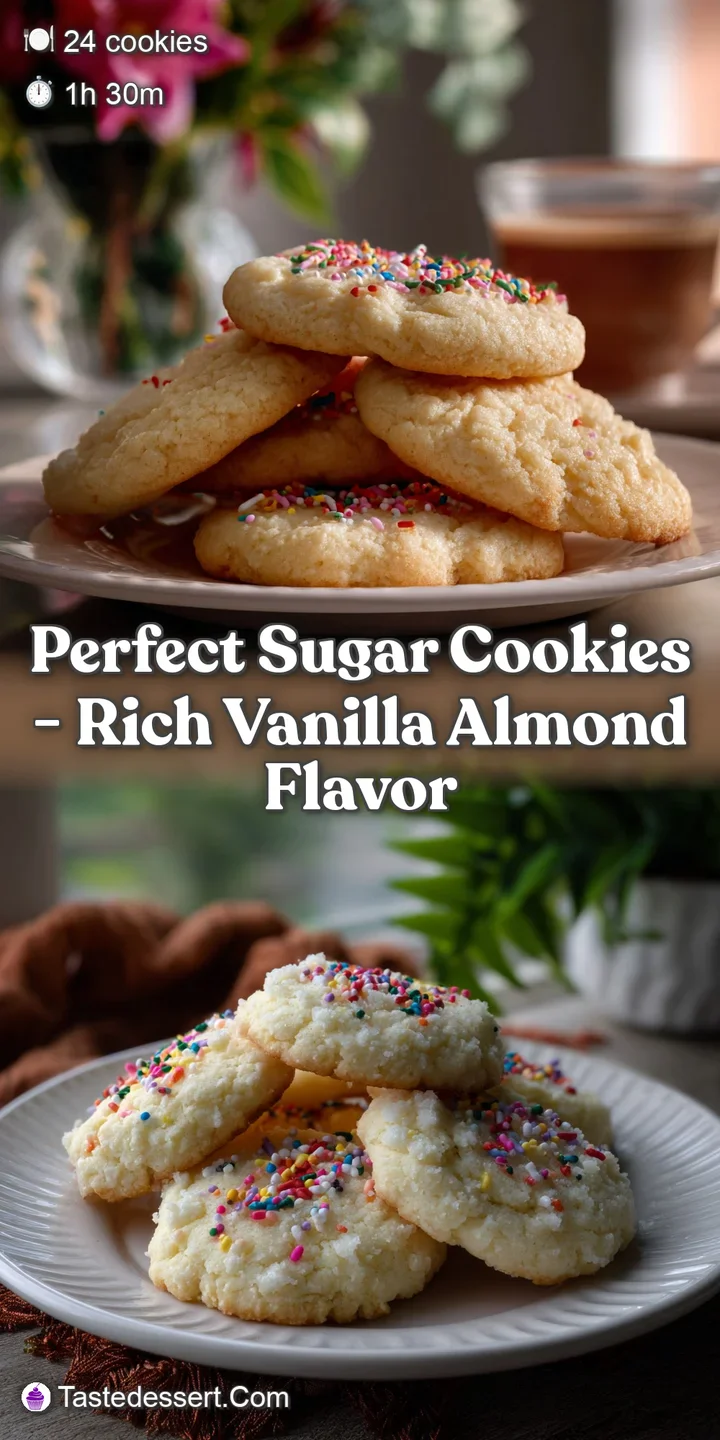
This protocol is calibrated for a yield of 24 cookies, assuming a standard 3 inch cutter size. Mastering this will ensure consistently perfect sugar cookies every time.
- Prep Time: 1 hour 20 mins (includes chilling)
- Cook Time: 10 mins
- Total Time: 1 hour 30 mins
- Yield: 24 cookies
- Caloric Load: 202 kcal per serving
The Alchemy of Baking: Selecting High Performance Elements
| Ingredient | Chemical/Physical Role (Science) | The Pro Secret (Why This Matters) |
|---|---|---|
| Land O'Lakes Unsalted Butter | Lipid barrier against gluten | Prevents toughness; unsalted allows total sodium control. |
| King Arthur All-Purpose Flour | Protein based structural scaffold | 11.7% protein provides the "snap" without becoming bread like. |
| Large Egg (Room Temp) | Protein denaturation/Emulsification | Binds fats and liquids; room temp prevents the butter from seizing. |
| Light Corn Syrup | Interference agent in sugar crystallization | Ensures the icing dries with a high gloss, "velvety" finish. |
The Components
- 1 cup (227g) Land O'Lakes Unsalted Butter, softenedWhy this? Unsalted butter contains less water than salted, preventing steam induced spreading.
- 1 cup (200g) granulated white sugar
- 1 (50g) large egg, room temperature
- 2 tsp (10ml) pure vanilla extract
- 1/2 tsp (2.5ml) almond extract
- 3 cups (375g) King Arthur All-Purpose FlourWhy this? Consistent protein levels provide a predictable gluten network.
- 1 tsp (5g) baking powder
- 1/2 tsp (3g) fine sea salt
- 2 cups (240g) C&H Confectioners' Sugar, sifted
- 3 tbsp (45ml) whole milk or heavy cream
- 1 tbsp (15ml) light corn syrup
- Assorted sprinkles
Technical Toolset for Professional Grade Cookie Structure
- KitchenAid Stand Mixer: Necessary for the high torque creaming of fats and sugars without manual heat transfer from hands.
- Silpat Silicone Baking Mat: Provides a non-stick surface that insulates the bottom of the sugar cookies, preventing the Maillard reaction from over browning the base.
- Adjustable Rolling Pin: Ensures an even 1/4 inch thickness across the entire sheet of dough for simultaneous doneness.
- Fine Mesh Sieve: Essential for sifting confectioners' sugar to eliminate "beading" in the icing.
The step-by-step Mechanical Assembly Protocol
- Cream butter and sugar for 3 minutes using the paddle attachment until the mixture is pale, aerated, and fluffy.
- Incorporate the egg and both extracts until the emulsion is smooth and no liquid streaks remain.
- Whisk dry ingredients (flour, baking powder, salt) in a separate bowl until the leavening agents are evenly distributed.
- Add dry mixture to wet on the lowest speed until a cohesive dough forms and clears the sides of the bowl. Note: Over mixing here will develop too much gluten.
- Divide dough in half, flatten into discs, and wrap in plastic until firm to the touch (approx. 1 hour).
- Preheat oven to 350°F (175°C) and line your USA Pan Half Sheet with parchment.
- Roll dough to 1/4 inch thickness on a lightly floured surface until the surface is even and smooth.
- Cut shapes using sharp edged cutters and transfer to the pan until the tray is full but not crowded.
- Bake for 10 minutes until the edges are just set and the centers no longer look wet or shiny. Note: Do not wait for browning.
- Cool on the pan for 5 minutes until the structure firms up enough to move without breaking.
- Whisk icing ingredients (sugar, milk, corn syrup) until the texture is thick like honey and flows in a slow ribbon.
- Decorate cooled cookies with icing and sprinkles until the surface is fully coated and the glaze begins to set.
Thermal Control and Troubleshooting Structural Failures
The most common failure in making sugar cookies from scratch is "Thermal Shock." When cold dough hits a hot pan that hasn't been properly cooled between batches, the bottom of the cookie melts before the top can set. This ruins the "sugar cookies for decorating" aesthetic. If you're looking for a different vibe after mastering these, our How to Make recipe offers a liquid take on these nostalgic flavors.
Why Your Cookies Spread Too Much This usually occurs due to "Fat Leakage." When butter isn't properly emulsified with the sugar, or the dough is too warm, the lipid molecules separate from the flour matrix. This leads to a puddle rather than a crisp shape in your cookies.
| Problem | Root Cause | The Fix | Pro Protocol |
|---|---|---|---|
| Rough/Grainy Icing | Undissolved sugar crystals | Sift sugar 2x; add corn syrup | Use a whisk, not a spoon. |
| Cookies are Tough | Gluten over development | Reduce mixing time after flour | Mix until just combined. |
| Shapes Distorted | Dough too warm | Excess chilling (30 mins) | Roll dough between parchment sheets. |
Flavor Architecture and Ingredient Modification Strategies
While sugar cookies christmas traditions often demand the classic vanilla almond profile, you can shift the flavor architecture easily. For a holiday twist, check out our Hershey Kiss Thumbprint Cookies recipe which uses a similar base logic but adds a chocolate focal point.
| Original Ingredient | Substitute | Why It Works |
|---|---|---|
| Whole Milk | Fresh Lemon Juice | Adds acidity; cuts through the sugar sweetness. |
| Almond Extract | Fiori di Sicilia | Provides a citrus vanilla "panettone" aroma. |
| All-Purpose Flour | Cup4Cup gluten-free | High starch content mimics the "snap" of wheat flour. |
Preserving Texture: Long Term Storage and Reclamation
Storage Protocol Store iced sugar cookies in a single layer in an airtight Rubbermaid Brilliance container. If stacking is necessary, wait 24 hours for the icing to fully dehydrate and place parchment paper between layers.
They remain optimal for 5 days at room temperature.
- Unbaked Dough
- Wrap tightly in double layer plastic. Thaw in the fridge for 24 hours before rolling.
- Baked (Un-iced)
- Freeze for up to 3 months. To reclaim, bake at 300°F for 3 minutes to "re-crisp" the fats.
- Baked (Iced)
- Not recommended for freezing as the sugar cookies with icing can develop "pockmarks" from condensation during the thaw.
Chef's Tip: If your icing is too thin, don't just add sugar. Add a teaspoon of cornstarch. It thickens the glaze without making it cloyingly sweet and helps it dry to a matte, professional finish.
Curated Aesthetics and Flavor Pairing Profiles
When serving sugar cookies with sprinkles, consider the "Visual Crunch" ratio. A mix of nonpareils and sanding sugar provides both a fine and coarse texture. For a sophisticated platter, pair these with our The Quintessential Crosshatch recipe to offer a salty sweet contrast that prevents palate fatigue.
⚗️ The Scaling Lab: The Physics of Quantity
When doubling this batch to 48 sugar cookies, you must account for the Thermal Mass Recovery.
- Flavor Saturation: Increase salt to 3/4 tsp (not 1 tsp). Spices and seasonings accumulate non-linearly.
- Leavening Precision: Stick to exactly 2 tsp of baking powder. Excess CO2 in a large batch can cause the cookies to "balloon" and then collapse.
- The Square Cube Law: A larger mass of dough in the mixer stays warm in the center. After mixing, divide the double batch into four discs instead of two to ensure even chilling.
- Baking Thermodynamics: If placing two trays in the oven at once, increase the bake time by 2 minutes and rotate the pans halfway through. The second tray acts as a heat sink, lowering the ambient temperature of the oven.
Zero Waste Philosophy: Transform Your Scraps
Don't discard the small shards of dough leftover after cutting. Transform: Knead them together with a teaspoon of cinnamon and bake as "Snickerdoodle Scraps." Science: The extra handling develops more gluten, making these scraps crunchier perfect for dipping in coffee or crushing over vanilla bean ice cream.
Also, any leftover "sugar cookies with frosting" remnants can be pulsed in a food processor to create a high fat "cookie butter" base for cheesecake crusts.
- Myth
- You must use cold butter for sugar cookies.
- Truth
- Cool room temperature (65°F) is best. Cold butter won't cream, meaning you'll have chunks of fat that melt and create holes in your cookies.
- Myth
- Baking soda and baking powder are interchangeable here.
- Truth
- Baking powder contains its own acid; baking soda requires an outside acid (like lemon or buttermilk) to react. Using soda here would result in a soapy taste and zero rise.
These sugar cookies from scratch are more than just a treat; they are a study in precision. Trust the chill time, respect the room temperature egg, and you'll never deal with a "blob" cookie again. Let's crack on.
Recipe FAQs
How to make sugar cookies?
Cream cold butter with sugar, incorporate dry ingredients, chill dough for 1 hour, roll to 1/4 inch, and bake at 350°F for 10 minutes. This mechanical process controls fat melting, ensuring structural integrity for decorating.
How to make sugar cookies from scratch?
Use standard butter, flour, sugar, egg, leavening, and salt for the base structure. Begin by creaming the cold fat and sugar until aerated, then gradually mix in the dry components to achieve the correct gluten network.
How to make sugar cookies without baking powder?
Myth: Baking soda and baking powder are interchangeable here. Baking powder contains its own acid; baking soda requires an outside acid (like lemon or buttermilk) to react. Using soda here would result in a soapy taste and zero rise.
How to make sugar cookies without eggs?
Use flax egg substitute for binding and moisture retention. Flax eggs create a stable mucilage that mimics the emulsifying properties of the yolk, preventing the dough from crumbling like our Ultimate Sourdough Discard Dessert Recipes: 5 Decadent Cookies to Try! base.
How to make sugar cookies for decorating?
Roll dough to a precise 1/4 inch thickness and chill it thoroughly. This controls the spread by hardening the fat barrier, locking the shape, which is critical for sharp edges beneath royal icing. This same temperature precision is key when learning How to Bake Sweet Buns with Delicious Cinnamon Sugar: A Family Favorite.
Should I use salted or unsalted butter for sugar cookies?
Unsalted butter is mandatory for precision control. Salted brands vary widely in sodium content (80-200mg per tbsp), which disrupts the desired neutral flavor profile. Unsalted lets you accurately standardize the overall sodium balance in the dough.
Why are my sugar cookies spreading flat in the oven?
Butter that is too warm causes lipid molecules to separate rapidly. When the fat melts too fast, it cannot maintain the internal structure created during creaming, leading to a loss of height and spread.
- Chill dough for minimum 60 minutes
- Ensure oven temp is calibrated
- Use corn syrup in the icing for adhesion
Buttery Sugar Cookies For Decorating
Ingredients:
Instructions:
Nutrition Facts:
| Calories | 202 kcal |
|---|---|
| Protein | 2 g |
| Fat | 8.1 g |
| Carbs | 31 g |
| Fiber | 0.4 g |
| Sugar | 19 g |
| Sodium | 71 mg |
