New Orleans Gumbo: Classic Chicken and Andouille Recipe
- Unlocking the Soul of Louisiana: A Deep Dive into Classic New Orleans Gumbo
- Ingredients You Need for New Orleans Gumbo
- The Method: Crafting Your Classic Chicken and Andouille Gumbo
- Pro Secrets and Troubleshooting Your New Orleans Gumbo
- Storage Solutions: Making Gumbo Last
- How to Serve Your Louisiana Gumbo Experience
- Recipe FAQs
- 📝 Recipe Card
Unlocking the Soul of Louisiana: A Deep Dive into Classic New Orleans Gumbo
Defining Gumbo: More Than Just a Soup
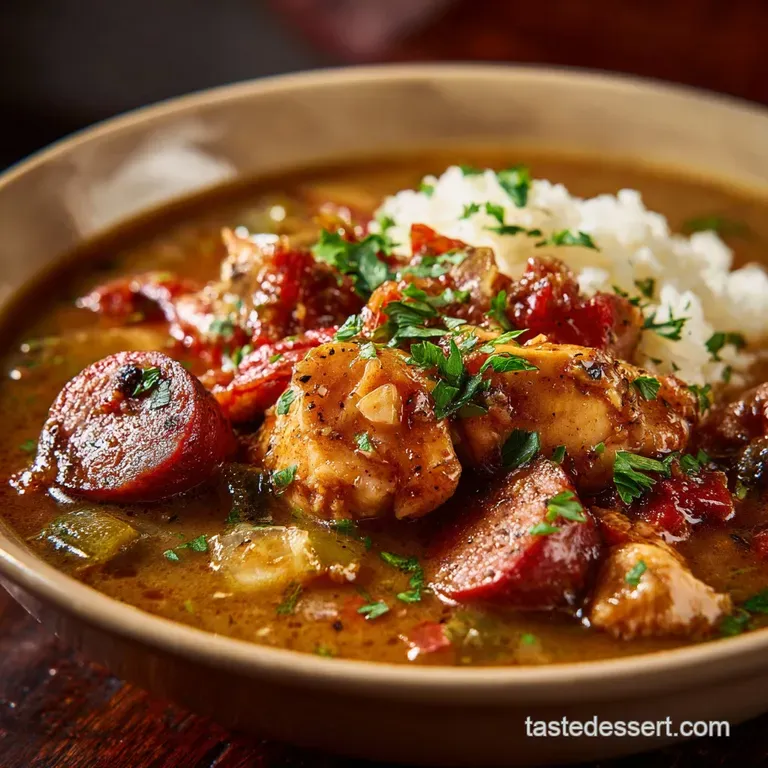
You know that scent that stops you dead in your tracks? That is the smell of a proper New Orleans Gumbo simmering on the stove. It’s dark, smoky, deep, and promises rich, soulful comfort that perfumes the entire house.
The color should be like melted milk chocolate, and the flavor should hug you instantly. This isn't just a basic soup; it’s a complex, patiently built stew where every step matters, especially that long, loving roux.
The History on Your Plate: Origins of the Dish
I used to think Gumbo was way too complicated for a weeknight, but trust me, it’s deceptive. Once you master the technique (which is mostly just patient stirring), this authentic Gumbo recipe is actually a massive lifesaver for feeding a crowd or meal prepping.
It gets better the next day, it freezes like a dream, and it transforms cheap ingredients into culinary gold. This dish is pure economy and pure flavor.
Why Chicken and Andouille is the Perfect Pairing
This recipe focuses on the classic Chicken Andouille Gumbo , which is arguably the most balanced version. The smoke and potent spice of the Andouille sausage cut through the richness of the dark roux perfectly.
The subtle flavor of tender chicken thighs adds body without competing with the complexity of the stew, making the final result incredibly satisfying. The secret to success isn't expensive ingredients; it's understanding how to treat that fat and flour foundation.
Ingredients You Need for New Orleans Gumbo
Main Ingredients Notes
The ingredient list for a good New Orleans Gumbo is short, but quality matters, especially when it comes to the meat and the spices. We are relying heavily on that smoky Andouille, so don't skimp here; choose a good quality, heavily smoked brand.
I always use boneless, skinless chicken thighs because they stay ridiculously tender, even after hours of simmering, unlike leaner breast meat which can dry out quickly.
Remember, the 'Holy Trinity' onions, celery, and bell pepper is non-negotiable for that essential Louisiana flavor base. Get everything chopped and ready before you even start the roux; this dish moves fast once the fat is hot.
Easy Substitutions and Swaps
Don't panic if you’re missing one little thing! We are home cooks; we adapt. If you can’t find Andouille, look for another high-quality smoked sausage like Kielbasa, though you’ll need to increase your cayenne pepper to compensate for the lost heat.
| Ingredient | Substitute | Impact on Dish |
|---|---|---|
| Andouille Sausage | Smoked Kielbasa or spicy Chorizo (drained well) | Less intense spice; may require more cayenne. |
| Chicken Thighs | Smoked Turkey (added late) or Pork shoulder cubes | Richer flavor; may take longer to become tender. |
| Vegetable Oil | Bacon Fat or Lard | Deeper, smokier flavor foundation; highly recommended. |
| Green Bell Pepper | Red or Orange Bell Pepper | Slightly sweeter flavor, less traditional. |
Essential Equipment
You only need a few things, but they are crucial for a successful authentic Gumbo recipe . You absolutely need a heavy bottomed pot, usually a Dutch oven. Why? Because it distributes the heat evenly, which is the difference between a perfect roux and a tragic, burnt one.
Grab a sturdy wooden spoon or heat proof spatula, too; your wrist will be tired.
The Method: Crafting Your Classic Chicken and Andouille Gumbo
Phase I: Building the Deep, Nutty Roux Foundation
This is the hardest part of the entire Gumbo recipe easy or not, so take a deep breath. Start by sautéing your sliced Andouille sausage over medium heat until it’s lightly browned and has rendered some glorious fat; remove the sausage and leave the fat behind.
Now, add enough vegetable oil to bring your total fat/oil up to 1 cup. Lower the heat to medium low, then slowly whisk in the flour.
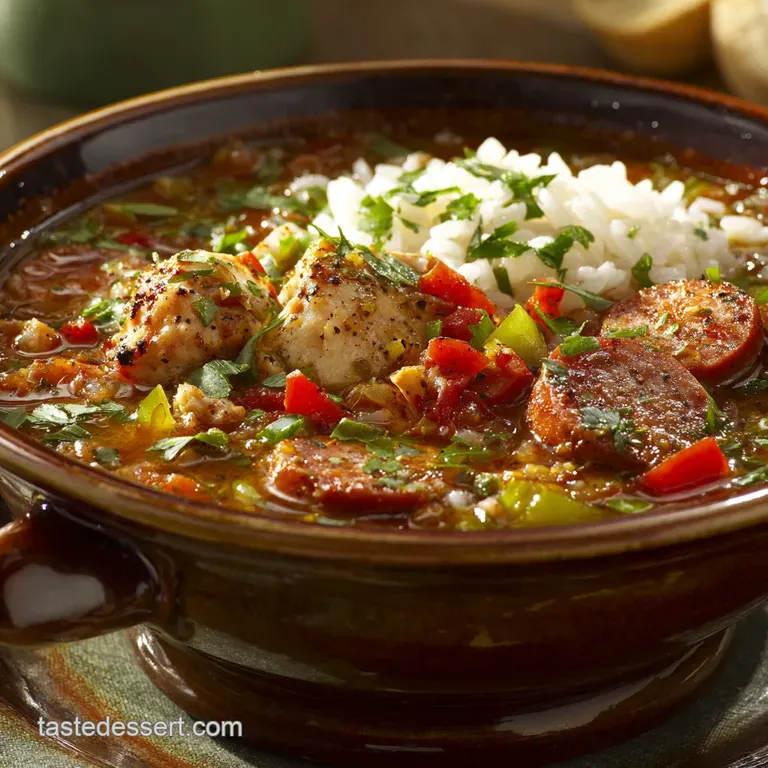
CRUCIAL CHEF’S NOTE: Stir constantly, scraping the bottom edges. This process takes 30– 45 minutes until the color progresses past peanut butter, past copper, and reaches the rich shade of dark, melted milk chocolate.
The darker the roux, the deeper the flavor, but the less it thickens.
Phase II: Sweating the Trinity and Sautéing the Meats
Once you hit that perfect dark color and trust me, it feels like forever immediately toss in your chopped onions, celery, and bell pepper (the Trinity). The moisture from the vegetables stops the roux from cooking further, preventing it from burning!
Stir them for about 8 minutes until they start to soften and turn translucent. They need to "sweat." Next, add your minced garlic, stirring for just 60 seconds until you smell it; don't let the garlic burn.
Phase III: Simmering for Depth of Flavor
Slowly, carefully whisk in the hot chicken stock. I cannot stress this enough: use warm stock to avoid seizing the roux into lumps. Once the base is smooth, bring the pot to a boil, then immediately drop the heat down to a low simmer.
Add your dried thyme, bay leaves, Cajun seasoning, and a pinch of cayenne. Let that simmer, uncovered or partially covered, for about 45 minutes to let the flavors marry deeply.
Finishing Touches and Final Consistency Check
Add the pre-cooked Andouille and your cubed raw chicken thighs back into the pot. Simmer for another 25 minutes, or until the chicken is cooked completely and almost falling apart tender. Remove the bay leaves before tasting! Seasoning is key here; taste and adjust salt and pepper. This Gumbo should be intensely savory and slightly spicy. If you want a fun regional variation, you could pair the spicy gumbo with a side of my Blackened Shrimp Bayou New Orleans Flavor at Home for an all-out Louisiana feast!
Pro Secrets and Troubleshooting Your New Orleans Gumbo
Preventing a Scorched Roux (The #1 Mistake)
I’ve been there, staring at a beautiful copper roux, only to look away for literally 20 seconds, only to return to black, bitter flecks. It is heartbreaking. If you see black flecks, it’s burned, and you MUST throw it out and start over.
There is no saving a burned roux; it will ruin the whole pot. The pro secret? If it feels like it’s getting too hot, pull the pot off the heat entirely while you continue to stir, or toss in a piece of cold celery for instant cooling.
Adjusting Consistency: Too Thick vs. Too Thin
If your Authentic Gumbo Recipe somehow ends up too thin (maybe your roux wasn't dark enough, meaning it retained more thickening power), you can cheat a little. Mix a tablespoon of cornstarch with a splash of cold water and whisk that slurry into the simmering gumbo until it thickens slightly.
If it's too thick, simply add a splash more hot chicken stock until it reaches that gravy like, spoon coating consistency we want.
Utilizing File Powder for Traditional Texture
Gumbo Filé powder is ground sassafras leaves, and traditionally, it was used as a thickener, or an alternative to okra. It also adds a distinctive, slightly root-y flavor. If you want to use it, remember this rule: Never cook the Filé powder.
Cooking it turns the gumbo slimy and stringy, which is gross. Stir about a half teaspoon of Filé directly into the bowl after you’ve finished cooking and served it.
Storage Solutions: Making Gumbo Last
Refrigeration and Reheating Best Practices
This is why I love Gumbo so much: it tastes better the next day. The flavors truly get a chance to socialize overnight in the fridge. Store it in an airtight container for up to 4 days. When reheating, do it slowly on the stove over low heat.
If it looks too thick after cooling (the roux fat can solidify), add a tiny splash of water or stock while it warms up.
The Art of Freezing Gumbo Safely
But does it freeze well? You bet it does! Let the gumbo cool completely before transferring it to freezer safe containers or heavy duty freezer bags. I recommend freezing it in serving sizes. It will last perfectly for 4 to 6 months.
To reheat from frozen, thaw it overnight in the fridge and then warm it gently on the stove, stirring occasionally.
How to Serve Your Louisiana Gumbo Experience
Perfect Pairings: What to Serve Alongside Gumbo
The traditional way to serve Gumbo is over a generous scoop of hot, fluffy long grain white rice. The rice soaks up that incredible, deep gravy. Beyond the starch, you absolutely need a bottle of Louisiana hot sauce, like Crystal or Tabasco, available for anyone who wants to customize the heat level.
The most New Orleans Gumbo pairing? A cold, creamy side dish like a proper potato salad. The temperature and texture contrast of hot, rich stew and cold, tangy potato salad is truly iconic. If you need a recipe, you should definitely check out my Best New Potato Salad for Grilling Tarragon Bacon Sides for BBQs . It’s a game changer! Finally, don't forget some crusty French bread for soaking up the last delicious drops.

Recipe FAQs
What is the most essential component of authentic New Orleans Gumbo?
The foundation is the roux a mixture of fat and flour cooked until it achieves a deep, dark chocolate brown color, providing nutty depth and flavor. Achieving this dark color is crucial, as it provides the savory richness and depth that defines a true Louisiana Gumbo.
A properly developed dark roux should smell rich and nutty, never scorched.
What is the 'Holy Trinity' and why is it crucial to Gumbo flavor?
The Holy Trinity is the essential aromatic base of Louisiana cooking, consisting of finely diced onions, celery, and green bell peppers. After the roux is complete, these vegetables are sautéed until softened, which adds a necessary sweetness and complex vegetal background flavor to the deep base.
This combination sets the regional flavor profile apart from other stews.
Should I include okra in my Gumbo, and is it necessary for authenticity?
While okra is traditional in many Gulf Coast variations (especially certain Creole Gumbos), it is entirely optional and not mandatory for authenticity. Okra acts as a natural thickener, containing mucilage, but many traditional Cajun Gumbos rely solely on the dark roux and optional filé powder for viscosity.
If using okra, sauté it first to minimize the ‘slimy’ texture.
My roux burned while I was stirring it. Can I still save the batch?
Unfortunately, if the roux burns even slightly it must be discarded immediately and you must restart the process. A burnt roux imparts a strong, acrid, bitter flavor that will ruin the entire pot of gumbo, and that bitterness cannot be masked by seasoning. This is the stage where patience is most required.
Can I substitute the chicken and Andouille sausage with seafood?
Absolutely; Gumbo recipes are highly adaptable, and seafood gumbo (often featuring shrimp, crab, and oysters) is a famous Louisiana variation. If using delicate seafood, add it only during the last 10-15 minutes of simmering to prevent it from becoming tough or rubbery.
Do not cook the seafood down for hours like you would the chicken and sausage.
How long can I safely store leftover Gumbo, and does it freeze well?
Gumbo stores wonderfully; it can be refrigerated in an airtight container for up to 4 days, and the flavors often meld further overnight. It also freezes exceptionally well; ladle it into freezer safe containers and store for up to 6 months. Always freeze the gumbo without the rice, adding the rice fresh when serving.
How should Gumbo be traditionally served, and what is filé powder?
Gumbo is traditionally served hot over a scoop of fluffy white rice, which helps soak up the rich, flavorful broth. Filé powder, made from ground sassafras leaves, is an optional seasoning and historical thickener, typically stirred into the individual bowl right before eating, rather than cooked into the main pot.
It provides a unique, earthy flavor.
Classic Chicken And Andouille Gumbo Recipe
Ingredients:
Instructions:
Nutrition Facts:
| Calories | 491 kcal |
|---|---|
| Protein | 28.8 g |
| Fat | 22.3 g |
| Carbs | 36.3 g |
