Sausage Stuffing Recipe: Classic Sage and Sausage Stuffing, Butchers Best
- Mastering the Perfect Contrast: Why This Stuffing Recipe Excels
- Essential Components for the Ultimate Flavor Base
- Preparing Your Bread for Maximum Absorption and Texture
- Step and by-Step: Assembling Your Signature Sausage Stuffing
- The Final Bake: Achieving Golden Brown Perfection
- Prep Ahead and Storage: Maximizing Your Cooking Timeline
- Troubleshooting and Flavor Variations
- Recipe FAQs
- 📝 Recipe Card
Mastering the Perfect Contrast: Why This Stuffing Recipe Excels
You know that feeling when you dig into a pile of stuffing and it’s just… mush? Sad, bland, uniform grey and brown mush? Yeah, me too. I’ve been there. I have wasted many an hour of precious holiday prep time on a lackluster stuffing that tasted vaguely of bread and disappointment.
This recipe, my friends, is the total opposite. It's the "Worlds Best Stuffing Recipe," hands down, because it focuses on contrast.
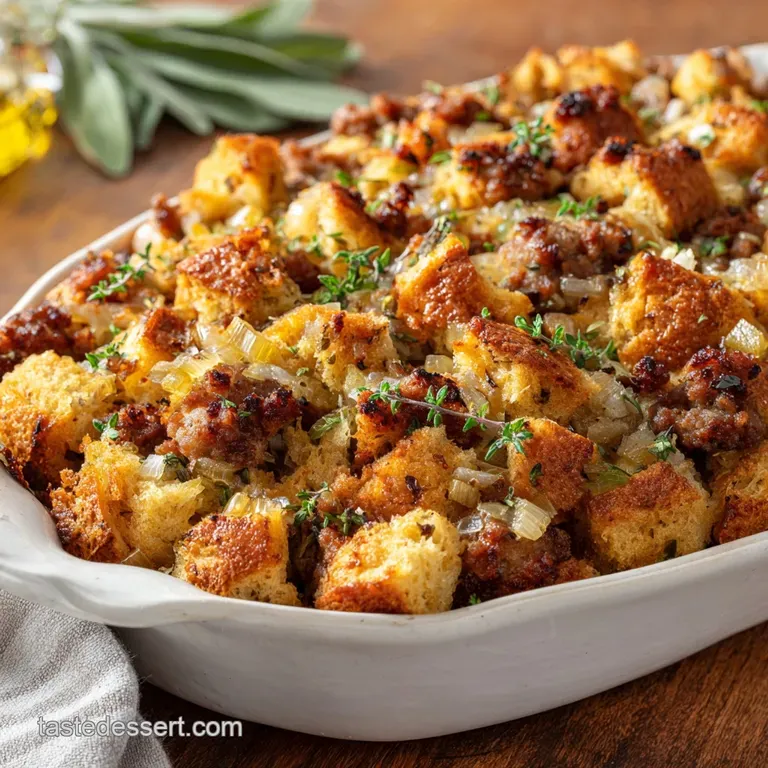
This isn't just about combining ingredients. It’s about building layers of flavour and texture so that every single bite delivers something different: salty, savoury sausage, sweet, soft aromatics, and crucially, those golden, crispy bits of bread.
We are aiming for a moist Thanksgiving stuffing, but we are absolutely refusing to accept sogginess.
The Crucial Role of Buttery, Crispy Edges
If your stuffing comes out of the oven looking pale and uniform, you’re missing the magic. The outer layer is where the transformation happens. We are coating the dried bread cubes in residual sausage fat and melted butter before it even hits the baking dish.
And then (this is key) we drizzle more butter right before the uncovered bake.
This fat creates a moisture barrier on the surface that lets the bread caramelize and brown. It makes the difference between a good stuffing and the kind of classic sage and sausage stuffing people talk about for weeks afterward.
Deeply Savory Aromatics: Sage and Thyme Infusion
Stuffing should smell like a warm hug. It should smell like the moment you realize the holiday cooking is actually going well. For me, that smell is sage and thyme.
I used to just toss in dried herbs right at the end, thinking it was fine. Rookie mistake. We need to "bloom" the fresh herbs. When you sauté the chopped fresh sage and thyme in the hot sausage fat and butter for just one minute, they release their essential oils, deepening their flavour intensity ten times over.
That deeply savory aromatic profile is what makes this the sausage stuffing recipe.
Beyond the Holidays: Serving Classic Sausage Stuffing Year and Round
Look, I get it. Stuffing screams "November" or "December." But why limit ourselves? This sausage stuffing recipe is so robust it works perfectly alongside roasted chicken any Sunday of the year.
It’s hearty enough to stand alone as part of a meal prep, or you can bake it into little individual portions (like large stuffing sausage balls, but flatter) and serve them with brunch. Don't let the calendar dictate your carb cravings.
Essential Components for the Ultimate Flavor Base
There are three non and negotiables here: the bread, the binding fat, and the sausage. If you skimp on any of these, you’re compromising the whole mission.
We need sturdy bread (sourdough is my absolute favorite choice because it’s tough and has a great tang), real, proper butter (honestly, don't even bother trying to substitute low and fat margarine here), and a good quality pork sausage.
I usually look for a mild Italian style, because it already contains fennel and plenty of seasoning, which saves me time and effort. It just tastes better when the sausage itself has some gusto.
Preparing Your Bread for Maximum Absorption and Texture
This section is non and negotiable, folks. If you skip drying the bread, you will have mush. Period.
Selecting the Ideal Pork Sausage for Robust Flavor
The key to great stuffing sausage recipes is choosing a sausage that complements, not dominates. Mild Italian pork sausage is perfect because the fennel seed plays so beautifully with the sage and thyme. If you like heat, absolutely grab the hot Italian sausage. It adds a welcome zip.
Whatever you choose, please, remove the casing. You want that loose meat texture that crumbles and disperses evenly throughout the bread, not little slippery tubes of meat hiding inside.
Fresh Versus Dried Herbs: Elevating the Aromatic Profile
Look, I keep a jar of dried sage in the cupboard like everyone else, but for this specific application? Go fresh. The difference is unbelievable. Fresh sage is brighter, earthier, and releases those beautiful oils when bloomed.
It’s the difference between a hint of flavour and an explosion of Classic Sage and Sausage Stuffing essence.
Staling Versus Drying: Achieving the Necessary Moisture Balance
People confuse stale with dry. You want dry bread, not just rock and hard stale bread. Stale bread still contains moisture deep inside. When you bake the bread cubes for just 15- 20 minutes in a low oven (300°F or 150°C), you are driving that moisture out.
This allows the bread to soak up all that savory, buttery chicken stock without collapsing into glue. It makes the final result truly moist Thanksgiving stuffing, not damp bread pudding.
The Ideal Bread Cube Size and Toasting Method
I aim for 1 inch cubes (no smaller!). If they are too small, they’ll turn to crumbs and absorb too much. Too large, and you’ll have hard, dry chunks.
Toasting is simple: Toss those cubes with a touch of olive oil or melted butter, spread them on a sheet pan, and bake for about 15 minutes, stirring once. The goal is hard, dry, and slightly golden. Then you’re ready to crack on with the good stuff.
Related Recipes Worth Trying
- Thanksgiving Stuffing: Buttery Sourdough, Sausage, and Sage Casserole — Thanksgiving Stuffing is the absolute backbone of the holiday table. This sourdough stuffing recipe guarantees a crisp top and moist interior, featuring...
- Homemade Stuffing Recipe: Classic Sage and Thyme Bread Stuffing — Homemade Stuffing Recipe is essential for the holidays. Master this Traditional Stuffing Recipe, guaranteed to be moist inside with a crispy, golden top....
- Grandmas Thanksgiving Stuffing: The Proper Herb Butter Classic — Grandmas Thanksgiving Stuffing is the ultimate herb and butter classic. Achieve the perfect balance of moist interior and crispy top with this traditional...
- Homemade Stuffing: Classic Sage Thyme Bread Recipe — Homemade Stuffing is the deeply savory side dish your holiday table deserves. Master this Classic Homemade Stuffing recipe with sage, thyme, and a glorious...
- Thanksgiving Side Dishes: The Butchers Sourdough, Sage Sausage Dressing — Thanksgiving Side Dishes just got an upgrade. This robust, make-ahead dressing combines sourdough and cider kissed sausage. Its one of the best Thanksgiving...
- Stuffed Butternut Squash Hearty Sausage Wild Rice and Sage Main — Stuffed Butternut Squash is the perfect autumnal dinner This hearty stuffed butternut squash recipe features savory sausage wild rice and fresh sage A...
Step and by-Step: Assembling Your Signature Sausage Stuffing
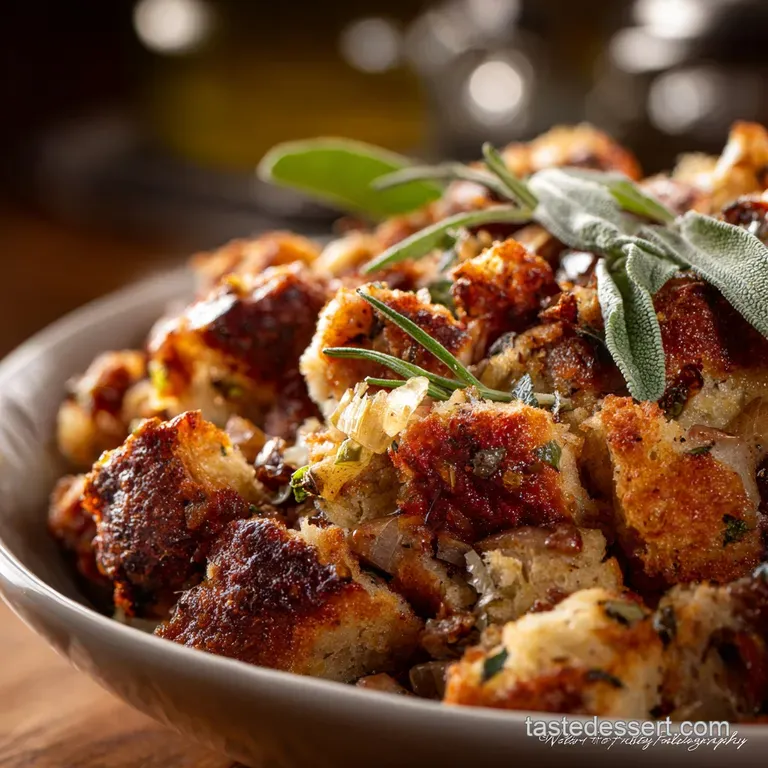
Right then, you have your dried bread cubes chilling out in the biggest mixing bowl you own. Now we build the flavor.
- Sausage First: Cook that sausage until it’s browned and beautifully crispy. Crucially, render out most of that fat, but save a couple tablespoons. That fat is flavour gold!
- Aromatics Bloom: Add butter, soften your onions and celery (the mirepoix), and then add the garlic and fresh herbs. The kitchen should smell incredible right now.
- Combine Everything Dry: Pour that hot, buttery aromatic mixture right over the dried bread cubes. Toss gently to coat.
- The Binder: Add your cooked sausage and your lightly beaten eggs (they help set the structure).
- Moisture Check: Slowly add the warm chicken stock. Don’t rush this! Use your hands and fold until everything is deeply moistened.
CRUCIAL WARNING: Do not pour the stock straight from the fridge. Use warm or room temperature stock. Cold liquid will solidify the sausage fat and make it harder to distribute evenly, resulting in patchy texture.
The Final Bake: Achieving Golden Brown Perfection
You've done the hardest part (which was mostly just waiting for the bread to dry). Now we send it to the oven for that perfect Best Oven Baked Stuffing Recipe finish.
Sautéing the Mirepoix and Rendering the Sausage
When rendering the sausage, make sure your heat isn’t too high. We want browning, not burning. If you use good sausage, you’ll get a decent amount of fat. I reserve about 2 tablespoons of that rendered fat in the pan when I add the butter for the mirepoix.
It’s a trick my grandmother taught me; it gives the whole base a profound, rich, meaty depth that stock alone can’t achieve.
Achieving the Perfect Liquid and to-Bread Saturation Point
This is often where people fail. You need enough liquid to hydrate the bread so it doesn't dry out in the oven, but not so much that you have soup.
The squeeze test is the way to go: When you gently squeeze a handful of the mixed stuffing, it should hold its shape, and maybe one or two drops of liquid should squeeze out. If it drips constantly, it’s too wet. If it crumbles, it’s too dry.
Start with two cups of stock, mix, wait five minutes for absorption, and then add more only if needed, up to the 2.5 cup mark.
Preparing the Baking Dish for Superior Crust Development
Use butter. A generous swipe of softened butter across the bottom and sides of your 9x13 inch dish is vital. It acts like a non and stick agent and, most importantly, helps the bottom and side edges of the stuffing achieve a beautiful, crispy, fried texture. Don't skip the butter dotting on top either!
Covering and Uncovering: When to Shield Your Stuffing
We use a two and stage baking process.
- Covered ( 30 minutes): Tightly covering the stuffing with foil traps the steam, ensuring that the internal bread fully hydrates, the eggs set, and the stuffing heats evenly throughout. This is essential for structure and food safety.
- Uncovered (15- 20 minutes): Removing the foil allows all that butter on the surface to bubble, crisp, and brown, giving you that shatteringly glorious crust. Keep an eye on it during this phase; you want golden brown, not charcoal black.
Prep Ahead and Storage: Maximizing Your Cooking Timeline
You can do almost all the heavy lifting for this Sausage Stuffing recipe the day before.
- Dry the Bread: Up to 2 days ahead, stored at room temp in an open container.
- Cook the Base: Cook the sausage, sauté the mirepoix, and mix them together. Store this mixture (without the bread or stock!) in an airtight container in the fridge for up to 2 days.
- Assembly: You can assemble the entire dish, including adding the stock and eggs, up to 12 hours before baking. Keep it covered tightly in the fridge, then allow it to come to room temperature for 30 minutes before baking according to the instructions.
Troubleshooting and Flavor Variations
Freezing and Reheating Guidelines for Sausage Stuffing
Yes, you can freeze it! Cook the stuffing completely, let it cool entirely, and then wrap it tightly in foil and plastic wrap. It keeps well for up to three months. To reheat, thaw overnight in the fridge and bake covered at 350°F (175°C) until piping hot in the centre (30- 45 minutes).
Safely Storing Leftovers and Maximizing Shelf Life
Leftover stuffing must be refrigerated within two hours of coming out of the oven. Use airtight containers. It keeps well for 3 to 4 days. If you find the leftovers are a little dry, just add a splash of stock or gravy before reheating.
Adjusting Texture: Too Dry or Too Wet?
- Too Dry: Mix in an extra quarter cup of warm stock and let it sit for 10 minutes before baking.
- Too Wet: This is tougher, but fixable. Gently fold in a handful of fresh bread crumbs or plain, unseasoned Panko breadcrumbs (not the dried cubes, just the soft stuff) and let it absorb the excess moisture before transferring to the dish.
Scaling the Recipe for Large Gatherings
If you’re attempting Holiday Dressing Recipes for a huge crowd, it’s better to make two separate batches in two different dishes rather than trying to fit it all into one massive container. You’ll get better heat distribution and superior crust development.
- Measure ingredients precisely (especially the stock).
- Use two 9x13 dishes instead of one giant pan.
- Increase the oven temperature slightly to 400°F (200°C) during the uncovered stage if you’re using multiple dishes, ensuring they all brown quickly.
- Always check the internal temperature (165°F or 74°C) to ensure the eggs are fully cooked.
Alternative Bindings and Add and Ins for Classic Sausage Stuffing
If you want to introduce a little something extra to your Sausage Stuffing Balls Recipe mix (or just the casserole style), here are a few ideas:
- Apples and Cranberries: Add the sweetness of diced Granny Smith apples and tart dried cranberries.
- Mushrooms: Sautéed wild mushrooms (cremini or shiitake) add deep umami.
- Chestnuts: Toss in some canned or jarred pre and cooked chestnuts (chopped) for that classic holiday texture.
Recipe FAQs
How do I stop my stuffing from being soggy and ending up a bit like porridge?
The key to perfect texture is bone dry bread cubes! Fresh bread turns mushy; ensure you bake or air-dry your cubes thoroughly before adding the liquid stock.
Is it really necessary to bake this Sausage Stuffing outside the turkey?
Absolutely! Baking separately ensures the filling reaches a safe temperature quickly and guarantees those beloved crispy, buttery edges, preventing a mushy centre.
Can I make this a day or two before the big Sunday roast?
Yes, you can prep and assemble the entire mix, cover it tightly, and chill for up to two days. Bring it to room temperature before baking to ensure even heating.
I need a lighter option; can I swap the pork sausage for something else?
Definitely! Use ground turkey or chicken, but season it aggressively with fennel, paprika, salt, and black pepper to capture that crucial savoury flavour.
What's the best way to reheat leftover stuffing without it drying out?
Reheat covered with foil in the oven at 350°F (180°C) until warm, then remove the foil for the last five minutes for a crispy top crust.
Classic Sage Sausage Stuffing
Ingredients:
Instructions:
Nutrition Facts:
| Calories | 350 kcal |
|---|---|
| Fat | 20 g |
| Fiber | 2 g |
