Baked Chicken Cordon Bleu: Proper, Leak-Proof, and Perfectly Crispy

- The Secret to Truly Crispy Baked Chicken Cordon Bleu
- Mastering the Technique: Why This Cordon Bleu Recipe Works
- Essential Components for the Perfect Baked Chicken Cordon Bleu
- Rolling and Baking: The Step-by-Step Method for Cordon Bleu Success
- Troubleshooting Your Baked Cordon Bleu: Pro Tips and Mistakes to Avoid
- Make Ahead, Freezing, and Reheating Instructions
- Perfect Pairings: What to Serve Alongside Cordon Bleu
- Recipe FAQs
- 📝 Recipe Card
The Secret to Truly Crispy Baked Chicken Cordon Bleu
The moment you pull these golden cylinders out of the oven, the house smells like a dream, right? Seriously, the aroma of toasted, buttered Panko mixed with the promise of melting Swiss cheese is pure kitchen magic.
When you finally cut into this classic, you get that satisfying shatter from the crust followed by the warm, salty ham and creamy Swiss oozing out. This dish is exactly what elegant comfort food is supposed to be.
I know the idea of Cordon Bleu sounds fussy or intimidating, but trust me, we are ditching the deep fryer entirely. Baking makes this dish infinitely less messy and eliminates all that heavy, oily feeling you get from traditional versions.
It’s an absolute lifesaver when you need a simple weeknight dinner that looks impressive enough for company.
I’ve learned all the hard lessons over the years the leaky rolls, the dry chicken, the soggy bottoms so you don't have to experience that heartbreak. We're going to lock in the flavour, guarantee the crunch, and make perfect, juicy Baked Chicken Cordon Bleu every single time.
Let’s dive into the details.
Mastering the Technique: Why This Cordon Bleu Recipe Works
Moving Past the Deep Fryer: Achieving Crunch Through Baking
Most people think you need scorching hot oil to get that signature golden crust, but that's just not true. We use high heat in the oven combined with a critical secret ingredient: melted butter in the breadcrumbs. This makes all the difference.
The butter toasts the crumbs beautifully and helps them adhere firmly, mimicking the deep fried result without the splattering mess or extra fat.
The Origin Story of the Iconic Cordon Bleu
While the exact history is debated, Cordon Bleu essentially translates to "blue ribbon," signifying high achievement in cooking. It’s fundamentally a fancy European schnitzel a thin piece of meat rolled around a filling and breaded.
Historically, it was a veal or pork dish, but the baked chicken cordon bleu version we love today became the affordable, weeknight champion.
Why Most Baked Versions Fall Flat (And How We Fix It)
Two main reasons baked versions disappoint: they leak, or they dry out. The chicken is usually too thick, meaning you have to overbake it to cook through, resulting in a rubbery texture. Plus, people skip the necessary steps to seal the edges, leading to a catastrophic cheese explosion all over your baking sheet.
We fix this by precision pounding and using a mandatory chilling step.
The Science of the Leak Proof Roll: Sealing the Ham and Swiss
The biggest disaster is the leaking filling; nobody wants a beautiful Cordon Bleu turned into a cheesy crater. The key is in the folding. You need to fold the short sides of the pounded chicken inward first , before you start rolling from the long end.
This creates neat, secure pockets that completely enclose the ham and cheese, locking them in until you serve.
The Panko and Butter Method for Golden, Satisfying Crunch
Standard breadcrumbs simply can't hold up to the texture of Panko. Panko crumbs are airy, irregular, and large, creating more surface area for crisping. We coat those Panko flakes in melted butter before the dredge, ensuring every single crumb is saturated.
This guarantees that beautiful, deep golden brown colour and a shatteringly crispy texture, even without oil. This trick is seriously transformative, much like how a quick buttermilk brine elevates my [Air Fryer Herbed Buttermilk Roast Chicken Breast: Succulent Weeknight Meal].
Ensuring Juicy Results: Pounding and Cooking Consistency
Pounding the chicken to a uniform 1/4 inch thickness is essential. This ensures the chicken cooks through at exactly the same rate as the breading crisps up. If you leave a thicker lump, that spot will still be undercooked when the thin parts are already dry.
Use an instant read thermometer to pull the chicken the second it hits 165°F (74°C) that’s the non-negotiable step for truly juicy results.
Essential Components for the Perfect Baked Chicken Cordon Bleu
Selecting the Right Cutlets and Achieving Uniform Thinness
Start with medium sized boneless, skinless chicken breasts. They are easier to manage than huge, factory farmed ones. Don't be afraid to slice large breasts in half horizontally first to create two thinner pieces.
Use plastic wrap when pounding; it keeps your countertop clean and prevents the delicate meat from tearing when you tenderize it.
Ham and Swiss: Choosing Quality Fillings That Won't Melt Away
We need flavourful, durable fillings. For the ham, look for good quality, thinly shaved cured ham or prosciutto cotto. Avoid the super wet, water added deli ham. For the cheese, Gruyère or Emmental are traditional and hold their shape beautifully. They melt perfectly without turning into an oily puddle.
The Essential Crumb Coating: Panko vs. Standard Breadcrumbs
| Crumb Type | Pros | Cons |
|---|---|---|
| Panko | Superior crunch, lighter texture, better adherence. | Slightly more expensive, sometimes harder to find. |
| Standard | Widely available, fine texture. | Becomes denser, softer crust, risk of sogginess. |
Bottom line: Panko is mandatory here. The texture is incomparable for a baked dish where we are trying to maximize crispness.
Flavor Variations: Swapping Cheeses and Seasonings
Want to switch things up? Absolutely! You can swap the Swiss for Provolone or a smoked cheddar if you want a bolder flavour. I occasionally like mixing a pinch of smoked paprika or dried Italian herbs right into the flour dredge for an extra layer of complexity.
Rolling and Baking: The step-by-step Method for Cordon Bleu Success
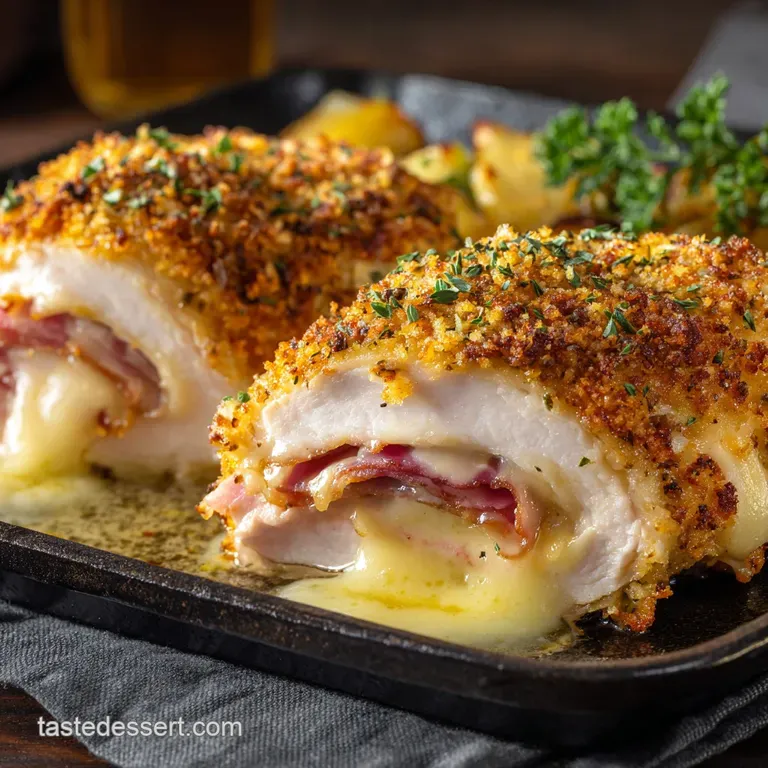
Prep Work: Pounding the Cutlets and Laying the Foundation
Lay your cutlets between plastic wrap and gently pound them out to 1/4 inch thick. Season them lightly. I always brush the interior with a thin layer of Dijon mustard; it adds a brilliant, necessary tang that cuts through the richness of the cheese.
The Tight Roll Technique: Ensuring a Perfect Seal
Place the ham, followed by the cheese stick, right near the edge of the pounded chicken. First, fold the two short ends in over the filling. This is essential for containment! Then, roll tightly like a jelly roll until you reach the end. Secure the seam side down on your plate.
If you struggle, use one or two small cocktail sticks to hold the roll in place just don't forget them later!
The Triple Dredge System: Achieving Maximum Adhesion
This is the standard breading process, but we’ve customized the final step.
- Flour: Dust in flour (mixed with seasonings, if desired), shaking off all excess.
- Egg: Dip completely in the beaten egg wash, letting the excess drip off.
- Panko/Butter: Roll aggressively in the buttered Panko crumbs, pressing firmly with your hands to make sure the coating is thick and even.
Chef’s Note: Do not skip mixing the Panko with melted butter. It provides the fat necessary to crisp up in the dry oven heat and gives you that fantastic golden colour.
Baking for Texture: Temperature, Timing, and the Final Broil
Bake these at a hot 400°F (200° C) on a wire rack. This high temperature helps the breading set quickly. Bake for 25 to 30 minutes.
If they are perfectly cooked internally but you want a little more colour, you can switch the oven to broil for 60 to 90 seconds right at the end. Keep a hawk eye on them during the broil they burn fast!
Troubleshooting Your Baked Cordon Bleu: Pro Tips and Mistakes to Avoid
How to Fix a Roll That Won't Stay Closed (The Toothpick Dilemma)
Sometimes you pound the chicken too aggressively, and the pieces are simply too large or oddly shaped to hold a perfect cylinder. Don’t panic! Use cocktail sticks. Simply pierce the roll through the seam, using 1 2 sticks per piece. Crucially, ensure you remove them all before serving.
If you're prepping these ahead of time, the 30 minute chill helps them hold their shape without sticks later.
Preventing a Soggy Bottom: The Importance of Rack Placement
A soggy bottom happens when the steam released from the chicken gets trapped underneath the roll. The fix is incredibly easy: bake on a wire rack set inside a baking sheet. This allows air to circulate entirely around the Cordon Bleu, guaranteeing a crunchy crust all the way around.
Ensuring the Filling is Perfectly Melted, Not Exploded
The biggest mistake I once made was overfilling the roll. If you pack too much cheese in there, the pressure from the melting process will blow out the weakest point (usually the seam). Use a single, dense stick of cheese rather than a pile of shredded cheese.
Also, ensure the cutlets are tightly rolled and chilled before baking this firms up the outer layer so it can better withstand the internal heat.
make-ahead, Freezing, and Reheating Instructions
Preparing Rolls Up to 24 Hours in Advance
Cordon Bleu is a fantastic make-ahead option! Complete the pounding, filling, and breading steps. Place the finished, unbaked rolls on a baking sheet lined with parchment paper, cover loosely with plastic wrap, and store them in the fridge.
Bake them straight from the fridge (you may need to add 5 minutes to the total baking time).
Freezing Unbaked Rolls for Later Use
Yes, you can absolutely freeze these! Freezing them before baking yields the best results. Place the fully breaded and chilled rolls on a baking sheet and freeze until solid. Once frozen, transfer them to a freezer safe zip-top bag. They keep well for up to three months.
When ready to cook, bake straight from frozen at 400°F (200°C), adding about 15- 20 minutes to the total cook time.
The Best Way to Reheat Leftovers Without Sacrificing Crispness
Microwaving is a crime. It will turn your beautiful crust into a sad, rubbery mess. To restore that satisfying crunch, use your oven or an air fryer. Preheat the appliance to 350°F (175°C) and reheat for about 8 to 12 minutes, or until the interior is hot (165°F/74°C).
This method gets them almost as crisp as they were the first night.
Perfect Pairings: What to Serve Alongside Cordon Bleu
Cordon Bleu is rich, salty, and creamy, so you need sides that offer some acidity and lightness to balance the dish.
We love serving these with a bright, crisp salad dressed with a simple lemon vinaigrette. For a truly hearty meal that still saves on cleanup, you might consider something like the easy [Chicken and Potatoes Foil Packets: Ultimate Speedy Dinner Zero Cleanup] method for your side veggies, simplifying the whole night.
A simple, quick sauce is also a must. A light Dijon Cream Sauce (just butter, shallots, Dijon, and a splash of stock and cream) poured over the top brings the entire meal together beautifully.
This creamy sauce element is similar in its satisfying texture to the rich blend in my [Hot and Spicy Buffalo Shrimp Dip: Creamy Baked Football Food Star].

Recipe FAQs
Why does the cheese filling always leak out while the Cordon Bleu is baking?
Leaking usually occurs because the chicken roll was not tight enough or the ends were not properly sealed. Ensure the chicken is pounded very thin and that you achieve a tight, cigar like roll, using toothpicks to secure the open edges before breading if needed.
A tight roll prevents the melting cheese from immediately escaping.
How do I prevent the baked Cordon Bleu from becoming dry and rubbery?
Dryness is common when baking lean chicken breasts; the most critical step is monitoring the internal temperature. Remove the chicken from the oven immediately once the thermometer reads 165°F (74°C) in the thickest part.
You can also briefly sear the outside of the rolls in butter before baking to help lock in moisture.
My Panko crust is soft, not crispy. How do I get that deep golden crunch without frying?
To ensure maximum crispiness, you must introduce fat directly to the Panko coating. Toss the dry breadcrumbs with 2-3 tablespoons of melted butter or olive oil before breading the chicken. Additionally, baking the chicken on a wire rack allows air to circulate underneath, preventing the bottom crust from getting soggy.
What are suitable substitutions for Swiss cheese or ham in this recipe?
For the cheese, Gruyère, Provolone, or even Fontina offer excellent melting properties and a similar salty, nutty flavor profile. If substituting the ham, Prosciutto or sliced capicola are fantastic alternatives that add a complex, cured flavor, or you can use high-quality deli turkey for a milder taste.
Can I prepare the Chicken Cordon Bleu rolls ahead of time, and do they freeze well?
Yes, you can fully assemble and bread the rolls up to 24 hours in advance and store them raw in the refrigerator. To freeze, flash freeze the breaded rolls on a baking sheet until solid, then transfer them to an airtight container. Bake from frozen, adding approximately 15-20 minutes to the total cooking time.
What is the safe minimum internal temperature the chicken needs to reach?
For food safety, the chicken must achieve a minimum internal temperature of 165°F (74°C). Always use a reliable digital meat thermometer inserted into the very center and thickest part of the roll, making sure not to puncture the cheese pocket while checking.
What is the best technique for pounding the chicken breasts thin without tearing the meat?
Place the chicken breast between two pieces of thick plastic wrap or wax paper. Use the flat side of your meat mallet, starting in the center and working outwards with smooth, even strokes until the chicken is a uniform 1/4 inch thickness. Avoid sharp, aggressive strikes which can cause holes.
Crispy Baked Chicken Cordon Bleu

Ingredients:
Instructions:
Nutrition Facts:
| Calories | 513 kcal |
|---|---|
| Protein | 24.0 g |
| Fat | 42.0 g |
| Carbs | 9.0 g |
