The Flash Fry Fillet Crispy Salmon Fried Rice with Ginger and Soy
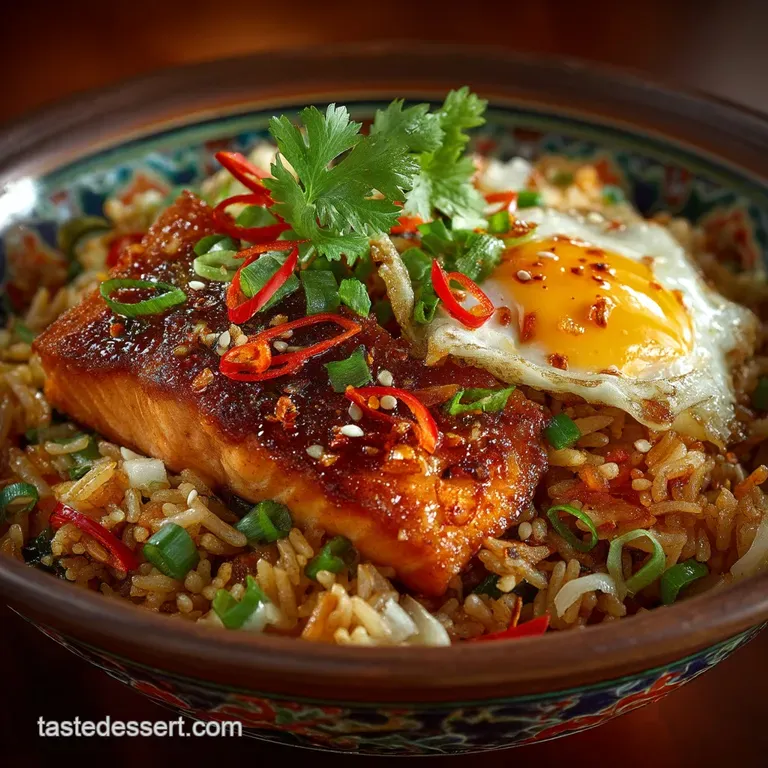
Why This Salmon Fried Rice Recipe Reigns Supreme
This particular take on the classic Salmon Fried Rice elevates a humble comfort dish into a culinary masterstroke. It’s a lightning fast, high impact weeknight meal that offers the perfect balance of flavour and texture: deeply savory, slightly spicy, and bursting with fresh aromatics.
Unlike many greasy takeout versions, this Salmon Fried Rice Recipe Easy focuses on aggressive heat and strict preparation protocols, ensuring every grain of rice is perfectly toasted rather than steamed.
It’s a stellar example of how great Seafood Dishes can be both quick to prepare and incredibly nourishing, making it a reliable addition to your repertoire of quick Salmon Recipes .
The Secret to Individual, Flavor Dressed Rice Grains
The difference between mediocre fried rice and truly spectacular fried rice lies entirely in the rice preparation. We are aiming for individual, chewy grains dancing in the seasoning, not a sticky clump. The absolute, non-negotiable secret to achieving this is using thoroughly cooked, completely cold, day-old rice.
Freshly cooked rice, even if cooled briefly, retains too much moisture and starch, which immediately leads to a disastrously soggy finish when it hits the hot wok. Our method ensures the starch is firm and the moisture is minimized, allowing the rice to achieve a proper, almost toasted sear during the flash fry.
Maximizing Crispy Edges on Flaky Salmon
While many recipes toss raw salmon directly into the mix, we utilize a crucial pre-cooking step. By pan-searing or baking the 350 grams (12 oz) of salmon fillets separately, we gain control over the texture.
This allows us to achieve perfectly flaky fish with potentially crispier edges, which is then gently folded into the rice at the very end. This technique prevents the salmon from overcooking, drying out, or disintegrating entirely during the high heat stir fry, guaranteeing delightful bite sized pieces throughout your Salmon Fried Rice Bowl .
Beyond Takeout: Nutritional Powerhouse Status
This dish isn’t just delicious; it’s genuinely good for you. Focusing on lean protein and fresh vegetables, this is one of the more satisfying Healthy Dinner Recipes you can prepare in under 30 minutes of active cooking time.
Salmon is rich in Omega-3 fatty acids, and by controlling the oil and salt (using light soy sauce), we keep the Salmon Fried Rice Calories well within a balanced range typically estimating 550 620 kcal per generous serving, offering a robust 35 40g of protein.
This careful balance of ingredients easily fits the criteria often sought in popular Skinny Taste Recipes without sacrificing flavour.
Essential Components for High Impact Flavor
A successful stir fry is built on mise en place and the quality of its primary ingredients. Every component must be prepped and ready to hit the wok when its moment arrives.
Securing the Star: Choosing and Prepping Your Salmon Fillets
Start with two large, high-quality salmon fillets, approximately 350g total. Ensure the skin is removed and that they are properly pin-boned. Season the fillets simply with salt and pepper and pan-sear or bake them just until they are cooked through (reaching an internal temperature of 63° C/ 145° F).
Crucially, allow them to cool slightly before gently flaking them into generous, substantial chunks. This preserves the texture and ensures they don't break down into mush when folded into the rice.
The Cornerstone: Why Day-Old Cold Rice is Non-Negotiable
As established, the four cups of cooked rice must be cold refrigerated for a minimum of two hours, ideally overnight. This step cannot be skipped. Whether you prepared it the night before using a traditional method or a Salmon Fried Rice Rice Cooker method, once cooled, the rice starch hardens, minimizing surface moisture.
Before beginning the stir fry, it is vital to use your hands to break up any major clumps in the rice. Uniformly separated grains guarantee uniform searing and seasoning when they hit the wok. We recommend short grain or jasmine rice for the best structure.
Aromatic Foundation: The Power Trio of Ginger, Garlic, and Scallions
The depth of flavour in quality Salmon Fried Rice comes from the swift searing of three key aromatics. You will need three cloves of finely minced garlic, one tablespoon of finely grated fresh ginger, and four scallions (spring onions) that are sliced thin.
It is essential to separate the white parts of the scallions (which are added with the aromatics and hard vegetables) from the green parts (which serve as a fresh garnish at the end).
This trio is flash fried in the initial stages to create a deeply fragrant base, ensuring the final dish moves beyond simple saltiness into complex umami notes reminiscent of sophisticated Salmon Fried Rice Japanese preparations.
Related Recipes Worth Trying
- 10Minute Blackened Air Fryer Salmon Bites Crispy Easy — Get perfectly crisp flavourpacked Blackened Air Fryer Salmon Bites in just 15 minutes This easy air fryer salmon recipe is highprotein and ideal for healthy...
- Crispy Seared Salmon Avocado Salad with Zesty LemonDill Vinaigrette — This easy Salmon Avocado Salad recipe delivers crispy skin and creamy avocado in under 25 minutes Its packed with healthy nutrition and the zesty dill...
- 15Minute Spicy Gochujang Canned Salmon Rice Bowls Recipe — This ultimate pantryraid meal is ready faster than boiling the kettle Our creamy fiery Spicy Canned Salmon Rice Bowls make quick Canned Salmon Meal Prep...
Mastering the Wok: The High Heat Cooking Strategy
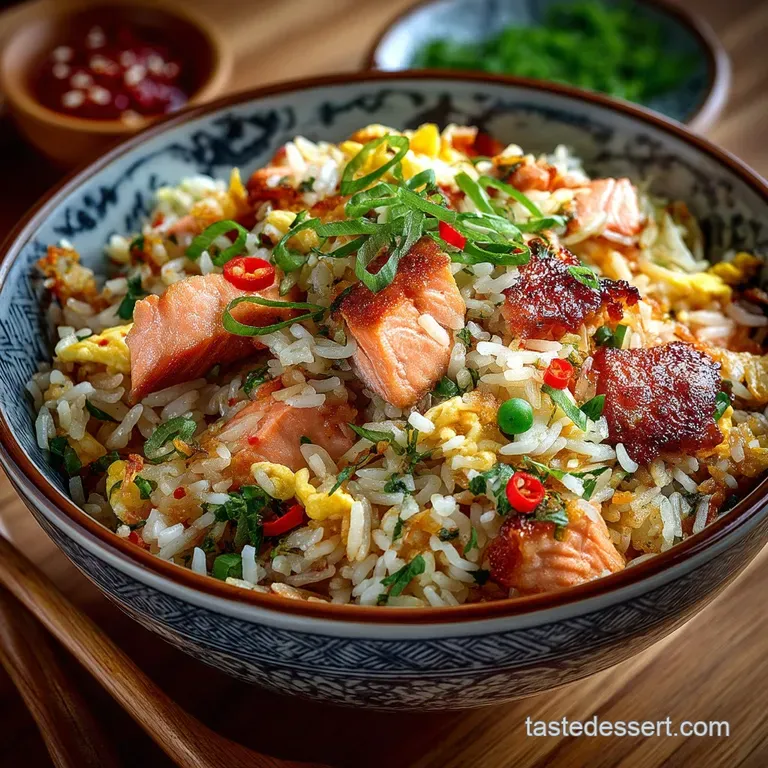
Mastering this recipe requires aggressive heat and swift execution. If you don't own a wok, use the largest, heaviest bottomed skillet you possess, preferably cast iron, to maintain temperature.
Stage One: Developing the Perfect Sear on Your Salmon
Before the stir fry even begins, the salmon must be prepped. Cook the fillets using a high heat sear in a separate pan or by baking. Once cooked and cooled, flake them and set them aside. The wok itself will first be dedicated to the eggs.
Heat one tablespoon of neutral oil and quickly pour in the three lightly beaten eggs. Cook them into a soft scramble, removing them immediately the moment they are barely set. This creates a fluffy texture and prevents the egg from overcooking later.
Building the Base: Sautéing Aromatics and Vegetables
Return the wok to maximum heat and add the remaining tablespoon of high smoke point neutral oil. Once the oil is shimmering, introduce the minced garlic, ginger, and the white sections of the scallions.
Stir fry rapidly for a precise 30 seconds just enough time for them to become intensely fragrant without burning. Next, add the hard vegetables: one medium carrot, diced very small (brunoise). These require approximately two minutes of quick stirring to begin softening before the rice enters the picture.
The Grand Finale: Integrating Rice and Sauce for the Flash Fry
This is the moment of truth. Add the prepared cold rice to the smoking hot wok. Turn the heat to its absolute maximum setting. Using the back of your spatula, press the rice firmly against the wok’s surface, then scrape and toss vigorously. Continue this high heat agitation for three to four minutes.
The goal is to hear the rice sound dry and look lightly toasted. Next, push the rice to one side of the wok to create a hot spot. Pour in the four tablespoons of soy sauce (or Tamari for gluten-free) and the optional tablespoon of oyster sauce (or mushroom umami substitute).
Allow the sauce to bubble and caramelize for five seconds before immediately tossing the rice to coat every grain thoroughly.
Final Polish: Ensuring Proper Temperature and Distribution
Once the rice is beautifully seasoned, stir in the cup of frozen peas. The fact that the peas are added frozen helps prevent the wok from overheating while ensuring the peas stay bright green and firm. Now, gently fold in the reserved flaked salmon and the soft scrambled eggs. Heat this through for about one minute.
The key is gentle folding to warm the additions without breaking up the delicate salmon flakes. Finally, remove the wok from the heat, finish with a teaspoon of toasted sesame oil for depth, and stir through the fresh green sections of the scallions just before serving.
Pro Tips and Troubleshooting for Ultimate Salmon Fried Rice
Achieving perfect Salmon Fried Rice is simple once you respect the heat and the ingredients. These practical tips ensure success every time.
Preventing Mushiness: Common Mistakes and Quick Fixes
The primary error home cooks make is using insufficient heat or overcrowding the pan. If the temperature drops, the ingredients release moisture and begin to steam. If you notice your rice starting to look wet rather than hearing a dry sizzle, remove half the rice immediately and continue frying the remainder in batches.
Always use the highest heat setting your stove allows, and never cook more than four servings at once in a standard home wok. On top of that,, adding high water content vegetables (like mushrooms or courgette) without pre-sautéing them is a fast track to a soggy texture; stick to firm vegetables like carrots and peas.
Reheating Leftovers: How to Restore the Crisp Texture
Leftover fried rice can often lose its crispness once refrigerated. To restore the texture, avoid the microwave. Instead, reheat the Salmon Fried Rice on the stovetop using a large, non-stick pan over medium high heat with just a tiny amount of neutral oil.
Spread the rice thin across the pan and let it sit undisturbed for two to three minutes until a slight crust forms, then toss and repeat. This dry-fry method revitalizes the texture, bringing back the desired bite.
Dietary Adaptations: gluten-free and Low-Carb Swaps
This naturally flexible recipe is easy to adapt. For a gluten-free version, swap standard light soy sauce for Tamari, ensuring any added oyster sauce substitute is also certified gluten-free.
If you are tracking Salmon Fried Rice Calories or seeking a low-carb alternative, the dish is excellent when swapping the traditional rice base for riced cauliflower or broccoli.
If using riced vegetables, sauté them separately first to evaporate excess moisture before integrating them with the aromatics and sauce.
What to Serve Alongside This Cracking Dish
Enhancing your Salmon Fried Rice Bowl is easy by adding simple counterpoints that provide freshness and acidity.
Quick Kimchi and Pickle Pairings
The richness and savoury depth of the fried rice and salmon benefit immensely from a sharp, acidic counterpoint. Serving the dish alongside a small bowl of spicy kimchi or quick pickled cucumbers provides a necessary palate cleanser.
The traditional crisp, acidic taste found in many regional Salmon Fried Rice Japanese preparations, such as gari (sushi ginger), also makes an excellent, simple side.
Balancing the Meal with Simple Asian Side Salads
To ensure a complete and balanced meal, consider pairing the rich fried rice with a light, fresh side salad. A simple Asian cucumber salad dressed with rice vinegar, a touch of sugar, and sesame oil, or a handful of dressed raw spinach and bean sprouts, cuts through the savory elements beautifully.
This balance transforms the fried rice from a heavy single dish into a sophisticated and satisfying supper.

Recipe FAQs
Why does my fried rice always end up soggy? I’m worried about ruining this lovely Salmon Fried Rice.
The key, mate, is using rice that is properly cold and dried out at least 8 hours in the fridge is non-negotiable! Warm rice releases steam and starch, turning your ambitious dish into a gloopy mess.
Additionally, keep the heat cranked up high and avoid overcrowding the pan; that aggressive sear is what gives you those beautifully dry, distinct grains.
I don't have a wok, can I still make great fried rice in a normal frying pan?
Don't fret if you haven't got a proper wok sitting about; a large, heavy bottomed frying pan or skillet will do the trick. The real secret isn't the curved sides, but heat management and space.
If your pan seems a bit crowded, simply cook the rice in two smaller batches so the temperature doesn't drop, guaranteeing a crispy texture.
Can I use tinned or pre-cooked salmon for this recipe?
Absolutely! Using leftover or pre-cooked salmon is brilliant for efficiency and makes this a fantastic fridge raid dinner. Just ensure the salmon is gently flaked and added right at the very end to heat through quickly.
If you cook it for too long, it will dry out and become a bit chewy we want flaky, not rubbery!
Is Salmon Fried Rice healthy, and how can I bulk up the veg content?
This dish is wonderfully nutritious, offering a generous hit of Omega-3s from the salmon and satisfying protein. To pack in more veg, try adding diced red bell peppers, chopped baby corn, or shredded cabbage alongside the carrots.
Just remember to cook any hard or watery vegetables first, removing them before adding the rice, to stop excess moisture from causing sogginess.
I’ve made too much! How long can I keep the leftover Salmon Fried Rice and what’s the best way to reheat it?
Leftover fried rice is a proper treat, provided you store it quickly. Ensure the cooled dish goes into the fridge within two hours, and it will keep safely for 3 4 days. For reheating, toss it in a hot, dry pan or wok for a few minutes until piping hot throughout microwaving is a bit lazy and tends to make the texture a touch rubbery, sadly!
Crispy Ginger Salmon Fried Rice
Ingredients:
Instructions:
Nutrition Facts:
| Calories | 2264 kcal |
|---|---|
| Protein | 19.1 g |
| Fat | 83.9 g |
| Carbs | 67.8 g |
| Fiber | 24.0 g |
| Sodium | 2524 mg |
