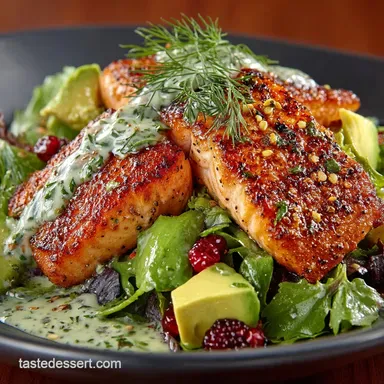
Seared Salmon Zesty Avocado Salad with Bright Lemondill Vinaigrette
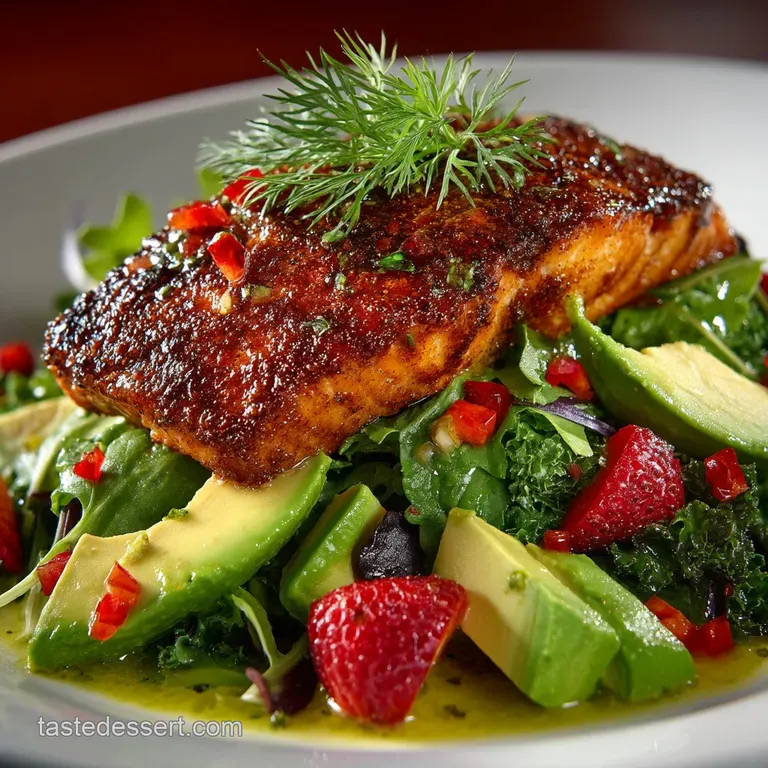
- The Ultimate 30-Minute Dinner: Why This Salmon Avocado Salad Wins
- Sourcing the Best: Essential Components for Our Seared Salmon Dish
- Building the Bright Vinaigrette: Flavor Chemistry Explained
- Perfect Pan-Searing: Mastering the Crispy Salmon Skin
- Assembly Line: Tossing and Plating the Zesty Salad
- Troubleshooting and Pro Chef Tips for Success
- Nutritional Breakdown: Fueling Your Body
- Recipe FAQs
- 📝 Recipe Card
The Ultimate 30-Minute Dinner: Why This Salmon Avocado Salad Wins
This Salmon Avocado Salad is the definition of high return cooking. In less than half an hour, you transition from raw ingredients to a magnificent, restaurant quality meal that is both profoundly satisfying and incredibly light.
Forget complicated culinary endeavors; this recipe focuses on maximizing flavor through high-quality, fresh ingredients and a simple, precise technique for the star of the show: perfectly seared salmon.
Whether you are looking for an Idee Pasto Sano (healthy meal idea) for a busy Tuesday or a stunning centerpiece for a weekend lunch, this vibrant dish offers a delightful balance of textures and tastes.
It’s no wonder recipes like this dominate Pinterest Salmon Recipes boards globally.
Decoding the Perfect Protein and Healthy Fat Balance
What truly elevates this Salmon Avocado Salad recipe beyond standard fare is the synergy between the two primary ingredients. Salmon is globally renowned for its high concentration of Omega-3 fatty acids, which support brain health and reduce inflammation.
When paired with the creamy, monounsaturated fats found in fresh avocado, you create a powerhouse of Healthy Nutrition . This combination ensures sustained energy and satiety, meaning this generous two-serving salad functions beautifully as a complete main course, delivering essential nutrients in every flavorful bite.
A Chef’s Take: Elevating Simple Ingredients
As a chef, I constantly seek complexity through contrast. Here, the challenge is taking fundamentally simple components a protein, a fat, and greens and turning them into a deeply engaging experience. We achieve this by focusing on precision.
The skin-on salmon provides a rich, crispy counterpoint to the buttery texture of the diced avocado and the snap of fresh cucumber and cherry tomatoes. The final layer of complexity comes from the intensely bright dressing, ensuring the overall dish remains fresh and never heavy.
What Makes This Lemon Dill Vinaigrette So Bright?
The dressing is the crucial element that ties the rich Salmon Avocado and the crisp greens together. Our salmon avocado salad dressing relies on fresh acid specifically, 3 tablespoons of freshly squeezed lemon juice to cut through the richness of the fish and the oiliness of the avocado.
The inclusion of 1 teaspoon of Dijon mustard acts as a flavor enhancer and a binding agent, while fresh dill introduces a herbaceous, slightly sweet quality that complements salmon perfectly, preventing the overall impression from being flat or one-dimensional.
Sourcing the Best: Essential Components for Our Seared Salmon Dish
Success in this recipe hinges on ingredient quality, especially given the minimal cooking time. We are aiming for freshness and texture. For the salad base, this means 5 ounces of well dried, crisp mixed salad greens (like spring mix or arugula), alongside 1 cup of halved cherry tomatoes, and half a cup of thinly sliced English or Persian cucumber.
Don’t overlook the red onion; a quarter cup of very thinly sliced red onion provides a necessary sharpness, but remember the pro tip: soak the slices briefly in cold water to mitigate the harsh, raw bite.
Building the Bright Vinaigrette: Flavor Chemistry Explained
Crafting this zesty vinaigrette requires combining 3 tablespoons of fresh lemon juice with 5 tablespoons of high-quality extra virgin olive oil. The key to the balanced flavor profile lies in adding about half a teaspoon of honey or maple syrup to temper the acidity.
After incorporating the Dijon mustard and 1 tablespoon of finely chopped fresh dill, the mixture must be seasoned precisely with salt and pepper to ensure it is vibrant enough to stand up to the seared salmon.
Wild Versus Farmed: Choosing Your Salmon Fillets Wisely
When selecting the two 6-ounce (170-gram) salmon portions for this Avocado Salad , aim for fillets that are uniform in thickness. While both farmed and wild salmon have merit, skin-on fillets are highly recommended.
The skin serves as a natural barrier, protecting the delicate flesh during the high heat searing process and, crucially, offering that deeply satisfying crispy texture that is so delightful against the tender, flaky meat.
The Unsung Heroes: Fresh Herbs and Crisp Greens
While the salmon and avocado take center stage, the success of the salad relies heavily on the supporting cast. The herbaceous punch of the fresh dill, utilized in the dressing, brightens the richness of the fish.
Meanwhile, ensuring your 5 ounces of mixed greens are thoroughly washed and dried is paramount residual water is the enemy of any good vinaigrette, diluting its potency and hastening the wilting process.
The final essential element is the avocado itself: you’ll need one large or two small ripe avocados, diced into substantial chunks (around 200g total), which will hold their structure during a gentle toss.
Quick Prep Checklist and Required Kitchen Tools
This efficient meal requires about 15 minutes of active preparation time, followed by a mere 8 to 10 minutes of cooking. The necessary tools are straightforward: a large cutting board and sharp chef’s knife, a large mixing bowl for the salad assembly, a small whisk or jar with a lid for the dressing, and a sturdy medium non-stick or cast iron skillet for searing the fish.
Having all these items ready ensures the entire process flows smoothly and stays under the 30-minute mark.
Achieving Optimal Emulsion: The Shake vs. Whisk Method
Emulsion is what turns separated oil and acid into a cohesive, slightly creamy dressing. In this recipe, the 1 teaspoon of Dijon mustard plays a vital role as the emulsifying agent. The mustard contains compounds that help the fat (olive oil) and the liquid (lemon juice) mix stably.
To achieve this, you can choose one of two methods: slowly whisking the oil into the combined acid and mustard, or the quicker method placing all vinaigrette ingredients into a jar and shaking vigorously for about 30 seconds until the mixture slightly thickens.
Related Recipes Worth Trying
- 15Minute Spicy Gochujang Canned Salmon Rice Bowls Recipe — This ultimate pantryraid meal is ready faster than boiling the kettle Our creamy fiery Spicy Canned Salmon Rice Bowls make quick Canned Salmon Meal Prep...
- Smashed Asian Cucumber Salad with Fiery Sesame Dressing — The ultimate crunchy Asian Cucumber Salad recipe Our simple smashing technique ensures every piece soaks up that rich spicy sesame oil dressing Ready in 45...
- 20Min Charred Corn Tomato Avocado Salad The Best Summer Side — This easy Corn Tomato Avocado Salad is the ultimate summer side We char the corn for smoky depth then toss it in a zesty honey lime dressing Ready in 20 mins
Perfect Pan-Searing: Mastering the Crispy Salmon Skin
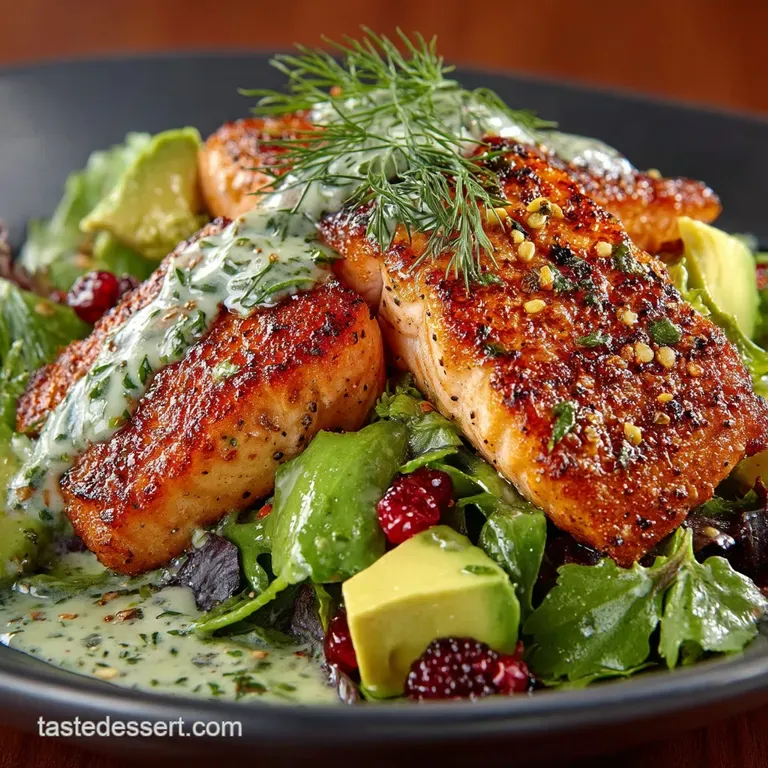
Achieving perfectly crispy skin on your salmon is non-negotiable for this dish. This technique requires high, consistent heat and patience. We rely on 1 tablespoon of high smoke point oil, such as avocado or regular olive oil, heated in the skillet until it is shimmering the moment before it starts to smoke.
This instant high heat seals the skin, allowing it to crisp rapidly without overcooking the delicate flesh.
Prep Work: Seasoning and Resting the Fillets
The most critical preparatory step for a successful sear is moisture removal. Pat the two salmon fillets completely dry using paper towels; moisture on the skin will lead to steaming, not searing.
Once dry, season generously on all sides with half a teaspoon of salt and a quarter teaspoon of freshly cracked black pepper. Allowing the seasoned fish to sit out for five minutes while the pan heats can also help ensure a more even cook.
Timing the Flip: When to Stop Sear and Finish Cooking
When the salmon fillets hit the hot pan, place them skin side down and press gently with a spatula for the first five seconds. This prevents the edges from curling. Cook the skin side undisturbed for a solid 4 to 5 minutes.
You will see the colour of the flesh change, cooking about halfway up the side of the fillet. This visual cue tells you the skin is perfectly crispy and that it's time to flip and finish the cooking process.
Achieving the Ideal Internal Temperature
After flipping, the salmon requires only 2 to 3 minutes more to finish cooking. The benchmark for safety and optimal flavor is an internal temperature of 145° F ( 63° C).
Immediately transfer the cooked salmon to a cutting board or clean plate and allow it to rest for a crucial 5 minutes. This resting period allows the muscle fibers to relax and reabsorb the juices, ensuring a moist, flaky texture when you incorporate it into the salad.
Assembly Line: Tossing and Plating the Zesty Salad
With the salmon resting, attention turns to the final assembly. In the large mixing bowl, combine the greens, tomatoes, red onion, and cucumber. At this stage, only drizzle about half of the prepared vinaigrette over the salad components. Toss the base gently it should be lightly coated but not dripping wet.
Avoiding Soggy Greens: Dressing Just Before Serving
To maintain the satisfying crunch of your mixed greens, it is imperative to dress the salad base immediately before serving. After the light initial dressing, add the diced avocado and toss only once or twice, using minimal force to avoid mashing the creamy pieces.
Divide the beautifully dressed salad onto two plates, flake the rested salmon into large, appealing chunks (or place the fillet whole) on top, and use the remaining salmon avocado salad dressing to lightly coat the fish and finish the presentation.
Troubleshooting and Pro Chef Tips for Success
The most common mistake when preparing seared salmon is not using enough heat or not drying the skin adequately. Always prioritize patting the skin dry. On top of that,, ensure the avocado you use is ripe but still slightly firm; this is essential for holding its shape within the salad.
Finally, resisting the urge to over dress the greens ensures a dynamic, crisp texture throughout the meal, enhancing the appeal of the rich salmon.
Nutritional Breakdown: Fueling Your Body
This Salmon Avocado Salad is a prime example of high impact, low-carb cooking, providing tremendous value for those focused on clean eating. Beyond the exceptional Omega-3 profile, the dish delivers balanced macros that sustain energy.
How Long Can I Store Leftover Cooked Salmon?
While this dish is best eaten fresh for optimal texture, leftover cooked salmon can be safely stored in an airtight container in the refrigerator for up to 3 days. It is important to separate the dressed salad base from the salmon and avocado, as the dressing will cause the greens to wilt rapidly.
Leftover dressed salad will generally only keep for a few hours.
Quick Variations for This Classic Salmon Avocado Salad
The fundamental flavor profile is versatile enough to support several excellent adaptations. For a lighter, no-cook alternative, skip the searing and use 4 ounces (115g) of cold smoked salmon per serving.
For an Asian inspired twist sometimes referred to as salmon avocado salad japanese style you can swap the lemon dill vinaigrette for a soy sauce, rice vinegar, and sesame oil blend, topping the dish with toasted sesame seeds and ginger.
Alternatively, incorporate fresh oregano and feta cheese for a vibrant Mediterranean feel.
Dietary Adaptations: Making It Paleo or Whole30 Friendly
This salmon avocado salad recipe is naturally aligned with popular diets. To ensure it fits within the Whole30 or Paleo frameworks, simply confirm that the Dijon mustard contains no sugar (or use a compliant stone ground mustard) and utilize maple syrup instead of honey for the dressing's sweetness, or omit the sweetener entirely if preferred.
All other components seared protein, fresh vegetables, and healthy fats are fully compliant.
Beyond Omega-3s: Calorie Count and Macronutrients
Based on the precise ingredient amounts outlined, each generous main course serving of this salmon avocado salad calories out at an estimated 620 to 650 kcal. This robust figure reflects the dish's density in healthy fats, predominantly derived from the olive oil and avocado.
Each serving delivers an impressive 45 grams of protein and around 45 grams of fat (rich in beneficial monounsaturated and Omega-3 fats), coupled with approximately 12 grams of carbohydrates and 6 grams of dietary fiber.
Recipe FAQs
Crikey, how do I stop my seared salmon skin sticking to the pan and make it really crispy?
The secret to achieving that beautifully crisp salmon skin, without fail, is removing all moisture first. Pat the fish fillets bone dry before seasoning any water causes steam, not crispness. Secondly, ensure your pan is piping hot with the oil shimmering before the fish goes in.
Once the salmon is skin side down, leave it alone for the full 4 5 minutes; resist the urge to peek or wiggle it until the time is up. If you nail those steps, a perfect sear is Bob’s your uncle.
I’m prepping lunch for the week. Can I make this Salmon Avocado Salad ahead of time?
You absolutely can get a head start, but you must keep the components separate. Prepare the Lemon Dill Vinaigrette and keep it refrigerated. Assemble the salad greens, tomatoes, and cucumber, storing them undressed.
Crucially, wait until you are ready to serve before searing the salmon and chopping the avocado; these ingredients don't hold up well once mixed, making for a soggy, brown disaster if prepped too early!
What if I don't have fresh dill, or need a different protein substitution?
Don't fret if you're missing a herb; chives or tarragon are both excellent substitutes for dill, offering a lovely, subtle anise flavour. For the protein, if salmon isn't available or preferred, consider a pan-seared chicken breast sliced thin, or go vegetarian with halloumi cheese.
If you fancy a cheeky shortcut, cold smoked salmon works brilliantly and eliminates the cooking time altogether!
This looks lovely, but is this dish actually a healthy main course?
Yes, this is a proper job when it comes to healthy eating! The Salmon Avocado Salad is packed with nutritional benefits, primarily high in omega-3 fatty acids from the fish and monounsaturated (good) fats from the avocado and olive oil.
It is also naturally high in protein and fibre, making it extremely satiating and a brilliant choice for those following a low-carb or ketogenic diet.
My avocado always goes brown before I eat the leftovers any tips for keeping it green?
The trick here is leveraging acidity. Avocados brown when exposed to air (oxidation). If you have a few chunks leftover, toss them very lightly in a splash of fresh lemon or lime juice before refrigerating.
Then, store the avocado pieces in an airtight container nestled tightly against a sliced onion or wrapped with cling film pressed right against the flesh. This minimizes air exposure and keeps it looking fresh for longer.
Crispy Salmon Avocado Salad