Roasted Boneless Leg of Lamb with Rosemary Garlic
- Hitting the Classics: Why the Boneless Leg of Lamb is the Perfect Roast
- The Science of the Perfect Lamb Roast: Flavor & Texture Explained
- Essentials for the Ultimate Roast: Ingredients and Preparation Notes
- The Process: Roasting Your Leg of Lamb to Perfection
- Troubleshooting Your Roast: Expert Tips for Success
- Handling Leftovers: Storage, Reheating, and Freezing Lamb
- What to Serve with Boneless Roasted Lamb
- Recipe FAQs
- 📝 Recipe Card
Hitting the Classics: Why the Boneless Leg of Lamb is the Perfect Roast
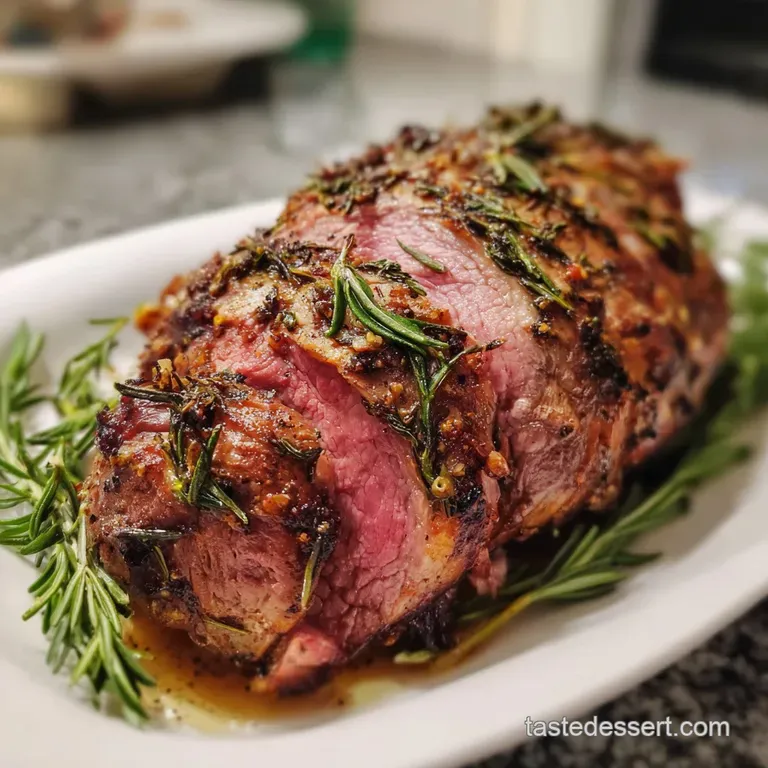
That unmistakable smell of garlic and rosemary wafting through the house? That’s how you know something glorious is coming. We are talking about the perfect Roasted Boneless Leg of Lamb today, that centrepiece that makes everyone stop talking for a second.
This recipe isn't about fussiness; it’s about maximizing flavor while minimizing stress.
Look, classic roasts seem daunting, but this method for Roasted Boneless Leg of Lamb is shockingly simple once you master the temperature controls. It’s an elegant meal without the three hours of fussy attention you might expect, making it a total lifesaver for busy weeknights or high stakes holiday dinners.
Since we remove the bone and roll the joint, carving is an absolute dream.
I promise, the only thing you need is a reliable thermometer and the guts to properly truss your meat. Let’s dive into how to make a truly succulent Roasted Boneless Leg of Lamb every single time, giving you that crisp exterior and that dreamy pink interior.
The Science of the Perfect Lamb Roast: Flavor & Texture Explained
The secret to the juiciest, most flavorful Roasted Boneless Leg of Lamb isn’t magic, it’s controlled heat and patience. This cut of meat is naturally lean but has a lovely layer of fat on the exterior that, when rendered correctly, becomes pure gold.
We’re manipulating the oven temperature strategically to maximize tenderness and develop that killer crust. The outcome is a truly unforgettable Sunday roast.
The Boneless Advantage: Carving Made Simple
Why bother with a bone-in leg of lamb? Unless you really love hacking away at a stubborn joint, the boneless version is simply superior for presentation and ease. Because the butcher removes the bone, the meat can be opened up, seasoned deeply on the inside, and then rolled back up into a compact, uniform cylinder.
This shape is why our Roasted Boneless Leg of Lamb cooks so evenly. Plus, when it comes time to serve, you just slice straight across the grain no fuss, no waste.
Mastering the High-to-Low Roasting Method
This is the technique that separates the legends from the rest of us. You start your Roasted Boneless Leg of Lamb at a ripping hot 220°C (425°F) for just 20 minutes.
That initial blast of heat is designed to trigger the Maillard reaction quickly, giving you a beautiful, thick crust right away. Then, you drop the temperature sharply to 180°C (350°F) for the remainder of the cooking time.
This lower, slower heat gently coaxes the internal temperature up, preventing the exterior from burning while ensuring the middle stays juicy.
A Flavor Profile for Every Season: The Mediterranean Rub
Lamb is a bold meat, and it needs bold flavors to stand up to it. My go-to rub for Roasted Boneless Leg of Lamb relies on the Mediterranean trifecta: fresh garlic, robust rosemary, and earthy thyme. Using fresh herbs is non-negotiable here; the difference in aroma alone is astounding.
The Dijon mustard acts as a binder, helping the salt and herbs adhere perfectly to the surface.
The Maillard Reaction: Achieving the Crisp, Golden Crust
I mentioned Maillard that’s the fancy term for the browning and crisping reaction that makes things delicious. To get the best Maillard reaction on your Roasted Boneless Leg of Lamb , three things must happen. First, the surface must be dry (pat it down!).
Second, the heat must be high (hello, 425°F blast). Third, you must season aggressively with salt. Salt draws moisture out, which quickly evaporates in the oven, allowing the meat's surface to crisp rather than steam.
Resting Time is Cooking Time: Retaining Juiciness
If you ignore the resting period, you might as well have just microwaved the joint, honestly. When your Roasted Boneless Leg of Lamb comes out of the oven, its muscle fibers are tense, and all the internal moisture is surging to the centre.
By resting the roast for a full 20 minutes, loosely tented with foil, the fibres relax and those precious juices redistribute throughout the entire joint. This carryover cooking also boosts the temperature slightly, ensuring you hit that perfect medium rare target.
Why Boneless Lamb Absorbs Marinade Better
Because the bone is gone, the butcher often butterflies the meat slightly before rolling it up. This means you have more surface area and little gaps where the aromatic rub can really penetrate the tissue fibers.
Unlike a solid, bone-in cut, the Roasted Boneless Leg of Lamb has already been compromised (in a good way!) allowing those potent garlic and herb notes to sink much deeper into the core of the roast before it even hits the oven.
Essentials for the Ultimate Roast: Ingredients and Preparation Notes
Let’s crack on with the essentials. Don't cheap out on the herbs; they are 50% of the flavor profile of this incredible Roasted Boneless Leg of Lamb recipe. Quality ingredients make a huge difference here.
Selecting Your Cut: Rolled vs. Tied Boneless Lamb Leg
When you buy a boneless leg of lamb, it usually comes either in an elastic net or tied with butcher's twine. Both are fine, but I prefer the twine because you can check the tie tightness yourself. You want the roast to be uniformly cylindrical, especially if it was butterflied wide before rolling.
A poorly tied joint will cook unevenly, leaving thin flaps dry while the core is still raw. Make sure your butcher has done a good job; it's the foundation for a flawless Roasted Boneless Leg of Lamb .
The Aromatic Trio: Garlic, Rosemary, and Olive Oil Ratios
We’re not talking about lightly scented lamb here. We want a punch. For a 4 5 pound roast, six cloves of garlic might sound like a lot, but trust me, it mellows beautifully in the high heat.
The olive oil is just enough to make a thick paste with the minced herbs, acting as the perfect carrier for the flavor before roasting. This is not a bath; it's a coating.
Herb Swaps: Creating a Greek or French Inspired Rub
No fresh rosemary? No problem, provided you have a decent substitute ready. This Roasted Boneless Leg of Lamb is versatile.
| Ingredient | Viable Substitute | Notes |
|---|---|---|
| Fresh Rosemary | Fresh Marjoram or Dried Oregano | If using dried herbs, use 1/3 the quantity. |
| Dijon Mustard | Worcestershire Sauce or Balsamic Vinegar | Adds acidity and helps tenderize slightly. |
| Garlic | Shallots or Garlic Powder | Use 1 tsp powder per 3 fresh cloves. |
| Olive Oil | Melted Ghee or Avocado Oil | Choose a high smoke point fat if possible. |
For a Greek twist on your Roasted Boneless Leg of Lamb , swap out the rosemary and thyme for dried oregano and the zest of a whole lemon. Phenomenal.
Salt Strategy: When and How Much to Season
This is a rookie mistake zone. You must be generous with salt. Salt is not just flavor; it’s texture. I use coarse kosher salt or fine sea salt applied directly to the rub. Do not apply salt an hour ahead of time and leave it in the fridge.
If you salt too early, it can draw too much moisture out, potentially drying the exterior prematurely. Rub the paste on, let it sit at room temperature for 30 minutes, and then roast. That’s the ticket.
The Process: Roasting Your Leg of Lamb to Perfection
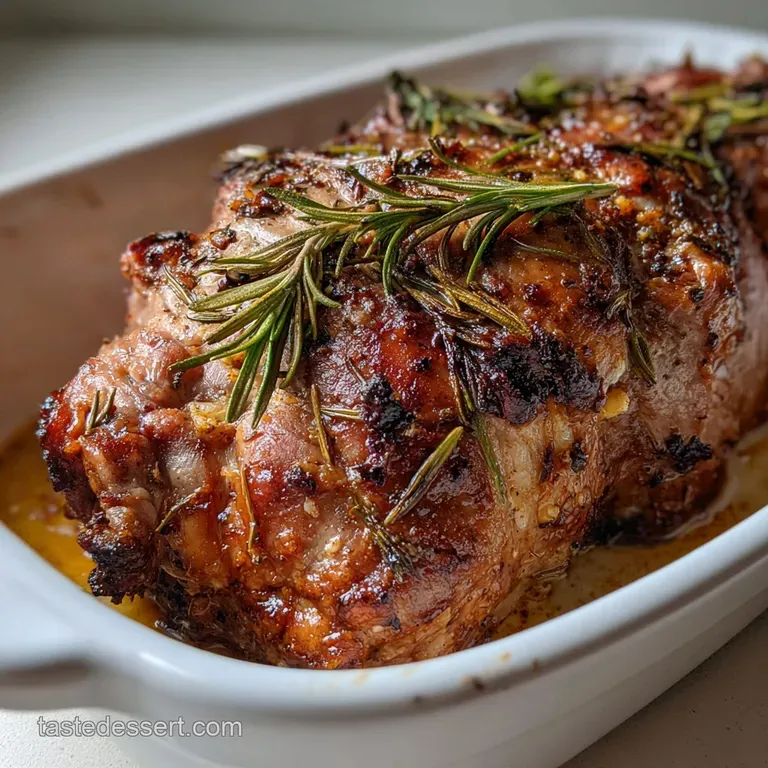
Now, let's get into the step-by-step roasting instructions. Remember, the oven is only an oven. The real cooking genius is your thermometer. Achieving perfect medium rare Roasted Boneless Leg of Lamb is easier than you think.
Preparation and Tying the Roast: Achieving Uniformity
If your boneless leg of lamb came untied, this part is crucial. Roll the joint up tightly, trying to create an even thickness throughout. Use butcher's twine to tie it every 1 to 1.5 inches. Uniformity is the reason the final product is so tender and sliceable.
The goal is to eliminate thin pockets that will overcook, ensuring the thick center of the Roasted Boneless Leg of Lamb hits medium rare just as the edges hit medium.
The Initial over High heat Sear: Locking in Moisture
Preheat your oven fully seriously, wait for it to beep. Starting the Roasted Boneless Leg of Lamb at 220°C (425°F) for 20 minutes sets that crust instantly.
If you skip this part, your lamb will slowly dry out as it comes up to temp, and you'll end up with a grey, chewy exterior instead of a crispy, aromatic one. Don't forget to put those roughly chopped carrots and onions underneath your rack to catch the delicious drippings!
Crucial Temperature Checks: When to Drop the Oven Heat
After 20 minutes, lower the oven to 180°C (350°F). Now we wait. Start checking the internal temperature with your instant read thermometer after 60 minutes of low heat. You’re looking for the deepest part of the meat.
Pull the lamb out when it is 5°C (10° F) below your target. For that perfect medium rare Roasted Boneless Leg of Lamb , that means removing it at 54°C (130°F).
The Post Roast Rest: Timing and Technique
The lamb is out of the oven, smelling incredible, but you must resist. The rest is non-negotiable. Transfer the roast to a clean cutting board. Tent it loosely with foil this keeps the surface warm but allows steam to escape, preventing the crust from getting soggy.
Set a timer for 20 minutes and wander off. This resting period is what guarantees a succulent, juicy Roasted Boneless Leg of Lamb .
Chef's Note: If you cut into the lamb before 20 minutes, all the glorious juice will flood your board, leaving the meat dry. Seriously, go make a quick pan gravy or pour a glass of wine instead. Patience is your final ingredient.
Troubleshooting Your Roast: Expert Tips for Success
We’ve all been there. You slice the roast and realize one side is perfect, but the other is underdone. Or maybe you filled your kitchen with smoke. A few quick adjustments will save the day, ensuring your next Roasted Boneless Leg of Lamb is flawless.
Fixing an Uneven Cook: Adjusting for Thin Sections
If you realize your Roasted Boneless Leg of Lamb is a bit wonky and has a thin end that’s cooking faster, you have two options. First, you can use kitchen foil to wrap the thinner section tightly halfway through cooking, insulating it from the heat.
The second option is to simply accept that end will be medium well (for those guests who inexplicably prefer that), while the thicker, gorgeous core remains medium rare. Next time, tie the roast tighter!
Dealing with Smoke: Proper Temperature Management
Smoke is usually caused by dripping fat hitting a high heat source or the bottom of the pan burning. Because we use a high low method for this Roasted Boneless Leg of Lamb , you might get a little smoke initially.
To combat this, ensure you are always using a wire rack to lift the roast away from the drippings. Also, placing those root vegetables (onions/carrots) underneath helps absorb the fat and prevents it from scorching the base of the pan.
The Pan Drippings Secret: Building a Quick Gravy
Don't let those dark, caramelized bits and rich liquid go to waste! That’s the foundation of an intensely flavorful gravy for your Roasted Boneless Leg of Lamb . After removing the roast, pour off most of the fat, leaving the browned aromatics.
Deglaze the pan over medium heat with a splash of red wine, scraping up all the sticky bits. Add your butter and flour (the roux), cook for a minute, then whisk in beef or chicken stock until thickened. Done. You have a rich, complex sauce ready in five minutes.
Handling Leftovers: Storage, Reheating, and Freezing Lamb
The beautiful thing about a Roasted Boneless Leg of Lamb is how well it holds up the next day. It makes incredible sandwiches, salads, or even a filling for savory pastries.
Safe Refrigeration Times for Cooked Lamb
Once the Roasted Boneless Leg of Lamb has cooled completely, slice all the leftovers and store them in an airtight container. The cooked lamb is safe and delicious for 3 to 4 days in the refrigerator.
I like to drizzle a bit of the leftover pan juice or gravy over the slices before sealing the container; it keeps the meat hydrated.
Reheating Sliced Lamb Without Drying It Out
Never reheat the whole joint; it will dry out the outside before the inside warms. The best way to reheat slices of your Roasted Boneless Leg of Lamb is gently in a covered skillet with a tablespoon of stock or gravy, just until warmed through. Alternatively, microwave only in short, 30 second bursts, wrapped in a damp paper towel. If you're looking for other ways to use savory leftovers, you could repurpose the lamb into a base for something like a Roasted Sweet Potato Black Bean Bowls with Creamy Lime Drizzle , swapping the beans for shredded lamb.
Maximizing Shelf Life: Freezing Cooked Roast Properly
Yes, you can freeze your cooked Roasted Boneless Leg of Lamb ! Slice the lamb first, then pack the slices tightly into a freezer safe bag or container, minimizing air exposure. If you have extra gravy, pour it over the slices. This helps prevent freezer burn.
It will keep well for up to three months. Thaw overnight in the fridge before reheating using one of the gentle methods above.
What to Serve with Boneless Roasted Lamb
A perfect Roasted Boneless Leg of Lamb demands the right supporting cast. We need crispy potatoes, something green and slightly tart, and a lovely gravy.
- Potatoes: Crispy roast potatoes cooked in duck fat or a rich, creamy potato gratin.
- Greens: Simple steamed asparagus or spring cabbage.
- Freshness: A refreshing mint sauce or a light Greek yogurt and cucumber tzatziki provides a necessary counterpoint to the richness of the lamb.
- Wine Pairing: A strong, peppery Australian Shiraz or a classic Cabernet Sauvignon.
If you’re hosting a dinner party and need an appetizer that’s lighter before tackling the heft of a full Roasted Boneless Leg of Lamb , consider starting with something fresh like an Avocado and Lump Crab Salad: Elegant, Low-Carb Recipe . It’s a great palate cleanser.
I sincerely hope this deep dive into the perfect Roasted Boneless Leg of Lamb gives you the confidence to tackle this classic dish. It is a showstopper, and armed with your thermometer and the high low method, your results will be nothing short of spectacular. Happy roasting!
Recipe FAQs
What is the best way to prevent my roasted lamb from being dry or tough?
The key to juicy lamb is precise temperature control and proper resting. Do not cook the lamb beyond medium (140°F / 60°C), and always remove it from the oven about 5 degrees before your target temperature.
Critically, rest the roast tented loosely with foil for 15 20 minutes before carving; this time allows the internal juices to redistribute, guaranteeing a tender and moist result.
What internal temperature should I aim for when roasting boneless leg of lamb?
For the classic, most recommended doneness, aim for medium rare (130 135°F / 54 57°C), which will be slightly pink in the center, or medium (135 140°F / 57 60°C).
Since the boneless leg is a lean muscle, cooking it past 145°F (63°C) risks making the meat chewy and dry, so it is vital to use a reliable meat thermometer.
Why does this recipe call for a high-to-low temperature roasting method?
The initial high heat (often 425°F / 220°C) is designed to create a rapid, crisp, golden brown crust, activating the Maillard reaction for maximum external flavor.
Reducing the temperature after the initial searing period ensures that the internal meat continues to cook gently and evenly toward the desired doneness without drying out the beautifully formed exterior crust.
Can I use different herbs instead of the classic garlic and rosemary rub?
Absolutely, lamb pairs wonderfully with a variety of strong flavors, making variations easy and delicious. For a North African twist, use a blend of cumin, coriander, paprika, and a pinch of cinnamon and cayenne pepper.
Alternatively, a Greek inspired rub featuring oregano, lemon zest, and dried mint provides a bright, refreshing profile.
Is it safe to prepare the rub and let the lamb sit in the refrigerator overnight?
Yes, prepping the rub and letting the lamb marinate for 12 to 24 hours is highly recommended as it allows the flavors, particularly the salt, to penetrate deeply into the muscle fibers.
For the best results, leave the rubbed lamb uncovered in the refrigerator overnight; this process slightly air-dries the surface, which aids in developing a superior, crisp crust during roasting.
How should I store leftover roasted lamb, and can I freeze it?
Leftover roasted lamb should be stored in an airtight container in the refrigerator and consumed within 3 to 4 days.
To freeze, slice the meat and place it in a freezer safe bag or container, ideally covered with any remaining cooking juices or gravy; frozen lamb maintains quality for up to three months.
I only have a bone-in leg of lamb. How does that change the cooking time?
A bone-in leg of lamb will generally require 15 to 20 minutes longer cooking time per pound compared to a boneless cut, as the bone conducts heat less efficiently.
The internal temperature check remains the same use a meat thermometer inserted away from the bone, aiming for 130 140°F (54 60°C) depending on your preferred doneness.
Garlic Rosemary Boneless Lamb Roast
Ingredients:
Instructions:
Nutrition Facts:
| Calories | 529 kcal |
|---|---|
| Protein | 47.7 g |
| Fat | 34.3 g |
| Carbs | 5.8 g |
