The Best Grilled Steak Salad Recipe
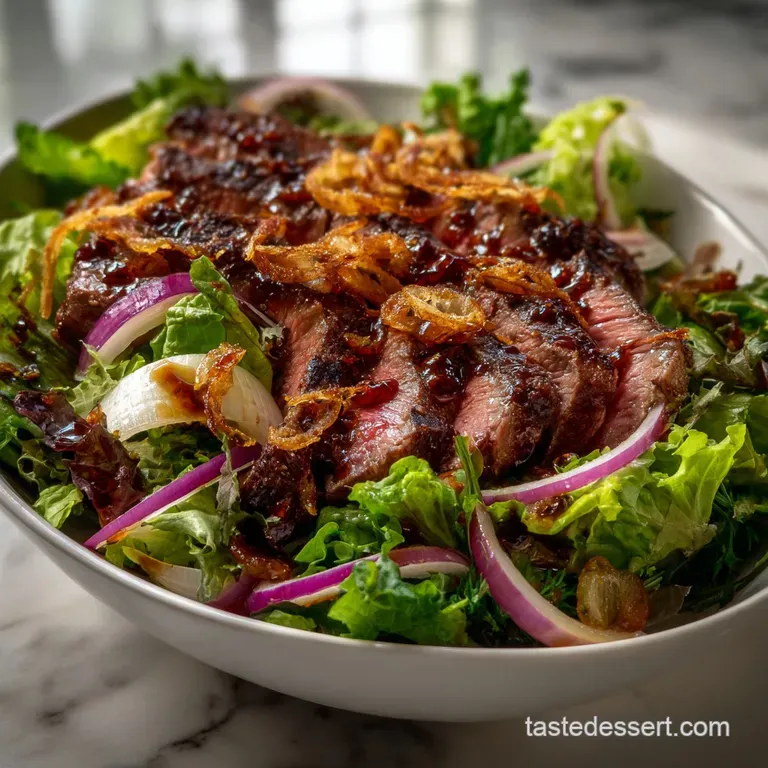
- Effort/Time:30 minutes total (Low-effort, High-impact)
- Flavor Hook: Umami-rich flank steak meets peppery arugula and funky blue cheese.
- Perfect for: High-protein weeknight dinners or impressive summer hosting.
- Masterclass Grilled Steak Salad: The Ultimate Guide to the Perfect Char
- Why This Grilled Steak Salad Recipe Works
- The Science Behind the Ingredients
- Ingredients and Smart Substitutions
- Step-by-Step Instructions for the Perfect Meal
- Common Mistakes and Expert Fixes
- Common Myths about Grilled Steak Salad
- Storage and Meal Prep Instructions
- Serving Suggestions and Wine Pairings
- Recipe FAQs
- 📝 Recipe Card
Masterclass Grilled Steak Salad: The Ultimate Guide to the Perfect Char
The Struggle for the Perfect Steak Salad
We’ve all been there: you order a Grilled Steak Salad and receive a pile of watery greens topped with cold, leathery strips of grey meat. It’s disappointing. I used to think the steak just "died" the moment it hit the lettuce, losing its soul to the cold temperature of the bowl.
But the problem wasn't the ingredients; it was the physics.
I spent years overcooking flank steak until it felt like chewing on a belt. The breakthrough came when I stopped treating the salad as an afterthought and started treating the steak like a standalone masterpiece.
By mastering the Maillard reaction and understanding the moisture wicking properties of arugula, you can transform a simple Steak Salad into a masterclass of texture and temperature.
This Grilled Steak Salad recipe is the result of those failures. We are going to use high density heat and a specific resting protocol to ensure your beef stays succulent while your greens remain crisp. Let’s get into the science of why this actually works.
Why This Grilled Steak Salad Recipe Works
- Maillard Reaction Optimization: Patting the 1.5 lbs flank steak bone dry allows amino acids and reducing sugars to react above 285°F without the interference of steam, creating a savory, dark crust.
- Enzymatic Tenderization: The aged balsamic vinegar in the dressing contains acetic acid, which subtly breaks down surface proteins if the steak is sliced thin, enhancing the "melt-in-mouth" feel.
- Hydrophobic Barriers: Coating the 6 oz baby arugula with the EVOO based dressing before adding the steak creates a temporary barrier, preventing the meat juices from immediately wilting the delicate leaves.
The Science Behind the Ingredients
The Science Behind 1.5 lbs Flank Steak
- What It Does
- Provides the primary protein structure and savory "chew" of the Grilled Steak Salad.
- The Chemistry
- As a hardworking muscle, flank steak has long, distinct fibers. During cooking, protein denaturation causes these fibers to tighten; slicing "against the grain" mechanically shortens these fibers, making them easier for the human jaw to break down.
- Why This Matters
- This ensures a tender bite despite the lean nature of the cut, maximizing the 38.5g of protein per serving.
The Science Behind 3 tbsp Aged Balsamic Vinegar
- What It Does
- Acts as the bright, acidic backbone of the Arugula Steak Salad dressing.
- The Chemistry
- The fermentation process creates acetic acid, which interacts with the 1 tsp honey to create a complex sweet acid balance.
- Why This Matters
- This acidity cuts through the 44.2g of fat provided by the avocado and blue cheese, cleansing the palate between bites.
The Science Behind 1 tsp Dijon Mustard
- What It Does
- Serves as the stabilizer for the vinaigrette.
- The Chemistry
- Dijon contains mucilage, a natural emulsifier that surrounds oil droplets (0.33 cup EVOO) and prevents them from coalescing and separating from the vinegar.
- Why This Matters
- It creates a "velvety" coating that clings to every leaf of the 6 oz baby arugula, ensuring consistent flavor delivery.
If you love the intensity of seared beef but want a different profile, my Pepper Steak Recipe: Wok-Seared Beef in a Savoury, Glossy Sauce is another technical win for weeknight cooking.
Ingredients and Smart Substitutions
To achieve the best results for your Steak Salad Sundays, use high-quality tools like a Lodge Cast Iron Skillet or a over high heat grill. I recommend Diamond Crystal Kosher Salt for its flaky texture and even coverage.
| Original Ingredient | Substitute | Why It Works |
|---|---|---|
| 1.5 lbs Flank Steak | Skirt Steak | Skirt has more fat/marbling; yields a richer flavor but requires faster cooking to avoid toughness. |
| 0.5 cup Blue Cheese | Feta Cheese | Feta provides a similar salty punch but with a tangier, less "funky" profile. |
| 3 tbsp Aged Balsamic | Red Wine Vinegar | Offers a sharper, less sweet acidity. Note: Add an extra 0.5 tsp honey to balance. |
| 6 oz Baby Arugula | Baby Spinach | Provides a milder, earthy base instead of the peppery bite of arugula. |
| 0.25 cup Toasted Walnuts | Toasted Pecans | Similar fat content and "crunch" factor with a slightly sweeter undertone. |
Chef's Note: If you are swapping the greens, consider the "sturdiness" of the leaf. Arugula stands up well to warm steak, while butter lettuce will collapse almost instantly. For a lighter seafood twist, try this Seared Tuna Salad with Wasabi Butter Sauce: Restaurant Quality Ahi Tuna.
step-by-step Instructions for the Perfect Meal
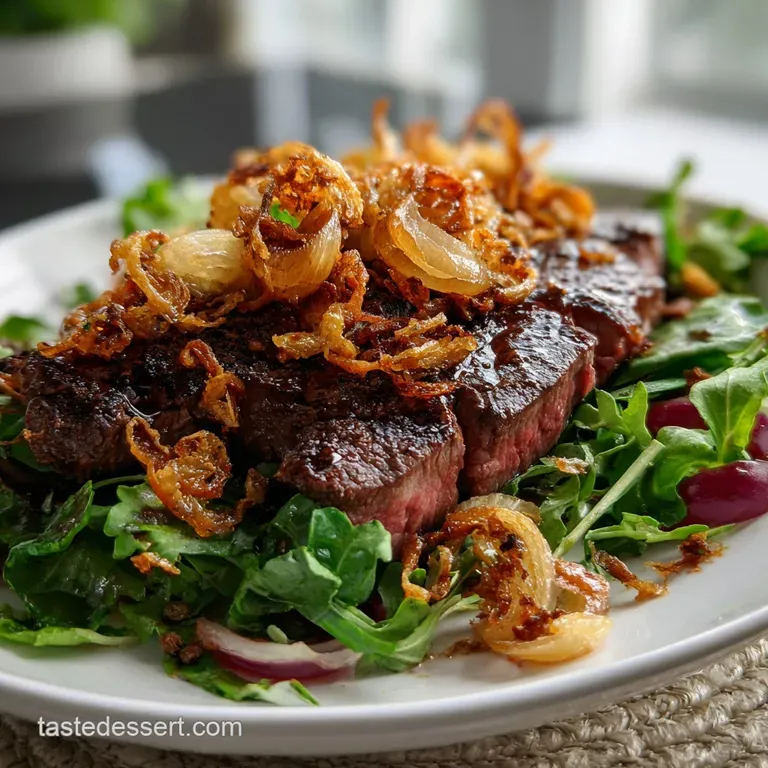
1. Prepare the Steak
Pat the 1.5 lbs flank steak completely dry using paper towels. Rub with 1 tbsp olive oil and season with 1 tsp kosher salt, 0.5 tsp freshly cracked black pepper, and 1 clove smashed garlic.
Note: Surface moisture causes steam; a bone dry steak is required for the Maillard reaction to create a dark, flavorful crust.
2. Sear for Maximum Flavor
Place the steak on a preheated over high heat grill or Lodge Cast Iron Skillet. Cook for 4 5 minutes per side until it reaches an internal temperature of 130°F-135°F for medium rare.
Note: Using a ThermoPro Digital Thermometer ensures you don't overshoot the protein denaturation point, which leads to dry meat.
3. The Mandatory Rest
Remove the steak to a cutting board and let it rest for 10 minutes. Note: This allows the muscle fibers to relax and reabsorb juices; cutting too soon results in all the moisture "bleeding" onto the board instead of staying in your Steak Salad.
4. Fry the Shallots
In a small pan, heat a splash of oil and fry 2 large thinly sliced shallots until golden and "shatter crisp." Drain on a paper towel. Note: Shallots have a high sugar content and will move from golden to burnt in seconds due to rapid caramelization.
5. Emulsify the Dressing
Whisk 0.33 cup extra virgin olive oil, 3 tbsp aged balsamic vinegar, 1 tsp Dijon mustard, and 1 tsp honey until thick and glossy.
Note: The Dijon mustard acts as the emulsifier, binding the polar (vinegar) and non-polar (oil) molecules together.
6. Assemble the Salad
In a large OXO Mixing Bowl, toss 6 oz fresh baby arugula with half the dressing. Top with 1 cup halved cherry tomatoes, 1 large sliced avocado, 0.5 cup crumbled blue cheese, and 0.25 cup toasted walnuts.
Note: Tossing the greens first ensures every leaf is seasoned before the heavy toppings are added.
7. Slice and Serve
Slice the rested steak thinly against the grain. Lay it over the greens, drizzle with the remaining dressing, and top with the crispy shallots. Serve this Best Steak Salad Recipe immediately.
Common Mistakes and Expert Fixes
| Problem | Why It Happens | The Fix | Pro Protocol |
|---|---|---|---|
| Tough, Chewy Steak | Slicing with the grain. | Slice "against the grain" (perpendicular to fibers). | Use a sharp Mercer Culinary Chef's Knife for clean, thin slices. |
| Soggy Arugula | Dressing the salad too early or adding hot steak. | Dress at the last second; let steak rest 10 mins. | Use a Salad Spinner to ensure greens are 100% dry before dressing. |
| Grey, Steamed Meat | Steak was cold or wet when it hit the pan. | Pat dry and bring to room temp for 20 mins. | Use a Lodge Cast Iron to maintain high thermal mass during searing. |
Common Myths about Grilled Steak Salad
Myth: You should pour the steak juices from the cutting board into the salad for extra flavor. Truth: This will immediately wilt your 6 oz baby arugula and turn your dressing into a watery mess. Discard the excess juice or whisk it into a separate pan sauce.
Myth: Salting the steak right before grilling draws out moisture and ruins the sear. Truth: While salt does draw out moisture (osmosis), if you salt immediately before the meat hits the heat, the moisture doesn't have time to pool.
Alternatively, salt 40 minutes in advance to allow the brine to be reabsorbed.
Storage and Meal Prep Instructions
Storing Leftovers
- The Components: For the best Healthy Grilled Steak Salad experience the next day, store the steak, dressing, and greens in separate Glasslock Containers.
- The Steak: Keep sliced steak in the fridge for up to 3 days. Do not freeze the fully assembled salad.
- The Greens: Arugula will wilt if stored with dressing. Always store "naked" greens separately.
Reheating for Optimal Freshness
- Steak: To avoid overcooking, let the steak sit at room temperature for 15 minutes rather than microwaving it. If you must use heat, use a low-power setting (30%) for 45 seconds.
- The Salad: Never reheat the greens. Cold greens with slightly warmed steak provide the signature "temperature contrast" that makes a Grilled Steak Salad with Balsamic Vinaigrette so satisfying.
Meal Prep Strategy
If you're prepping this for work lunches: 1. Layer the halved cherry tomatoes at the bottom of the container. 2. Add the steak and blue cheese. 3. Place the 6 oz arugula on top (it stays dry away from the tomatoes). 4.
Keep the dressing in a separate 2 oz container and the toasted walnuts/shallots in a small baggie to maintain their "shatter" texture.
Serving Suggestions and Wine Pairings
This Arugula Steak Salad is a complete meal, but if you're hosting Steak Salad Sundays, it pairs beautifully with a crusty sourdough baguette to mop up the balsamic dressing.
For a beverage pairing, look for a Malbec or a Cabernet Sauvignon. The tannins in these red wines bind to the steak's proteins, while the dark fruit notes complement the balsamic vinegar and blue cheese funk.
If you prefer white wine, a buttery Chardonnay can stand up to the fat in the avocado and walnuts.
For a completely different vibe on your table, consider my Easy Grilled Vegetable Platter with Zesty Yogurt Mint Sauce as a side if you are serving a larger crowd.
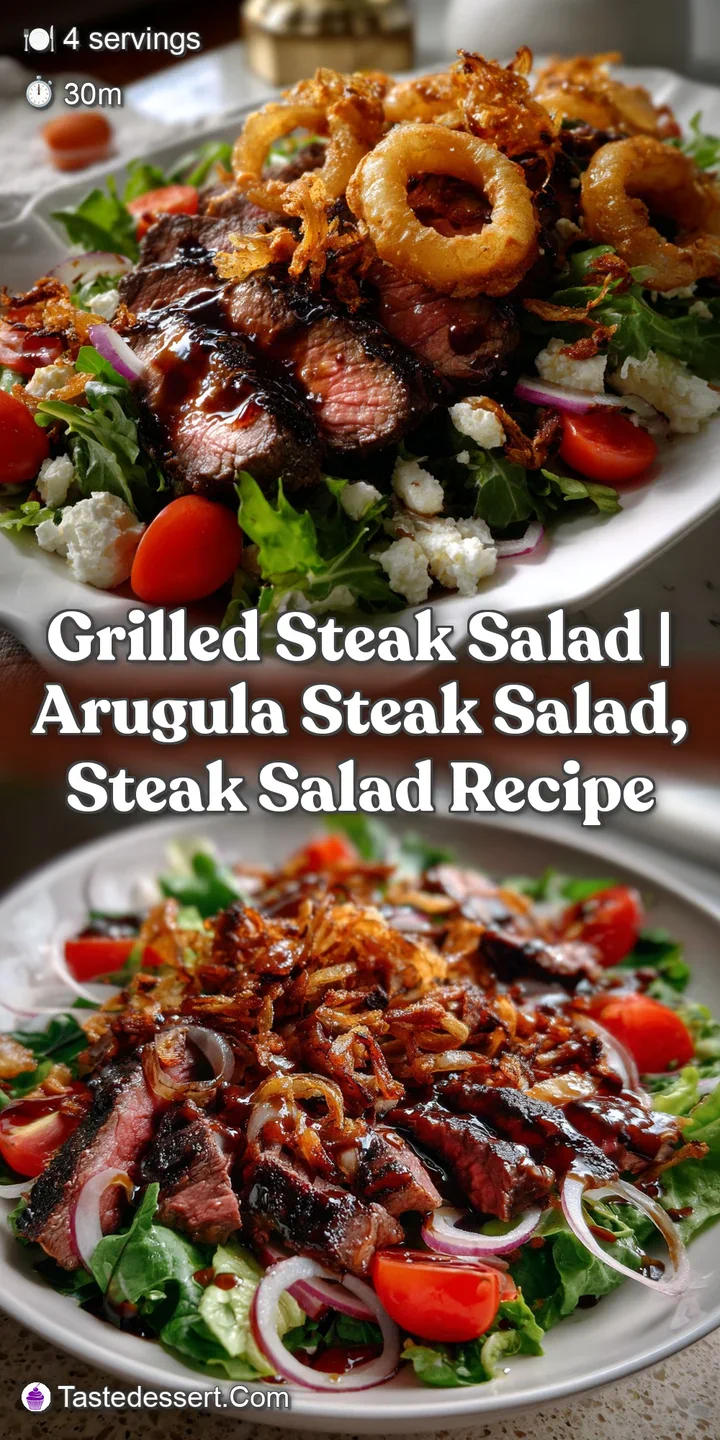
This Grilled Steak Salad isn't just a bowl of food; it's a study in balance. The 618 calories are packed with complex fats, high-quality protein, and enough acidity to keep every bite feeling fresh. Master the sear, respect the rest, and enjoy the best salad you've ever made.
Recipe FAQs
What is the best cut of steak for high heat grilling?
Ribeye or Hanger steak offer ideal marbling for searing. The intramuscular fat renders quickly over high heat, basting the meat internally for maximum juiciness. Fat content directly correlates to flavor profile during charring.
Can I substitute romaine lettuce for arugula?
Yes, but the flavor profile changes significantly. Romaine offers crunch and neutrality, whereas arugula provides essential peppery bitterness to cut the richness of the steak. The required vinaigrette acidity would need adjustment when using milder greens.
Why is my balsamic vinaigrette separating instantly?
Cold olive oil causes immediate phase separation from the vinegar. The molecular structure of oil and water based liquids resists binding until an emulsifier creates a stable interface between them.
- Ensure vinegar and oil are room temperature
- Use a Dijon mustard base for stability
- Whisk vigorously in a narrow container
Should I rest the steak before slicing for the salad?
Absolutely, resting is non-negotiable for juiciness. Slicing immediately releases internal moisture onto the cutting board instead of keeping it bound within the muscle fibers. Carryover cooking continues during this rest period, ensuring perfect medium rare.
Is pan-frying the shallots as effective as deep frying?
Pan-frying requires more precise temperature control for crispness. Deep frying achieves uniform heat transfer around the entire shallot surface, guaranteeing an even 'shatter crisp' texture across all pieces. For a similar technique focusing on poultry sides, see Classic Chicken Salad My Simple Delicious Recipe.
Myth: Adding sugar to shallots prevents burning.
Myth: Adding sugar to shallots prevents burning. Reality: Sugar significantly lowers the caramelization point, causing the shallots to burn faster, not slower. This rapid browning compromises texture, leading to brittle rather than crisp shards.
Can I use frozen avocado instead of fresh?
No, frozen avocado breaks down into an unacceptable slurry. Freezing causes ice crystals to rupture the cell walls, resulting in a mushy, watery texture upon thawing that ruins the salad’s textural contrast. Try Easy Pea Salad with Frozen Peas My Classic Recipe if you prefer utilizing frozen components.
Grilled Steak Salad Recipe
Ingredients:
Instructions:
Nutrition Facts:
| Calories | 618 calories |
|---|---|
| Protein | 38.5g |
| Fat | 44.2g |
| Carbs | 17.4g |
| Fiber | 5.1g |
| Sugar | 8.2g |
| Sodium | 685mg |
