Hähnchenbrust Mit Buntem Ofengemüse Und Cremiger Kräutersoße
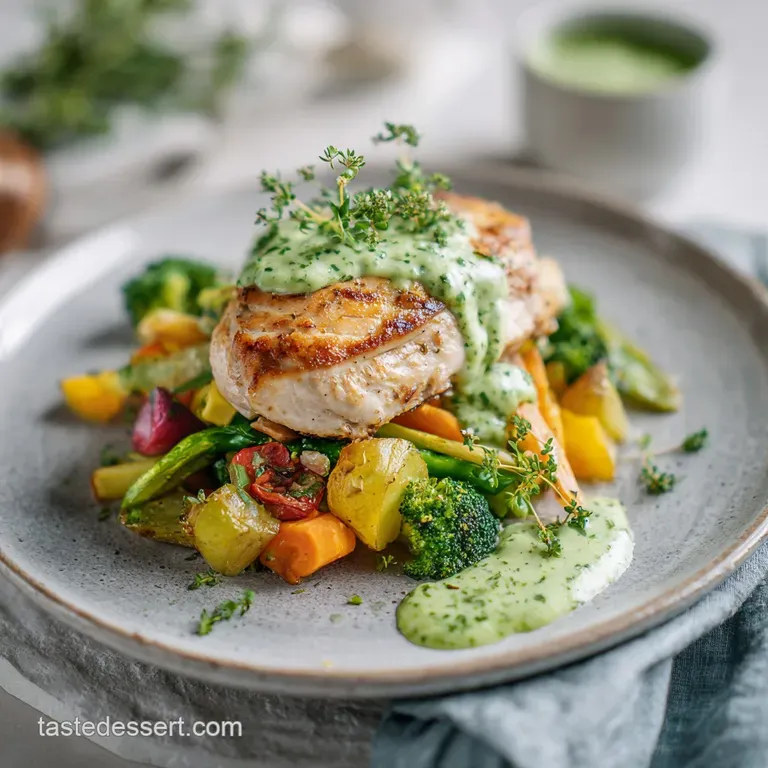
- Time: Active 15 minutes, Passive 20 minutes, Total 35 minutes
- Flavor/Texture Hook: Velvety herb sauce meets smoky, charred peppers.
- Perfect for: Impressive weeknight dinner or colorful meal prep.
- Hähnchenbrust mit buntem Ofengemüse und cremiger Kräutersoße
- Why These Vibrant Flavors Pop
- The Palette of Fresh Ingredients
- Essential Tools for Visual Success
- Mastering the High Heat Roast
- Perfecting Your Kitchen Technique
- Creative Variations for Every Occasion
- Proper Storage and Waste Reduction
- Aesthetic Plating and Presentation Tips
- Kitchen Myths Debunked
- Recipe FAQs
- 📝 Recipe Card
Hähnchenbrust mit buntem Ofengemüse und cremiger Kräutersoße
Imagine walking into a kitchen where the air is thick with the scent of charred peppers and the sweet, earthy hum of smoked paprika. That first "sizzle" when the chicken hits the hot metal tray is purely hypnotic.
Discover our star recipe for Hähnchenbrust mit buntem Ofengemüse und cremiger Kräutersoße, a dish that treats your baking sheet like a blank canvas, splashed with the reds of bell peppers and the deep greens of zucchini.
The real hero of this story, though, is the smoked paprika. I remember the first time I swapped regular paprika for the smoked variety; it was like moving from a black and white film to technicolor. It adds a depth that makes the oven-roasted vegetables taste like they’ve been kissed by an open flame.
This isn't just a meal; it's a visual feast that proves simple ingredients can create a masterpiece if you treat them with a little bit of artistic flair.
We are going for a over high heat technique here that guarantees a "shatter" on the skin of the peppers while keeping the chicken medallions incredibly tender. Most people fear 220°C, but that intensity is exactly what prevents the vegetables from turning into a soggy, sad mess.
We want edges that are slightly blackened and sweet, paired with a sauce so velvety it feels like a luxury. You'll see how the cold emulsion sauce cuts through the warmth of the roast perfectly.
Why These Vibrant Flavors Pop
Thermal Contrast: High oven heat rapidly caramelizes vegetable sugars while the cold sauce provides a refreshing, acidic counterpoint.
over High heat Vaporization: Using 220°C ensures that the moisture in the zucchini evaporates quickly rather than pooling, which prevents the "steaming" effect that makes vegetables mushy.
Fat Soluble Infusion: The smoked paprika dissolves into the olive oil, coating every crevice of the chicken to ensure the flavor penetrates the meat rather than just sitting on top.
Cold Emulsion Stability: Whisking lemon juice into crème fraîche creates a thickened, stable structure that won't separate when it hits the warm chicken.
| Servings | Chicken Quantity | Vegetable Volume | Pan Size | Cook Time |
|---|---|---|---|---|
| 2 People | 300g Medallions | 1 Pepper, 1/2 Zucchini | Quarter Sheet | 18 minutes |
| 4 People | 600g Medallions | 2 Peppers, 1 Zucchini | Standard 18x13 | 20 minutes |
| 6 People | 900g Medallions | 3 Peppers, 2 Zucchini | Two Baking Sheets | 22 minutes |
| 8 People | 1.2kg Medallions | 4 Peppers, 3 Zucchini | Two Large Sheets | 25 minutes |
Choosing the right pan size is the silent partner in your kitchen. If you crowd a small tray with 600g of chicken and all those vegetables, the moisture has nowhere to go. It stays trapped between the chunks of bell pepper, and instead of roasting, your dinner boils.
I always tell my friends: if you can't see the bottom of the tray in a few spots, you need a bigger tray or a second one.
The Palette of Fresh Ingredients
Component Analysis
| Ingredient | Science Role | Pro Secret |
|---|---|---|
| Crème Fraîche | Fat Base | Higher fat content than sour cream prevents curdling when hitting heat. |
| Smoked Paprika | Flavor Catalyst | The phenols in the smoke mimic a charcoal grill without the actual fire. |
| Zucchini | Moisture Source | Slicing into half moons increases surface area for faster water evaporation. |
| Red Onion | Sweetness | Roasting breaks down complex starches into simple sugars for a jammy finish. |
The chicken breast is our primary protein, and because we’ve sliced it into 600g of thick medallions, it cooks at the same rate as the peppers. This is a crucial bit of kitchen geometry.
If the chicken were whole breasts, the vegetables would be burnt to a crisp before the meat reached its safe internal temperature. By matching the size of the protein to the density of the zucchini and onion wedges, we create a synchronized finish.
Ingredients and Substitutes
- Chicken Breast (600g): Sliced into thick medallions. Why this? Lean protein that absorbs the smoky oil beautifully.
- Substitute: Turkey breast (same weight) provides a similar lean texture.
- Bell Peppers (2 large): Red and yellow for visual pop. Why this? High sugar content leads to spectacular caramelization.
- Substitute: Poblano peppers add a mild, earthy heat.
- Zucchini (1 medium): Sliced into half moons. Why this? Adds a soft, buttery texture to the tray.
- Substitute: Eggplant (cubed) works well but requires more oil.
- Cherry Tomatoes (200g): Kept whole. Why this? They burst in the oven, creating a natural "jam" for the chicken.
- Substitute: Grape tomatoes or halved Roma tomatoes.
- Red Onion (1 medium): Thick wedges. Why this? Provides a sharp contrast that mellows into sweetness.
- Substitute: Shallots (halved) for a more delicate, garlicky sweetness.
- Crème Fraîche (200g): The sauce base. Why this? Its thickness carries the fresh herbs without running off the plate.
- Substitute: Full fat Greek yogurt (adds more tang, less richness).
- Fresh Herbs (1 bunch): Parsley, chives, and dill. Why this? Dill offers a whimsical, floral note that brightens the heavy cream.
- Substitute: Fresh cilantro and lime for a Southwest twist.
- Smoked Paprika (1 tsp): The flavor engine. Why this? Essential for that "roasted" aroma.
- Substitute: Chipotle powder (adds significant spice) or liquid smoke (use sparingly).
Essential Tools for Visual Success
You don't need a professional kitchen, but a large rimmed baking sheet is non negotiable. I once tried making this on a flat cookie sheet with no edges let's just say the olive oil and tomato juices made a very unwelcome appearance on the floor of my oven.
A heavy gauge aluminum tray (like those from Nordic Ware) distributes heat more evenly than thin, dark pans that tend to scorch the bottom of your zucchini before the top is even warm.
An instant read thermometer is your second best friend here. We are aiming for exactly 72°C. Chicken is a fickle thing; at 70°C it's slightly under, and at 80°C it's basically a rubber ball.
Pulling it at 72°C and letting it rest for those final 3 minutes allows the carry over heat to gently nudge it to 75°C. This ensures the fibers stay relaxed and the juices remain trapped inside the medallions rather than spilling out onto the tray.
Mastering the High Heat Roast
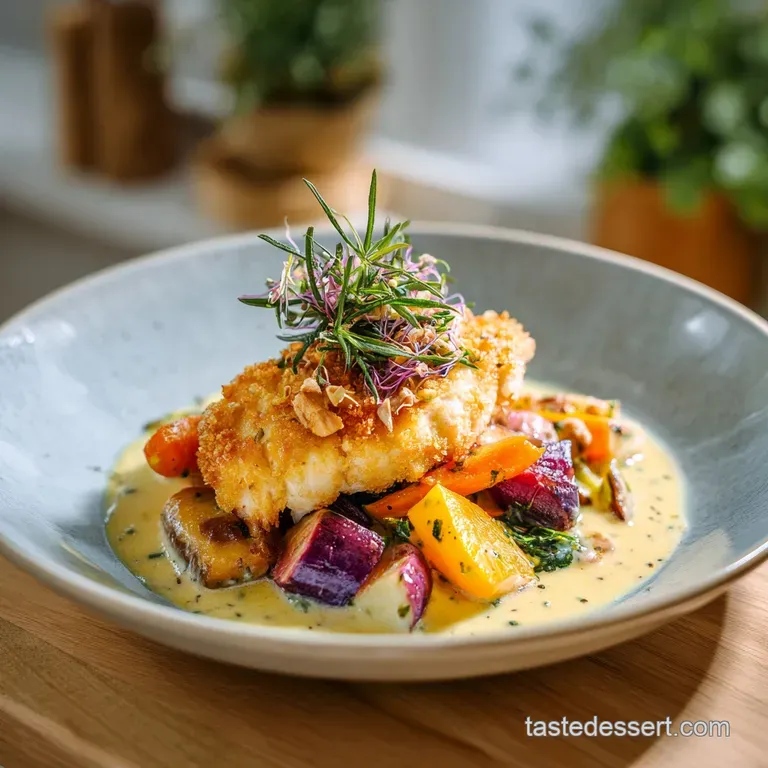
- Preheat your oven to 220°C (425°F). Note: This high temp is vital for the Maillard reaction on the vegetables.
- Chop the vegetables. Cut the 2 peppers and red onion into large chunks, and the zucchini into half moons.
- Season the produce. Toss the vegetables in a bowl with 2 tablespoons of olive oil, 1 tsp smoked paprika, 1 tsp salt, and 1 tsp black pepper.
- Arrange the tray. Spread the vegetables in a single layer on the baking sheet. until no vegetables are overlapping.
- Prepare the chicken. Season the 600g of chicken medallions with the remaining 1 tablespoon of olive oil and a pinch of salt.
- Create nests. Move the vegetables aside to place the chicken directly on the hot metal. Note: Direct contact with the tray sears the meat better.
- Roast the tray. Place in the center rack for 18-20 minutes. until the chicken reaches 72°C and the peppers show charred edges.
- Whisk the sauce. Combine 200g crème fraîche, chopped herbs, 1 tbsp lemon juice, 1 tsp zest, grated garlic, and 1 tsp honey.
- Rest the protein. Remove from the oven and let the chicken sit for 3-5 minutes. until the juices settle and temperature reaches 75°C.
- Plating. Arrange the vegetables on a platter, top with chicken, and add a generous dollop of the herb sauce.
Perfecting Your Kitchen Technique
Why Your Vegetables Get Soggy
The most common heartbreak with oven-roasted vegetables is a lack of "crunch." This usually happens because of overcrowding. When vegetables are too close together, the steam they release gets trapped, effectively boiling the food instead of roasting it.
If you want those beautiful, dark, caramelized edges, give every piece of zucchini its own personal space.
Why Your Chicken Is Dry
Chicken breast lacks the fat content of thighs, making it prone to drying out in a over high heat environment. By slicing them into medallions and placing them on the tray halfway through the process or ensuring they are tucked slightly into the "nests" of moist vegetables you create a micro environment that protects the meat.
However, the most effective tool is the thermometer. Never guess the doneness of chicken.
| Problem | Root Cause | Solution |
|---|---|---|
| Vegetables are mushy | Tray was overcrowded | Use two trays or a larger sheet to allow airflow. |
| Sauce is too thin | Too much lemon juice added | Whisk in an extra tablespoon of crème fraîche to emulsify. |
| Chicken is rubbery | Internal temp exceeded 80°C | Pull the chicken at exactly 72°C next time. |
Common Mistakes Checklist
- ✓ Pat the chicken medallions dry with a paper towel before oiling (removes surface moisture for a better sear).
- ✓ Ensure the oven is fully preheated; putting the tray in a cold oven results in limp, oily vegetables.
- ✓ Don't skip the honey in the sauce it balances the sharp acidity of the lemon and the bitterness of the charred onion.
- ✓ Use fresh herbs only; dried herbs in a cold crème fraîche sauce will taste dusty and won't hydrate properly.
- ✓ Grate the garlic into a paste rather than mincing it to avoid raw, pungent chunks in the velvety sauce.
Creative Variations for Every Occasion
The 15 Minute Shortcut
If you’re in a rush, you can skip the medallion slicing and use pre cut chicken strips. However, you’ll need to reduce the roasting time to about 12-15 minutes. The vegetables should be cut smaller (matchstick size) to ensure they cook through at the same speed.
It's a faster version, but you lose that beautiful, thick "medallion" texture that feels so intentional and artistic on the plate.
The Low Carb Swap
This dish is naturally quite low in carbohydrates, but if you want to lean further into it, replace the cherry tomatoes with mushrooms. Mushrooms have a lower sugar content and add a wonderful umami depth. For the sauce, if you want a lighter feel, you can use a mix of Greek yogurt and a splash of heavy cream.
This maintains the "cremiger Kräutersoße" feel while cutting down on the heavier fats found in crème fraîche.
Chef's Note: If you find yourself craving a bit more crunch, toss a handful of toasted pine nuts or slivered almonds over the final dish. The texture contrast against the velvety sauce is whimsical and unexpected.
When scaling this recipe up for a party, remember that the "sauce to meat" ratio is a matter of personal preference. While the recipe calls for 200g of crème fraîche, I often double the sauce because guests inevitably want to dip their bread into it. If you have leftovers, they make a fantastic cold salad the next day. Simply chop the cold chicken and vegetables and toss them with the remaining herb sauce. For another great prep ahead option, check out my Stuffed Bagel Balls recipe which makes a great side for a brunch style roast.
Proper Storage and Waste Reduction
Storing Hähnchenbrust mit buntem Ofengemüse und cremiger Kräutersoße is simple, but there is a trick to keeping it fresh. Store the roasted components and the sauce in separate airtight containers. The chicken and vegetables will last in the fridge for up to 3 days.
When reheating, I recommend using the oven at 180°C for about 10 minutes rather than the microwave. The microwave tends to make the zucchini "weep" water, which ruins the texture.
Zero waste is all about those herb stems! Don't throw away the parsley and dill stems. They hold an incredible amount of flavor. I like to finely mince them and toss them into the vegetable bowl before roasting. They get crispy and add a punch of herbal intensity.
If you have leftover red onion, pickle it in a bit of vinegar and sugar for a bright topping on your next meal.
Aesthetic Plating and Presentation Tips
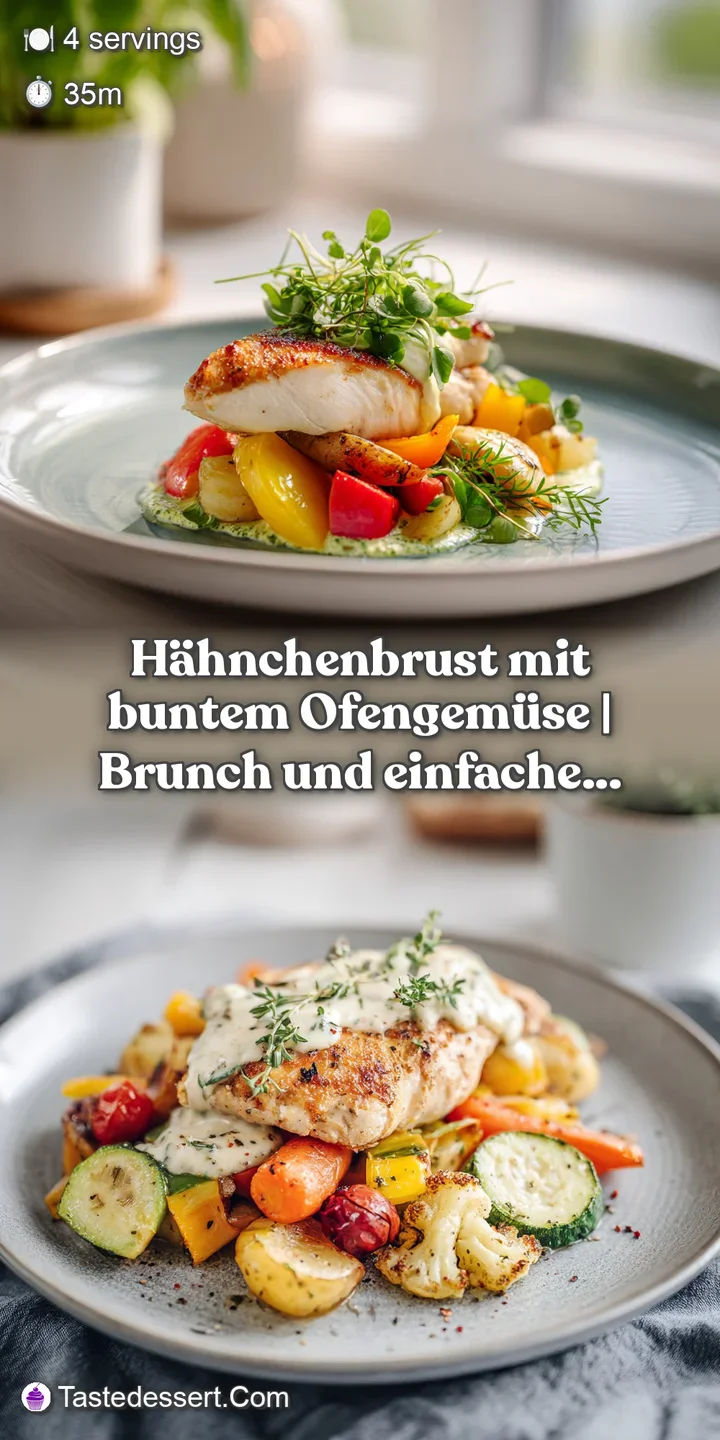
To make this dish look like it belongs in a gallery, think about color blocking. Instead of just piling everything in the center, lay the vegetables down first in a vibrant "bed." Place the chicken medallions on top in a clean line or a gentle curve.
The sauce should be the final artistic touch don't just dump it on. Use a small spoon to create elegant dollops, or a squeeze bottle for whimsical swirls.
Finish the dish with a final sprinkle of the lemon zest and some whole herb leaves. The contrast between the charred, dark tones of the roast and the bright, neon green of the fresh herbs is what makes this dish pop visually. It transforms a simple traybake into a "presentation" piece. If you’re looking for a dessert to follow such a colorful meal, the Nutella Swirl Pound Cake provides a beautiful, marbled visual that matches the artistic energy of this dinner.
| Feature | Fast Method | Classic Method |
|---|---|---|
| Prep Time | 5 minutes (Pre cut veg) | 15 minutes (Hand carved shapes) |
| Flavor Profile | Basic salty/savory | Complex smoky/sweet/acidic |
| Visual Appeal | Homogenous mix | Distinct, vibrant colors |
Kitchen Myths Debunked
One common misconception is that you must marinate the chicken for hours to get flavor. In a traybake like this, the flavor comes from the seasoned oil and the "burst" of the cherry tomatoes. A long marinade can actually break down the proteins too much, resulting in a mushy texture.
Salt the meat just before it hits the tray for the best results.
Another myth is that "fresh is always better" for every single ingredient. While fresh herbs are non negotiable for the sauce, using a high-quality jarred smoked paprika is often better than a "fresh" generic paprika.
The drying and smoking process concentrates the compounds, providing that essential depth that fresh peppers alone cannot achieve. Trust the spice rack to do the heavy lifting here.
Decision Shortcut
- If you want extra crispy vegetables, use two baking sheets to maximize airflow and prevent any overlapping.
- If you want a spicier kick, add a half teaspoon of red chili flakes to the vegetable oil mixture before roasting.
- If you want a richer sauce, swap the lemon juice for a splash of dry white wine, though you'll lose that bright, citrusy lift.
Recipe FAQs
How long must chicken breast bake in the oven?
Roast for 18-20 minutes at 220°C (425°F). You must pull the chicken once it hits an internal temperature of 72°C (162°F) to ensure it reaches the safe 75°C during the resting phase.
How to ensure the chicken breast remains tender?
Pat the medallions dry with paper towels before oiling. This removes surface moisture, allowing for a better sear, and always let the meat rest for 3-5 minutes after roasting to retain its juices.
Which vegetables pair best with this chicken?
Use bell peppers, zucchini, cherry tomatoes, and red onion. These roast at similar rates and provide a balance of sweetness and char that complements the herbaceous sauce perfectly.
How to season chicken breast for the best flavor?
Coat the medallions with extra virgin olive oil, salt, and smoked paprika. The olive oil helps conduct heat for a golden finish, while the smoked paprika adds a subtle, savory depth that enhances the natural flavor of the poultry.
Is it necessary to use dried herbs in the sauce?
No, this is a common misconception. You must use fresh parsley, chives, and dill, as dried herbs in a cold crème fraîche emulsion will taste dusty and fail to hydrate correctly.
How to keep the roasted vegetables from becoming soggy?
Spread the vegetables in a single, uncrowded layer on the baking sheet. If you enjoy the science of balancing flavors in this way, see how we use the same acid technique in our herb focused fish recipes to brighten heavy dishes.
Why is my garlic sauce tasting too pungent?
Grate the garlic into a fine paste instead of mincing it. Using a paste ensures the flavor disperses evenly throughout the crème fraîche, preventing harsh, raw chunks from overpowering the other delicate ingredients.
Hahnchenbrust Mit Buntem Ofengemuse
Ingredients:
Instructions:
Nutrition Facts:
| Calories | 492 kcal |
|---|---|
| Protein | 37.8 g |
| Fat | 29.4 g |
| Carbs | 16.5 g |
| Fiber | 3.8 g |
| Sugar | 8.2 g |
| Sodium | 645 mg |
