Classic Thanksgiving Recipe with Herb Roasted Poultry
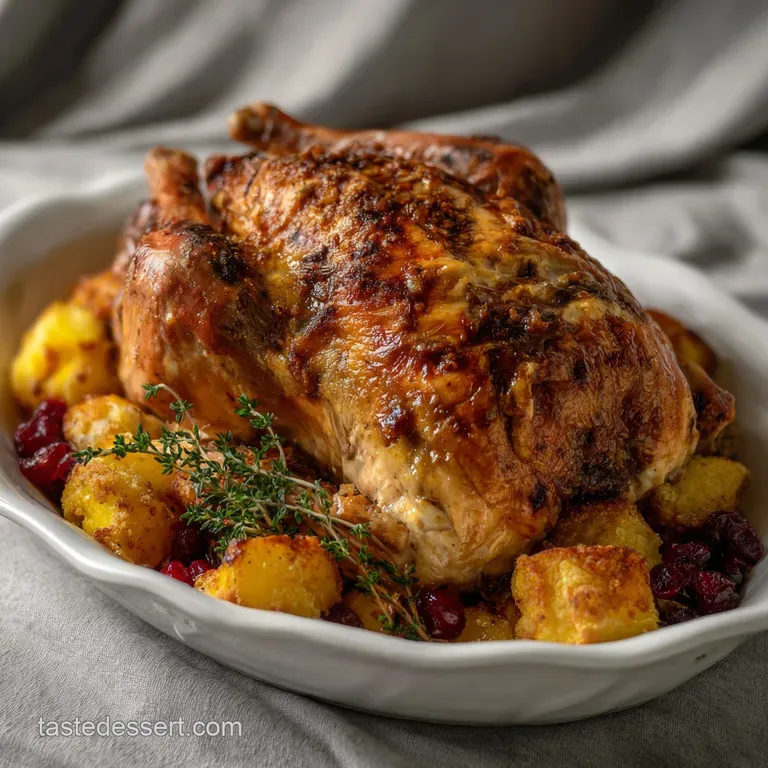
- Time: Active 30 minutes, Passive 2 hours 45 mins, Total 3 hours 15 mins
- Flavor/Texture Hook: Shatter-crisp skin protecting velvety, herb-infused poultry
- Perfect for: Holiday gatherings and large-scale family celebrations
- The Ultimate Classic Thanksgiving Recipe for a Heartwarming Feast with Herb Roasted
- The Physics of Flavored Crusts
- Feast Planning and Numeric Targets
- The Aromatic Component Analysis Matrix
- Essential Tools for Holiday Success
- Selecting Your Herbaceous Elements
- Step-by-Step Culinary Transformation Guide
- Troubleshooting Your Holiday Centerpiece
- Creative Variations and Flavor Profiles
- Proportional Adjustments and Physics
- Storage and Strategic Resource Use
- Presentation and Perfect Side Pairings
- Truths Behind Holiday Tradition Myths
- Common Questions
- 📝 Recipe Card
The Ultimate Classic Thanksgiving Recipe for a Heartwarming Feast with Herb Roasted
The fear of a dry, flavorless bird often haunts the holiday host, leading to over basted stress and lackluster results. We have all stood over a roasting pan, hoping for that picture book finish only to find the breast overcooked while the legs remain stubborn.
This method eliminates the guesswork by prioritizing a heavy aromatic rub and a strategic roasting environment that guarantees a succulent result every single time.
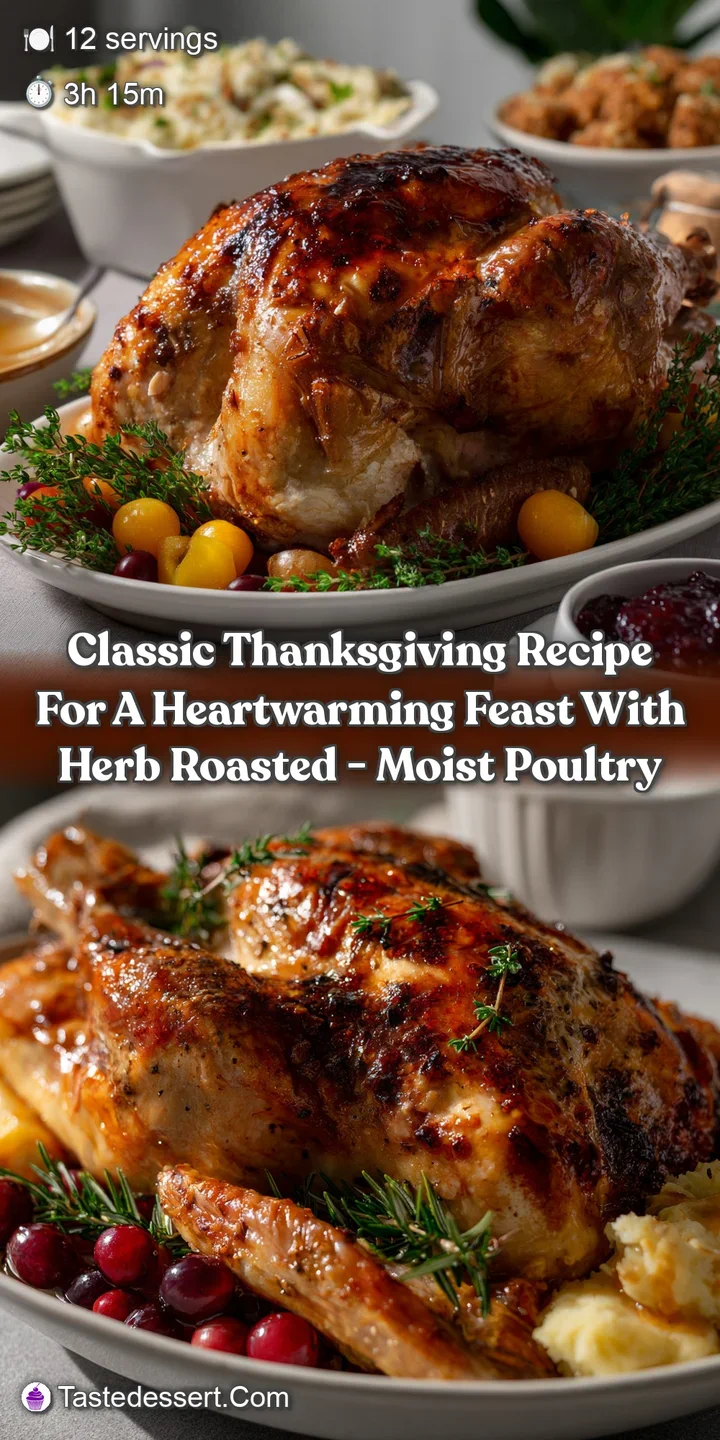
Here's a delicious Classic Thanksgiving Recipe for a Heartwarming Feast with Herb Roasted Turkey. By focusing on the art of the herb paste and the science of heat, we turn a standard 13 lb whole turkey into a breathtaking culinary centerpiece.
The transformation from a pale, cold bird into a golden brown trophy of the kitchen is one of the greatest joys of the season.
Imagine the aroma of 2 tbsp fresh rosemary and 4 cloves garlic, minced into a paste, as it sizzles against the heat of the oven. This isn't just a meal; it's a sensory experience that defines the spirit of the gathering.
The contrast of the bright, citrusy lemon against the deep, earthy sage creates a flavor map that is both nostalgic and sophisticated. Implementing this Classic Thanksgiving Recipe for a Heartwarming Feast with Herb Roasted ensures that sensory experience is front and center.
The Physics of Flavored Crusts
Why does the high-to-low heat transition preserve juiciness?
Starting at a high temperature (425°F) initiates the Maillard reaction, a chemical dance between amino acids and reducing sugars that creates hundreds of flavor compounds.
Once the skin begins to brown and "set," dropping the temperature ensures the internal proteins do not experience rapid protein denaturation, which would otherwise squeeze out the moisture like a wrung out sponge.
How does the aromatic vegetable "rack" benefit the meat?
Placing the 13 lb whole turkey atop 2 large carrots, 3 stalks celery, and 1 large yellow onion creates a natural convection system. Instead of the bottom of the bird steaming in its own juices and becoming soggy, the hot air circulates underneath, while the vegetables slowly caramelize and perfume the drippings for a future sauce.
Feast Planning and Numeric Targets
| Metric | Target Value | Purpose |
|---|---|---|
| Internal Temperature | 165°F (74°C) | Ensures safety while maintaining cellular moisture |
| Resting Time | 30–45 minutes | Allows juice redistribution and carryover cooking |
| Turkey Weight | 13 lb | Ideal size for even heat penetration and 12 servings |
The Aromatic Component Analysis Matrix
| Ingredient | Chemical/Physical Role (Science) | The Pro Secret (Why This Matters) |
|---|---|---|
| Extra Virgin Olive Oil | Lipophilic heat conductor | Distributes herb oils deep into the skin's fat layer |
| Fresh Sage & Rosemary | Volatile aromatic compounds | Essential oils (thujone/rosmarinic acid) resist over high heat degradation |
| Fresh Lemon | Acidic collagen breakdown | Breaks down surface proteins for a more tender bite |
| Garlic Paste | Allicin driven flavor depth | Mincing into paste ensures maximum surface area for flavor infusion |
Essential Tools for Holiday Success
To achieve professional results, I always reach for my Lodge Cast Iron Roasting Pan because its heat retention is unrivaled, ensuring the bottom aromatics caramelize rather than just boil.
A KitchenAid digital probe thermometer is non-negotiable for tracking the internal temperature without constantly opening the oven door and losing heat. For the herb paste, a Zyliss garlic press or a heavy duty mortar and pestle will help you achieve that fine consistency needed to coat every crevice of the bird.
Finally, use Regency natural cooking twine to truss the legs, which prevents the extremities from overcooking before the core is ready.
Selecting Your Herbaceous Elements
- 13 lb whole turkey: Ensure it is completely thawed for 3 4 days in the fridge. Why this? Thawing prevents "ice-core syndrome" where the center remains raw while the exterior burns.
- 3 tbsp extra virgin olive oil: Use a high-quality oil like Bertolli. Why this? Fat acts as a glue for the herbs and facilitates the browning process.
- 4 cloves garlic: Mince into a fine paste.
- Fresh Rosemary & Sage: 2 tbsp of each, finely minced.
- 2 cups vegetable or turkey stock: For the pan to prevent smoking.
- Aromatic Vegetables: Onion, carrots, and celery for the roasting bed.
| Original Ingredient | Substitute | Why It Works |
|---|---|---|
| Extra Virgin Olive Oil | Unsalted Butter (softened) | Adds a dairy richness but burns faster; watch the heat closely. |
| Fresh Sage | Dried Rubbed Sage (2 tsp) | More concentrated flavor; use less to avoid a "soapy" aftertaste. |
| Vegetable Stock | Dry White Wine (Sauvignon Blanc) | Adds acidity and brightens the pan drippings for gravy. |
step-by-step Culinary Transformation Guide

- Remove the 13 lb whole turkey from the refrigerator 1 hour before cooking. Note: Taking the chill off ensures even heat penetration.
- Pat the skin with paper towels until bone dry to the touch. Note: Moisture is the enemy of a crisp crust; water must evaporate before browning begins.
- Combine 3 tbsp olive oil, 2 tbsp rosemary, 2 tbsp sage, 1 tbsp salt, and 1 tbsp pepper.
- Whisk in 4 cloves of minced garlic to create a thick, fragrant paste.
- Rub the herb mixture over the entire surface and under the breast skin.
- Place 1 large yellow onion (quartered), 2 large carrots, and 3 stalks celery in the roasting pan.
- Stuff the cavity with 1 halved lemon, 1 halved head of garlic, and 1 bunch of fresh thyme.
- Position the turkey on top of the vegetables and add 2 cups of stock to the pan.
- Roast at 425°F for 30 minutes until the skin turns a light mahogany and begins to sizzle.
- Reduce oven heat to 325°F and continue cooking for ~2 hours 15 mins until the thigh registers 165°F and juices run clear.
- Rest the bird for 30–45 minutes until the internal temperature stabilizes and the skin feels firm.
Troubleshooting Your Holiday Centerpiece
Why did my turkey skin look pale and soft?
If the skin doesn't shatter, it's usually due to surface moisture or overcrowding. If the bird is tucked too tightly into a deep pan, it steams in its own humidity rather than roasting. This prevents the evaporative cooling phase from finishing, leaving the skin flaccid.
| Problem | Root Cause | The Fix | Pro Protocol |
|---|---|---|---|
| Dark skin/Raw center | Sugar in rub or too much heat | Tent with foil | Start breast side down for 45 mins |
| Dry breast meat | Uneven heat distribution | Flip the bird or use ice packs | Chill the breast with ice before roasting |
| Bitter drippings | Burnt garlic or herbs | Add more stock to the pan | Place garlic inside the cavity only |
If you enjoy a bit of heat with your succulent feast, this bird pairs exceptionally well with a side featuring a Horseradish Sauce recipe to cut through the richness. Mastering this Classic Thanksgiving Recipe for a Heartwarming Feast with Herb Roasted means no side dishes will overshadow the main event.
Creative Variations and Flavor Profiles
- Citrus Burst: Replace the lemon with halved oranges and add 1 tbsp of orange zest to the herb rub for a brighter, floral profile.
- Smoky Forest: Swap the rosemary for fresh thyme and add 2 tsp of smoked paprika to the olive oil for a deep, campfire aroma.
- Spiced Maple: After the temperature reduction, brush the skin with a mix of maple syrup and Dijon mustard for a sticky sweet contrast.
Decision Shortcut
- If you want maximum crunch, dry-brine with salt for 24 hours uncovered in the fridge.
- If you want fastest results, spatchcock the bird by removing the backbone to lay it flat.
- If you want the richest gravy, roast extra turkey wings in the pan for more collagen.
Proportional Adjustments and Physics
Scaling Up (Two 13 lb Turkeys)
When roasting two birds at once, do not simply double the time. Instead, ensure at least 3 inches of space between the pans to allow for proper airflow. Use the 1.5x rule for the salt and spices to avoid an over seasoned crust, but scale the aromatics exactly.
Large Roasts vs. Small Birds
A larger bird (20 lb+) has a smaller surface area-to-volume ratio, meaning the outside will likely burn before the center reaches 165°F. For this Classic Thanksgiving Recipe for a Heartwarming Feast with Herb Roasted, the 13 lb size is the "sweet spot" for thermodynamics.
If you use a smaller bird, reduce the second roasting phase by 15 minutes per pound.
Storage and Strategic Resource Use
- Storage
- Store leftovers in airtight containers in the fridge for up to 4 days, or freeze for 3 months.
- Zero Waste
- Never discard the carcass!
- Transform
- Simmer the bones with the roasted vegetable "rack" and herb stems for 4 hours to create a bone broth rich in gelatin.
- Science
- The collagen in the joints breaks down into gelatin (hydrolyzed collagen), which provides a velvety mouthfeel and supports gut health.
After the savory feast, a creamy dessert is essential. My Homemade Banana Cream Pie recipe provides the perfect silky contrast to the crisp texture of the turkey.
Presentation and Perfect Side Pairings
To showcase the art of your creation, carve the bird in the kitchen but present it whole on a bed of fresh herbs and pomegranate seeds for a pop of color. The contrast of the golden skin against the bright red fruit creates a visual delight. Pair this with a glass of something festive; a Homemade Eggnog recipe is a classic companion that echoes the warm spices and joyful atmosphere of the day.
Stovetop vs. Oven Techniques
| Method | Benefit | Resulting Texture |
|---|---|---|
| Oven (Low & Slow) | Deep heat penetration | Uniformly tender and juicy |
| over High heat Start | Rapid Maillard reaction | Shatter crisp, mahogany skin |
| Stovetop Searing | Intensive browning | Difficult with a 13 lb bird; best for pieces |
Truths Behind Holiday Tradition Myths
Myth: Basting the turkey keeps the meat moist. Truth: Basting is a surface level action. It actually cools the oven every time you open the door, prolonging the cook time and potentially drying out the meat. The fat in our herb rub is all you need for a golden finish.
Myth: The "pop-up" timer is the most accurate way to check doneness. Truth: These timers are calibrated to pop at 180°F-185°F, which is far beyond the point of dryness. Always use a digital probe thermometer for precision.
Myth: You must wash the turkey before roasting. Truth: Washing poultry spreads bacteria (Campylobacter) around your kitchen. High oven heat is the only effective way to kill pathogens.
The joy of this Classic Thanksgiving Recipe for a Heartwarming Feast with Herb Roasted lies in the simple transformation of quality ingredients into a shared memory. By mastering the heat and respecting the rest, you ensure your holiday table is filled with nothing but delight.
Common Questions
What is the absolute minimum resting time required before carving the turkey?
30 minutes is sufficient for juice redistribution. Resting allows muscle fibers to relax and reabsorb internal moisture lost during high heat cooking. If you skip this, the juices run out onto the cutting board.
Can I substitute the olive oil with melted butter for the herb rub?
Melted butter provides a richer flavor profile. Butter contains water solids that can inhibit a perfectly crisp crust compared to pure fat like oil. If you are aiming for the crackling texture achieved in our BoneIn Rib Roast: Classic Reverse Sear Prime Rib for Holidays, the higher smoke point of oil is preferred initially.
What temperature should the thigh register for safe consumption?
The internal temperature must reach 165°F (74°C). USDA guidelines mandate this for safety, as sustained heat at this point kills potential pathogens. Ensure your probe is not touching bone for an accurate reading.
Is it necessary to place vegetables underneath the bird?
No, it is not strictly required for safety. The vegetables form an elevated platform that prevents the bottom skin from steaming in its own rendered fat and juices. This technique promotes better overall convection, similar to the way air circulates in our Hoppin John: Traditional Smoky Black Eyed Peas Recipe.
Should I use fresh or dried herbs for the paste?
Use fresh herbs for superior aromatic complexity. Dried herbs possess a more muted, sometimes musty flavor that cannot match the volatile oils released by fresh components during roasting.
Why does my turkey often dry out, even when I use a thermometer?
Residual heat continues cooking the meat after removal from the oven. This phenomenon, known as carryover cooking, can raise the internal temperature by 5 10 degrees if you wait too long to carve. Check the temperature at 155°F and remove immediately to rest.
- Remove bird before target temp
- Tent loosely with foil
- Use a carving board with a moat
Myth: Pouring ice water into the cavity cools the breast to prevent drying.
Myth: Pouring ice water into the cavity cools the breast to prevent drying. Reality: Adding water lowers the ambient oven temperature, requiring longer cooking times and creating steam, which results in soggy skin.
Herb Roasted Thanksgiving Feast
Ingredients:
Instructions:
Nutrition Facts:
| Calories | 442 kcal |
|---|---|
| Protein | 61.4 g |
| Fat | 19.5 g |
| Carbs | 3.2 g |
| Fiber | 0.8 g |
| Sugar | 1.1 g |
| Sodium | 785 mg |
