Lemon Posset Brulee: Eggless Custard
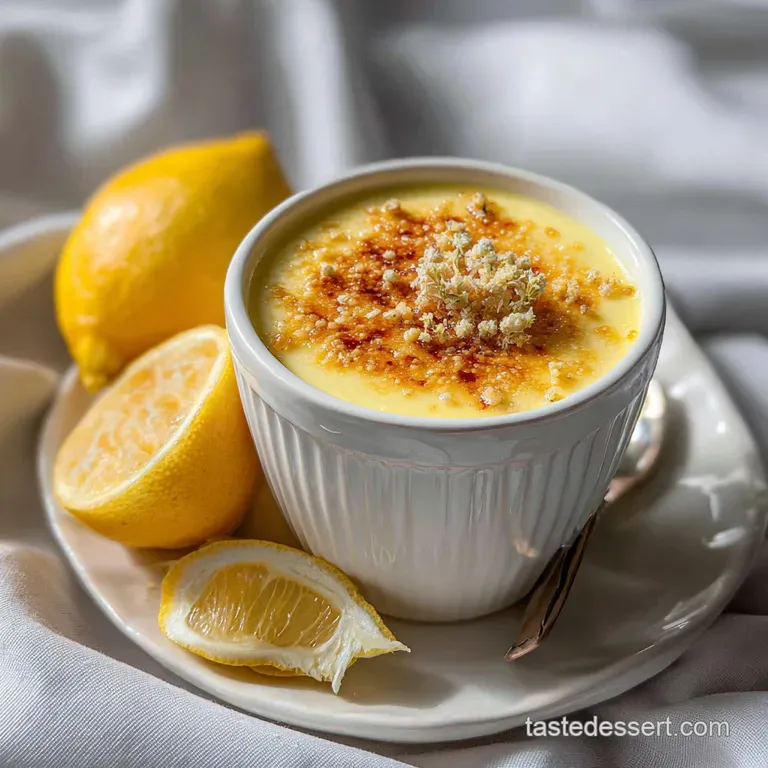
- Time: Active 10 minutes, Passive 3 hours 5 mins, Total 3 hours 15 mins
- Flavor/Texture Hook: Tangy, velvety cream topped with a shattering, bitter sweet burnt sugar crust.
- Perfect for: Stress free dinner parties or a refreshing summer palate cleanser.
- Mastering Your Homemade Lemon Posset Brulee
- The Alchemy of Citrus and Fat
- Essential Components for Creamy Success
- Tools for a Professional Finish
- From Stovetop to Glass Ramekin
- Correcting Common Texture Problems
- Scaling and Smart Flavor Tweaks
- Storing Your Chilled Citrus Treats
- Pairings and Beautiful Serving Ideas
- Recipe FAQs
- 📝 Recipe Card
Mastering Your Homemade Lemon Posset Brulee
I remember the first time I tried to make a traditional custard. It was a humid Tuesday, and I spent forty minutes hovering over a bain marie, terrified I’d scramble the eggs. When it finally came out, it was... fine. But then a friend told me about the British secret weapon: the posset. No eggs. No flour.
No stressful tempering. Just cream, sugar, and lemon. I didn't believe something so simple could feel so luxurious until I heard that first "clink" of the spoon hitting the glass.
The magic happens when you combine the heat of the cream with the bright acidity of the lemon. It doesn't just flavor the dish; it physically transforms the liquid into a dense, silky pot of gold.
Adding the brulee topping was a happy accident in my kitchen one night when I realized the tartness of the lemon begged for that smoky, charred sugar crunch. It’s a texture contrast that makes your tongue do a little dance.
Honestly, once you see how the cream thickens into a velvety dream right before your eyes, you’ll never go back to those finicky egg based puddings. It is remarkably forgiving, budget friendly, and feels like something you'd pay twenty dollars for at a high end bistro.
We're going to use basic pantry staples to create something that tastes like pure sunshine.
The Alchemy of Citrus and Fat
The Alchemy of Citrus and Fat: When lemon juice is added to hot cream, the citric acid causes the casein proteins to clump together in a process called "acid set" coagulation. This creates a dense, stable network that thickens the cream into a velvety custard without needing eggs or starch.
- High Fat Stability: Using 36% fat heavy cream ensures the emulsion stays smooth and doesn't separate when the acid hits.
- Sugar Saturation: Boiling the sugar with the cream creates a syrup like consistency that aids in the final structural set.
- Cold Cure: The three hour chill time allows the fat globules to crystallize, locking the citrus oils into a firm, spoonable texture.
- Maillard Magic: The caster sugar on top undergoes rapid pyrolysis when torched, creating that iconic shattering caramel layer.
| Choice | Texture Outcome | Flavor Profile |
|---|---|---|
| Fresh Squeezed Juice | Firm and stable set | Bright, complex, and zesty |
| Bottled Lemon Juice | Softer, slightly runny set | Flat, one dimensional acidity |
| Meyer Lemon Juice | Very soft, delicate set | Floral and sweet but less tart |
Using bottled juice often leads to a disappointing, soup like result because the pH levels are inconsistent. Fresh lemons contain the natural oils in the zest that provide that floral aroma we're looking for.
If you find yourself with only bottled juice, you might need to increase the volume by 10%, but I really recommend sticking to the real deal for that signature shatter.
Essential Components for Creamy Success
| Component | Science Role | Pro Secret |
|---|---|---|
| Heavy Cream (36%) | Primary structural fat | Don't use "light" cream; it won't set. |
| Granulated Sugar | Lowers water activity | Simmer until it fully dissolves for silkiness. |
| Fresh Lemon Juice | Coagulates the proteins | Add it only after the cream is off heat. |
| Vanilla Paste | Flavor depth | Paste adds those beautiful black specks. |
Choosing the right cream is the most important step here. If you use a lower fat dairy, the acid won't have enough protein and fat to cling to, leaving you with a watery mess. I always look for a cream that has no added thickeners like carrageenan if possible, as it lets the natural lemon reaction shine through more clearly.
| Original Ingredient | Substitute | Why It Works |
|---|---|---|
| Heavy Cream (600ml) | Full fat Coconut Cream | Similar fat content. Note: Adds a distinct tropical flavor. |
| Granulated Sugar | Honey (120g) | High sugar concentration. Note: Makes the set slightly softer. |
| Vanilla Paste | Vanilla Extract (1 tsp) | Same aromatic compounds without the visible seeds. |
| Caster Sugar | Brown Sugar | High moisture. Note: Creates a chewier, less "shattering" crust. |
The vanilla paste is a small touch that makes a huge difference. It bridges the gap between the sharp citrus and the heavy dairy, rounding out the edges. If you're using honey as a swap, be aware that it can make the posset taste much sweeter, so you might want to add an extra squeeze of lemon to balance it out.
Tools for a Professional Finish
You don't need a professional kitchen, but a few specific items make this much easier. A heavy bottomed saucepan is non negotiable because cream is notorious for scorching the moment you look away. The thick base distributes heat evenly, preventing those bitter, burnt bits from ruining your velvety base.
- Heavy bottomed Saucepan: Prevents the cream from catching and burning.
- Fine Mesh Sieve: Essential for removing zest and any coagulated bits for a smooth finish.
- Glass Ramekins: Glass conducts the cold quickly during the chilling phase.
- Kitchen Blowtorch: Provides the intense, targeted heat needed for the brulee top.
- Microplane Grater: For the finest zest that releases maximum essential oils.
Chef's Tip: If you don't have a blowtorch, you can use your oven's broiler, but keep a very close eye on it. The sugar goes from golden to black in about five seconds, and the heat from the oven might melt your beautifully set posset.
From Stovetop to Glass Ramekin
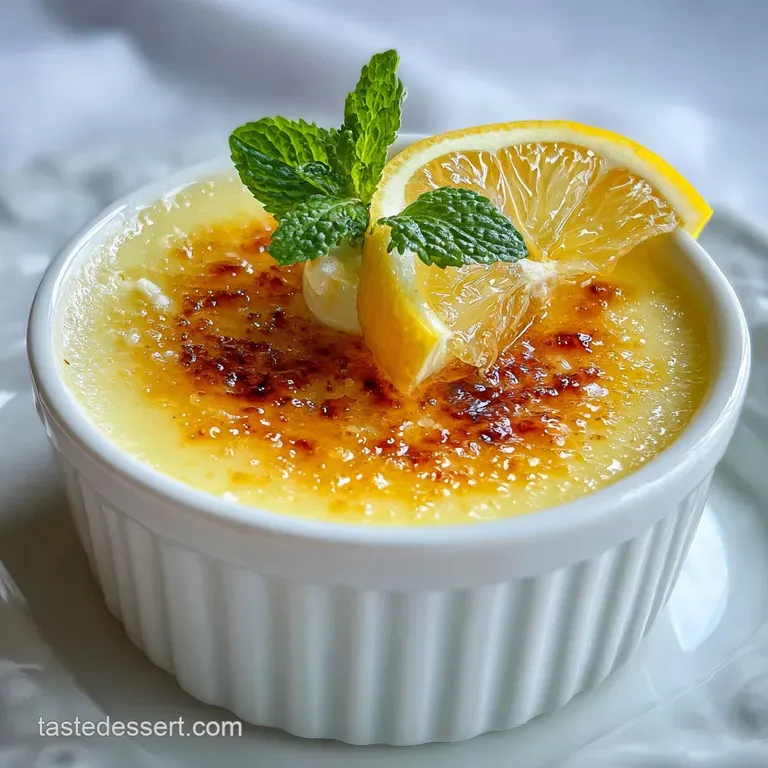
- Zest lemons. Use a microplane to get 1 tablespoon of lemon zest, avoiding the bitter white pith.
- Combine liquids. Place 600ml heavy cream and 150g granulated sugar in your saucepan. Note: This helps the sugar dissolve evenly as the cream warms.
- Simmer mixture. Bring the cream to a boil over medium heat, then reduce to a simmer for 3 minutes until it starts to thicken and coats the back of a spoon.
- Infuse flavor. Remove from heat and stir in the 1 tablespoon of lemon zest and 1 teaspoon of vanilla paste.
- Add acidity. Pour in the 75ml fresh lemon juice. Observe the mixture thickening instantly.
- Strain custard. Pour the hot liquid through a fine mesh sieve into a jug. Note: This removes the zest for a perfectly velvety texture.
- Fill ramekins. Divide the mixture evenly between 6 ramekins.
- Initial chill. Let them sit at room temperature for 15 minutes until a slight skin forms.
- Final set. Refrigerate for at least 3 hours until firm to the touch.
- Brulee top. Just before serving, sprinkle 1 teaspoon of caster sugar over each and torch until bubbling and mahogany brown.
Correcting Common Texture Problems
Why Your Posset Stayed Liquid
If your Lemon Posset Brulee didn't set, it usually comes down to the fat content or the simmer time. If the cream didn't reach a proper boil for a few minutes, the sugar and proteins didn't concentrate enough. Another culprit is using "old" lemon juice that has lost its acidic punch.
| Problem | Root Cause | Solution |
|---|---|---|
| Runny consistency | Not enough simmer time | Simmer for a full 3 mins next time to reduce water. |
| Grainy texture | Sugar didn't dissolve | Whisk sugar into cold cream before heating. |
| Oily surface | Cream boiled too hard | Keep at a gentle simmer, never a rolling boil. |
Why Your Sugar Top is Soft
The brulee layer is sensitive to moisture. If you torch the sugar and then put the ramekins back in the fridge, the sugar will absorb the humidity and turn into a sticky syrup. This also happens if your sugar layer is too thick; the bottom melts but the top stays raw.
Common Mistakes Checklist
- ✓ Never use "Half and Half" or light cream; the fat ratio is too low for an acid set.
- ✓ Don't add the lemon juice while the cream is still on the active heat source.
- ✓ Ensure the posset is completely cold before adding the sugar top.
- ✓ Strain the mixture twice if you want a truly professional, "mirror smooth" finish.
- ✓ Use caster sugar for the top; the fine grains melt faster and more evenly than regular granulated sugar.
Scaling and Smart Flavor Tweaks
Scaling this recipe is quite simple because it relies on ratios. If you want to cut the recipe in half for a date night, use a much smaller saucepan. A large pan will cause the 300ml of cream to evaporate too quickly, leading to a rubbery texture.
Reduce your simmering time by about 1 minute since the smaller volume reaches temperature faster.
To double the recipe for a crowd, keep your sugar and liquids at the 2x mark, but only use 1.5x the vanilla. Large batches of cream take longer to reach a boil, so be patient and keep stirring to prevent the bottom from scorching.
| Method | Time | Texture | Best For |
|---|---|---|---|
| Traditional Stovetop | 10 mins | Velvety and thick | The gold standard for quality. |
| Microwave Shortcut | 5 mins | Slightly softer set | Quick fixes or small portions. |
| Infused Cold Steep | 24 hours | Deeply aromatic | Advanced prep with herbs. |
If you go the microwave route, you must watch it like a hawk. Cream expands rapidly when it boils and will create a massive mess in your microwave if it overflows. Heat in 30 second bursts and stir frequently.
Storing Your Chilled Citrus Treats
The "brulee" part of this Lemon Posset Brulee does not keep well. Once you torch that sugar, the clock is ticking. Within 30 to 60 minutes, the sugar will start to liquefy. However, the base custard is a champion of longevity.
- Fridge: Store the un torched ramekins covered with plastic wrap for up to 3 days.
- Freezer: You can freeze the set posset for up to 1 month. Thaw in the fridge overnight before torching.
- Zero Waste: Use the leftover lemon husks to make a Turkey Brine recipe or toss them into a jar with sugar to make a quick citrus syrup for cocktails.
One myth I hear a lot is that you need to "scald" the cream before adding sugar. In reality, adding the sugar early actually protects the cream from curdling too quickly under high heat. Another myth is that the zest is just for garnish.
Actually, the zest contains the limonene oils that provide the actual "lemon" scent, while the juice provides the "sour" taste. You need both for the full experience.
Pairings and Beautiful Serving Ideas
This dessert is quite rich, so it pairs beautifully with something light and slightly floral. I love serving it alongside a small glass of dessert wine or even a bit of my Violet Simple Syrup recipe drizzled over fresh blueberries on the side. The purple against the pale yellow posset is stunning.
If you want to change things up, try serving these inside the hollowed out lemon halves. It’s a bit rustic and always gets a "wow" from guests. Just slice a tiny bit off the bottom of the lemon so it sits flat on the plate.
- Shortbread Rounds: The buttery crunch is the perfect vehicle for the creamy custard.
- Fresh Raspberries: The tartness of the berry cuts through the heavy cream.
- Mashed Pistachios: Add a sprinkle after torching for a salty, nutty contrast.
Trust me on the shortbread there is something about that butter on-butter action that makes this feel like the ultimate indulgence. Whether you’re making this for a fancy holiday dinner or just because you had an extra carton of cream in the fridge, it’s going to be a hit.
Just don't forget the blowtorch; that shattering top is half the fun!
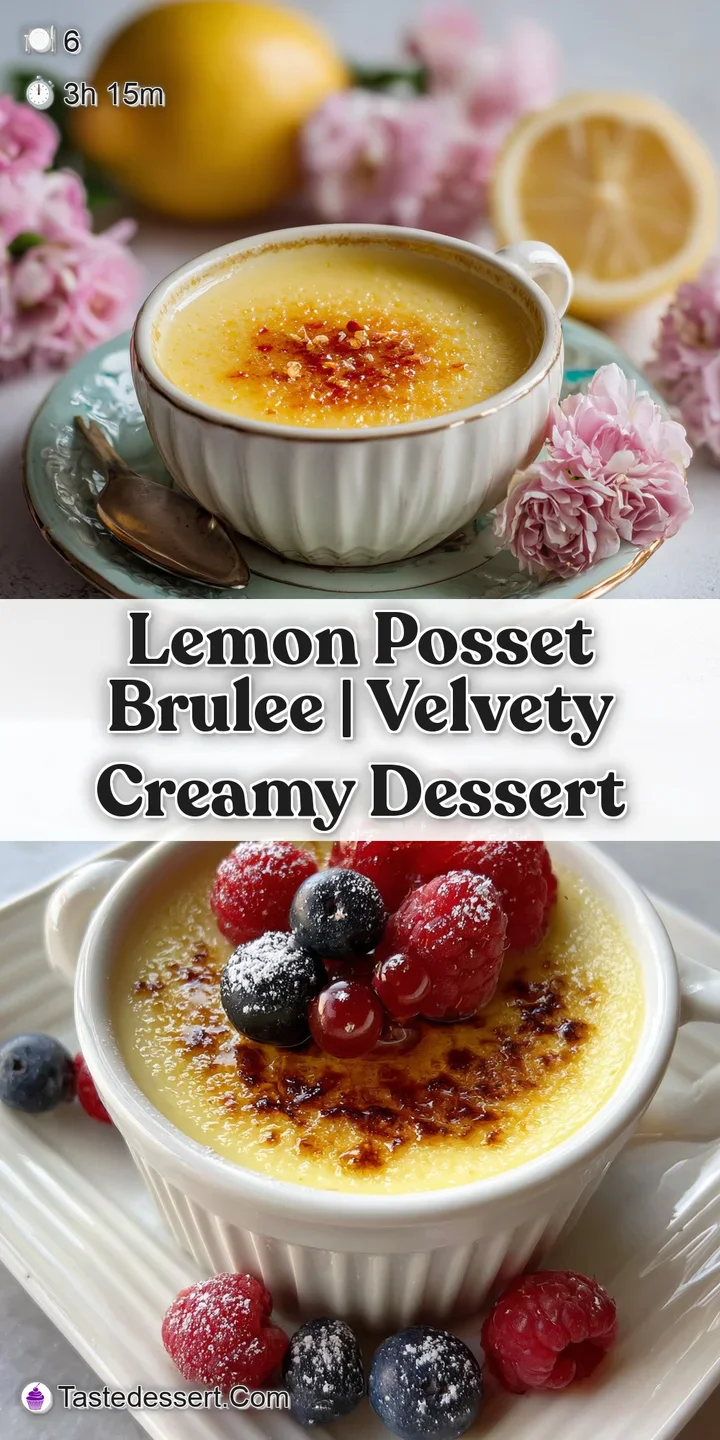
Recipe FAQs
What is the difference between crème brûlée and posset?
Crème brûlée is egg-based. Posset is a traditional British dessert that relies solely on the chemical reaction between hot cream and citrus acid to set, containing no eggs or gelatin.
What is lemon posset brulee?
It is a hybrid dessert. It combines the creamy, egg-free base of a lemon posset with the signature burnt sugar crust of a crème brûlée, torched just before serving for a textural contrast.
What is lemon posset?
It is a simple, rich, chilled custard. It is made by heating heavy cream and sugar, then adding fresh lemon juice which causes the cream to thicken into a silky, dense texture instantly.
What is lemon posset supposed to taste like?
It should taste intensely bright and creamy. The flavor profile balances the richness of high fat cream with a sharp, fresh lemon tartness, often rounded out with a hint of vanilla.
Is it true that I must use fresh lemon juice, or can I use bottled?
No, you must use fresh juice for best results. Bottled juice has inconsistent pH levels and lacks the aromatic oils from the fresh zest, resulting in a duller flavor and often a softer, unset posset.
How to achieve the perfect shatter on the sugar topping?
Sprinkle a thin, even layer of caster sugar. Use a kitchen blowtorch on high heat, moving constantly until the sugar bubbles and turns a deep amber color, then serve immediately to preserve the crunch.
If I chill the posset overnight, will the sugar top still work?
Yes, but only torch it right before serving. The base must be fully chilled before torching; if you torch it and then return it to the cold fridge, the moisture will melt the caramelized sugar within an hour.
Lemon Posset Brulee
Ingredients:
Instructions:
Nutrition Facts:
| Calories | 458 kcal |
|---|---|
| Protein | 2.1 g |
| Fat | 36.5 g |
| Carbs | 32.4 g |
| Fiber | 0.1 g |
| Sugar | 31.7 g |
| Sodium | 32 mg |
