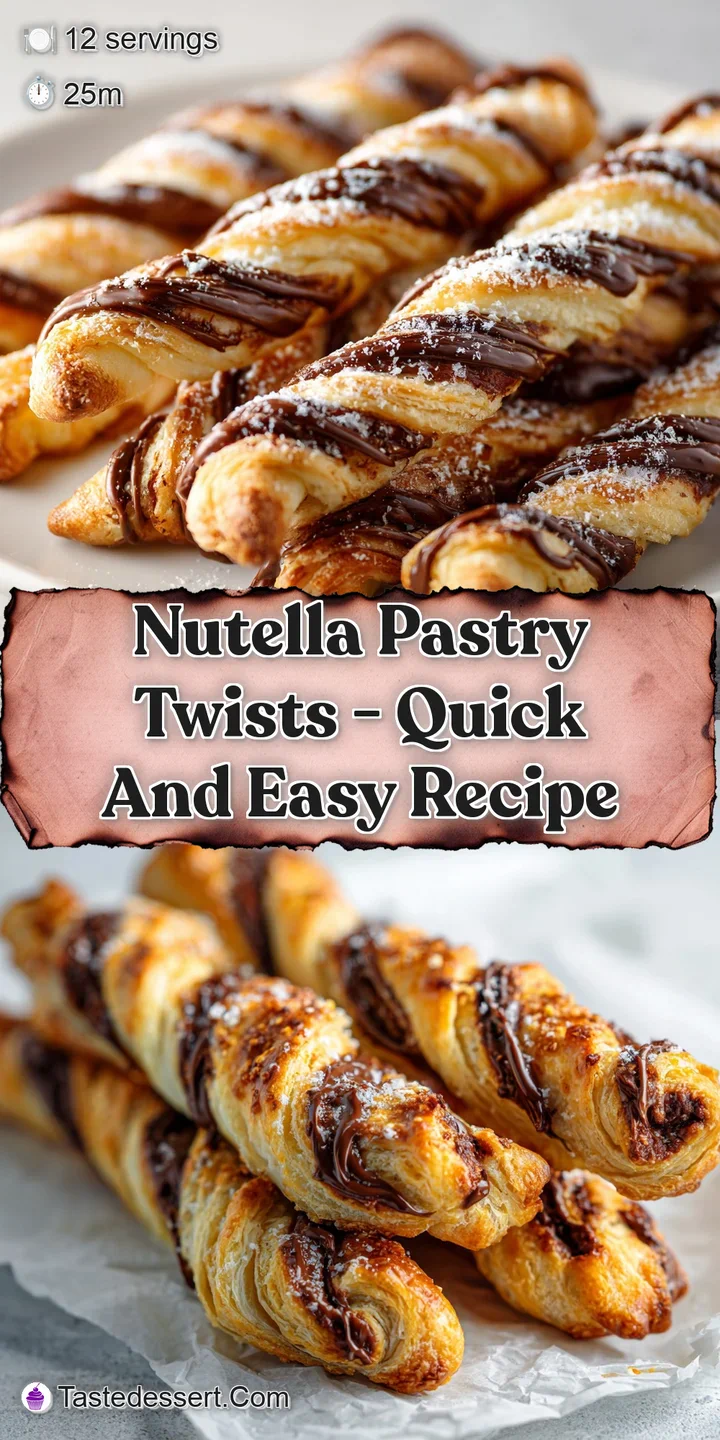
Nutella Pastry Twists
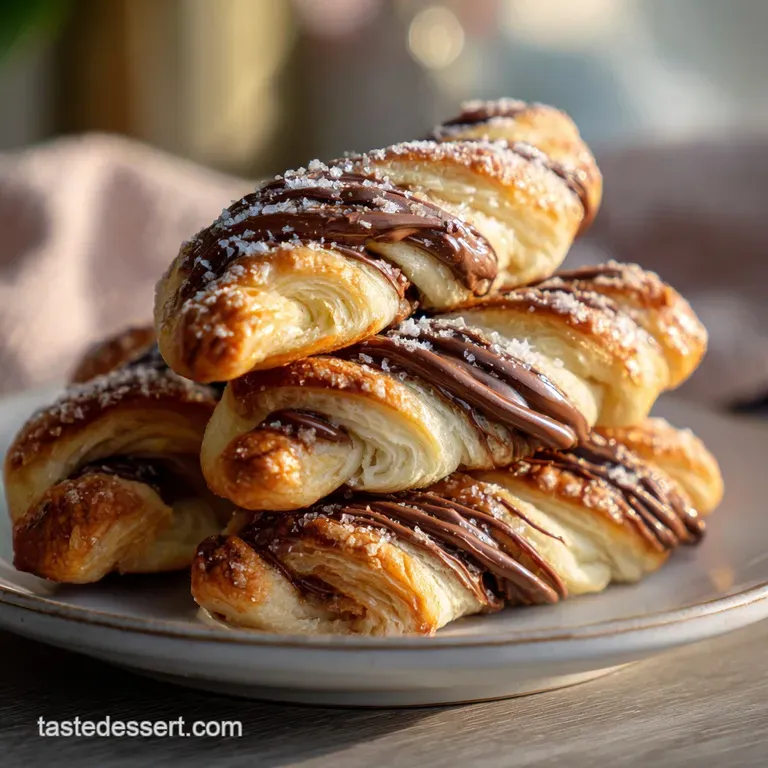
- Time: Active 10 minutes, Passive 15 minutes, Total 25 minutes
- Flavor/Texture Hook: Shatteringly crisp exterior with a velvety, warm hazelnut center.
- Perfect for: Last minute brunch guests or festive holiday snack trays.
- Bake These Flaky Nutella Pastry Twists
- The Physics of the Crunch
- Essential Batch Specifications
- Elements for the Perfect Bake
- Tools for Kitchen Success
- Steps to Golden Perfection
- Fixing Common Baking Blunders
- Plant Based and Allergy Variations
- Keeping Your Twists Fresh
- How to Serve Them
- Two Ways to Perfection
- Recipe FAQs
- 📝 Recipe Card
Bake These Flaky Nutella Pastry Twists
The first time I pulled a tray of these out of the oven, the sound was what hit me first. As they cooled on the wire rack, you could hear the tiny, microscopic crackles of the buttery layers settling. Then the smell reached me - that unmistakable aroma of toasted hazelnuts and dark cocoa melting into buttery pastry.
It’s the kind of scent that brings everyone into the kitchen before the timer even goes off.
I used to think I had to spend all morning laminating dough to get this kind of result. Honestly, I’ve made the mistake of trying to overcomplicate things when a simple, well executed shortcut works better.
These twists look like something you’d find in a glass case at a Parisian patisserie, but they’re actually my secret weapon for when I have zero time but want to impress someone.
You’ll find that the trick isn't in the ingredients themselves, but in how you handle the temperature. If you keep the dough cold and the oven hot, you get that dramatic rise that makes people ask for the recipe.
We're going to use a few smart techniques to make sure the Nutella stays inside the twist and not all over your baking sheet.
The Physics of the Crunch
- Lamination Expansion: The cold butter layers in the pastry create steam in the high heat of the oven, which physically pushes the flour layers apart to create height.
- Sugar Crystallization: Using Demerara sugar provides a larger crystal structure that doesn't melt immediately, ensuring a persistent crunch even after the pastry cools.
- Protein Coagulation: The egg wash acts as a structural glue on the surface, sealing the outer layer to prevent the interior steam from escaping too quickly.
Before we get into the nitty gritty of the components, you need to decide which cooking method fits your afternoon. While the oven is classic, the air fryer is a speed demon for smaller batches.
| Method | Time | Texture | Best For |
|---|---|---|---|
| Conventional Oven | 15 minutes | Even browning, maximum rise | Large batches/Parties |
| Air Fryer | 8 minutes | Extra crispy edges | Quick solo snacks |
| Convection Oven | 12 minutes | Very dry, flaky finish | Professional results |
Choosing the right approach depends on how many people you're feeding. If you're hosting a crowd, the oven's consistent heat is your best friend.
Essential Batch Specifications
To get that professional finish, we need to understand what each component brings to the table. It’s not just about flavor; it’s about how these elements interact under heat. This isn't just a simple assembly, it's a small scale engineering project where fat and sugar work together.
Component Analysis
| Ingredient | Science Role | Pro Secret |
|---|---|---|
| Puff Pastry | Structural Base | Keep it below 18°C to prevent the butter from melting into the flour. |
| Nutella | Fat Based Filling | Warm it for 10 seconds so it glides without tearing the delicate dough. |
| Egg Wash | Maillard Reactor | Adding a pinch of salt breaks down the egg proteins for a smoother glisten. |
I've learned that if your pastry gets too soft, the whole thing becomes a greasy mess. If you've mastered the Nutella Swirl recipe on this blog, you already know that managing the thickness of the chocolate is half the battle.
Elements for the Perfect Bake
Everything in this list serves a purpose. I don't believe in "filler" ingredients, so every gram here is doing heavy lifting for either texture or taste.
- Puff Pastry (490g): Use a high-quality butter based version for the best flavor. Why this? Provides the 1,000+ layers needed for that signature shatter.
- Nutella (150g): The classic hazelnut spread. Why this? Its specific oil to sugar ratio keeps it spreadable but stable in heat.
- Large Egg (50g): For the wash. Why this? Creates the golden brown color through the Maillard reaction.
- Water (1 tsp): To thin the egg.
- Demerara Sugar (12g): For the topping. Why this? Large crystals add a distinct, satisfying "snap" to every bite.
- Sea Salt (1 pinch): Just to balance the sugar.
| Original Ingredient | Substitute | Why It Works |
|---|---|---|
| Nutella (150g) | Cookie Butter (150g) | Similar viscosity. Note: Result will be much sweeter with a spiced profile. |
| Egg Wash | Heavy Cream | High fat content still aids browning but lacks the "glue" strength of egg. |
| Demerara Sugar | Granulated Sugar | Still sweet, but you lose the coarse, crunchy texture. |
Tools for Kitchen Success
You don't need a professional kitchen, but a few specific tools make this process significantly cleaner. A pizza cutter is my favorite hack here - it zips through the dough without dragging or tearing the layers.
Organize Your Kitchen
Make sure you have a large, flat surface. I prefer a marble slab or a cold countertop to keep the pastry chilled. You'll also need a pastry brush (silicone is fine, but natural bristles give a more even coat) and a baking sheet lined with parchment paper.
Trust me, do not try to bake these directly on the metal; the sugar in the Nutella will turn into permanent cement.
Much like the technique used in my Flaky Puff Pastry recipe, the goal is to work fast. If you feel the dough getting "floppy," throw the whole tray in the fridge for ten minutes. Your future self will thank you when those layers actually puff up instead of slumping.
Steps to Golden Perfection
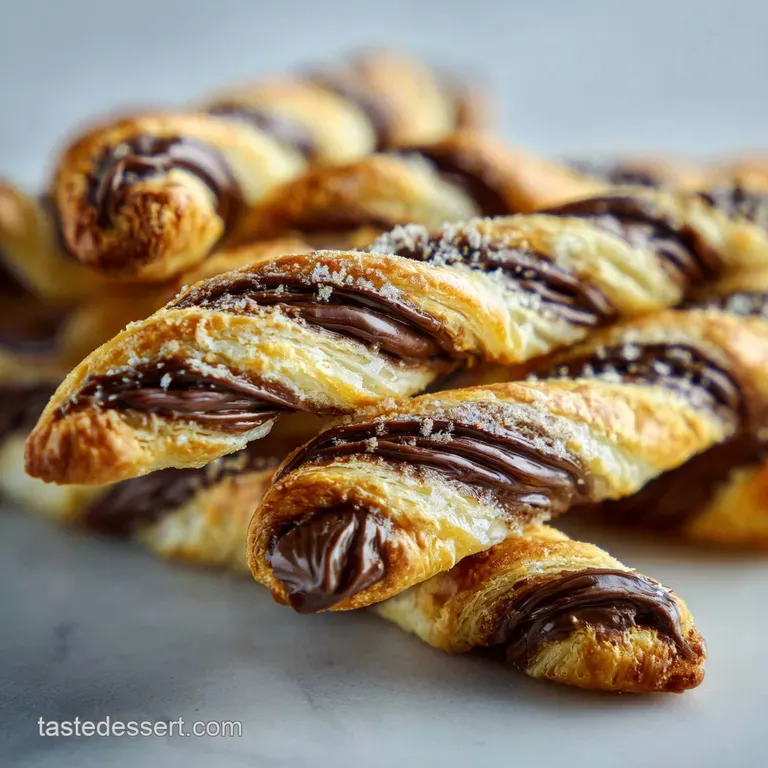
- Prep the Pastry: Lay out one cold sheet of puff pastry (245g) on a piece of parchment paper.
- Spread the Filling: Apply the warmed Nutella (150g) in an even, thin layer, leaving a 1cm border at the edges. Note: Too much filling will cause it to squirt out during the twisting phase.
- Cap the Layer: Place the second sheet of pastry directly on top of the Nutella, pressing the edges lightly to seal.
- Slice the Straws: Use a pizza cutter to slice the rectangle into 12 even strips. Each strip should be about 2cm wide.
- Execute the Twist: Hold both ends of a strip and twist in opposite directions three or four times. Hold the ends firmly so they don't unravel.
- Apply the Glaze: Whisk the egg and water, then brush a light coating over each twist. Ensure you hit the sides for even browning.
- Add the Crunch: Sprinkle the Demerara sugar and sea salt evenly over the top of the glazed twists.
- Bake for Height: Place in a preheated 200°C oven for 15 minutes until golden and crackling to the touch.
Fixing Common Baking Blunders
We've all been there - you open the oven and instead of beautiful spirals, you have a puddle of chocolate. Usually, it's a temperature issue.
Stop the Leakage
If your twists are leaking Nutella, the oven likely wasn't hot enough. When the heat is too low, the fat in the spread melts and runs before the pastry can rise and "trap" it. Always use an oven thermometer to verify your settings.
Fix the Soggy Center
A soggy middle happens when the pastry is underbaked or the Nutella layer was too thick. It might look done on the outside, but those inner layers need heat to dry out.
| Problem | Root Cause | Solution |
|---|---|---|
| Greasy texture | Dough was too warm before baking | Chill the formed twists for 15 minutes before putting them in the oven. |
| No "puff" | Pastry was rolled too thin | Don't use a rolling pin on store-bought sheets; just unfold them. |
| Burnt bottom | Dark baking sheet used | Use a light colored pan or double up on parchment paper. |
Common Mistakes Checklist
- ✓ Never work with room temperature pastry; it should be cold to the touch.
- ✓ Don't skip the egg wash - it's the difference between a dull crust and a professional sheen.
- ✓ Avoid over twisting; 3-4 turns are plenty to show the contrast without tearing the dough.
- ✓ Preheat your oven for at least 20 minutes before baking to ensure a blast of initial heat.
- ✓ Use a sharp blade for the strips; a dull knife will pinch the layers shut.
Plant Based and Allergy Variations
You can easily adapt this for different dietary needs without losing that incredible texture. Many store-bought puff pastries are actually "accidentally vegan" as they use vegetable fats instead of butter.
dairy-free Substitutions
Swap the Nutella for a dairy-free hazelnut cocoa spread (there are many high-quality options made with coconut or sunflower oil). For the egg wash, use a tablespoon of maple syrup mixed with a little soy milk. The sugar in the syrup helps with browning, though it will be slightly stickier than the egg version.
Festive Tree Shape
To make a Nutella Pastry Twists Christmas tree, don't cut the dough into strips. Instead, cut the stacked pastry into a large triangle. Cut "branches" into the sides, leaving the center intact, then twist each branch individually. It’s a stunning centerpiece for holiday brunches.
Keeping Your Twists Fresh
These are undoubtedly best when eaten within two hours of baking. That’s when the contrast between the hot, silky Nutella and the brittle pastry is at its peak. However, life happens, and you might have leftovers.
- Storage
- Store cooled twists in an airtight container at room temperature for up to 2 days. Don't put them in the fridge, as the moisture will turn the pastry into a rubbery mess.
- Freezing
- You can actually freeze these before baking. Flash freeze them on a tray, then toss them into a freezer bag. Bake directly from frozen, adding about 3-4 minutes to the total time.
- Zero Waste
- If you have scraps of dough or a little leftover Nutella, ball them up together and bake them as "chef's snacks." Or, crush up any stale twists and use them as a crunchy topping for vanilla bean ice cream.
How to Serve Them
While these are spectacular on their own, a little bit of styling goes a long way. I love serving them on a large wooden board with a bowl of fresh raspberries or sliced strawberries to cut through the richness of the chocolate.
If you're feeling extra, serve them alongside a small bowl of lightly sweetened whipped cream or a warm espresso. The bitterness of the coffee perfectly balances the sweet, nutty profile of the Nutella. If you're looking for more ways to use this dough, my Christmas Eve Appetizers recipe uses similar pastry techniques but with a savory sweet twist.
Two Ways to Perfection
Depending on the vibe of your event, you might want a classic look or something a bit more rustic.
- The Clean Spiral: Use a ruler to ensure every strip is exactly 2cm. This creates a uniform, high end look.
- The Rustic Loop: After twisting, join the two ends together to create a circular "Nutella crown."
- The Mini Bite: Cut your 12 strips in half horizontally to create 24 bite sized snacks, perfect for kids' parties.
Myth: Homemade Pastry is Better
Actually, for most home cooks, high-quality store-bought puff pastry is superior. Professional pastry is made in temperature controlled environments with industrial rollers that create more consistent layers than we can achieve by hand with a rolling pin. Don't feel guilty about the shortcut.
Myth: Nutella Needs to be Refrigerated
Never put your Nutella in the fridge. The oils will solidify, making it impossible to spread without destroying your delicate pastry. Keep it in a cool, dark pantry to maintain that velvety consistency.
Recipe FAQs
Can I use homemade puff pastry for Nutella twists?
No, not typically for this recipe. high-quality store-bought puff pastry is often superior for home cooks because it's made with industrial equipment that creates more consistent layers. Don't feel guilty about this shortcut!
How do I prevent Nutella from leaking out of the pastry?
Ensure your oven is fully preheated to 200°C. Low oven temperatures cause the Nutella's fats to melt and run before the pastry can rise and trap it. Using an oven thermometer can verify your settings.
What's the best way to store leftover Nutella pastry twists?
Store cooled twists in an airtight container at room temperature for up to 2 days. Refrigeration will make the pastry rubbery due to moisture. For longer storage, flash freeze them before baking and then bake directly from frozen.
Can I make these twists ahead of time?
Yes, you can freeze them before baking. Flash freeze the formed twists on a tray until solid, then transfer them to a freezer bag. Add about 3-4 minutes to the baking time when cooking from frozen.
How do I get that perfect flaky puff pastry texture?
Keep the pastry cold and work quickly. If the dough feels warm or "floppy," chill it in the fridge for ten minutes. This prevents the butter layers from melting into the flour, which is crucial for achieving that dramatic puff and shatter.
Can I substitute the Nutella with another spread?
Yes, cookie butter is a good substitute. It has a similar viscosity to Nutella, though the flavor profile will change to be sweeter and spiced. If you enjoyed mastering the spreadable chocolate technique here, see how similar principles apply in our Peanut Butter for Dessert Swirl Chocolate Lava Cakes.
How do I make a festive shaped Nutella pastry twist?
Cut the pastry into a large triangle for a Christmas tree shape. Then, make diagonal cuts along the sides to create "branches," leaving the center intact. Twist each branch individually for a stunning centerpiece.
Nutella Pastry Twists
Ingredients:
Instructions:
Nutrition Facts:
| Calories | 302 kcal |
|---|---|
| Protein | 4.2 g |
| Fat | 18.6 g |
| Carbs | 28.6 g |
| Fiber | 0.4 g |
| Sugar | 8.0 g |
| Sodium | 228 mg |
