Overnight French Toast Casserole Bake
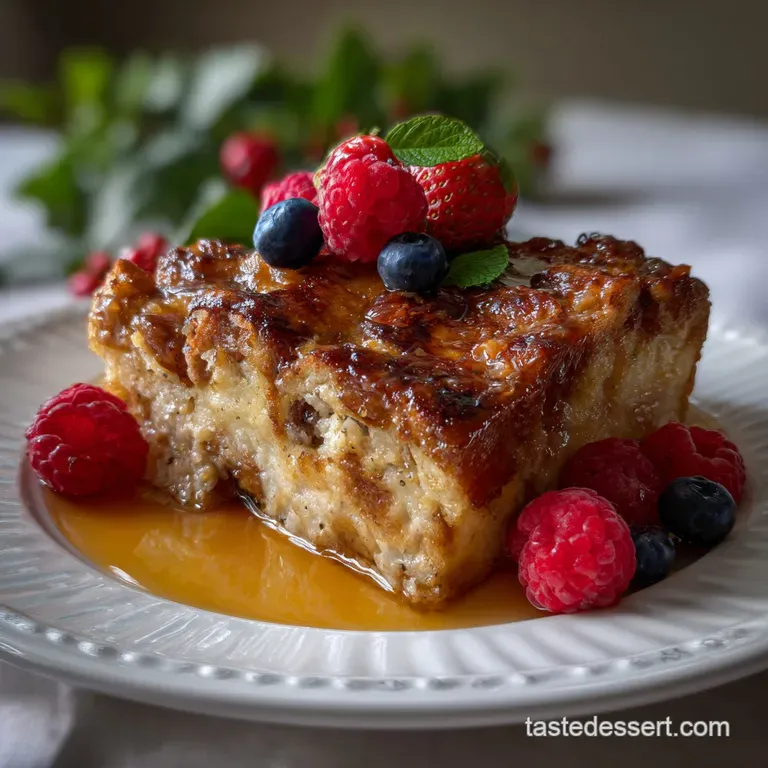
- Effort/Time: 20 minutes prep / 45 minutes bake
- Flavor Hook: Deep vanilla-nutmeg custard meets a buttery, light-brown sugar crumble.
- Perfect for: Stress-free holiday brunches or high-volume weekend celebrations featuring overnight french toast casserole.
- Mastering the Art of a Velvety Overnight French Toast Casserole
- The Culinary Physics of Bread Hydration and Custard Equilibrium
- Precision Metrics: Timing and Thermal Requirements for Baking
- The Alchemy of Sweetness: Curating the Perfect Brioche Base
- Essential Tools for Achieving a Shattering Crust Texture
- A Step-by-Step Architecture of Flavor and Texture
- Diagnosing Structural Failures and Soggy Foundations
- Creative Flourishes to Transform Your Breakfast Experience
- ⚗️ The Scaling Lab: Physics of Quantity
- Preserving the Delight: Moisture Retention Protocols
- Elevating the Morning Ritual with Flavor Contrast Maps
- Recipe FAQs
- 📝 Recipe Card
The nightmare of spending 40 dollars on premium brioche and organic eggs only to pull a soggy, grey, unappetizing sponge out of the oven is a technical failure that haunts many home cooks.
We’ve all been there: the edges are burnt to a crisp while the center remains a pool of uncoagulated liquid, leaving you with a breakfast that feels more like a mistake than a treat.
This textural disaster usually stems from an imbalance in the hydration ratio or a rushed soaking period that fails to penetrate the dense crumb of the bread when preparing an overnight french toast casserole.
I remember my first attempt at a make-ahead bake; I thought I could shortcut the process by using fresh, soft sandwich bread and skipping the heavy cream. I ended up with a tray of mush that lacked any structural integrity, effectively destroying three liters of custard and a dozen eggs.
It was a humble reminder that the physics of baking requires respect for the ingredients you cannot rush the molecular bond between starch and fat if you want that signature "custard snap" in your overnight french toast casserole.
The secret to success lies in starch gelatinization and the specific protein-to-fat ratio of the custard. By utilizing 8 large Eggs and a combination of 2 cups Whole milk and 1 cup Heavy cream, we create a stable emulsion that nests within the 1 lb Brioche bread cubes.
This overnight rest isn't just for convenience; it allows the bread's cellular structure to fully saturate, ensuring every bite of your overnight french toast casserole is mahogany gold on the outside and velvety smooth on the inside.
Mastering the Art of a Velvety Overnight French Toast Casserole
Overnight french toast casserole is a sophisticated evolution of the classic stovetop method, designed to feed a crowd while maximizing the depth of flavor through prolonged infusion.
Unlike traditional slices that are dipped and immediately seared, this method allows the 1 lb Brioche bread to act as a sponge, pulling the 2 tbsp Pure vanilla extract and 1 tsp Ground cinnamon deep into its crumb.
The result is a dish that carries the structural elegance of a bread pudding but maintains the bright, morning friendly profile of a classic French toast.
The joy of this transformation lies in the contrast. You have the rich, buttery brioche which is already an "enriched" dough soaking in an even richer custard. This creates a luxurious mouthfeel that is heightened by the 1/2 cup Light brown sugar crumble.
The art of the creation is in the assembly: we want the cubes to be distinct enough to catch the heat and create "shatter" points, while the bottom layers meld into a singular, decadent mass.
It is the ultimate expression of homemade delight, and mastering the overnight french toast casserole is deeply satisfying.
The Culinary Physics of Bread Hydration and Custard Equilibrium
This recipe succeeds because the 12 hour resting period allows for total starch hydration, while the heavy cream-to-egg ratio ensures a stable protein lattice that won't weep during the bake. Many find that the success of an overnight french toast casserole rests entirely on this hydration window.
- Starch Gelatinization: Overnight soaking allows the starch granules in the brioche to swell and absorb the custard, preventing a "dry core" and ensuring a uniform texture for the overnight french toast casserole.
- Protein Coagulation: The 8 large Eggs act as the structural "glue," setting at exactly 160°F (71°C) to turn liquid milk into a firm yet tender solid.
- Maillard Reaction: The 3/4 cup Granulated sugar reacts with the proteins in the dairy and eggs under heat, creating the complex, toasted flavor and mahogany color.
- Capillary Action: Cut 1 inch cubes create a high surface area-to-volume ratio, allowing the vanilla and nutmeg molecules to travel to the center of each piece of bread in this incredible overnight french toast casserole.
Precision Metrics: Timing and Thermal Requirements for Baking
The overnight french toast casserole requires a total time of 1 hour 5 minutes, excluding the mandatory 8 to-12 hour hydration window in the refrigerator.
| Metric | Value | Technical Importance |
|---|---|---|
| Prep Time | 20 minutes | Essential for cubing bread and emulsifying the custard. |
| Cook Time | 45 minutes | Required for the internal temperature to reach 160°F. |
| Total Time | 1 hour 5 minutes | The window needed to transform raw custard into a set bake. |
| Yield | 9 servings | Based on a standard 9x13-inch (23x33 cm) baking dish. |
| Oven Temp | 350°F (177°C) | The "Goldilocks" zone for browning without burning. |
The Alchemy of Sweetness: Curating the Perfect Brioche Base
Selecting high-quality elements is the first step toward breakfast mastery; using a buttery bread like Brioche is non-negotiable for achieving a professional grade crumb in your overnight french toast casserole.
- 1 lb Brioche bread (cut into 1 inch cubes): Why this? High fat and egg content in the dough prevents the bread from disintegrating.
- 8 large Eggs: Why this? Provides the necessary lecithin and protein for a stable, velvety custard set.
- 1 cup Heavy cream: Why this? The high butterfat content (36%+) yields a richer mouthfeel than milk alone.
- 2 cups Whole milk: Why this? Provides the volume and hydration needed to swell the starch granules.
- 2 tbsp Pure vanilla extract: Why this? Alcohol based flavor carrier that blooms under the oven's heat.
- 1/2 cup Light brown sugar, packed: Why this? Molasses content adds moisture and a deep caramel note to the topping.
- 1/2 cup Cold unsalted butter, cubed: Why this? Cold fat creates steam pockets in the flour, resulting in a crisp crumble.
- 1/2 cup All-purpose flour: Used in the topping to provide structure and prevent the sugar from simply melting into the bread.
- 1 tsp Ground cinnamon & 1/2 tsp Ground nutmeg: These spices provide the aromatic warmth that defines the classic flavor profile.
Ingredient Chemistry Breakdown
| Ingredient | Chemical/Physical Role (Science) | The Pro Secret (Why This Matters) |
|---|---|---|
| 8 Large Eggs | Protein denaturation and emulsification | Ensures the custard doesn't "leak" out of the bread after baking. |
| Heavy Cream | Fat-in-water emulsion for mouthfeel | Inhibits gluten development in the bread, keeping the texture tender. |
| Granulated Sugar | Hygroscopic moisture retention | Keeps the internal custard moist while promoting surface browning. |
| Kosher Salt | Osmotic pressure and flavor enhancement | Balances the sweetness and strengthens the egg protein bonds. |
If you love the ease of make-ahead mornings but want a different texture, you might also enjoy a classic Overnight Oats recipe which uses similar hydration principles for a chilled result. The ease of preparing overnight french toast casserole the night before sets you up for a successful morning.
Essential Tools for Achieving a Shattering Crust Texture
A standard Pyrex 9x13-inch Baking Dish is the industry standard for this recipe because its glass construction allows for even heat distribution and easy monitoring of the bottom browning.
You will also need a KitchenAid Stainless Steel Whisk to properly emulsify the 8 large Eggs into the 2 cups Whole milk failure to fully incorporate the whites will result in "fried egg" streaks in your casserole.
For the crumble, a Lodge Cast Iron Pastry Blender or a simple fork is necessary to cut the 1/2 cup Cold unsalted butter into the 1/2 cup All-purpose flour. The goal is to keep the butter in pea-sized chunks; if the fat melts during the prep, your topping will be greasy rather than crisp.
Finally, use a ThermoPro Digital Meat Thermometer to check the center of the bake. You are looking for a precision checkpoint of 160°F (71°C) to ensure the eggs are safe and the custard is set without being overcooked and rubbery when making your overnight french toast casserole.
A step-by-step Architecture of Flavor and Texture
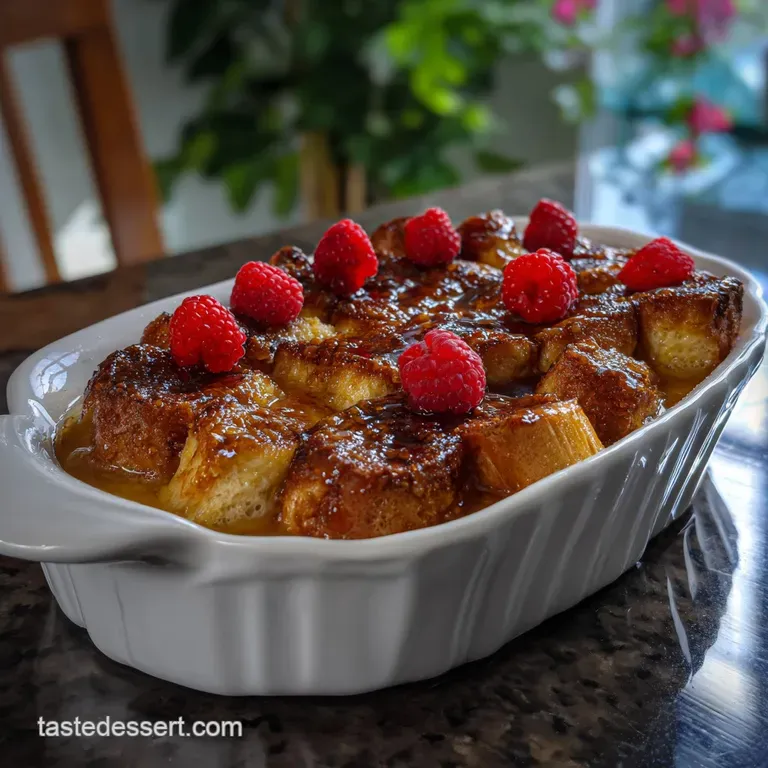
Follow these atomic steps with precision to ensure your french toast casserole achieves the perfect balance of crisp and tender. Achieving this balance is the primary goal when constructing an overnight french toast casserole.
- Grease a 9x13-inch baking dish with 1 tbsp Unsalted butter until the surface is slick and fully coated.Note: Prevents the egg proteins from bonding to the dish.
- Cube 1 lb Brioche bread into 1 inch pieces until you have a mountain of uniform, golden squares.Note: Uniformity ensures even hydration and cooking.
- Whisk 8 large Eggs in a large bowl until no streaks of white remain and the mixture is pale yellow.Note: Essential for a smooth, homogenous custard.
- Combine 2 cups Whole milk, 1 cup Heavy cream, 3/4 cup Granulated sugar, 2 tbsp Pure vanilla extract, 1 tsp Ground cinnamon, 1/2 tsp Ground nutmeg, and 1/2 tsp Kosher salt until the sugar is fully dissolved.Note: Dissolving sugar ensures even caramelization.
- Pour the custard mixture over the bread cubes in the dish until every piece is submerged or coated.
- Press down lightly with a spatula until the bread is compact and the liquid rises to the top layer.
- Refrigerate covered for 8 to 12 hours until the liquid has been almost entirely absorbed by the bread.Note: This is the critical hydration phase for a perfect overnight french toast casserole.
- Mix 1/2 cup All-purpose flour, 1/2 cup Light brown sugar, 1 tsp Ground cinnamon, and 1/4 tsp Salt in a small bowl until evenly blended.
- Cut in 1/2 cup Cold unsalted butter using a pastry cutter until the mixture resembles coarse, pea-sized crumbs.Note: These fat pockets create the "shatter" texture.
- Sprinkle the topping over the soaked bread and bake at 350°F (177°C) for 45 minutes until the top is mahogany brown and the center jiggles slightly but feels set.
Chef's Tip: Freeze your 1/2 cup Cold unsalted butter for 10 minutes before grating it into the flour mixture with a box grater. This creates ultra fine fat distribution for a more delicate, professional grade crumble on your overnight french toast casserole.
Diagnosing Structural Failures and Soggy Foundations
If your casserole is weeping liquid or has a rubbery texture, you are likely dealing with an issue of temperature or emulsion stability. The integrity of the final overnight french toast casserole depends on avoiding these pitfalls.
Why Your Casserole is Soggy
A soggy center is usually the result of incomplete starch hydration or underbaking. If the 1 lb Brioche bread wasn't stale enough, it can't absorb the 3 cups of liquid effectively. Plus,, if the internal temperature doesn't reach 160°F, the egg proteins won't coagulate, leaving the center "soupy."
| Problem | Root Cause | The Fix | Pro Protocol |
|---|---|---|---|
| Liquid at bottom | Bread was too fresh/soft | Use day-old bread or toast cubes at 300°F for 10 min | Aim for a "stale" feel before soaking |
| Top is burnt, middle raw | Oven temp too high | Tent with foil and lower heat to 325°F | Use a thermometer to verify oven calibration |
| Rubbery texture | Over whisking eggs | Whisk until just combined | Stop as soon as the yolk and white are one |
Addressing Uneven Browning
Uneven browning often stems from "hot spots" in your oven or an uneven distribution of the 1/2 cup Cold unsalted butter in the crumble. Ensure the topping is spread edge-to-edge; the sugar in the topping is what drives the Maillard reaction. For a truly decadent serving, top a warm slice of overnight french toast casserole with a scoop of Homemade Vanilla Bean recipe — the cold, velvety cream melting into the warm, spiced bread is the height of delight.
Creative Flourishes to Transform Your Breakfast Experience
While the classic version is a masterpiece of homemade joy, you can easily adapt the flavor map to suit your specific cravings or dietary needs. The base structure remains the same, whether you are making a simple or complicated overnight french toast casserole.
| Original Ingredient | Substitute | Why It Works |
|---|---|---|
| Whole Milk | Coconut Milk (Full fat) | Similar fat content but adds a nutty, tropical note. |
| Brioche | Challah Bread | Similarly enriched with eggs; maintains great structure. |
| Heavy Cream | Half and Half | Reduces total fat by ~50%; result is slightly less velvety. |
- Overnight French Toast with Cream Cheese: Dot the layers of bread with 4 oz of cubed cream cheese before pouring the custard. The cheese melts into "pockets" of bright, tangy contrast against the rich custard.
- Overnight Blueberry French Toast Casserole: Fold 1.5 cups of fresh blueberries into the bread cubes. The berries will burst during baking, releasing juices that create a beautiful purple swirl and a bright, acidic lift to the sweetness.
- dairy-free Adaptation: Substitute the milk and cream with barista blend oat milk and the butter with a high-quality vegan butter stick. Note: The "shatter" on the crumble will be slightly softer due to different fat melting points when using dairy substitutes in this overnight french toast casserole.
⚗️ The Scaling Lab: Physics of Quantity
When you decide to double this overnight french toast casserole for a larger crowd, standard math does not apply to the thermodynamics of the bake.
- The Evaporation Paradox: If you double the recipe in two separate 9x13 dishes, the cooking time remains roughly 45 minutes. However, if you use one massive, deep hotel pan, you must reduce the added milk by 10%. The increased volume and depth trap moisture, which can lead to a soggy center if the liquid isn't adjusted.
- Thermal Mass & Carry Over: A double batch in a single deep dish has significant thermal mass. It will continue to cook for 10 15 minutes after being pulled from the oven. Mandatory instruction: Pull the casserole when the center reaches 155°F; it will hit the safe 160°F on the counter.
- Pan Crowding (The Maillard Killer): Never overlap the dishes in the oven so that one blocks the airflow of the other. This drops the ambient temp below 300°F, causing the bread to "steam" rather than brown. Rotate the pans halfway through the 45 minutes bake.
Preserving the Delight: Moisture Retention Protocols
Overnight french toast casserole stores remarkably well in the fridge for up to 3 days when tightly wrapped in plastic or stored in an airtight container.
- Fridge: Store for 3 days. The texture will become denser as the starches continue to set.
- Freezing: You can freeze the baked casserole for up to 2 months. Slice it into individual portions first, wrap each in foil, and place them in a freezer bag.
- Reheating: Avoid the microwave if you want to preserve the "shatter." Reheat in a 350°F oven for 10 15 minutes. This re-activates the fats in the crumble, restoring the crispness.
- Zero Waste: Don't discard the crumbs at the bottom of your bread bag! Transform: Toss them into the 1/2 cup All-purpose flour for the topping. Science: These pre-dried bits add extra surface area for the butter to cling to, enhancing the crunch on your next batch of overnight french toast casserole.
Elevating the Morning Ritual with Flavor Contrast Maps
To truly experience the art of this dish, you must focus on the contrast between the rich, warm casserole and bright, acidic, or cool toppings. Serving a perfect overnight french toast casserole requires balancing elements.
- The Bright/Rich Contrast: Serve with a side of fresh raspberries or a squeeze of lemon juice over the top. The acidity cuts through the 31.7 g of fat per serving, cleansing the palate between bites.
- The Crisp/Tender Contrast: Ensure your crumble is thick. That "shatter" against the velvety center is what makes this a masterclass level dish.
- The Sweet/Salty Contrast: A final dusting of flaky sea salt (like Maldon) over the baked 1/2 cup Light brown sugar topping transforms the sweetness into something more complex and addictive.
Whether you are making this for a quiet Sunday or a loud holiday house, the transformation of simple bread, milk, and eggs into this golden treasure is a pure expression of culinary joy.
Trust the soak, mind the temperature, and enjoy the homemade masterpiece you've created with your overnight french toast casserole.
Recipe FAQs
how to make overnight french toast casserole?
Cube 1 lb brioche, soak overnight in a custard made of 8 eggs, 2 cups milk, and 1 cup heavy cream. Top with brown sugar crumble before baking at 350°F for 45 minutes.
how to make overnight french toast bake?
Use day-old, dense bread like brioche or challah. Stale bread absorbs liquid slowly and maintains structure during the 8-12 hour rest; fresh bread yields mush.
how long to cook overnight french toast casserole?
Bake at 350°F for 45 minutes. The internal temperature must hit 160°F to set the custard structure firmly. If using a deeper dish, extend the time by 10 minutes.
how to make baked french toast casserole?
Always cover the dish tightly before refrigeration. Covering prevents the custard surface from drying out and forming a skin that inhibits full liquid absorption. This moisture seal ensures deep flavor penetration.
how to make french toast casserole not soggy overnight?
Ensure bread cubes are sufficiently stale or toasted first. Starch gelatinization requires dry bread to fully absorb the custard mixture without collapsing during the final bake. If you enjoyed mastering the texture control here, see how the same principle of controlled hydration applies when preparing your French Cruller Doughnut Recipe: Light & Airy Perfection.
Is heavy cream essential for the custard?
Heavy cream delivers superior richness and texture. Cream provides a higher fat content (butterfat) than milk, which coats the egg proteins, resulting in a more tender, less rubbery final set.
Myth: I can use white sugar instead of brown sugar in the topping.
Myth: White sugar creates the same texture. Reality: Brown sugar contains molasses, which adds critical moisture and deep caramel flavor to the crumble. White sugar burns faster and results in a drier crust.
Overnight French Toast Casserole
Ingredients:
Instructions:
Nutrition Facts:
| Calories | 578 kcal |
|---|---|
| Protein | 13.1 g |
| Fat | 31.7 g |
| Carbs | 59.9 g |
| Fiber | 1.7 g |
| Sugar | 31.1 g |
| Sodium | 333 mg |
