Beef Bourguignon Slowcooked Magic for a Proper Sunday Best
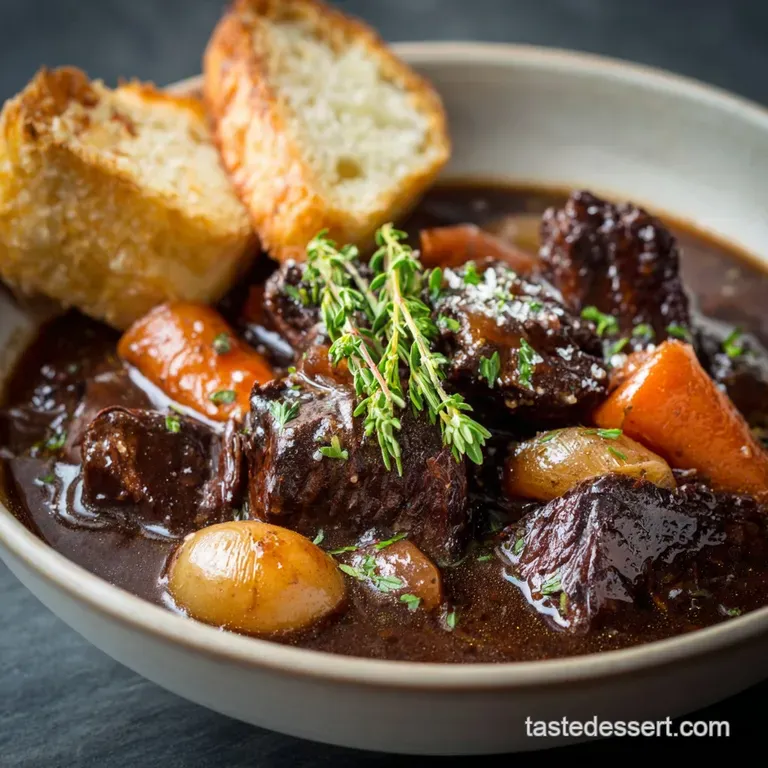
Why This Classic Beef Bourguignon Endures
Oh, mate. Beef Bourguignon. If I could choose one dish to eat every single Sunday from October to March, this would be it. Forget the complicated recipes you see on TV. This is the ultimate cold and weather champion, demanding nothing more from you than time and patience.
Seriously, a proper, glossy, rich Bourguignon is the culinary equivalent of sinking into a velvet armchair by a roaring fire. It’s deep. It’s soulful. It is not an easy Beef Bourguignon if you define "easy" as "fast," but it is absolutely simple to execute.
The beauty of the French Beef Stew lies in its transformation. You take humble, tough beef and turn it into something that melts on contact.
Tracing the Roots: Where Burgundy Meets the Bowl
This absolute bobby and dazzler of a dish hails from the Burgundy region of France (Bourgogne, naturally). That area isn't just known for great cheese and Dijon mustard; it’s famous for its Charolais cattle and, crucially, its Pinot Noir wine.
The tradition started as a peasant dish using tougher cuts of meat and whatever leftover wine was around to tenderise and braise them slowly over low heat. It’s resourceful, comforting, and fundamentally delicious. It’s an old recipe that has endured because it simply cannot be improved upon.
The Essential Difference: Stew vs. Bourguignon
Right, let’s clear this up quickly because you might be thinking, "But isn’t this just a fancy beef stew recipe?" Well, yes and no. A basic beef stew usually uses stock or water as the main liquid. A Bourguignon Recipe , however, insists on wine.
This isn’t a small distinction. It’s foundational. The acidity in the red wine breaks down the tough proteins and connective tissue in the beef better than stock ever could, resulting in that unbelievably tender texture.
Plus, as the wine reduces, its flavours deepen and become concentrated, leaving behind a complex, savory sauce that is miles beyond what a standard beef stew offers. You need that acidity. You need that wine.
The Pantry Checklist: Securing Your Bourguignon Components
Selecting the Best Cut of Beef for Ultimate Tenderness
Do not, I repeat, do not buy lean stewing beef. That’s for sad people. If you want meat that completely dissolves, you need a cut with plenty of marbling and connective tissue. Chuck roast is your champion here. Silverside also works a treat if you’re finding the right fat content.
I always cut my meat into proper, chunky 1.5 inch cubes. If the pieces are too small (a mistake I made when first attempting a simplified Slow Cooker Beef Bourguignon ), they’ll either disintegrate entirely, or they’ll dry out around the edges before the three and hour braise is finished.
Go big or go home.
Mastering the Wine Selection: Which Varietal is Required?
This is the rule: If you wouldn’t happily drink a glass of it, don’t pour it into your Bourguignon. The entire sauce is based on this wine, so anything cheap or poor quality will become concentrated and taste vinegary, and nobody wants that.
Pinot Noir from Burgundy is traditional, obviously, but really, any good, dry, robust red wine works. A Merlot or a decent Cabernet Sauvignon will do the job beautifully.
Crucial Note: You need a full 750ml bottle. Yes, that much. It feels extravagant, but that volume is necessary to build the correct sauce base. Don't skimp here.
The Aromatic Foundation: Lardons, Pearl Onions, and Mushrooms
We start with lardons (thick and cut smoked bacon). This isn’t just for flavor; we’re rendering the fat to cook everything else in. That smoky, meaty oil is flavor layer number one. Save the crispy lardons for the end.
And let’s talk about the finishing elements: the mushrooms and pearl onions. Do not dump these in at the beginning. If you cook them for three hours, they will turn into sad, squishy ghosts.
They go in right at the end (after being sautéed separately in butter) to ensure they retain their texture and distinct flavor. Honestly, though, who has time to peel a sack of pearl onions? I use the small bags of frozen ones every time.
It’s the best cheat in the kitchen, and it’s what Ina Garten would secretly do if the cameras were off.
Related Recipes Worth Trying
- CrockPot Recipes for Two Rich Tender Beef Ragu Dinner — CrockPot Recipes for Two are perfect for small households This rich slow cooker beef ragu delivers restaurantquality flavour with minimal effort making it...
- Air Fryer Roast Beef Joint with Perfect Garlic Herb Crust — Air Fryer Roast Beef delivers tender mediumrare results with an intense herb bark Get perfect air fryer roast beef cooking times for your roast beef joint...
- Proper Slow Cooker Beef Stew Recipe Rich Gravy Tender Meat — Unlock the secret to a truly outstanding Crockpot Beef Stew This easy slow cooker beef stew recipe gives you forktender meat and the richest gravy base
Building Flavour Depth: The Step and by-Step Method
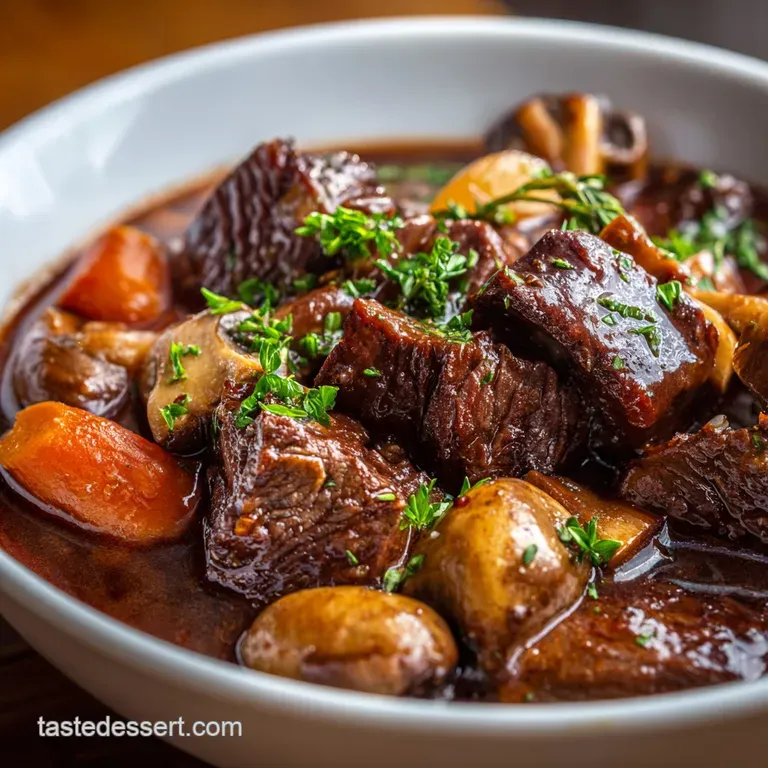
Overnight Strategy: Crafting the Red Wine Marinade
Some recipes, particularly the very classic Julia Child version, will have you marinate the beef in the wine and aromatics overnight. If you have the foresight and the time, absolutely do it. It slightly pre and tenderizes the meat and adds an extra day of flavour melding.
If you’re like me, though, and decided 30 minutes ago that tonight is the night, just make sure you pat your beef cubes fiercely dry before you move to the searing stage.
Searing the Beef: Achieving the Crucial Maillard Reaction
Listen, this step is non and negotiable. If you don't sear, you don't get flavour. The Maillard reaction that magical chemical change that creates a deep, savoury crust is the engine of this dish.
Get your pot screaming hot, add the bacon fat and a touch of oil, and sear the beef in small, single and layer batches. If you crowd the pot, the temperature drops, and the meat steams instead of browns. You need a proper crust on every side.
This takes patience, about 15 minutes total, but it is the key difference between a great Beef Bourguignon Recipe and an average one.
Deglazing the Pot: Capturing the Fond for Maximum Richness
Once the beef is set aside, your pot bottom should have a layer of sticky brown goodness that’s called the fond . Don’t scrape it out and discard it! This is concentrated flavour. Add a splash of the wine or stock, and use a wooden spoon to scrape up every last bit of that fond.
Stir it into the cooking onions and carrots. It melts and dissolves, enriching your entire sauce base dramatically. It’s pure savory depth.
The Low and Slow Transformative Simmer
After the wine has been added and allowed to simmer vigorously for about five minutes (to burn off that harsh alcohol smell), you add the stock and your bouquet garni. Then, you cover it tightly and place it into a very low oven (325°F or 160°C).
The oven heat is gentle and consistent, hitting the pot from all sides, which is why a heavy Dutch oven is essential. Don't rush it. Three hours is the minimum time needed for the collagen to break down into gelatin. That’s what makes the sauce glossy and the meat tender.
If you’re using a Beef Bourguignon Instant Pot adaptation, you cut the time, but you lose a bit of that slow, gentle melding that makes this classic so special.
Troubleshooting and Maximizing Your Beef Bourguignon
Achieving the Perfect Consistency (Too Thin? Too Thick?)
You’ve taken it out of the oven, and it smells heavenly, but the sauce is looking a little more watery than you’d hoped. Don't stress! You have options:
- If slightly thin: Remove the lid and let it simmer gently on the stovetop for 10 to 15 minutes, stirring occasionally. Reduction is usually enough.
- If still too thin: I use a beurre manié . It sounds complicated, but it’s just equal parts softened butter and flour kneaded together into a smooth paste. Whisk a tablespoon of this paste into the simmering stew. It melts and thickens the sauce beautifully without adding that chalky taste you sometimes get from just dumping flour straight in.
Storage and Reheating Tips for Leftovers
This is my secret: Make it a day ahead. I know, more patience. But trust me, Bourguignon is one of those dishes that improves profoundly overnight. Chilling it allows the flavours to fully meld. Plus, it makes fat removal dead easy.
You pull it out of the fridge, and you’ll see a thick layer of solidified orange and gold fat right on the surface. Scoop it off! That excess fat is now separate from the sauce, leaving you with a clean, rich, intensely flavourful sauce that is perfect. Reheat gently on the stove until warmed through.
It keeps happily for three days in the fridge.
Perfect Pairings: What to Serve Alongside Your French Classic
Ideal Starch Companions: Potatoes, Pasta, or Bread?
You must have something absorbent. The sauce is the star, and you need a vessel to ensure not a single drop is wasted. Mashed potatoes are the traditional favorite, and they work brilliantly (make them super creamy with lots of butter, please).
Alternatively, try serving the stew over wide egg noodles. They coat the sauce perfectly and give a lovely, luxurious texture. Or, if you’re keeping it truly French, grab a huge hunk of crusty baguette. Tear it, dip it, love it.
Wine Pairing Recommendations Beyond the Cooking Bottle
Since you’ve already invested in a good bottle for the sauce, why not drink something that complements it beautifully? Here’s a little table for inspiration:
| For Drinking | Why It Works |
|---|---|
| Good Pinot Noir (from the same region) | Mirrors the flavors in the sauce, providing a light, earthy acidity. |
| Beaujolais and Villages | A little lighter than Pinot, offering bright fruit that cuts through the beef’s richness. |
| A Dark, Dry Cider | If you prefer to skip wine, the crisp acidity and tannic bite of cider is a stunning complement. |
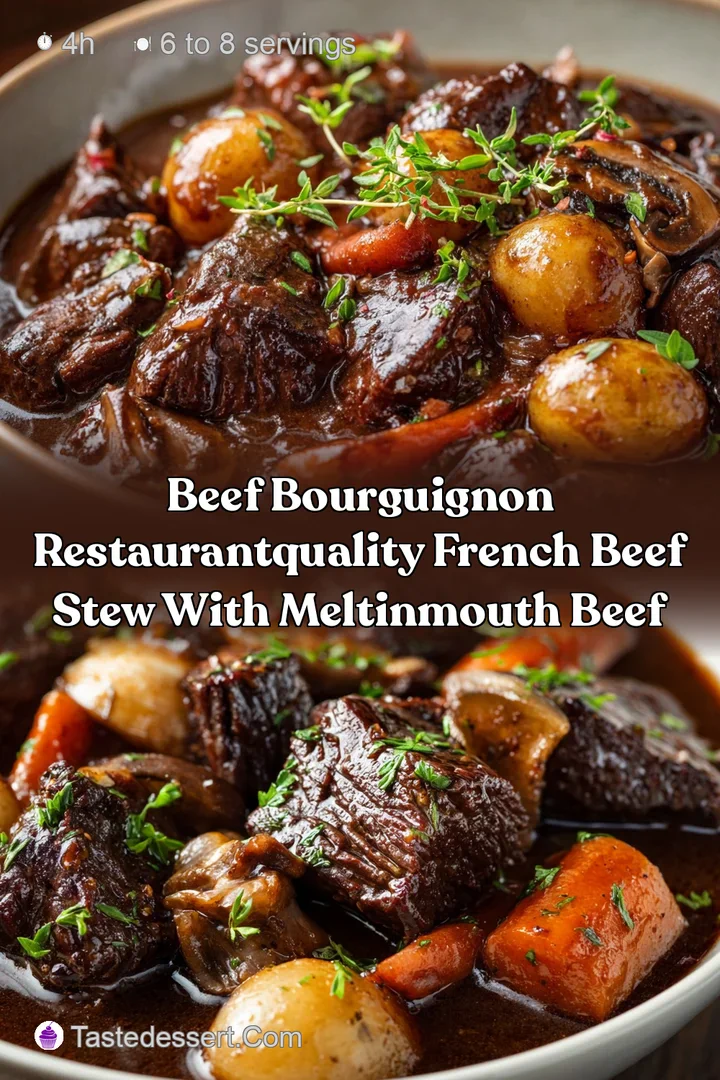
Recipe FAQs
Is the full four hour cooking time absolutely essential, or can I rush my Beef Bourguignon a bit?
I'm afraid patience is key here, old chap! The long, slow braise is necessary to break down the collagen in the tough chuck beef, yielding that glorious, melt-in-your mouth tenderness the dish is famous for. Skipping the time compromises the texture and deep, complex flavour profile we are aiming for.
What kind of wine should I use, and can I swap it out if I don't drink alcohol?
A dry, medium bodied Pinot Noir or Burgundy is the ticket; remember, if you wouldn't drink it, don't cook with it, as the wine forms the heart of the sauce! For an alcohol free alternative, a mix of rich mushroom stock and cranberry juice with a dash of balsamic vinegar works a treat.
Can I make this proper Sunday feast ahead of time, and how long will the leftovers last?
Absolutely, making it a day ahead is a top-tier chef's secret the flavours deepen beautifully overnight, and it’s much easier to skim off the excess fat once solidified. Keep the cooled stew in an airtight container in the fridge for 3 4 days, or freeze it successfully for up to 3 months.
I've cooked it for hours, but my sauce is a bit thin and watery; what's the quick fix?
No worries, that’s easily remedied! You can either simmer it uncovered on the hob for 10 15 minutes to allow the sauce to naturally reduce, or use a gluten-free cornflour slurry (cornflour mixed with cold water) whisked in at the end until the sauce is glossy.
This feels very rich how can I make my Bourguignon a little lighter on the waistline?
The richness is part of the magic, but you can certainly lighten the load! The easiest trick is chilling the stew overnight, which allows you to effortlessly spoon off the solidified excess rendered fat before reheating and serving.
Proper Slow Cooked Beef Bourguignon
Ingredients:
Instructions:
Nutrition Facts:
| Calories | 563 kcal |
|---|---|
| Protein | 54.0 g |
| Fat | 22.0 g |
| Carbs | 15.0 g |
