Structurally Sound Breakfast Casserole: No More Soggy Bottoms
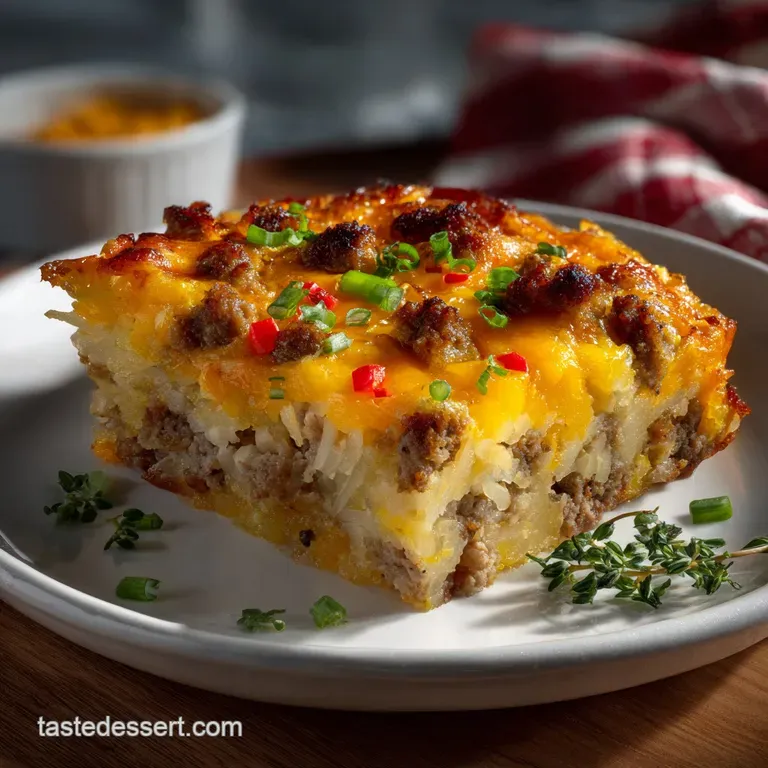
- Effort/Time: 1 hour 10 minutes of total thermal management for this breakfast casserole.
- Flavor Hook: Smoked-paprika-spiked pork sausage with a sharp cheddar finish in this amazing breakfast casserole.
- Perfect for: Low-stress holiday hosting or grab-and-go weekday fuel from your breakfast casserole.
- The Science of Structural Integrity in Your Breakfast Casserole
- Critical Dimensions and Thermal Logistics for Morning Success
- The Molecular Architecture of Savory Morning Elements
- Precision Hardware for Optimal Heat Distribution and Texture
- The Sequential Protocol for a Flawless Morning Bake
- Why Structural Integrity Fails and How to Fix It
- Modifying the Flavor Matrix Without Compromising Chemistry
- ⚗️ The Scaling Lab: The Physics of Quantity
- Preserving the Custard Network and Reclaiming Crisp Textures
- Enhancing the Flavor Profile with Strategic Side Pairings
- Common Myths
- Recipe FAQs
- 📝 Recipe Card
There is nothing more demoralizing than spending $40 on premium ingredients only to pull a gray, weeping, waterlogged mess out of the oven. I once served a crowd a dish where the eggs had curdled into rubbery pellets and the potatoes were a translucent, gritty mush.
It was an expensive, embarrassing nightmare that ended with everyone reaching for the cereal boxes while my hard work sat untouched in the sink.
I destroyed at least five test batches of this breakfast casserole before I respected the physics of moisture migration. I used to dump frozen hash browns straight into the pan, thinking the oven heat would handle the water.
Instead, that ice turned into steam, which trapped itself under the egg layer and prevented the Maillard reaction from ever occurring. I had to fail publicly to realize that great cooking isn't about the recipe; it’s about managing the battle between liquid and heat in a successful breakfast casserole.
The secret to a shattering, golden crust and a velvety interior is the science of starch gelatinization and protein denaturation. By thawing the potatoes and pre-searing the pork sausage, we remove the "thermal dampeners" that usually kill a breakfast casserole.
The result is a mahogany brown base and a custard that stays firm yet supple, providing a distinct snap and sizzle in every single bite of this breakfast casserole.
The Science of Structural Integrity in Your Breakfast Casserole
Understanding the molecular mechanics of this dish prevents the most common failures. When we bake eggs and starch together, we are essentially building a scaffold of proteins and carbohydrates that must support its own weight in a perfect breakfast casserole.
- Protein Denaturation Control: The 10 large eggs create a matrix that sets as heat unfolds their proteins, but adding whole milk cushions this process to prevent a rubbery texture in your breakfast casserole.
- Starch Retrogradation: Thawing the 20 oz frozen shredded hash browns allows the surface starches to dehydrate slightly before baking, ensuring they crisp rather than steam.
- Emulsification via Mustard: The 1 tsp dry mustard powder isn't just for flavor; it acts as a mild emulsifier, helping the fats from the 1 lb ground pork sausage integrate with the water based egg custard.
- Lipid Saturation: Using 2 cups sharp cheddar cheese provides the necessary fat to coat the potato strands, preventing them from absorbing excess moisture from the eggs in the final bake.
Critical Dimensions and Thermal Logistics for Morning Success
Before we light the burner, we must understand the "thermal mass" we are dealing with. A breakfast casserole is a dense object that requires even heat penetration to avoid a raw center and burnt edges.
- Preparation Phase: 20 minutes
- Thermal Processing: 50 minutes
- Total Runtime: 1 hour 10 minutes
- Yield Logistics: 8 servings (Standard 9x13 volume)
- Energy Density: 451 kcal per 1/8th slice
| Statistic | Value | Technical Impact |
|---|---|---|
| Protein | 27.2 g | High structural support and satiety |
| Fat | 27.4 g | Essential for flavor carry and "mouth coating" |
| Carbohydrates | 15.9 g | Primarily from potato starch and vegetable fiber |
| Fiber/Sugar | 1.8 g / 4.2 g | Minimal impact on glycemic load |
The Molecular Architecture of Savory Morning Elements
Selecting the right elements for your breakfast casserole determines whether the final texture is velvety or gritty. We prioritize high fat dairy and high pigment spices to ensure a deep, mahogany finish.
| Ingredient | Chemical/Physical Role (Science) | The Pro Secret (Why This Matters) |
|---|---|---|
| 1 lb Ground Pork Sausage | Maillard reaction and fat rendering | Provides the savory "umami" foundation and essential lipids. |
| 20 oz Shredded Hash Browns | Starch gelatinization for structure | Acts as the "rebar" in our protein concrete; must be thawed for this breakfast casserole. |
| 10 Large Eggs | Protein coagulation and binding | The primary structural adhesive that holds the matrix together. |
| 2 Cups Whole Milk | Fat-buffered hydration | Dilutes egg proteins to prevent a "rubbery" over set texture. |
- 1 lb Jimmy Dean Ground Pork Sausage: Why this? High fat-to-lean ratio ensures meat stays tender during the double cook process.
- 20 oz Frozen Shredded Hash Browns (Thawed): Why this? High surface area allows for maximum moisture evaporation and crisping.
- 1/2 cup Yellow Onion (Finely Diced): Adds sulfurous depth and moisture that softens into sweetness.
- 1 Bell Pepper (Diced): Provides Vitamin C and a bright, acidic counterpoint to the heavy fats.
- 1 tsp Dry Mustard Powder: Why this? Contains thioglycosides that cut through the richness of the 2 cups sharp cheddar cheese.
- 1 tsp Garlic Powder & 1/2 tsp Smoked Paprika: The paprika provides a "pseudo smoke" profile similar to wood fired cooking.
- 1/2 tsp Salt & 1/2 tsp Black Pepper: Essential for osmotic balance and flavor amplification.
- 2 cups Sharp Cheddar Cheese (Freshly Shredded): Why this? Freshly grated cheese lacks the cellulose anti caking agents that prevent a smooth melt.
- 1/4 cup Fresh Chives (Sliced): The final aromatic "hit" to brighten the heavy fats.
Precision Hardware for Optimal Heat Distribution and Texture
Using the right tools is the difference between a breakfast casserole that slides out cleanly and one that requires a chisel to clean.
- Lodge Cast Iron Skillet: Essential for the initial browning of the 1 lb ground pork sausage to maximize the Maillard reaction.
- Pyrex 9x13-inch Glass Baking Dish: Glass is an insulator; it heats up slowly but holds heat steady, which is ideal for egg-based custards.
- KitchenAid Balloon Whisk: High velocity aeration is needed to fully integrate the 10 large eggs and 2 cups whole milk into a homogenous fluid.
- Microplane Grater: For the 2 cups sharp cheddar cheese; a fine grate ensures the cheese melts into the custard rather than sitting on top.
- Rubber Spatula: To ensure no flavor rich "fond" is left behind in the skillet.
The Sequential Protocol for a Flawless Morning Bake
Follow these steps exactly to ensure the thermodynamics of your breakfast casserole remain stable.
- Thaw hash browns 1 hour until they are soft and no longer contain ice crystals.Note: Prevents water release during baking.
- Brown pork sausage in a Lodge skillet for 8 minutes until mahogany colored and no pink remains.Note: Creates umami through the Maillard reaction.
- Sauté onions and peppers in the rendered fat for 5 minutes until edges are translucent and the raw pungent smell vanishes.
- Grease the Pyrex dish with butter or non-stick spray until the surface is slick and glossy.
- Layer the hash browns in the bottom of the dish until they form an even, compressed 1 inch base.
- Distribute the sausage and vegetables over the potatoes until the surface is fully covered with savory elements.
- Whisk eggs and milk with the dry mustard, garlic powder, paprika, salt, and pepper until the mixture is pale yellow and perfectly smooth.
- Pour the custard slowly over the dry ingredients until the liquid reaches the top edge of the sausage layer.
- Top with cheddar cheese evenly until a thick, orange blanket covers the entire dish.
- Bake at 375°F for 50 minutes until the center jiggles slightly like gelatin and the edges are bubbling and golden brown.
- Rest the casserole for 10 minutes until the internal temperature stabilizes and the structure sets firm.
- Garnish with chives just before slicing until the heat of the dish releases the onion like aroma.
This savory bake pairs beautifully with my Thanksgiving Stuffing recipe if you're hosting a massive holiday brunch.
Why Structural Integrity Fails and How to Fix It
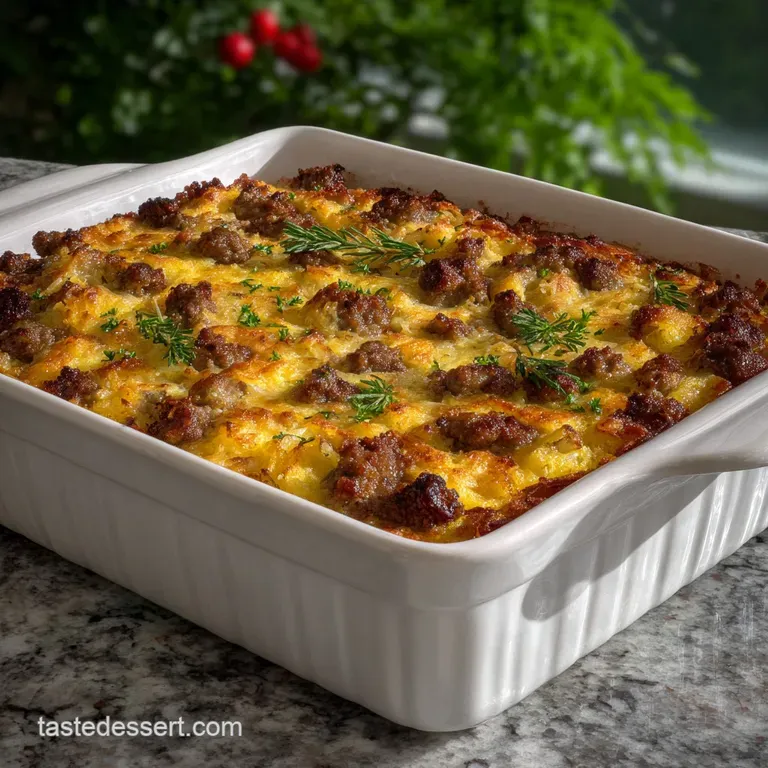
Why Your Breakfast Casserole is Watery
The most common cause of a watery breakfast casserole is "syneresis." This happens when egg proteins are cooked too fast or too long, causing them to tighten and squeeze out the liquid they were holding. It can also be caused by using frozen potatoes that haven't been properly drained.
| Problem | Root Cause | The Fix | Pro Protocol |
|---|---|---|---|
| Soggy Bottom | Excess moisture in frozen hash browns | Thaw and pat potatoes dry with a paper towel | Squeeze potatoes in a tea towel to remove 100% of surface water |
| Rubbery Eggs | Over coagulation / Over baking | Pull the dish when the center has a slight "jiggle" | Use a thermometer; pull at 160°F (71°C) internal temp |
| Broken Cheese | Pre-shredded cheese oils separating | Use freshly grated blocks of sharp cheddar | Add cheese in the last 15 minutes for a creamier melt |
Modifying the Flavor Matrix Without Compromising Chemistry
When swapping ingredients in a breakfast casserole, you must maintain the fat-to-protein ratio. If you use a leaner meat, you may need to add a tablespoon of butter to keep the potatoes from becoming dry.
| Original Ingredient | Substitute | Why It Works |
|---|---|---|
| Ground Pork Sausage | Ground Turkey Sausage | Similar texture but lower fat. Note: Add 1 tbsp oil to prevent dryness. |
| Whole Milk | Heavy Cream | Increases fat content for a richer, more velvety "French style" custard. |
| Sharp Cheddar | Pepper Jack | Same melting point but adds capsaicin for a spicy kick. |
| Hash Browns | Tater Tots | Same starch profile but higher density; adds more "crunch" to the base. |
If you're looking for a sweeter contrast to this savory dish, consider serving it alongside my Southern Sweet Potato recipe.
⚗️ The Scaling Lab: The Physics of Quantity
When you decide to double your breakfast casserole for a large crowd, the thermodynamics change significantly. You cannot simply double the time and temperature.
- The Square Cube Law: Doubling the volume of a casserole increases its depth. Heat takes longer to reach the geometric center. Protocol: Do not use a deeper dish; use two 9x13 dishes side-by-side to maintain the same surface area-to-volume ratio.
- Flavor Saturation: When doubling spices like 1 tsp dry mustard or 1/2 tsp smoked paprika, scale to 1.5x initially. Spices can become overpowering in large batches due to how they disperse in a larger fluid mass.
- Pan Crowding: If browning 2 lbs of pork sausage in one skillet, the temperature will drop, causing the meat to steam in its own juices. Protocol: Sauté meat in two separate batches to maintain a surface temp above 300°F for proper browning.
- Carry Over Heat: A larger mass retains more thermal energy. Pull the breakfast casserole5 minutes earlier than you think, as the internal temp will continue to climb more aggressively than a single batch.
Preserving the Custard Network and Reclaiming Crisp Textures
Storing a breakfast casserole requires preventing the starch from absorbing the fridge's humidity, which leads to "stale" potatoes.
- Fridge Storage: Place in an airtight container for up to 4 days. The eggs will slightly firm up as the protein structures tighten.
- Freezing: You can freeze the baked breakfast casserole for up to 3 months. Wrap individual slices in parchment paper, then foil, to prevent freezer burn.
- Reheating: Avoid the microwave if possible; it turns the eggs rubbery. Reheat in a 350°F oven for 15 minutes to recrisp the potato base.
💡 ZERO WASTE PHILOSOPHY: Don't discard onion and pepper scraps. Transform: Simmer them with the sausage fat and a bit of flour to create a savory morning gravy.
Science: The vegetable fibers release aromatic oils that flavor the fat-based roux, creating a complex sauce for the casserole slices.
Enhancing the Flavor Profile with Strategic Side Pairings
To balance the heavy lipids and dense proteins of a breakfast casserole with sausage, you need acidity and freshness.
- The "Coffee House" Pairing: Serve with a dark roast coffee. The tannins in the coffee help strip the fat from your palate, making every bite of cheese and sausage taste as fresh as the first.
- Acidic Balance: A side of sliced grapefruit or a sharp arugula salad with a lemon vinaigrette cuts through the 27.4 g of fat per serving.
- Texture Contrast: Fresh, crunchy fruit like apples or pears provides a "snap" that contrasts with the velvety custard.
Common Myths
Myth: You must let the casserole sit in the fridge overnight before baking. Truth: This is only true if using bread (like a strata). For a breakfast casserole with hash browns, an overnight soak actually makes the potatoes mushy as they absorb the egg moisture too deeply.
Bake immediately for the best texture.
Myth: Adding more eggs makes it "fluffier." Truth: More eggs actually make the dish denser and firmer. For "fluffiness," you need more air (whisking) or a higher ratio of milk-to-egg to soften the protein bonds.
Trust me, once you master the moisture management of those potatoes and the gentle set of the custard, you'll never go back to those soggy, sad versions again. Let's crack on with your next perfect breakfast casserole!

Recipe FAQs
How to make breakfast casserole?
Brown meat, sauté aromatics, whisk eggs/milk, layer with thawed potatoes, pour custard, top with cheese, and bake at 375°F for 50 minutes. This sequence ensures the meat browns properly and the starches hydrate before the final set. If you enjoyed controlling the texture here, see how the same principle applies to Healthy Breakfast Casserole: High Protein & make-ahead.
How to make breakfast casserole with biscuits?
Use pre-made, raw canned biscuits cut into quarters as the base layer instead of potatoes. Biscuits soak up moisture rapidly, so reduce the milk slightly to prevent sogginess. If you enjoyed mastering the technique of building a base layer here, look at how we adapt that structural knowledge in our slow cooker variation: Crock Pot Mexican Casserole: Low & Slow Fiesta.
How to make breakfast casserole with crescent rolls?
Yes, line the pan with raw crescent dough, overlapping slightly. Crescent dough contains higher fat content than biscuits, resulting in a flakier, less dense base layer that browns faster.
Ensure the dough base is lightly brushed with egg wash before adding fillings to promote uniform rise.
How to make breakfast casserole with potatoes?
Thaw frozen hash browns completely and pat them very dry before layering. Excess ice turns to steam, preventing the potato starch from crisping; pre-drying encourages the Maillard reaction on the surface. Temperature shock denatures casein proteins, creating grainy texture instead of
smooth emulsion.
- Remove pan from heat first
- Add cheese in small handfuls
- Use fresh grated Gruyère (pre-shredded has cellulose coating)
How to make breakfast casserole with bread?
Use cubed, stale bread and allow the mixture to soak for at least 2 hours before baking. Bread requires significant hydration time (like a strata) to soften the gluten structure before it sets firm in the oven.
Can I substitute bacon for sausage?
Yes, substitute bacon, but render the fat first and add 1 tbsp oil to the pan. Bacon yields less rendering fat than ground sausage, and you need enough fat to coat the potatoes and prevent a dry texture. If you enjoyed mastering this fat-to-starch balance, see how similar principles of flavor extraction apply when developing richness in How to Create Heartfelt Harmony: 5 Tips for a Cozy Casserole.
Is it better to use whole milk or 2% milk?
Whole milk creates a richer, velvety custard structure. Whole milk contains 3.5% fat, which buffers the egg proteins, preventing them from setting too tightly and becoming rubbery. Lower fat milk results in a thinner, more prone-to-weeping final product.
Sausage Hash Brown Casserole
Ingredients:
Instructions:
Nutrition Facts:
| Calories | 451 kcal |
|---|---|
| Protein | 27.2 g |
| Fat | 27.4 g |
| Carbs | 15.9 g |
| Fiber | 1.8 g |
| Sugar | 4.2 g |
| Sodium | 912 mg |
