Panseared King Scallops with Creamy Lemonparmesan Risotto
- Mastering the Trio: Why This Recipe is Your Ultimate Dinner Party Upgrade
- Elevating the Classic: Seared Scallops with Risotto and Spinach
- Essential Components for the Lemon-Parmesan Base
- Required Tools for High-Heat Pan-Seared Scallops
- Phase One: Building the Luxurious Risotto Foundation
- Phase Two: The Critical Sear and Final Plating
- Troubleshooting and Pro Tips for Your Scallop Risotto
- Recipe FAQs
- 📝 Recipe Card
Mastering the Trio: Why This Recipe is Your Ultimate Dinner Party Upgrade
There is a select category of Gourmet Dinner Recipes that effortlessly bridge the gap between restaurant quality and approachable home cooking. This recipe for Seared Scallops with Risotto and Spinach falls squarely into that category.
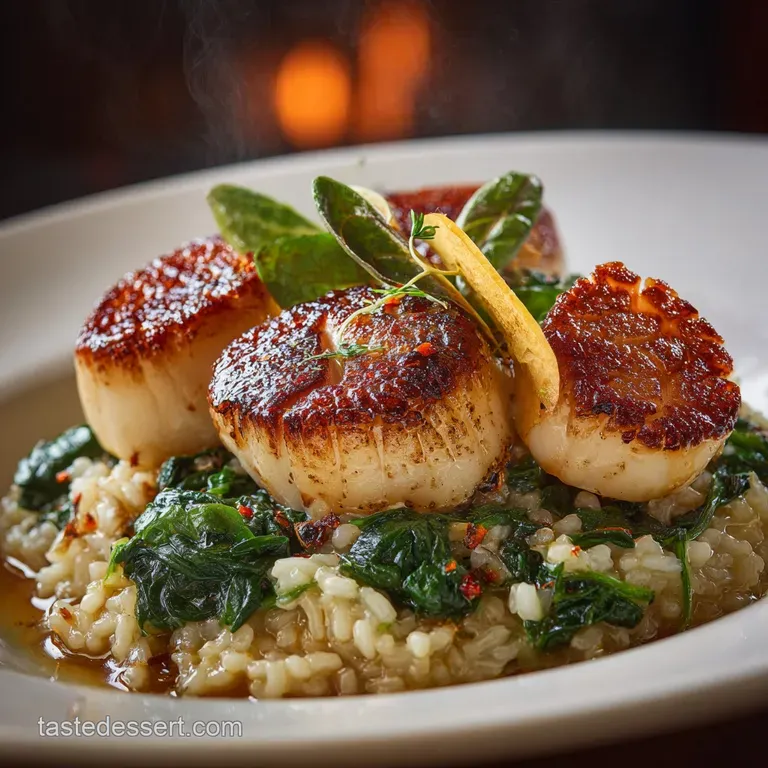
It is an exercise in focused timing and texture management, resulting in a dish that is deeply satisfying yet surprisingly light. The secret to its success lies in the perfect contrast: the exterior crunch of the Pan-Seared King Scallops set against the opulent, velvety texture of the Creamy Lemon Parmesan Risotto .
We’ve balanced this richness with the earthy simplicity of wilted spinach, creating a cohesive, elegant plate that always impresses guests. If you’re looking to elevate your repertoire of Seafood Dinner Recipes , this essential trio is where you start.
Elevating the Classic: Seared Scallops with Risotto and Spinach
While the preparation requires focused multitasking earning it a "medium" difficulty rating the steps are entirely logical. We dedicate about 25 minutes to building the luxurious risotto base, and only the final 10 minutes to the rapid, high heat sear of the scallops.
This detailed approach ensures that every component reaches peak flavour and perfect texture simultaneously, transforming simple Scallop Risotto Recipes into a truly masterful meal.
The Art of the Perfect Crust: Caramelizing King Scallops
The centerpiece of this dish, and arguably the most nerve wracking element for home cooks, is achieving the flawless caramelised crust on the scallop. This is where the magic of the Maillard reaction occurs, resulting in Seared Scallop Recipes that boast a deep golden brown exterior while the interior remains sweet and tender.
We use high smoke-point oil and a heavy gauge pan ideally cast iron heated until it’s smoking hot. By cooking the King Scallops undisturbed for precisely two minutes per side, followed by a quick butter and herb baste, we guarantee that impressive, professional grade crust in less than four minutes total.
Decoding Risotto: Achieving That Signature Creamy Texture
Authentic Italian risotto should never be stiff or gluey; it must achieve a flowing, wave like consistency known as all’onda . The key to this signature velvetiness lies not just in the constant stirring, but in the specific method of gradually introducing hot stock.
This process encourages the slow, even release of starch from the Arborio rice, creating a natural thickening without the need for additional cream. When paired with the bright zest of lemon and sharp Parmesan, the resulting Creamy Lemon Parmesan Risotto provides the ideal foundation for the richly seared seafood.
Balancing Richness: How Spinach Completes the Dish
Given the inherent richness of the butter laden risotto and the high fat searing process for the scallops, the incorporation of fresh spinach is crucial for both aesthetic appeal and flavour balance. We use 5 ounces of fresh spinach, wilted briefly in a separate pan.
This quick cooking method maintains its vibrant green colour and introduces a much needed earthy, slightly bitter counterpoint to the decadent cheese and sweet scallops, ensuring the plate feels fresh and complete.
From Frozen to Flawless: Prepping Your Scallops Correctly
The success of any Scallop Recipes hinges entirely on the preparation stage. Whether you purchased fresh or previously frozen scallops, moisture is the enemy of a good sear.
This is the single most important step: the King Scallops must be aggressively patted dry using multiple layers of paper towels or a clean kitchen towel. Any residual water will cause the scallops to steam and grey rather than sear and brown.
On top of that,, ensure you locate and gently remove the small, tough side muscle a bit of effort that prevents the finished dish from having an undesirable rubbery texture.
Essential Components for the Lemon Parmesan Base
The core flavour profile of our creamy base relies on specific ratios of aromatics, acid, and dairy. For the initial sauté, we start with 2 tablespoons of unsalted butter used to sweat one finely diced shallot and two cloves of minced garlic.
The heartiness of the risotto requires 1 ½ cups of quality Arborio rice. Flavour is built by deglazing with ½ cup of dry white wine (a Pinot Grigio or Sauvignon Blanc works best), providing essential acidity.
The final flourish of flavour and texture comes from ½ cup of freshly grated Parmesan and a teaspoon of finely grated lemon zest.
Related Recipes Worth Trying
- The Grand Summer Salad Platter Mezze Feast for FussFree Entertaining — Elevate your party spread with this stunning Salad Platter It features a vibrant quinoa base and bright lemonherb dressing Perfect for healthy appetizers...
- Flavourful Grilled Chicken Kabobs with Yogurt Cucumber Sauce — Achieve juicy Grilled Chicken Kabobs with Yogurt Cucumber Sauce using our lemon marinade secret These Mediterranean Chicken Skewers are foolproof and served...
- Proper Flaky Blueberry Scones Recipe with Zingy Lemon Glaze — Achieve perfect lightasair Blueberry Scones using our frozen butter technique This easy scones recipe yields tender insides and a bright lemon glaze finish
Required Tools for High Heat Pan-Seared Scallops
While most of the tools needed are standard kitchen fare, success with this recipe absolutely mandates the right cookware for the searing stage. For the risotto, a heavy bottomed saucepan or Dutch oven is required to ensure even heat distribution and prevent sticking during the long stirring process.
For the scallops, however, a cast iron skillet or heavy gauge stainless steel pan is essential. These materials retain the high heat needed to create the instantaneous, deep golden crust we seek, a step that cannot be properly executed in a thin pan.
Quality Check: Selecting Arborio Rice vs. Carnaroli
The selection of rice is non-negotiable in achieving the authentic all’onda texture characteristic of all excellent Risotto Recipes . Arborio rice is widely available and performs wonderfully due to its high starch content.
However, if you are seeking a slightly finer texture and superior resistance to overcooking, consider Carnaroli. Both varieties are high in amylopectin, the starch responsible for the desirable creamy quality, but avoid substituting with standard long grain rice, which will lack the necessary starch and result in a dry, separated dish.
A Note on Broth: Using Homemade vs. store-bought Stock
For the necessary liquid volume, we utilize 4 cups (950 ml) of stock either chicken or vegetable. Whether you opt for homemade or high-quality store-bought stock, one critical factor remains: it must be low sodium.
As the stock reduces into the rice over 20 minutes, the sodium concentrates heavily, and combined with the salt naturally present in the Parmesan, a high sodium stock can easily ruin the final seasoning.
Equally important is maintaining the stock at a gentle simmer in a separate small saucepan; cold stock will shock the hot rice and stall the cooking process.
Dairy & Wine: The Key Flavour Anchors
The complexity of the flavour profile relies heavily on the quality and timing of the dairy and wine additions. The dry white wine serves two immediate purposes: deglazing the aromatics, and providing a necessary acidic depth that cuts through the starch.
For the finish, known as mantecare , we rely on cold, cubed unsalted butter (4 tablespoons) and freshly grated Parmesan cheese. Using cold butter is vital as it quickly emulsifies into the hot rice off the heat, resulting in a rich, glossy sheen rather than a greasy finish.
Mise en Place Checklist: Setting Up for Success
Given the time sensitive nature of the Scallop Risotto Recipes —especially the need for continuous stirring setting up your mise en place (everything in its place) is key.
Before turning on the stove, ensure the shallots are finely diced, the garlic is minced, the Parmesan is grated, the lemon is zested, and most importantly, the stock is steaming hot.
Finally,, have the 12 large King Scallops thoroughly patted dry and lightly seasoned, ready to be placed directly into the screaming hot pan when their time comes.
Phase One: Building the Luxurious Risotto Foundation
The initial phase of cooking the risotto takes approximately 25 minutes and sets the stage for the entire dish. Start by sautéing the shallots in the initial 2 tablespoons of butter until they are completely translucent, then add the garlic just until fragrant about 60 seconds to prevent burning.
Once the aromatics are softened, you are ready to introduce the rice and begin building the core texture.
Phase Two: The Critical Sear and Final Plating
As the risotto nears its al dente stage (around the 20-minute mark), your focus shifts entirely to the high heat searing of the scallops and the final incorporation of the finishing elements.
Sweating the Aromatics and Toasting the Rice (Tostatura)
Once the shallots and garlic are softened, the 1 ½ cups of Arborio rice are added to the pan for the crucial tostatura stage. This process involves toasting the grains in the hot butter for about two minutes, stirring constantly until they are translucent around the edges.
This locks the starch into the grain, ensuring it releases slowly and evenly, preventing the mushy texture that plagues lesser Risotto Recipes . Following the toast, the dry white wine is added to deglaze and fully absorbed until the sharp alcohol scent has completely dissipated.
The Gradual Addition Technique for Maximum Creaminess
This is the phase requiring patience. Ladle in the hot stock, one cup at a time, stirring continuously until the liquid is almost fully absorbed. It is the friction created by this constant stirring, combined with the hot liquid, that encourages the slow release of starch.
This technique is non-negotiable for achieving that classic all'onda flow, taking 18 to 22 minutes to fully absorb the 4 cups of stock while seasoning throughout.
Achieving the Al Dente Bite and the Mantecare Finish
You know the risotto is ready when the grains are tender, yet still possess a tiny, pleasant firmness at the very center the signature al dente bite. Immediately remove the pan from the heat. Now comes the mantecare , or finishing technique.
Vigorously stir in the cold, cubed butter and the grated Parmesan for two minutes. The cold temperature helps the butter emulsify, lending an incredible glossy finish and binding the mixture beautifully before you stir in the fragrant lemon zest.
The High Heat Method for a Deep Golden Crust
While the finished risotto rests under a cover for three minutes, it’s time to cook the Pan-Seared King Scallops . Heat your cast iron skillet over screaming high heat until it just begins to smoke.
Add the high smoke-point oil and place the prepared, seasoned scallops down, ensuring ample space between each one to prevent temperature drop. Cook undisturbed for two minutes. After flipping, add the 2 tablespoons of butter and herb sprigs (thyme or rosemary).
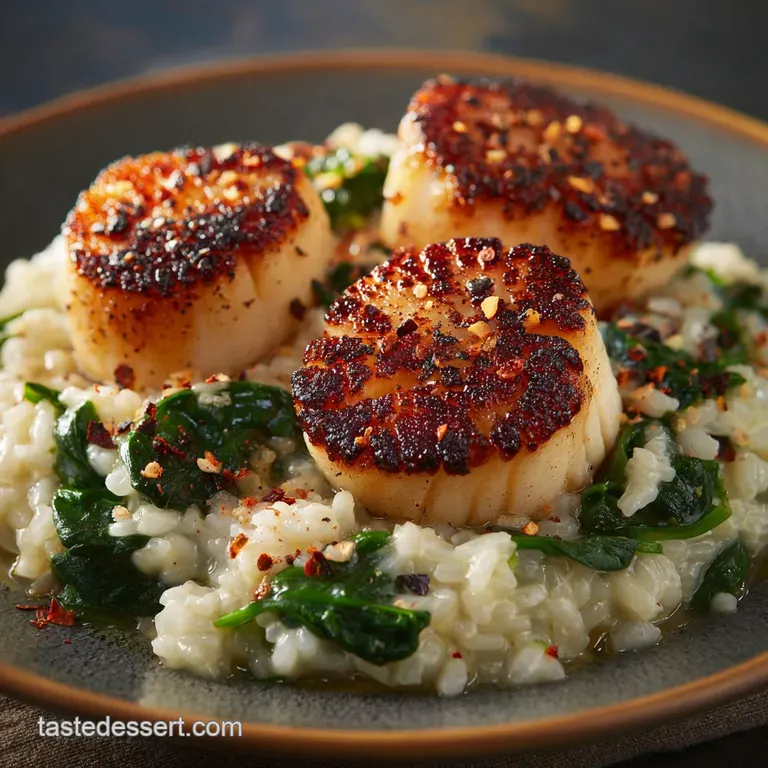
Tilt the pan and continuously spoon the foaming, herb infused butter over the scallops for 60 to 90 seconds until they are opaque a total cook time of 3.5 to 4 minutes.
Integrating the Wilted Spinach into the Creamy Risotto
While the scallops sear, quickly wilt the 5 ounces of spinach. This should be done in a separate small pan with a drizzle of oil or butter, requiring just one to two minutes until the spinach is softened but still bright green.
For presentation, we typically keep the spinach separate from the risotto, placing a small mound of the wilted leaves on the side of the plate to provide a clean visual and textural break.
Presentation Perfected: Artfully Serving the Seared Scallops with Risotto and Spinach
Speed is critical now, as risotto should never be served cold. Spoon the velvety Creamy Lemon Parmesan Risotto immediately onto warm serving plates. Arrange three of the perfectly Seared Scallop Recipes elegantly atop the risotto, showing off their deep golden crusts.
Place the mound of wilted spinach nearby. For extra decadence, finish the plate with a drizzle of the fragrant herb butter used for basting. Serve this stunning dish at once.
Troubleshooting and Pro Tips for Your Scallop Risotto
Achieving restaurant quality Seared Scallops with Risotto and Spinach is completely within reach, provided you adhere to three fundamental rules of execution. First, remember that drying the scallops is non-negotiable; any lingering moisture guarantees steaming instead of searing.
Second, always maintain your chicken or vegetable stock at a gentle, steaming heat, as cold liquid will disrupt the cooking process and ruin the starch release.
Dealing with "Gummy" Risotto: Too Much Stirring or Not Enough?
If your final risotto texture is gummy rather than all’onda , it’s often due to two issues: either you added too much stock too quickly, overwhelming the grains, or the heat was too high, cooking the rice rapidly but unevenly.
Risotto demands moderate, steady heat and continuous, gentle stirring to ensure the starch releases consistently and creates that beautiful, unified creaminess.
Temperature Control: Why Butter Must Be Cold for the Mantecare
The Risotto Recipes finishing step ( mantecare ) is often misunderstood. The final 4 tablespoons of butter must be cubed and kept cold. Adding cold fat to the hot rice pan (removed from the heat) ensures the butter melts rapidly but cools the overall mixture, emulsifying the fat and the starch perfectly.
This creates the signature luxurious, glossy mouthfeel. If the butter is warm or melted, the result is often a separated, slightly greasy consistency.
Swapping Proteins: Shrimp or Halibut Alternatives
While the flavor profile is perfectly tailored for Scallop Recipes , this base works beautifully with other delicate seafood. If scallops are unavailable, you can substitute them with large peeled prawns (shrimp) or firm white fish fillets like cod or halibut.
Prawns cook even faster than scallops, requiring only 90 seconds per side. Halibut needs slightly more time but benefits from the same high heat sear and butter baste technique.
Making it dairy-free: Alternatives to Parmesan and Butter
Adapting this dish for dairy sensitivities means rethinking the crucial mantecare stage. To maintain creaminess without compromising the structure of the Scallop Risotto Recipes , swap the butter for high-quality, full bodied olive oil.
Instead of Parmesan, incorporate nutritional yeast toward the end of the cooking process, adding a nutty, savory depth without the dairy. The lemon zest remains essential to provide brightness and mimic the sharpness of the cheese.
Nutritional Breakdown of Seared Scallops with Risotto and Spinach
For those tracking intake, this impressive dish is nutrient dense. Estimated per serving (based on four generous portions of Seared Scallops with Risotto and Spinach ), the caloric count ranges from 650 to 700 kcal.
It provides an excellent protein source, with approximately 45g due to the King Scallops and Parmesan. The fat content is higher, ranging from 35 40g (largely from the substantial butter and cheese used), and carbohydrates come in at 45 50g from the Arborio rice base.
Recipe FAQs
My scallops always come out pale and rubbery. How do I get that brilliant, crunchy golden crust?
It’s all down to moisture, mate! Before seasoning, you must pat those scallops aggressively dry think bone dry using layers of kitchen roll. Any residual moisture will cause them to steam instead of sear.
Use a smoking hot cast iron pan (seriously high heat), add high smoke point oil, and resist the urge to move them for the first two minutes; patience is key to developing that perfect Maillard reaction.
This seems like a lot to manage. What’s the best way to time the Seared Scallops with Risotto and Spinach so everything is hot at once?
The risotto is the diva here, demanding constant attention. Aim to start the searing process when the risotto is about 90% cooked just before you remove it from the heat for the crucial mantecare (final finishing) step.
Once the risotto is covered and resting for those final three minutes, crank up the heat for the scallops. This ensures your lovely scallops are fresh, piping hot, and beautifully caramelised just as the risotto is ready to plate.
I struggle to get that ‘wavy’ (all’onda) creamy risotto texture. What’s the secret to keeping it from becoming sticky?
The magic phrase is mantecare. Once your rice is cooked al dente and taken off the heat, stir in the cold, cubed butter and Parmesan vigorously. Adding the fat cold helps it emulsify beautifully with the starch, giving that desired glossy, flowing (all’onda) texture.
Crucially, always keep your stock simmering hot throughout the process; adding cold liquid kills the creamy momentum and results in a sticky mess.
Can I make the risotto base vegetarian, or swap out the wine for something non-alcoholic?
Absolutely, you can make this suitable for vegetarians by swapping the chicken stock for a good quality vegetable stock, and ensuring your Parmesan uses microbial rennet. If you are ditching the booze, simply deglaze the rice with a tablespoon of high-quality white wine vinegar or lemon juice instead of the wine, then proceed immediately with the hot stock.
The acidity provides a lovely balance without the alcohol.
Is it safe to reheat leftover seafood and risotto? What's the best way to store this dish?
While technically safe, leftover risotto and scallops are not ideal, frankly. The rice loses its creamy, wavy structure, and the scallops can become tough when reheated. If you must store it, refrigerate the components quickly in an airtight container for up to 2 days.
To reheat the risotto, warm gently in a pan with a splash of extra stock or water to revive the texture, but accept that those beautifully seared scallops won't be quite the same.
Scallop Risotto With Lemon Spinach
Ingredients:
Instructions:
Nutrition Facts:
| Calories | 1560 kcal |
|---|---|
| Protein | 23.5 g |
| Fat | 98.6 g |
| Carbs | 82.3 g |
| Fiber | 19.1 g |
| Sodium | 746 mg |
