The Baron of Beef: Perfect Slow-Roasted Ribeye Roast
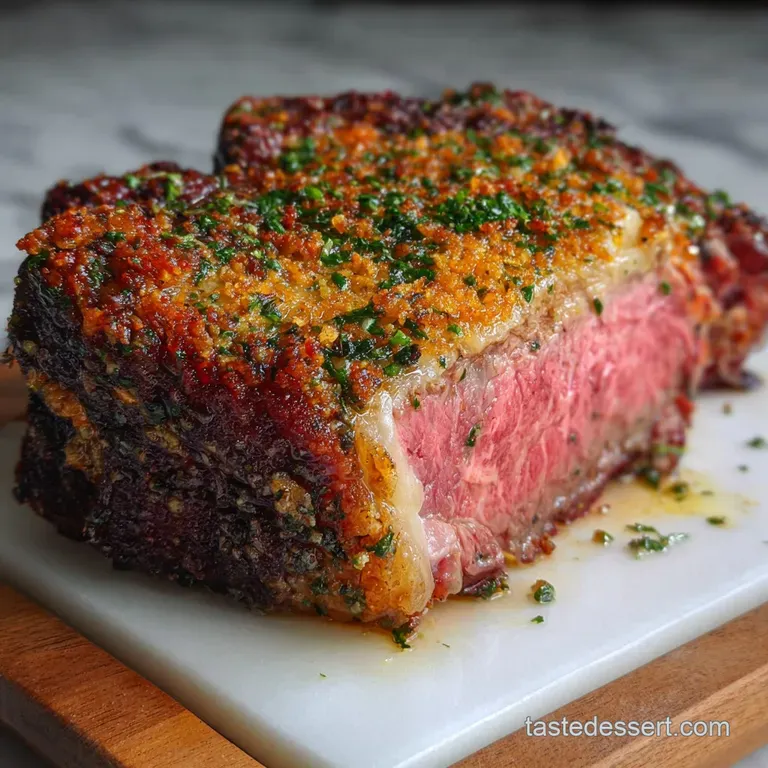
- The Baron of Beef: Perfect Slow-Roasted Standing Ribeye with Horseradish and Herb Crust
- The Science of Success: Why Low and Slow Yields the Best Standing Ribeye Roast
- Mastering the Components: Essential Ingredients for the Ribeye Roast
- Herb Crust Excellence: Selecting the Best Aromatics and Seasoning
- Blueprint for Success: Step-by-Step Method for the Slow-Roasted Ribeye
- Precision Cooking: Achieving the Ideal Internal Temperature for Standing Ribeye
- From Chef's Notebook: Troubleshooting and Elevating Your Roast
- Maximizing the Experience: Storage, Serving, and Pairing Suggestions
- Recipe FAQs
- 📝 Recipe Card
The Baron of Beef: Perfect Slow Roasted Standing Ribeye with Horseradish and Herb Crust
You know the moment that happens when you walk into a fancy steakhouse? That deep, comforting, savory smell that hits you right in the chest? That's what we’re chasing today, except we’re building it right here in your kitchen.
This Ribeye Roast recipe is the masterpiece you didn't know you needed, delivering a spectacular performance in smell, sight, and pure, concentrated flavor.
Forget the myth that a roast is some fussy, complicated affair reserved only for professional chefs or holiday dinners. I promise you, this method is so simple it mostly relies on accurate temperature management and passive waiting. It's truly a lifesaver when you want maximum impact for minimal active effort.
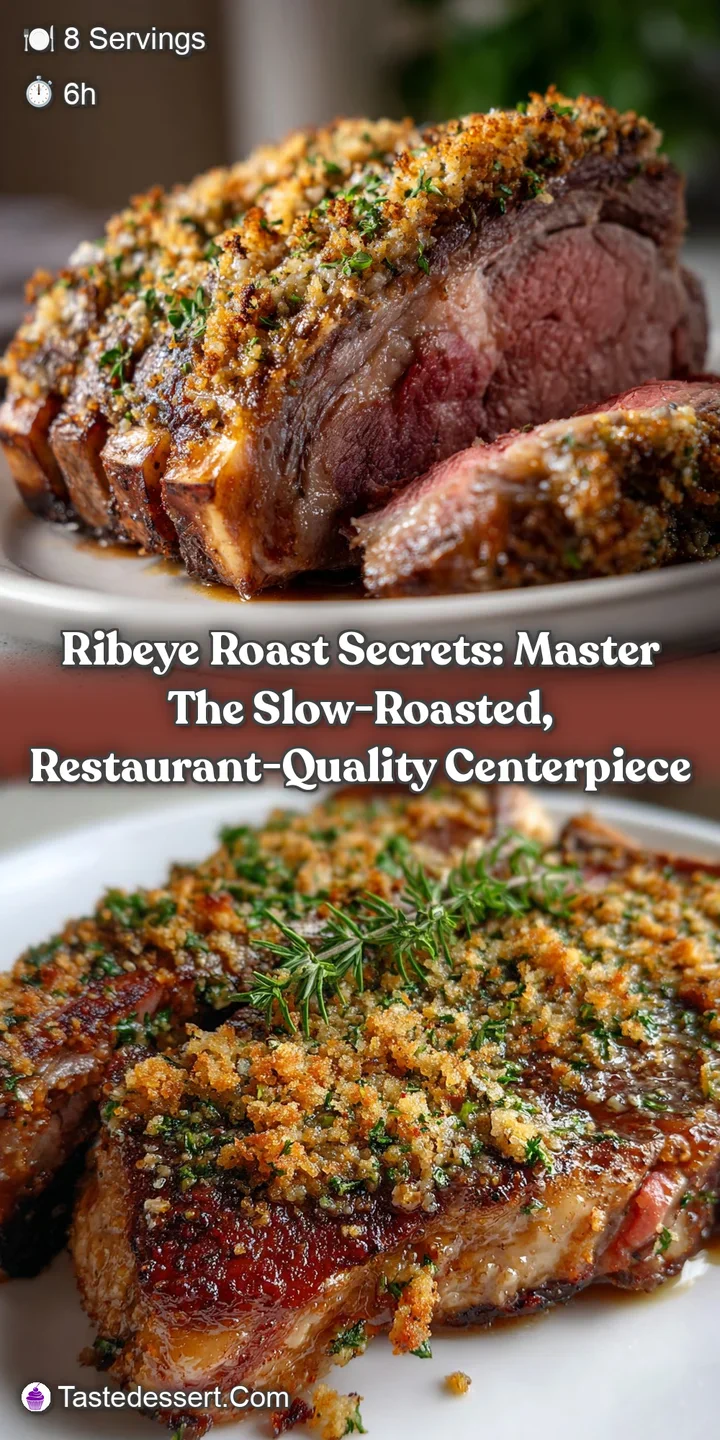
We are going deep into the secrets of the revered 'reverse sear' technique, ensuring that every slice of your finished joint is perfectly pink from edge to edge, coated in a ferocious, crunchy herb crust. Let’s get you ready to make the best Ribeye Roast you've ever tasted, hands down.
The Science of Success: Why Low and Slow Yields the Best Standing Ribeye Roast
This technique works because we fundamentally change the roasting process. Traditional roasting starts hot, which leads to a thick, unsightly grey band of overcooked meat just under the crust.
Using a gentle, low-temperature cook first, we allow the heat to penetrate slowly and evenly, relaxing those muscle fibers entirely.
What Makes the Ribeye Cut Ideal for Roasting?
The Ribeye cut, often called Prime Rib when roasted whole, is located between the sixth and twelfth ribs of the animal. It is naturally fatty and marbled , which means that when you cook it low and slow, all that gorgeous internal fat melts into the muscle.
This self basting action keeps the meat incredibly juicy and tender.
Decoding 'Prime Rib': Understanding the Best Cut for the Occasion
Many home cooks get hung up on terminology (What’s the difference between a Ribeye Roast and prime rib?). Honestly, it’s mostly technical grading and nomenclature. When you ask your butcher for a Bone-In Rib Roast, or a Boneless Ribeye Roast , you are getting the same core muscle the longissimus dorsi —which has the perfect fat content and structure for an elegant centerpiece. If you need a smaller, fancier version for a dinner party, skip the faff and check out my Prime Rib Roast Recipe: Herb Crusted Perfection at Home .
Chef’s Note: Always request that the butcher tie the boneless roast tightly with kitchen string. This helps the joint maintain its shape and cook uniformly, ensuring your Ribeye Roast looks magnificent.
The Culinary Advantage of a Herb Crusted Exterior
We aren't just sprinkling herbs; we're creating a flavour shield. The combination of pungent horseradish, mustard powder, and fresh rosemary and thyme mixes with soft butter to form a paste.
When this paste hits the high heat at the end, it caramelizes and crusts over, providing a textural contrast and protecting the perfectly cooked meat inside.
Achieving That Perfect Edge-to-Edge Medium Rare
The reverse sear is your key to steak perfection. Cooking the Ribeye Roast slowly means you can watch that internal temperature rise with absolute precision. We pull it early, let it rest completely, and then blast it with high heat.
This final blast delivers the crust without drying out the already perfectly cooked interior.
Mastering the Components: Essential Ingredients for the Ribeye Roast
Every ingredient here plays a specific role no passenger ingredients allowed. We need high-quality fat, potent aromatics, and a robust cut of meat to achieve proper Ribeye Roast status.
| Ingredient | Role | Substitution (If You're Caught Out) |
|---|---|---|
| Ribeye Roast (Boneless, tied) | Centerpiece, Marbled Fat | Eye of Round Roast (adjust cook time significantly; see Eye of Round Roast: The No-Fail Tender Medium Rare Method ) |
| Coarse Sea Salt / Pepper | Seasoning, Texture | Kosher salt, freshly ground black peppercorns (don't use pre-ground!) |
| Softened Butter | Binder for the paste | Olive oil or rendered duck fat |
| Fresh Herbs (Rosemary/Thyme) | Aroma, Crust Flavor | Use 1/3 the amount in dried herbs, crushed strongly in your hands |
| Horseradish Sauce (Creamy) | Pungency, Heat | Prepared English Mustard or Wasabi Paste |
Herb Crust Excellence: Selecting the Best Aromatics and Seasoning
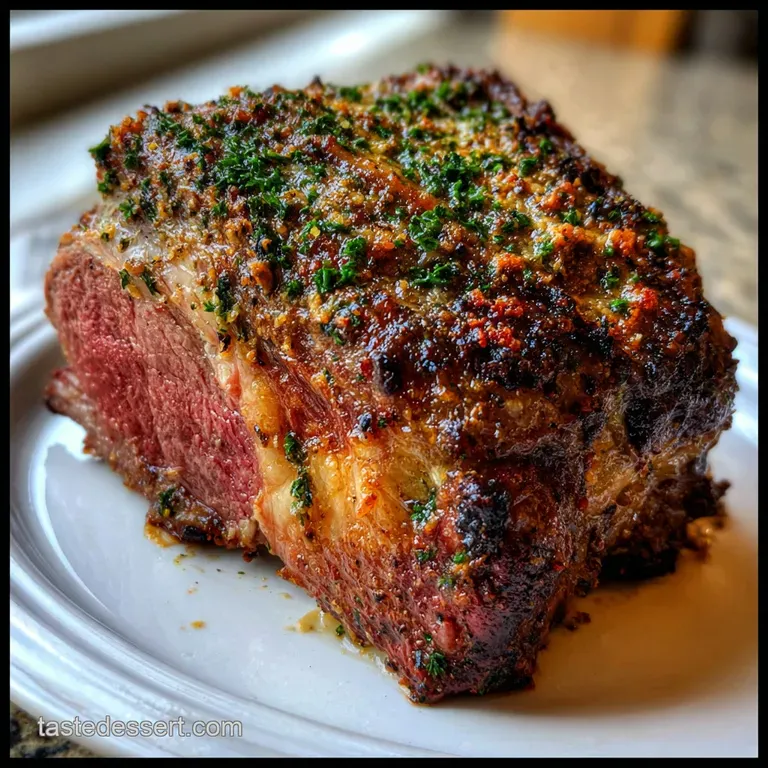
A great Ribeye Roast starts with preparation several hours before a lick of heat touches it. Trust me, the waiting is the hardest part.
Sourcing Your Star: Choosing the Right Weight and Grade for the Roast
Aim for a roast that is at least 3kg (6 7 lbs) so you have enough mass to retain moisture during the long, low cook. Look for good marbling those tiny white streaks of fat woven through the meat.
If you bought that beauty from Costco , make sure to dry it extra well, as they are often packed quite wet.
The Role of the Fat Cap and How to Prepare It
If your butcher left a thin layer of fat on top (the fat cap), that is excellent. You don't need to remove it! We score it lightly in a cross hatch pattern, but only cutting through the fat, not the meat underneath.
This allows the seasoning to penetrate deeper, and the rendered fat will self baste the joint during the cook.
Building the Flavour Base: Salt, Pepper, and high-quality Fats
We apply a generous coating of salt and pepper first, directly to the raw meat, before the herb paste even comes out. Use a coarse salt; it draws out superficial moisture, creating a better surface for that ultimate crust. Don't be shy; you are seasoning a large, thick piece of meat.
Horseradish and Herb Crust: Ingredient Preparation Details
Mince your garlic fine and strip the leaves directly off the stems of the rosemary and thyme. Combine them with the soft butter and horseradish in a bowl. It should resemble a thick, potent paste pungent enough to wake up your neighbors.
Blueprint for Success: step-by-step Method for the Slow Roasted Ribeye
Prepping the Joint: Scoring, Seasoning, and Bringing to Room Temperature
First things first: Pat that Ribeye Roast utterly dry with paper towels. You want it desert dry. Rub it lightly with olive oil and then a very generous coating of coarse salt and cracked pepper. Now, place it uncovered on a roasting rack and refrigerate for four hours.
This surface dehydration is crucial for crust formation later. One hour before cooking, take it out to let it warm up cold meat seizes up and cooks unevenly.
The Herb Paste and Initial Oven Setup
Once warmed, rub your vibrant herb and horseradish paste all over the surface of the meat. Place the roast on a V-rack inside a roasting pan. Preheat your oven to a low 120°C (250°F). Low and slow is the mantra for the perfect, juicy Ribeye Roast in Oven .
The over Low heat Phase: Initial Cooking for Even Temperature Distribution
Put the roast into the low oven. Set a timer, but know this is only a guide. The only thing that matters from here on out is your digital thermometer. Start checking the internal temperature around the two-hour mark.
We are aiming for 54°C (130° F) if you want that magical medium rare when finished. This low temperature creates steam and aroma, filling your kitchen with that luxurious, savory promise.
The Vital Rest: Why Time Off the Heat is Non-Negotiable
When the thermometer hits your target (e.g., 54°C/130°F), remove the Ribeye Roast immediately. Tent it loosely with foil and let it rest for a full 30 minutes . Don't peek!
The internal temperature will continue to rise (this is called carryover cooking), and this rest allows all those tight, squeezed internal juices to settle back into the meat fibers. Cutting too soon means all the deliciousness runs out onto the board.
The over High heat Finish: Developing the Crispy, Golden Crust
After resting, increase the oven temperature to a blazing 250°C (480°F). Remove the foil and slam the roast back into the oven, uncovered, for about 8 to 10 minutes. This is where the herb crust turns golden, crackling, and deeply pungent. You will hear the fat sizzling excitedly.
Precision Cooking: Achieving the Ideal Internal Temperature for Standing Ribeye
Here’s the straight truth: If you rely on time, you will inevitably overcook or undercook your roast. A perfectly executed Ribeye Roast demands a good thermometer.
- Rare: Pull at 49°C (120°F). Final temperature after rest/sear: 52°C (125°F).
- Medium Rare: Pull at 54°C (130°F). Final temperature after rest/sear: 57°C (135°F). (Recommended!)
- Medium: Pull at 57°C (135°F). Final temperature after rest/sear: 63°C (145°F).
Insert the thermometer probe into the thickest part of the roast, avoiding bone entirely.
From Chef's Notebook: Troubleshooting and Elevating Your Roast
Avoid the Pitfalls: Common Mistakes in Roasting and How to Fix Them
1. Slicing too early: Seriously, don't do it. If you carve immediately after searing, all the spectacular flavour you built will bleed out. The meat will taste dry, even if it’s perfectly cooked. Fix: Be patient. The full 30 minute rest is critical.
2. Skipping the drying phase: If the surface is damp when it goes into the oven, the herb paste steams rather than crusts. Fix: Always rely on the salt seasoning and the fridge to truly dry out the surface before applying the paste.
Temperature Guide: Knowing When to Pull the Roast for Medium Rare
I always aim for medium rare, pulling the roast when my instant read thermometer reads precisely 54°C (130°F). This buffer allows for the 3 degree 'carryover' increase during the rest and then another few degrees during the final over high heat sear, landing you squarely on 57°C (135°F).
You can use this exact method for a Ribeye Roast recipe oven approach.
Maximizing the Experience: Storage, Serving, and Pairing Suggestions
Handling Leftovers: Proper Chilling and Reheating the Remaining Roast
A leftover Ribeye Roast is a treasure. Once completely cool, wrap residual slices or the entire remaining joint tightly in foil or plastic wrap and store in the fridge for up to four days. To reheat, don't use the oven! That will dry it out terribly.
Instead, slice it thinly and flash fry the strips briefly in a pan with a little butter, or gently warm slices in a pan of simmering gravy.
Classic Accompaniments: Strategic Pairings Beyond the Plate
To cut through the richness of this meal, you need some excellent sides. Nothing beats excellent Roast Potatoes and a silky Roasted Boneless Leg of Lamb: Perfect Medium Rare Roast gravy (you can totally steal that idea for this roast!). Don't forget something sharp and slightly acidic, like creamed horseradish or a simple green salad dressed with vinaigrette. These sides pull the whole meal together.
This simple, powerful Ribeye Roast recipe should be filed away as a keeper. Seriously, once you master the low and slow reverse sear, you’ll never look at a Sunday roast the same way again.
Recipe FAQs
What internal temperature should I aim for when cooking a Ribeye Roast?
For perfect Medium Rare, pull the roast out of the oven when the internal temperature reads 125°F (52°C). Remember that the temperature will increase by 5-10 degrees during the crucial resting period.
Why is my herb crust burning or falling off before the meat is cooked?
A crust burns if the initial temperature is too high for too long; ensure you only apply the high heat searing step at the end of the low-and-slow cooking process. If the crust is falling off, the roast surface was likely too wet when the crust was applied pat the meat thoroughly dry with paper towels first.
Is it essential to tie the Ribeye Roast before cooking?
While not strictly mandatory for flavor, tying the roast ensures a uniform shape which promotes even cooking throughout the joint. This is especially important if you are cooking a boneless ribeye or if the roast is irregularly shaped.
How long should I rest the roast, and what happens if I skip this step?
You must rest the roast for at least 20-30 minutes, covered loosely with foil. Skipping this allows the juices, which are currently centralized due to heat, to immediately run out when sliced, resulting in dry, less flavorful meat.
Can I prepare the herb crust mixture ahead of time?
Yes, you can prepare the herb and horseradish mixture up to 24 hours in advance and store it covered in the refrigerator. However, for maximum flavor and aromatic impact, apply the crust just before baking the roast.
What is the best way to store and reheat leftover Ribeye Roast?
Store leftovers tightly wrapped in the refrigerator for up to four days. To reheat without overcooking, slice the cold meat thinly against the grain and gently warm it in hot gravy or beef stock, or flash sear it quickly in a hot skillet.
My oven doesn't hold a low temperature well. What temperature adjustments should I make?
If your oven struggles with very low settings, try setting it 25°F higher than the suggested low-and-slow temperature and monitor the roast frequently with a thermometer. Accept that the total cooking time may be reduced, so check the internal temperature 30 minutes earlier than scheduled.
Slow Roasted Ribeye Roast Recipe
Ingredients:
Instructions:
Nutrition Facts:
| Calories | 1033 kcal |
|---|---|
| Protein | 78.8 g |
| Fat | 77.0 g |
| Carbs | 7.9 g |
