Spicy Poke Bowls: Fiery Hawaiian Ahi Tuna for a Quick Lunch Hero
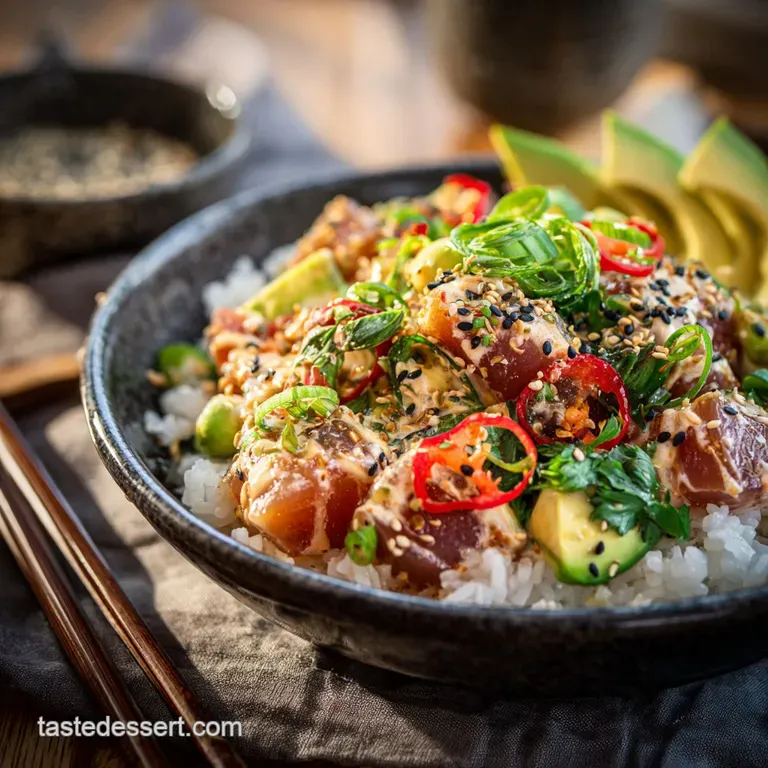
- Unlocking the Secret to Authentic and Fiery Spicy Poke Bowls
- The Flavour Science Behind Perfect Spicy Ahi Poke
- Essential Components for Your Spicy Poke Bowls
- How to Prepare Spicy Ahi Poke Bowls: Step-by-Step Method
- Expert Tips for Mastering Your Next Poke Bowl
- Safe Handling and Storage of Spicy Poke Bowls
- Elevating Your Spicy Poke Bowl Presentation and Pairings
- Recipe FAQs
- 📝 Recipe Card
Unlocking the Secret to Authentic and Fiery Spicy Poke Bowls
Stop what you are doing. The rich, creamy texture of perfectly diced, cold tuna coated in a vibrant crimson sauce is calling your name. That addictive aroma of toasted sesame and lime juice promises a huge flavour payoff. Honestly, nothing else in the quick meal world feels this vibrant or tastes this clean.
This recipe is my absolute weeknight hero. We're talking show stopping results in under an hour, most of that time is just waiting for the rice to cook. Forget spending $20 on a takeout bowl when you can make four servings at home for half the cost and control the exact spice level.
It's fast, incredibly fresh, and totally satisfying.
I'm finally sharing the secrets I learned after many messy attempts including the crucial, non-negotiable step for flawless sushi rice. Trust me, once you nail the balance of this specific sriracha mayo emulsion, you’ll never buy pre-made poke again.
Let’s crack on and get this fiery goodness happening!
The Flavour Science Behind Perfect Spicy Ahi Poke
What Exactly is Poke (Poh-keh)?
Poke, pronounced poh-keh , is the OG Hawaiian staple, translating simply to "to slice" or "cut." Traditional poke is straightforward: raw, cubed fish dressed lightly with salt, limu (seaweed), and kukui nut oil. Our modern, spicy version is a riff on that classic.
It takes the simplicity of the fresh ingredients and dials up the decadence with creamy heat.
The Difference Between Traditional and Creamy Poke
Traditional poke highlights the pure flavour of the fish; it’s usually light, salty, and incredibly clean. The creamy, spicy poke we’re making today is all about the emulsion. We use mayonnaise as a carrier for the spice and umami ingredients. This ensures the sauce clings perfectly to every cube of tuna.
The key is balance: the richness of the mayo must be cut hard by lime juice and soy sauce.
Why Ahi Tuna is the Only Choice for This Recipe
Ahi, or yellowfin tuna, is the absolute best choice here because of its texture and fat content. It's lean, but sturdy enough to hold its shape when diced. Crucially, Ahi has a beautiful deep colour that looks stunning against the bright red sauce.
If you substitute, you need a fish that won't fall apart once marinated.
Balancing Umami and Heat: The Sriracha Emulsion
This sauce isn't just about dumping Sriracha into mayo. That would be boring. We layer the flavours: umami from the soy sauce, nutty depth from the toasted sesame oil, and tang from the lime juice.
The Sriracha provides clean, upfront heat, but the fat in the mayo rounds it out beautifully, preventing it from tasting harsh.
Achieving the Ideal Texture Contrast (Silky Tuna vs. Sticky Rice)
A great poke bowl is a masterclass in contrasting textures. You need the firm, silky bite of the tuna and the cool, soft creaminess of the avocado. This is anchored by perfectly cooked, slightly sweet, sticky short grain rice. If your rice is mushy, the whole bowl falls flat.
If it’s too dry, it won't hold the toppings.
Why You Must Marinate the Tuna (But Not Too Long)
Marination is essential for flavour absorption, obviously. However, the salt and acid in the marinade will actually start to "cook" the raw fish if left too long this is called denaturation. We want enough time for the flavour to penetrate but not so much that the fish turns pale, firm, and ceviche like.
Keep it under 45 minutes.
Chef's Note: The magic ratio for the dressing is 2:1:1. Two parts mayo (creamy), one part Sriracha (heat), and one part soy/lime combo (acid/salt). Adjust from this baseline, never start from scratch.
Essential Components for Your Spicy Poke Bowls
This recipe is only as good as its ingredients. Seriously, quality matters immensely when the list is this short.
Sourcing Sushi Grade Ahi Tuna (The Non-Negotiable Step)
Look, I’m not playing games here. You must buy certified sushi or sashimi grade tuna. This means it has been handled and frozen according to specific FDA standards to kill potential parasites. Ask your fishmonger directly. If they hem and haw, walk away.
Food safety isn't worth saving two dollars.
| If you don't have... | Use instead... |
|---|---|
| Sushi Grade Ahi Tuna | Cooked, peeled and chilled prawns, or cubed, blanched tofu. |
| Kewpie Mayonnaise | Standard whole egg mayonnaise plus a tiny splash of rice vinegar for tang. |
| Sriracha Sauce | Gochujang (Korean chilli paste) for a complex, fermented heat. |
| Soy Sauce | Tamari or coconut aminos (for gluten-free options). |
| Fresh Lime Juice | Lemon juice or rice vinegar, though lime gives the best freshness. |
Building the Fiery Sauce: Creamy Base and Heat Agents
Kewpie mayonnaise is highly recommended because it uses egg yolks only, giving it a much richer, creamier texture and a slightly sweeter flavour than standard American mayo. If you don't have Kewpie, standard mayo works just know the texture might be slightly lighter.
For heat, Sriracha is the classic choice, delivering reliable, bright spice.
The Perfect Rice Base: Short Grain Sticky Rice Preparation
Please, for the love of all that is holy, use short grain rice. It provides that essential sticky texture that holds the bowl together. Never use long grain like Basmati; it dries out and won't clump properly.
The washing process is critical: you must rinse the rice until the water is totally clear, removing the excess starch that causes gumminess.
Garnishes and Texture Boosters (Onions, Sesame, etc.)
Garnishes aren't just for looks; they provide crucial crunch. I love the sharp bite of thinly sliced spring onions (scallions) and the crunch of toasted black sesame seeds. The avocado adds a lush, smooth texture that cools the heat. I also toss in some edamame for a pop of colour and extra protein.
How to Prepare Spicy Ahi Poke Bowls: step-by-step Method
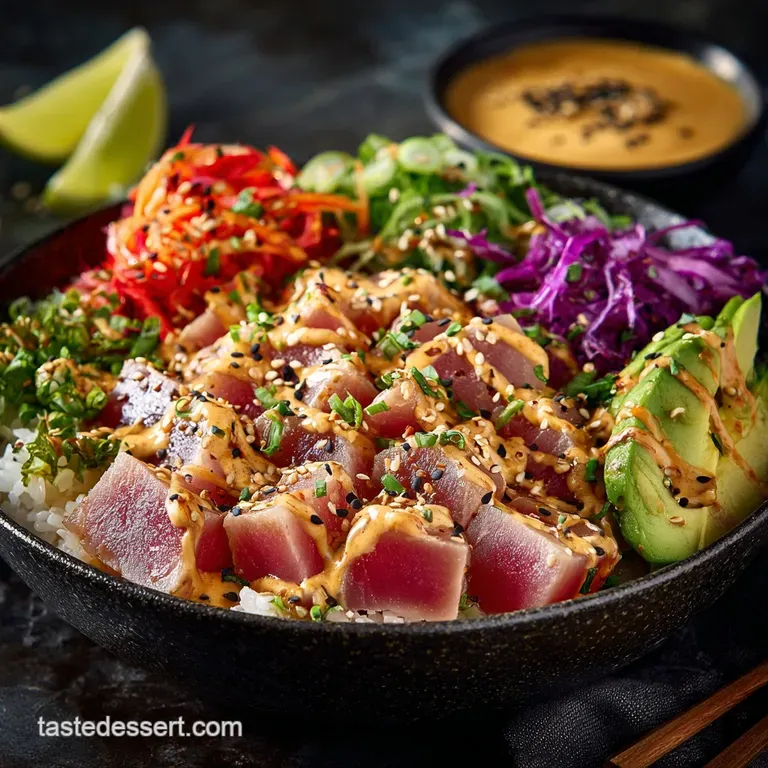
Preparing and Seasoning the Sushi Rice
- Rinse the rice vigorously in a fine mesh sieve under cold running water until the water is completely transparent. This can take four or five minutes, but don't skip it.
- Combine the rinsed rice and cold water in your cooker or heavy saucepan. Cook according to instructions, then let it steam, covered , for 10 minutes off the heat.
- While the rice steams, dissolve the sugar and salt into the rice vinegar in a small, warm pan. Just heat it gently until everything melts, no need to boil it.
- Transfer the cooked rice to a wide glass or wooden bowl. Pour the vinegar mixture over and use a flat spatula to gently fold and slice the seasoning into the rice. Do not stir or mash. Fan the rice until it cools to room temperature. This is essential!
Dicing the Tuna and Mixing the Spicy Emulsion
- Ensure the tuna is very cold; this makes dicing easier and cleaner. Use your sharpest knife to cut the tuna into uniform 1 inch cubes. Uniform cubes ensure even marination and look way better.
- In a separate large bowl, whisk together the Kewpie, Sriracha, soy sauce, sesame oil, and lime juice until you have a smooth, gorgeous pinkish orange sauce. Taste it! Add more Sriracha if you are feeling brave.
The Critical 15 Minute Marination Window
- Add the diced tuna to the spicy sauce. Use a rubber spatula to gently fold the tuna until every cube is beautifully coated. Be gentle! You want fish cubes, not tuna salad.
- Cover the bowl and immediately place it in the fridge. Marinate for at least 15 minutes, but absolutely no longer than 45 minutes. This is not a make-ahead step.
Assembly and Final Garnishing Techniques
- Prep all your toppings now: slice the avocado, chop the cucumber, and julienne the nori sheets.
- Scoop the cooled, seasoned rice into your bowls, forming a solid base.
- Spoon the marinated spicy poke mixture over the rice. Artfully arrange your toppings cucumber, avocado, and edamame around the perimeter of the tuna.
- Finish the bowls with a generous sprinkle of toasted black sesame seeds and the shredded nori. Serve immediately and watch your friends gasp.
Expert Tips for Mastering Your Next Poke Bowl
The Right Knife for Perfect Tuna Cubes
Using a dull knife is the quickest way to ruin perfect tuna. A dull knife will tear the delicate fibres, resulting in ragged, messy cubes that release moisture. You need a sharp chef's knife or a slicing knife to achieve clean, defined 1 inch squares.
A clean cut seals the fish, helping it hold its moisture during the quick marinade.
Troubleshooting Over Marinated or Dry Poke
Did you leave the poke marinating for two hours because you forgot? Rookie mistake I’ve done it! The fish will look pale and slightly tough. To fix this (if it’s only slightly overdone), serve it with an extra drizzle of plain toasted sesame oil and creamy avocado to counteract the dryness.
For future bowls, stick rigidly to the 15 to 45 minute window.
Adjusting the Heat Level (Spice Scale Hacks)
If you love the flavour but not the fire, you can easily pull back the heat. Use less Sriracha, substituting that missing volume with extra mayonnaise. Conversely, if you want to turn up the heat, don't just add more Sriracha.
Try stirring in a teaspoon of fine chilli garlic paste (like Sambal Oelek) or a dash of finely grated fresh ginger for a sharper kick.
Safe Handling and Storage of Spicy Poke Bowls
Refrigerating Leftover Poke (Shelf Life of Raw Fish)
This is important: Spicy Poke Bowls are meant to be eaten the day they are made. If you absolutely must store leftovers, separate the fish from the rice and vegetables immediately.
The seasoned tuna, due to the high salt and acid content, might last safely in the fridge for up to 24 hours, maximum , provided it was kept cold the entire time. I strongly advise tossing anything remaining after 24 hours.
Can You Freeze Poke? (A Firm Warning)
No, absolutely not. Freezing raw fish that has already been cut and marinated will ruin the texture completely. It will turn mushy and watery upon thawing. If you are prepping for the week, make the rice and chop the toppings, but do not dice or marinate the tuna until just before serving. If you want a great meal prep option that freezes beautifully, check out my Cilantro Lime Quinoa Bowls with Shrimp Zesty Healthy 35Minute Dinner .
Best Practices for Keeping Garnishes Crisp
Keep all your crunchy garnishes like cucumber, spring onion, and nori in separate airtight containers until the moment of assembly. Moisture is the enemy of crunch.
If you are preparing this for a party buffet, don't add the nori strips until the very last minute, as they absorb moisture from the air and wilt fast.
Elevating Your Spicy Poke Bowl Presentation and Pairings
Presentation Tips for Maximum Impact
I love serving poke in deep ceramic bowls; they really show off the layers of rice, toppings, and the vibrant red tuna. To make the presentation pop, drizzle a tiny bit of extra Sriracha or a swirl of plain mayo over the finished bowl just before serving. Sprinkle the sesame seeds and nori along the edges, not just in the middle. If you need inspiration for other beautiful light lunch bowls, try my recipe for Spicy Crab Stuffed Avocado: Easy 30 Minute, Healthy Light Lunch .
Pairing and Drink Recommendations
For drinks, the spicy, rich flavour of the poke pairs perfectly with something light and dry. Think crisp white wine (like Sauvignon Blanc) or a chilled sake. If you prefer a lighter, non-alcoholic route, an iced green tea or sparkling water infused with mint and cucumber is incredibly refreshing and helps cleanse the palate between bites of the fiery tuna. For a heartier alternative that still uses seafood, you might also like my Shrimp Fajita Bowls The Best Quick Weeknight Dinner Recipe .

Recipe FAQs
What are the best substitutions for Ahi (Tuna)?
You can substitute the Ahi with other firm, sushi grade fish like salmon, yellowtail (Hamachi), or even sea bass. If you prefer cooked seafood, try poached and completely cooled shrimp or scallops, ensuring they are firm before tossing with the sauce.
How should I store leftover Spicy Poke? Can I prep it ahead?
Poke is best eaten immediately after assembly, as the acid in the sauce quickly begins to "cook" the raw fish (the ceviche effect). If absolutely necessary, leftovers can be stored for up to 12 hours in an airtight container in the coldest part of the refrigerator.
Never store poke for more than one day, and discard it immediately if it smells overtly fishy.
How do I ensure the tuna is safe to eat raw (sushi grade)?
Always purchase fish explicitly labeled as "sushi grade" or "sashimi grade" from a reputable fishmonger you trust. This labeling guarantees the fish has been properly handled and flash frozen according to safety guidelines, killing potential parasites.
Never attempt to use standard grocery store fish not designated for raw consumption.
My sushi rice turned out mushy/sticky. What went wrong?
Mushy rice is usually caused by inadequate rinsing or using too much water during the cooking process. Ensure you rinse the rice under cold water until the water runs completely clear to remove the excess surface starch.
Also, make sure to measure your water precisely according to the rice cooker or stovetop instructions for a perfect texture.
Can I make this Spicy Poke bowl vegan or vegetarian?
Yes, the vibrant, spicy, and creamy sauce works exceptionally well with non-meat substitutes. Good options include firm tofu (pressed, cubed, and lightly pan-fried for texture), rehydrated watermelon cubes, or cubed avocado and cucumber for a purely vegetarian option. Simply replace the mayo with a vegan variety.
How can I control or reduce the fiery spice level?
The primary heat source is the Sriracha or chili garlic sauce; begin by reducing the amount by half and taste test before adding more heat. You can also mix in extra mayonnaise or plain Greek yogurt to boost the creaminess and fat content, which helps neutralize the capsaicin heat.
Should I marinate the tuna for a long time?
No, a lengthy soak is not recommended for this style of creamy poke. Marinating the raw fish for more than 15-20 minutes will cause the acidity in the sauce to cure the tuna, resulting in a slightly tougher, drier texture. For the best, silkiest mouthfeel, toss the fish gently and serve immediately.
Spicy Poke Bowls Quick Lunch Hero
Ingredients:
Instructions:
Nutrition Facts:
| Calories | 700 kcal |
|---|---|
| Protein | 27.6 g |
| Fat | 46.4 g |
| Carbs | 39.6 g |
