Eye of Round Roast: Chefs Tender No-Fail Method

- Mastering the Eye of Round: Your Guide to a Tender Roast
- The Science Behind Perfect Tenderness and Crust
- Required Ingredients and Preparation Notes
- Step-by-Step Roasting: From Prep to Plate
- Expert Tips and Troubleshooting Common Roasting Errors
- Practical Guides: Storage, Freezing, and Pairings
- Recipe FAQs
- 📝 Recipe Card
Mastering the Eye of Round: Your Guide to a Tender Roast
If there is one thing that guarantees a Sunday afternoon spent in contented silence, it’s the smell of garlic and thyme filling the kitchen, mingling with the deep, savoury scent of a proper roast. We aren't talking about a pricey prime rib here, though.
We are talking about the humble, often misunderstood, and extremely budget friendly Eye of Round Roast . Get ready for a crust so crisp it snaps and meat so tender it redefines what you thought was possible from this notoriously lean cut.
Look, this cut is tough if you treat it badly. I know, because I’ve turned countless rounds into flavourful but chewy mistakes. But when you nail the technique the specific technique I’m about to share the Eye of Round Roast becomes a life saver.
It’s cheap, it’s fast (for a roast), and the leftovers make the absolute best sandwiches I swear you will ever eat. Seriously, forget deli meat forever.
I’m going to walk you through the precise temperature control, the perfect seasoning ratio, and the absolute mandatory resting time that transforms this inexpensive cut into a truly luxurious experience.
Stop worrying about expensive cuts; let’s make magic with the Eye of Round Roast .
The Science Behind Perfect Tenderness and Crust
So many cooks treat every roast the same, and that’s the main problem with the Eye of Round Roast . This isn’t a fatty chuck or a forgiving ribeye. This is pure, lean muscle.
If you blast it with heat the whole time, the outer edges seize up and dry out before the centre even gets warm. The result? That awful, dry, grey ring around a rare centre. Gross.
Why This Economical Cut Deserves a Second Look
The reason we love the Eye of Round Roast is purely practical. It has a beautiful uniform shape, which is great for even slicing, and it costs a fraction of the price of traditional roasts.
The trick lies in acknowledging its leanness and compensating with a dual temperature approach the over high heat sear followed by a long, slow finish. This approach makes sure the heat penetrates gently, cooking the meat from edge to edge without tightening those muscle fibres into chewy oblivion.
The Essential Equipment Checklist
You don't need fancy tools, but you do need two non-negotiables to make a spectacular Eye of Round Roast . First, a wire rack that fits inside your roasting pan. This is crucial because it allows air to circulate underneath the meat, ensuring the bottom crust is just as crispy as the top.
Next,, and I cannot stress this enough: you need a reliable, instant read meat thermometer. If you don't have one, pause this entire cooking adventure and go buy one right now. We are cooking to temperature, not to time.
Understanding the 'No-Fail' Temperature Strategy
The strategy here is a modified reverse sear, optimized specifically for the uniform shape of the Eye of Round Roast . We hit it with super high heat first (450°F / 230°C) for a quick 15 minutes to develop that dark, savoury crust immediately.
Then, we immediately drop the oven temperature way down to 250°F (120°C). This low, slow cooking allows the interior temperature to climb gently and evenly, preventing the edges from overcooking.
Achieving the Ideal Edge-to-Edge Medium Rare
For me, the only way to eat an Eye of Round Roast is medium rare. We pull it from the oven when the internal temperature hits 125°F to 130°F (52°C to 54°C). If you’re nervous, pull it at 125°F.
The 20 minute rest is non-negotiable, and during that rest, the temperature will climb 5 to 10 degrees due to carry over cooking, landing you right in the sweet spot of 135°F (57°C). That’s how you get that gorgeous pink colour all the way to the edges.
The Maillard Reaction: Building the Flavorful Crust
That 450°F blast at the beginning? That’s for the Maillard Reaction. It’s not just about colour; it’s about flavour molecules exploding on the surface of the Eye of Round Roast .
To get this reaction right, the surface of the meat must be completely dry before you apply the rub. Any moisture will steam instead of sear, and you’ll end up with a pale, soft crust. We want crunch!
Why Low and Slow Wins for Lean Roasts
Because the Eye of Round Roast is so lean, high sustained heat will aggressively squeeze out every drop of moisture. By dropping the temperature after the initial sear, we are giving the muscle fibres a chance to relax while still reaching the target temperature gently.
This technique retains juices, which is the whole point of mastering this particular cut.
Required Ingredients and Preparation Notes
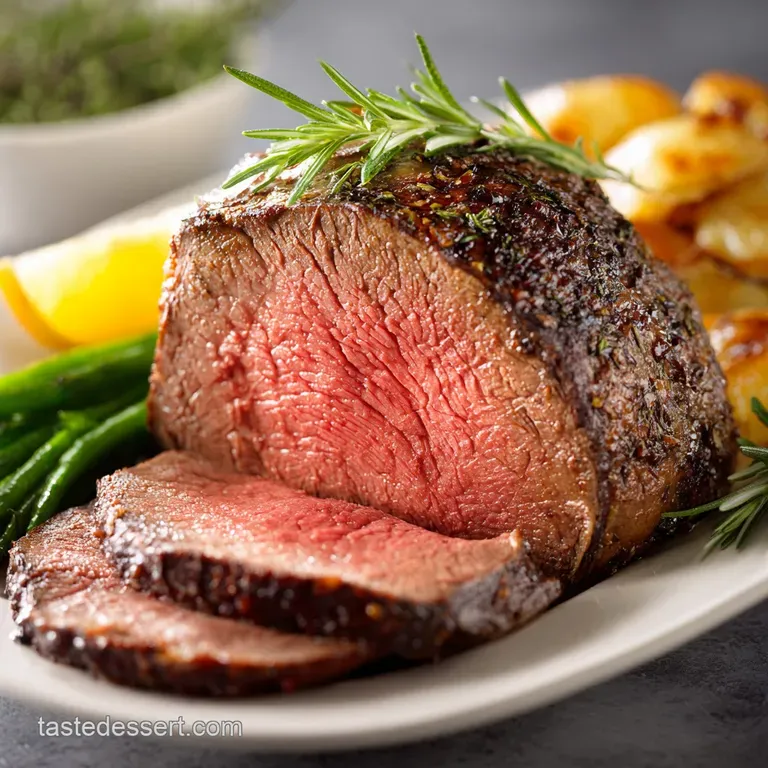
Making a truly unforgettable Eye of Round Roast requires minimal ingredients but maximum attention to quality and preparation. We’re building a classic savoury crust that complements the clean flavour of the meat.
| Ingredient | Role | Substitution |
|---|---|---|
| Eye of Round Roast | Main event, budget friendly | None, obviously! |
| Kosher Salt | Crust creation, seasoning | Use half the amount if using fine table salt. |
| Dijon Mustard | Binder, subtle tenderizer | Worcestershire sauce + a pinch of mustard powder. |
| Fresh Rosemary/Thyme | Aromatic foundation | Use 1/3 the amount if substituting with dried herbs. |
| Olive Oil | Binder, helps searing | Melted butter, though olive oil holds up better at high heat. |
Choosing Your Eye of Round: Size and Quality
A good Eye of Round Roast should be uniform in size and tightly packaged. If you buy a larger one (4 5 lbs), you’ll need to adjust the roasting time slightly, but the temperatures remain the same. Ensure it’s trimmed of any large silver skin, which can tighten during cooking.
If it looks floppy or uneven, have your butcher tie it up tightly with butcher’s twine.
The Aromatic Rub: Enhancing the Roast Flavor Profile
The rub is simple, but powerful. The combination of freshly minced garlic, earthy rosemary, and thyme is classic for a reason. Don't use dried garlic powder here; the fresh stuff makes a huge difference. It creates a savory paste that sticks beautifully to the mustard.
This rub is the foundation for the deep, complex flavour of your finished Eye of Round Roast .
Mustard Magic: The Secret Binder and Tenderizer
I swear by Dijon mustard for this recipe. It doesn't actually make the meat taste like mustard; it acts as a phenomenal binder for the salt, pepper, and herbs, ensuring the crust sticks during the over high heat sear.
Plus, the vinegar in the mustard subtly breaks down the surface proteins, giving the Eye of Round Roast a head start on tenderness.
Essential Temperature Pointers for Success
Remember, we are aiming for that initial internal temperature of 125°F 130°F. If you want medium doneness, aim for 135°F (57°C) before resting, but know that you risk a slightly drier result with the Eye of Round Roast .
If you pull it at 140°F, you're looking at medium well after resting, and that beautiful tenderness will start to disappear.
step-by-step Roasting: From Prep to Plate
Let's crack on with the cooking. This is where patience pays off, particularly when dealing with the over high heat method for the Eye of Round Roast .
Preparation and Tying the Roast (The Butcher's Knot)
First things first: pat that roast dry! Remove the Eye of Round Roast from the fridge and let it sit on the counter for 30– 45 minutes to temper (come closer to room temperature). This helps it cook more evenly.
While it's tempering, combine your olive oil, Dijon, salt, pepper, garlic, and herbs into a thick paste. Rub it all over the meat aggressively. Place it immediately on a wire rack over a pan.
The Initial over High heat Sear Technique
Preheat your oven to 450°F (230°C). Once roaring hot, place the seasoned roast inside. You must sear the Eye of Round Roast for exactly 15 minutes. This sets the crust and activates all those brilliant flavours we rubbed onto the surface.
Do not open the oven door during this step. Trust the process.
Precision Roasting: Setting the Internal Target Temperature
After 15 minutes, do not remove the roast , but immediately reduce the oven temperature to 250°F (120°C). Once the oven temperature has begun to settle (about 5 minutes), insert your probe thermometer into the thickest part of the roast, making sure it avoids the wire rack or the edge of the pan.
Continue roasting until the internal temperature hits your target (125°F 130°F). For a 3 lb Eye of Round Roast , this usually takes 35– 50 minutes more.
The Mandatory Resting Period Explained
When the temperature hits the bullseye, remove the roast immediately and place it on a clean cutting board (still on the rack, if possible). Tent it loosely with foil and I mean loose. We don't want to steam the crust we just worked so hard for. Now, walk away. Seriously.
The Eye of Round Roast must rest for a minimum of 20 minutes. This resting period allows the muscle fibres to relax and reabsorb all the juices that were pushed to the centre during cooking. Skip this, and all your beautiful juice runs onto the board, leaving you with dry meat.
Chef’s Note: While your roast is resting, you have the perfect window to whip up a quick pan sauce from the drippings. If you want a fantastic side dish that cooks quickly, try making my recipe for sticky maple soy roasted brussels sprouts roasted Best Sticky Side Dish right now!
Expert Tips and Troubleshooting Common Roasting Errors
We’ve all been there proudly presenting a roast only to find the slices are tough and dry. The good news is that these common failures are easily avoidable when tackling the Eye of Round Roast .
The Critical Role of the Meat Thermometer
If you try to make an Eye of Round Roast relying on the "poke test" or pure instinct, you are setting yourself up for disappointment. Because this cut is so lean and dense, the difference between perfect medium rare and sad, overcooked grey meat is literally five degrees.
An instant read thermometer is your life insurance policy for this recipe. Use it!
Avoiding the Dreaded Grey Band (Temperature Control)
The grey band happens when the heat penetrates too aggressively and too quickly from the outside in. By using the high sear, low-finish method, we minimize the difference between the temperature of the oven and the target internal temperature.
This gentle finish ensures that the cooking is even, and you avoid that unappetizing ring of overcooked meat around the rosy pink interior of the Eye of Round Roast .
Slicing Against the Grain for Maximum Tenderness
This is the number one secret to making a tough cut feel tender, and it’s especially vital for the Eye of Round Roast . Look closely at the surface of the meat you will see lines of muscle fibres running in one direction (this is the "grain").
When you slice the roast, you must slice perpendicular to these lines, cutting them short. If you slice parallel to the grain, you end up with long, chewy fibres, even if the meat is cooked perfectly. For this cut, slicing paper thin is also critical.
Practical Guides: Storage, Freezing, and Pairings
You probably won't have much leftover, but if you do, the cold cuts from a perfectly prepared Eye of Round Roast are genuinely legendary. Knowing how to store and reheat this lean meat is key to enjoying it all week long.
Safe Storage and Reheating Leftovers
Once the roast has cooled completely, slice any remaining portion and store it in an airtight container in the fridge. Properly stored, sliced Eye of Round Roast will last 3 to 4 days. If you plan to eat the slices cold (for sandwiches, salads), you’re good to go.
If you absolutely must reheat it, use low, moist heat. Thinly slice the roast and warm it gently in residual gravy or warm stock for just a minute or two. Never blast it in the microwave; it will turn rubbery instantly.
How to Freeze and Thaw Sliced Roast Properly
If you know you won't use all the slices within a few days, freezing is a great option. Slice the entire leftover Eye of Round Roast thinly first. Stack small portions (about two servings) between layers of parchment paper, then wrap the stack tightly in plastic wrap, followed by a layer of foil or a freezer bag.
This prevents freezer burn. It will last safely for about 3 months. Thaw slowly overnight in the fridge.
Classic Side Dish Pairings for a Lean Roast
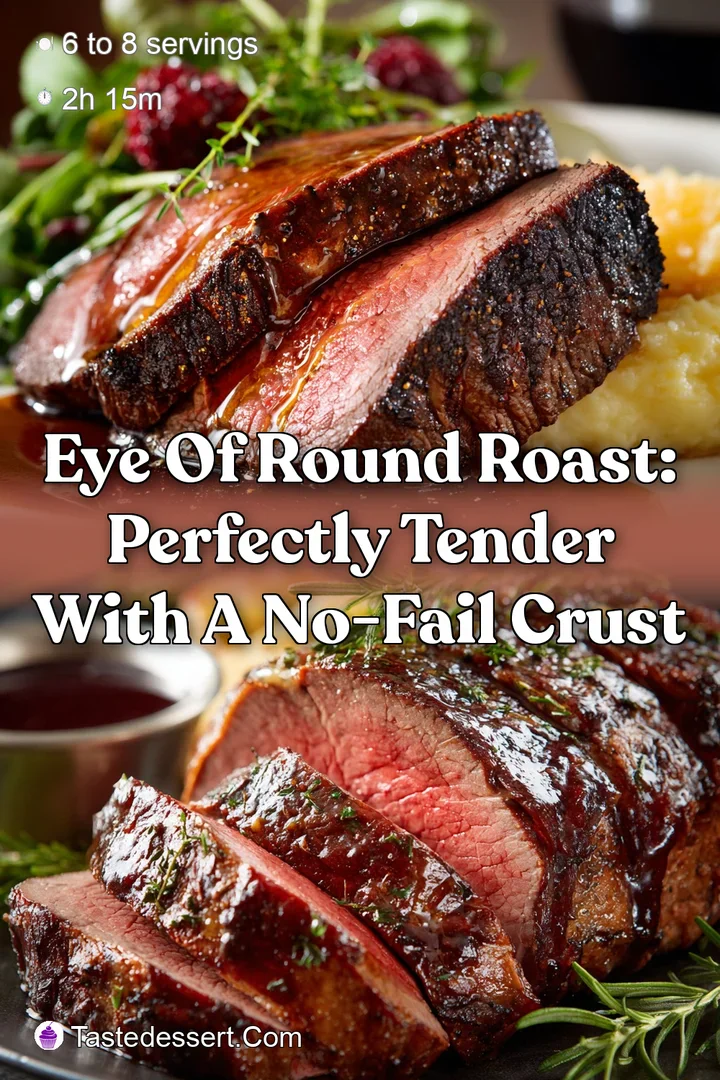
Because the Eye of Round Roast is so savoury and rich in flavour, it pairs wonderfully with creamy, comforting sides or bright, acidic counterparts. For a classic Sunday dinner, I love serving it with mashed potatoes and maybe a side of my vibrant Roasted Sweet Potato Black Bean Bowls with Creamy Lime Drizzle to cut the richness. Alternatively, serving it thinly sliced over a fresh arugula salad with a balsamic vinaigrette is divine. This truly magnificent Eye of Round Roast deserves equally thoughtful sides!
Recipe FAQs
Why did my Eye of Round roast turn out dry, even though I used the low-temp method?
Dryness usually indicates overcooking, which is easy to do with this lean cut. Ensure you are using a reliable instant read thermometer and pulling the roast precisely at 125°F (52°C) for medium rare, as the internal temperature will continue to rise during the mandatory rest.
Slicing the meat too thickly can also make the lean texture seem tougher and drier than it is.
Why is resting the roast so important for this specific cut?
Resting is crucial as it allows the tightened muscle fibers to relax and redistribute the valuable internal juices throughout the meat. If you skip this step, those juices will immediately spill out when the roast is sliced, leaving you with a tough, dry, and less flavorful result.
Rest the roast loosely tented with foil for a minimum of 15 to 20 minutes.
How should I adjust the internal temperature if I prefer medium or medium well doneness?
For medium doneness, pull the roast when the internal temperature reaches 130°F (54°C), aiming for a final temperature of 135 140°F (57 60°C) after resting.
Since Eye of Round is so lean, we highly recommend against cooking it past medium, but if necessary, pull it at 140°F (60°C) for medium well.
Do I really need a meat thermometer, or is timing sufficient?
A high-quality meat thermometer is absolutely essential and non-negotiable for success with this recipe and cut. Roasts vary widely in size and shape, and oven temperatures fluctuate, meaning relying solely on time will almost certainly lead to inaccurate results.
Precision temperature control is the 'Chef's Secret' for tender Eye of Round.
What is the correct way to slice an Eye of Round roast to maximize tenderness?
The Eye of Round must always be sliced thinly, against the grain, to maximize tenderness. Locate the direction the long muscle fibers run and use a sharp carving knife or electric slicer to cut across them, aiming for slices ideally less than 1/8 inch thick.
Slicing against the grain shortens the fibers, making the meat easier to chew.
Can I use different herbs or spices instead of rosemary and thyme?
Yes, the herb profile is easily customized to your preference. Classic alternatives include savory options like sage and marjoram, or you could use a pepper forward, Montreal style steak rub for a different crust.
Always mix your desired spices with oil or softened butter to ensure they create a flavorful crust that adheres well during roasting.
How long do leftovers last, and can I freeze the cooked roast?
Leftover Eye of Round will last safely in an airtight container in the refrigerator for 3 to 4 days. You can also tightly wrap and freeze sliced portions for up to 3 months for later use. Thaw frozen slices slowly in the refrigerator for the best texture when planning to serve them cold, perhaps in sandwiches.
Tender Eye Of Round Roast Secret
Ingredients:
Instructions:
Nutrition Facts:
| Calories | 468 kcal |
|---|---|
| Protein | 27.0 g |
| Fat | 34.0 g |
| Carbs | 10.1 g |
