Heartwarming Thanksgiving Recipe Ideas for Your Masterpiece Meal
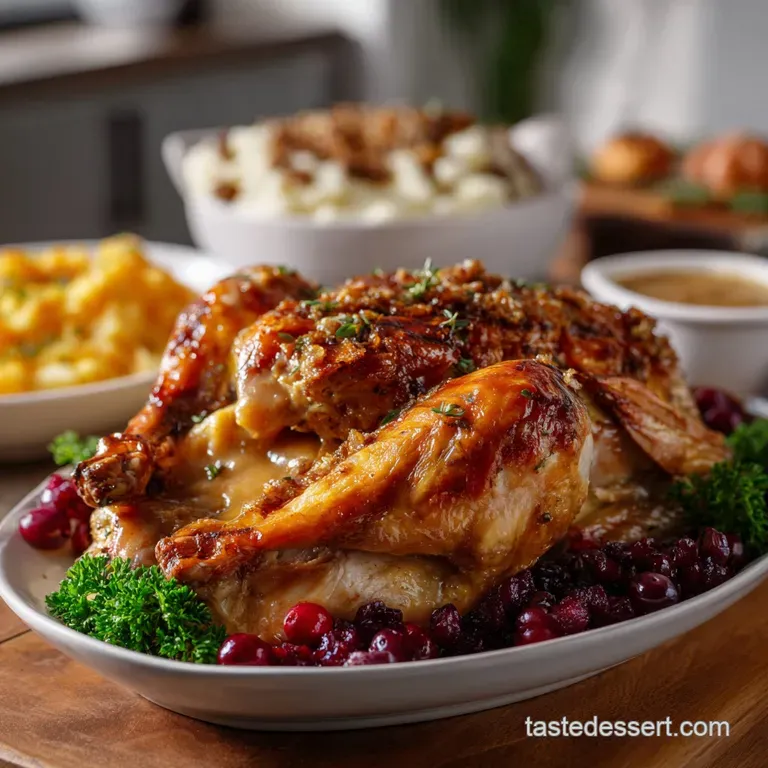
- Effort/Time: High effort, 1 day 2 hours 15 mins total.
- Flavor Hook: Herb-infused compound butter meets slow-roasted garlic umami.
- Perfect for: A 10 person "wow-factor" holiday gathering.
- Master the Ultimate Heartwarming Thanksgiving Recipe Ideas for Your
- The Thermodynamic Advantage: Why This Recipe Works So Well
- Essential Preparation Metrics for Your Holiday Feast Planning
- The Alchemy of Umami: Selecting Your Elements and Aromatics
- Precision Culinary Instruments for Stress-Free Poultry Engineering
- Phase-Based Execution: Mastering the over High heat Roasting Protocol
- Diagnostic Solutions: Resolving Common Poultry and Potato Failures
- Strategic Substitutions for Customizing Your Perfect Holiday Feast
- ⚗️ The Scaling Lab: The Physics of Quantity
- Traditional Myths Debunked
- Post-Feast Logic: Preservation and Reheating for Maximum Quality
- The Final Presentation: Plating and Flavor Architecture Strategies
- Recipe FAQs
- 📝 Recipe Card
Master the Ultimate Heartwarming Thanksgiving Recipe Ideas for Your
There is nothing more gut-wrenching than pulling a $70, 13 pound turkey out of the oven only to realize the breast meat has reached the texture of parched drywall while the thighs remain dangerously undercooked.
We spend weeks planning, hundreds of dollars on premium ingredients, and hours of labor, only to be met with a centerpiece that requires a gallon of gravy just to swallow. It is an expensive, emotional nightmare that leaves every home cook feeling defeated while guests politely push "sawdust" meat around their plates.
I have lived through that failure more times than I care to admit. Years ago, I followed a "classic" recipe that involved frequent basting and a deep roasting pan; I ended up with a bird that was pale, soggy, and took two hours longer than the box promised.
I sat in the kitchen, exhausted, realizing that traditional methods often fight against the laws of thermodynamics rather than working with them. That failure drove me to abandon "tradition" for science backed techniques like spatchcocking and dry-brining.
The secret to success with Heartwarming Thanksgiving Recipe Ideas for Your isn't a secret at all it is physics. By removing the backbone (spatchcocking), we lay the bird flat, allowing the dark meat thighs to be more exposed to heat than the lean breast meat.
This ensures the legs hit their required 175°F (80°C) for collagen breakdown at the exact moment the breasts reach a succulent 165°F (74°C).
Combined with a 24 hour dry brine that alters the protein structure to trap moisture, you get a shatter crisp skin and a velvety interior that redefines the holiday standard.
The Thermodynamic Advantage: Why This Recipe Works So Well
- Spatchcocking for Even Heat: Laying the bird flat creates a uniform surface area, ensuring heat penetrates the thighs faster than the insulation heavy breasts.
- Dry-Brining Osmosis: Kosher salt draws moisture out, dissolves into a concentrated brine, and is reabsorbed, deeply seasoning the meat and denaturing proteins to prevent fiber contraction.
- Maillard Reaction Optimization: By air-drying the skin in the fridge, we remove surface moisture, allowing the skin to reach the 300°F (150°C) threshold for browning almost immediately upon entering the oven.
- Starch Retrogradation Control: Boiling Yukon Gold potatoes whole (if size permits) or in large chunks reduces surface area contact with water, preventing the starch granules from rupturing and creating a "gluey" texture.
- Aromatic Fat Infusion: The herb compound butter acts as a self basting mechanism, where the fats carry the volatile oils of rosemary and sage directly into the muscle fibers.
Essential Preparation Metrics for Your Holiday Feast Planning
To execute Heartwarming Thanksgiving Recipe Ideas for Your, timing and precision are non-negotiable. This is a multi day protocol that requires 1 day 45 minutes of preparation, predominantly consisting of the mandatory 24 hour dry-brining phase.
The actual active cooking time is a streamlined 1 hour 30 mins, yielding 10 generous portions.
| Metric | Value |
|---|---|
| Yield | 10 Servings |
| Prep Time | 24 hours 45 mins |
| Cook Time | 1 hour 30 mins |
| Total Time | 1 day 2 hours 15 mins |
The Alchemy of Umami: Selecting Your Elements and Aromatics
Ingredient Chemistry Breakdown
| Ingredient | Chemical/Physical Role (Science) | The Pro Secret (Why This Matters) |
|---|---|---|
| 13 lbs Whole Turkey | Protein denaturation and collagen conversion | Spatchcocking increases surface area for faster thermal transfer. |
| Kosher Salt | Osmotic pressure and myofibrillar protein solubilization | Breaks down muscle structure to hold 10% more moisture. |
| Yukon Gold Potatoes | High starch-to-sugar ratio for creamy texture | Medium starch levels provide the "velvety" mouthfeel without the graininess of Russets. |
| Heavy Cream | Fat-in-water emulsion stabilizer | High butterfat content (36%+) coats starch molecules to prevent gumminess. |
- 1 Whole Turkey (13 lbs / 5.9 kg): Why this? Medium size ensures optimal heat penetration without the exterior burning before the core cooks.
- 3 tbsp (50g) Diamond Crystal Kosher salt: Why this? Large flakes provide even coverage and controlled sodium diffusion.
- 1 cup (225g) Unsalted butter, softened: Why this? Controlled fat content allows you to manage seasoning levels precisely.
- 2 tbsp (10g) Fresh rosemary, minced: Why this? Woody herbs contain oils that survive over high heat roasting better than soft herbs.
- 5 lbs (2.3kg) Yukon Gold potatoes: Why this? Naturally buttery flavor profile with a waxier cell structure that resists breaking.
- 10 cloves Garlic: Slow roasted in olive oil to create a "confit" that provides a mellow, sweet umami base.
Precision Culinary Instruments for Stress Free Poultry Engineering
- Messermeister Poultry Shears: Necessary for cutting through the ribs and backbone without splintering the bone.
- Lodge Cast Iron Rimmed Baking Sheet: Provides high thermal mass to help sear the bottom of the vegetables and turkey.
- ThermoWorks Thermapen One: This is the most critical tool for Heartwarming Thanksgiving Recipe Ideas for Your; 1 degree accuracy prevents overcooking.
- KitchenAid Stand Mixer (with Paddle Attachment): Used for the potatoes to incorporate air and fat without overworking the starch.
Phase Based Execution: Mastering the over High heat Roasting Protocol
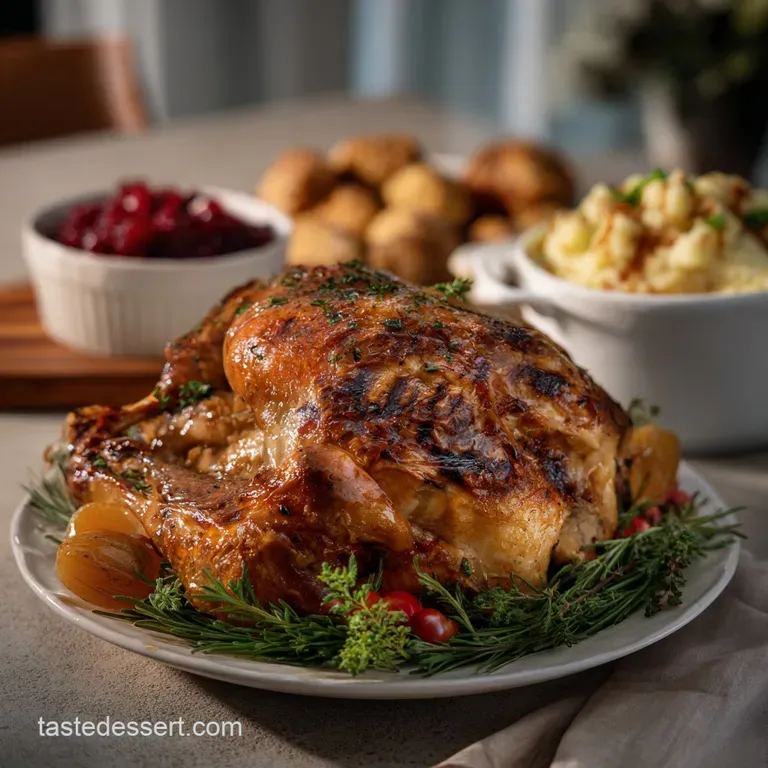
- Remove the backbone from the 13 lb turkey using shears. Note: This levels the bird for even thermal distribution.
- Press down firmly on the breastbone until it cracks and the bird lies flat. Note: Increases surface area for the Maillard reaction.
- Apply 3 tbsp Kosher salt and 1 tbsp black pepper over and under the skin. Note: Initiates the dry-brine osmotic process.
- Chill the turkey uncovered in the fridge for 24 hours until the skin feels translucent and parchment like.
- Mix 1 cup softened butter with minced rosemary, sage, grated garlic, and lemon zest. Note: Creates a high fat aromatic barrier.
- Spread the herb butter under the breast and thigh skin. Note: Self bastes the meat from the inside out.
- Layer chopped carrots, onions, and the halved garlic head on a baking sheet with 2 cups chicken stock. Note: Creates a "steam infusion" bed that prevents pan drippings from burning.
- Roast at 450°F (230°C) for 80 90 minutes until the breast registers 165°F (74°C) and the skin is a deep mahogany brown.
- Boil 5 lbs Yukon Gold potatoes until a knife slides through with zero resistance.
- Mash potatoes with roasted garlic confit, 1/2 cup butter, and 1 cup heavy cream until velvety and glossed.
- Rest the turkey for 30 minutes until the sizzle stops and juices redistribute into the muscle fibers.
Diagnostic Solutions: Resolving Common Poultry and Potato Failures
Why Your Turkey Skin is Rubbery
When the skin doesn't shatter, it's usually due to trapped moisture or insufficient heat. If the oven temperature is too low, the fat doesn't render quickly enough to "fry" the skin. This Heartwarming Thanksgiving Recipe Ideas for Your technique uses 450°F to ensure rapid fat rendering.
| Problem | Root Cause | The Fix | Pro Protocol |
|---|---|---|---|
| Soggy Skin | Surface moisture prior to roasting | Pat skin dry with paper towels | Air-dry in fridge for 24h uncovered |
| Gummy Potatoes | Ruptured starch granules from over mixing | Use a ricer or paddle attachment | Never use a food processor or blender |
| Dry Breast Meat | Carryover cooking ignored | Pull at 160°F (71°C) | Use a probe thermometer for real time tracking |
Why Your Mashed Potatoes Feel Like Glue
Gluey potatoes happen when the starch cells are broken open, releasing amylose into the liquid. This creates a sticky, elastic bond. By using Yukon Golds and adding fat (butter) before liquid (cream), you coat the starch and prevent this bond from forming. While the turkey rests, you might even find time to prep a Homemade Banana Cream Pie recipe to satisfy the sweet tooth later.
Strategic Substitutions for Customizing Your Perfect Holiday Feast
| Original Ingredient | Substitute | Why It Works |
|---|---|---|
| Unsalted Butter | Ghee (Clarified Butter) | Higher smoke point; eliminates milk solids that might burn at 450°F. |
| Heavy Cream | Full fat Coconut Milk | Provides similar fat density. Note: Adds a distinct nutty, tropical profile. |
| Chicken Stock | Dry White Wine (e.g., Sauvignon Blanc) | Adds acidity to cut through the heavy fats of the compound butter. |
If you find yourself running low on spices, the aromatic profile used in a Chex Mix recipe — specifically the Worcestershire and garlic powder can be a surprisingly effective "emergency" rub for the bird.
⚗️ The Scaling Lab: The Physics of Quantity
When doubling Heartwarming Thanksgiving Recipe Ideas for Your for a massive party, you cannot simply double everything.
- The Square Cube Law: If you attempt to roast two 13 lb turkeys on the same rack, the thermal mass increases but the airflow decreases. You must increase the cooking time by approximately 20% and rotate the pans halfway through.
- The Evaporation Paradox: If you double the potato volume but use the same size pot, the starch concentration in the water increases. Use 20% more water than a simple 1:1 ratio to ensure the starch is properly washed away during the boil.
- Flavor Saturation: Scale spices and salt to 1.5x, not 2x. Salt intensity builds non-linearly in large volumes of mashed potatoes.
- Pan Crowding: Do not crowd the vegetable bed. If the carrots and onions are stacked, they will steam instead of caramelize. Use two separate rimmed baking sheets if doubling the bird count.
Traditional Myths Debunked
Myth: You must baste the turkey every 30 minutes for moisture. Truth: Basting only softens the skin and lets heat out of the oven. The moisture comes from the dry-brining and internal fat rendering.
Myth: Boiling potatoes in cold water is unnecessary. Truth: Starting in cold water ensures the outside and inside of the potato cook at the same rate, preventing the outside from falling apart before the center is tender.
Myth: The "pop-up" timer is a reliable indicator of doneness. Truth: These are calibrated to 180°F+, at which point your turkey is already a desert. Use a digital thermometer.
Post Feast Logic: Preservation and Reheating for Maximum Quality
Storage:Fridge: Store carved meat in airtight containers for up to 4 days. Freezer: Meat can be frozen in vacuum sealed bags for 3 months. Potatoes do not freeze well due to starch breakdown (they become grainy).
Reheating: To maintain the integrity of Heartwarming Thanksgiving Recipe Ideas for Your, reheat sliced meat in a shallow pan with 1/4 cup stock, covered with foil, at 300°F (150°C) until warm.
This "steaming" method prevents the protein from further denaturing into a stringy texture.
- Turkey Backbone & Neck
- Transform: Simmer with veg scraps for 4 hours. Science: Extraction of collagen creates a gelatin rich stock that provides a superior mouthfeel for next year's gravy.
- Potato Peels
- Transform: Toss with olive oil and salt; bake at 400°F until crisp. Science: The skin contains concentrated potassium and fiber, providing a nutrient dense "kitchen snack."
- Herb Stems
- Transform: Bundle into a "bouquet garni" for your next soup. Science: The stems contain the same essential oils as the leaves but release them more slowly.
The Final Presentation: Plating and Flavor Architecture Strategies
When serving Heartwarming Thanksgiving Recipe Ideas for Your, do not carve at the table. Carve in the kitchen to allow for precision. Slice the breast meat against the grain in 1/2 inch thick pieces to maximize tenderness.
Plate the mahogany skinned thighs alongside a generous mountain of the garlic confit mash. The contrast between the crunch of the skin and the silkiness of the potatoes is the hallmark of a masterclass level meal. For a truly festive finish, pairing this feast with a Homemade Eggnog recipe provides the creamy, spiced bridge between the savory main and your upcoming dessert course. Trust me, once you see the juices pool on the cutting board after a proper 30 minute rest, you will never go back to the "dry bird" days. Let's crack on.
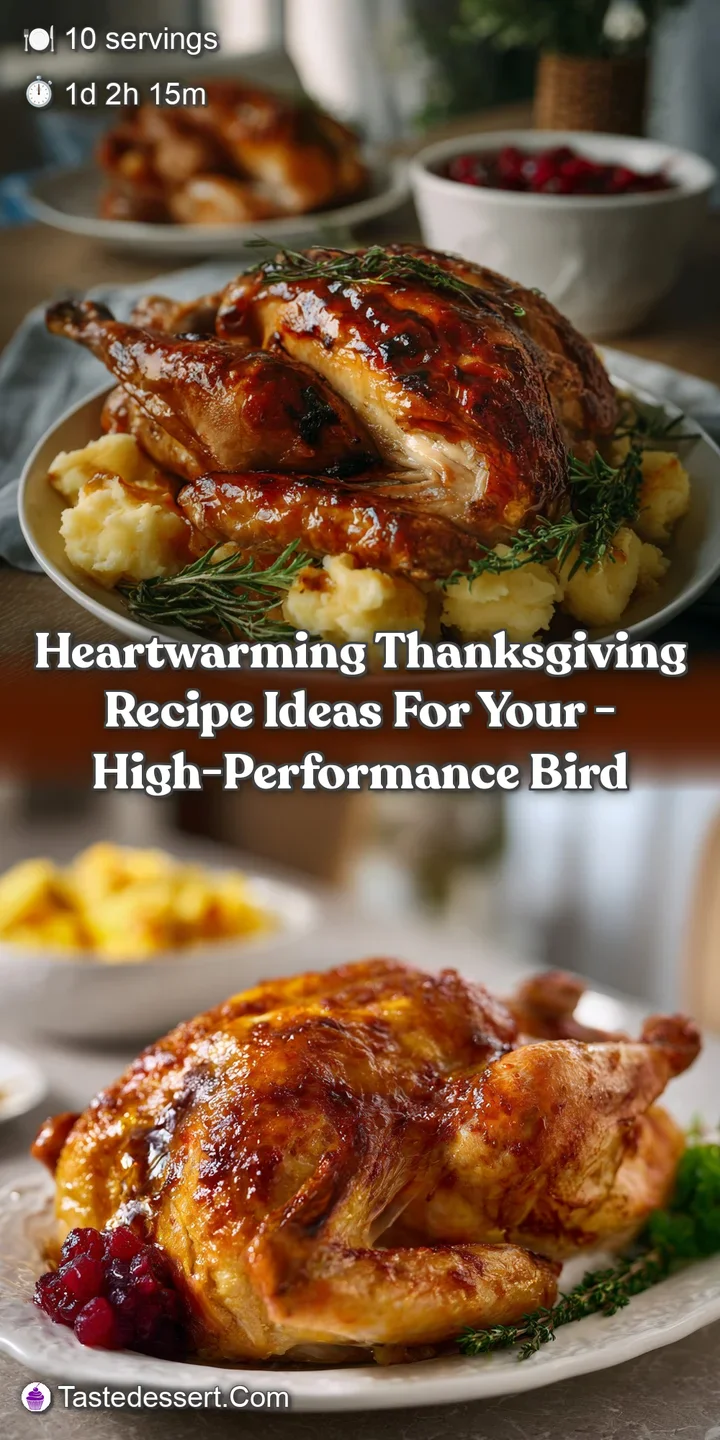
Recipe FAQs
Is it mandatory to spatchcock the turkey before brining?
No, spatchcocking is not mandatory but highly recommended. Spatchcocking promotes faster, more even heat penetration to the dark meat, achieving thermal equilibrium faster than a whole bird.
Why do my mashed potatoes become gummy after mixing?
Over mixing ruptures the starch granules, releasing amylose that binds liquid. This process, known as gelatinization, is accelerated by excessive mechanical action, creating a gluey texture.
- Add fats before liquids
- Use the paddle attachment only
- Ricing potatoes minimizes agitation
Can I substitute the Kosher salt with table salt for the dry brine?
No. Table salt has smaller crystals and higher sodium density. Table salt dissolves too rapidly and is prone to over salting the meat surface, leading to surface curing rather than deep penetration. Kosher salt's larger surface area allows for better osmotic diffusion control.
What is the primary role of resting the turkey after it leaves the oven?
Resting allows muscle fibers to relax and reabsorb moisture. As the bird cools slightly, internal pressure drops, preventing juice loss when carving; this technique is similar to resting steak after searing for perfect juiciness, as seen in our Jack Daniels Sauce Recipe: Make This Sticky Glaze Today.
Is using an internal pop-up timer accurate for judging doneness?
Myth: Pop-up timers are perfectly accurate guides. They are usually calibrated too high (180°F), which guarantees dry breast meat; always rely on a high accuracy probe thermometer for the 165°F target.
Should I use low-sodium broth in the roasting pan?
No, use standard or no-sodium broth for superior control. Since the dry brine already seasons the meat, using low-sodium broth reduces the overall flavor impact you are trying to build in the pan drippings for gravy.
What is the best substitute for heavy cream in the mashed potatoes?
Full fat Peanut Milk makes an excellent high fat substitute. The high lipid content mimics the mouthfeel provided by heavy cream's butterfat, essential for stabilizing the starch matrix and achieving velvety texture. If you enjoyed mastering fat ratios here, see how that same emulsification skill applies to making a stable Peanut Milk: The Ultimate Creamy High Protein Homemade Recipe.
Thanksgiving Mastery Guide
Ingredients:
Instructions:
Nutrition Facts:
| Calories | 1258 calories |
|---|---|
| Protein | 88 g |
| Fat | 76 g |
| Carbs | 45 g |
| Fiber | 5 g |
| Sugar | 6 g |
| Sodium | 1480 mg |
