Sausage Stuffing Casserole: the Ultimate Sage and Thyme Holiday Side Dish
- The Secret to Truly Exceptional Sausage Stuffing
- Achieving the Perfect Crispy Exterior and Moist Interior
- Essential Ingredients for Superior Homemade Sausage Stuffing
- Method: How to Bake and Assemble the Ultimate Stuffing
- Stuffing Savvy: Chef's Tips and Troubleshooting Guide
- Storing, Freezing, and Reheating Leftover Sausage Stuffing
- The Perfect Pairings: What to Serve Alongside Your Stuffing
- Recipe FAQs
- 📝 Recipe Card
The Secret to Truly Exceptional Sausage Stuffing
That smell, oh my gosh, that smell . When you open the oven and that cloud of caramelized sage, thyme, butter, and browned sausage hits you, it instantly transforms a house into a home.
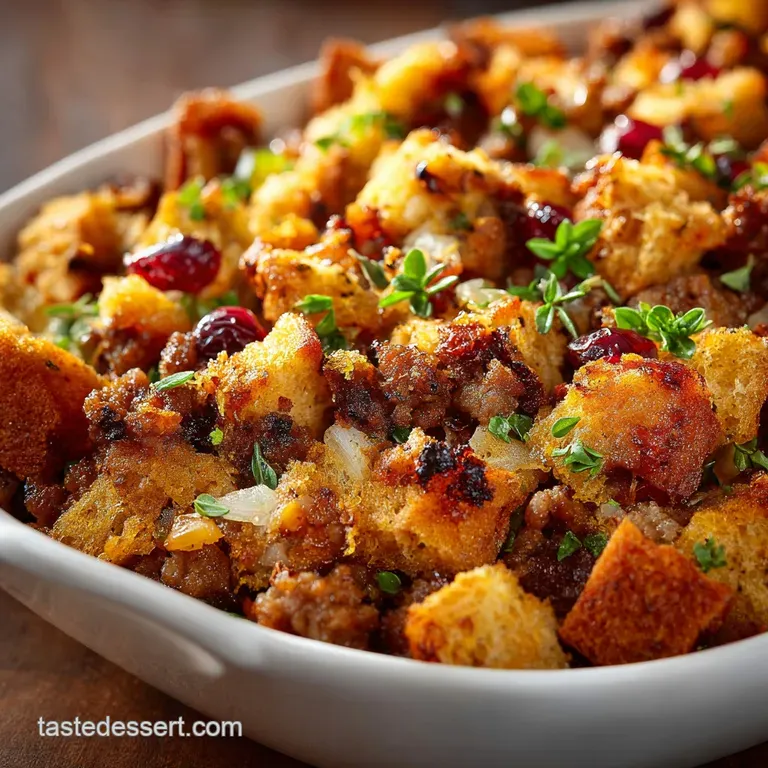
This isn't just a side dish for your holiday table; it's the defining flavour of the season, promising a crunchy crust and a moist, deeply savoury interior.
Forget those dry, cardboard box mixes you see near the gravy aisle. This homemade sausage stuffing recipe is shockingly easy to pull off, requires minimal fussy prep, and tastes infinitely better.
It relies on real butter, proper browning techniques, and enough fresh herbs to make your kitchen smell like a victory garden.
Ready to bake the best stuffing you have ever tried? We are going to dive deep into the specific techniques the secrets I learned the hard way that ensure your stuffing is perfectly balanced. Let’s make a proper, hearty, family favorite sausage stuffing casserole right now.
Achieving the Perfect Crispy Exterior and Moist Interior
What Makes This Stuffing the Ultimate Side Dish?
This recipe truly shines because we treat the sausage like the main event, not just an add-in. The pork sausage provides essential fat and a rich umami backbone that elevates the simple bread and celery base. It’s robust enough to stand up to heavy gravy and rich roasted meats.
The real magic, though, is the texture contrast. We actively work to create two separate textures: a beautifully crunchy, golden brown top layer and a soft, yielding, spongy interior. This delicate balance is achieved entirely through the bread drying process and strategic use of foil while baking.
The Historical Difference: Stuffing vs. Dressing
I get this question all the time. Technically, "stuffing" is cooked inside the turkey cavity, where it absorbs juices but also creates food safety concerns and inconsistent cooking times. Since we are baking this masterpiece separately in a dish, it is technically "dressing." Seriously, who cares?
Call it whatever you like, as long as it makes an appearance at the holiday table.
Equipment Check: Pans, Prep, and Par-Baking
You will definitely need a large skillet or a Dutch oven for browning the sausage and aromatics. More importantly, grab your biggest mixing bowl the one you think is too large. Tossing the stuffing gently is key to achieving that fluffy texture, and a too-small bowl forces you to handle the ingredients roughly.
A standard 9x13 inch baking dish is ideal for this batch.
The Bread-to-Liquid Ratio: Preventing a Soggy Bottom
The biggest mistake I ever made was using fresh bread and drowning it in cold stock. Instant mush! We must use genuinely dry bread cubes that have been lightly toasted with butter. We then use warm stock, adding it gradually until the bread is fully hydrated but not waterlogged.
Chef's Note: When in doubt about hydration, squeeze a bread cube gently. If liquid drips out easily, it’s too wet. If it holds its shape but feels uniformly damp and spongy, you've hit the sweet spot.
Developing Depth: Browning the Sausage and Aromatics
Flavour layers are everything in cooking. We start by thoroughly browning the pork sausage until it develops a beautiful crust. Crucially, we then drain most of the rendered fat but leave a tablespoon or two behind.
That sausage fat, mixed with fresh butter, is the flavour foundation for softening your diced onions and celery. This step is non-negotiable for a deeply savoury stuffing.
Maximizing the Herbaceous Punch of Sage and Thyme
This is a classic preparation, and classic means fresh herbs. The amount of vibrant, piney, savoury flavor that fresh sage and thyme bring is incomparable to dried versions. We activate these herbs by stirring them into the hot butter and aromatics for exactly one minute, just enough time to release their fragrant oils before adding them to the bread mixture.
Essential Ingredients for Superior Homemade Sausage Stuffing
Choosing the Right Pork Sausage
Stick with quality bulk pork sausage; the flavour difference is enormous. I prefer a mild Italian sausage or a high-quality breakfast sausage that already has those essential hints of sage and pepper. If you can only find links, just slice the casing and squeeze the meat right out into the pan.
If you prefer a lighter meat, substituting with turkey sausage is fine, but you will need to add an extra couple of tablespoons of butter because poultry fat renders less.
Selecting and Prepping the Bread Base (Staling vs. Drying)
Your stuffing is only as good as your bread. Use a dense, sturdy bread like sourdough or a rustic Italian loaf. Standard sandwich bread turns into instant mush when liquid is added.
I cube the bread (about 1 inch pieces) and leave it out overnight, or if time is tight, bake it at 300°F (150°C) until hard and slightly crunchy. Dry bread absorbs flavour, wet bread absorbs doom.
Liquid Gold: Broth, Fat, and Binder Alternatives
We rely on warm chicken or turkey stock to hydrate the dry bread evenly and quickly. Warming the stock helps everything blend better. Want it richer? I sometimes sub out half a cup of the stock for heavy cream or evaporated milk, especially when I make this Thanksgiving Stuffing: Buttery Sourdough, Sausage, and Sage Casserole .
| Ingredient | Why It Works | Substitution Notes |
|---|---|---|
| Rustic Bread | Holds shape when hydrated, provides necessary structure. | Any dense bread like Sourdough or French Boule. |
| Pork Sausage | Essential fat and deep savoury seasoning. | Turkey or Chicken Sausage (Add 2 tbsp extra butter/oil). |
| Chicken Stock | Hydrates the bread and adds moisture efficiently. | Vegetable Stock or up to ½ cup heavy cream. |
| Fresh Sage/Thyme | Aromatic anchor; provides classic holiday flavour. | Use 1/3 the amount if substituting with dried herbs (1 tbsp fresh = 1 tsp dried). |
Fresh Herbs vs. Dried Herbs: The Critical Difference
While dried herbs are acceptable in a bind, I urge you to use fresh sage and thyme here. The volatile oils in fresh herbs explode with flavour when they hit the hot butter. If you absolutely cannot find fresh, use one-third the amount listed in the recipe (so 1 teaspoon of dried sage instead of 1 tablespoon of fresh).
Method: How to Bake and Assemble the Ultimate Stuffing
Step 1: Rendering the Sausage and Building the Flavor Base
Start by browning the pound of pork sausage in your skillet over medium high heat. Break it into small crumbles as it cooks until no pink remains. Drain off almost all the rendered fat and set the cooked sausage aside in your large mixing bowl with the dried bread.
Now, melt the remaining butter (8 tablespoons) into the skillet along with the residual sausage fat. Sauté the onion and celery for 8– 10 minutes until soft and translucent. Stir in the minced garlic, fresh sage, and thyme, cooking for just one minute until fragrant.
Step 2: Combining Wet and Dry Ingredients Correctly
Pour the hot aromatic mixture from the skillet directly over the bread and sausage. Toss this mixture gently to make sure every cube is coated in butter and herb oils. Next, pour in the lightly beaten eggs and the fresh parsley. Finally, start adding the warm stock slowly, beginning with 2 cups.
Toss lightly until the bread looks fully saturated but not soggy. You might need the extra half cup, but don't dump it all in unless the mixture still looks dry near the bottom.
Step 3: Baking for Texture (Covered vs. Uncovered)
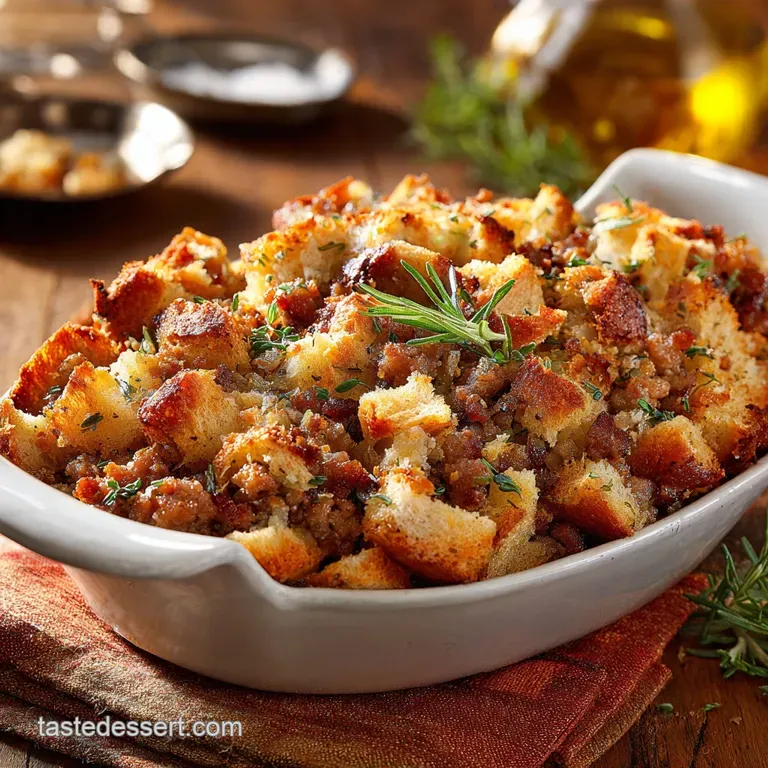
Transfer the assembled stuffing to your buttered baking dish. Do not pack it down tightly; a looser mixture bakes up fluffy and allows steam to escape. Cover the dish tightly with foil. Bake in a preheated 375°F (190°C) oven for 30 minutes.
This covered stage traps moisture and ensures the center cooks fully. Remove the foil and bake for an additional 15– 20 minutes, or until the top is gorgeously golden brown and crispy.
Stuffing Savvy: Chef's Tips and Troubleshooting Guide
People tend to fail at stuffing when they rush the bread prep or get sloppy with the liquid. Here are the common pitfalls and easy fixes:
- The Soggy Center: This happens because the bread wasn't dry enough or you added cold stock too quickly. Fix: Use only thoroughly dried bread. If you suspect it's too wet before baking, fold in another handful of dried, unbuttered bread cubes to soak up the excess liquid.
- The Dry, Crumbly Mess: You didn't add enough fat or stock, or you baked it uncovered for too long. Fix: Ensure you use the full 12 tablespoons of butter/fat mixture. If it looks dry mid-bake, gently pour an extra splash of warm stock (about ¼ cup) around the edges and re-cover immediately with foil.
- The Dense Brick: This happens when you press the mixture into the baking dish too hard. Fix: Scoop the mixture loosely into the dish. If you need a smaller, individual serving option, try baking them as stuffing "balls" or scoops instead, like I did for this alternative method: Sausage Stuffing: The Butchers Best Classic Sage Onion Recipe .
Storing, Freezing, and Reheating Leftover Sausage Stuffing
Safe Storage Guidelines for Stuffing Containing Meat
Because this stuffing contains both eggs and meat, handling leftovers safely is important. Cool the stuffing quickly after it comes out of the oven. Transfer any leftovers to an airtight container and refrigerate within two hours of baking. It will keep beautifully for three to four days.
Best Practices for Freezing Cooked Sausage Stuffing
Good news, stuffing freezes like a dream! Make sure it’s completely cooled, then scoop it into a freezer safe container or heavy duty freezer bag, pressing out all the excess air. It holds its flavour and texture well for up to two months.
When freezing, I sometimes separate the crispiest bits and store them separately, adding them back during reheating for maximum crunch.
Reheating Without Losing the Crispness
Please don't nuke this beautiful stuffing in the microwave; it will turn rubbery and soft. The best method is to reheat leftovers, covered, in a 350°F (175°C) oven for about 15– 20 minutes. If it seems dry, sprinkle a teaspoon of stock over the top before covering with foil.
For the last five minutes, remove the foil to re-crisp that glorious top layer.
The Perfect Pairings: What to Serve Alongside Your Stuffing
Stuffing is the star, but it needs a great supporting cast. This robust, savoury sausage stuffing is the ultimate partner for roasted turkey, roast chicken, or a hearty glazed ham.
It simply demands a rich, silky gravy (made with pan drippings, naturally) and a tart, homemade cranberry sauce to balance the richness of the pork and butter.
Can I Make Sausage Stuffing Ahead of Time?
Yes, absolutely! You can prep the entire recipe up to the point of combining wet and dry ingredients two days in advance. Cook the sausage and aromatics (Step 1), store them covered in the fridge, and keep your dried bread cubes stored at room temperature.
Warning: Do not mix the wet stock into the bread more than a few hours before baking, or the bread structure will collapse, resulting in a soggy, dense bake.
Adjusting the Recipe for Different Batch Sizes
If you need to double this recipe for a huge gathering, don't try to cram it all into one massive pan. Use two separate 9x13 inch baking dishes instead. Overcrowding the dish prevents proper moisture evaporation and stops the sides from getting that desirable crisp crust.
Use the same proportions and follow the cooking steps exactly for each pan.
Diagnosing and Fixing a Dry or Overly Wet Stuffing
If you realize before baking that you've added too much liquid, quickly fold in a handful of extra dried bread cubes or even a little plain flour to absorb the excess. Conversely, if your stuffing seems crumbly and dry when you mix it, use a little more warm stock until the mixture just holds together when squeezed. For those who want to compare notes on achieving different moisture levels, you might enjoy my discussion on texture over at Homemade Stuffing Recipe: Classic Sage and Thyme Bread Stuffing .

Recipe FAQs
Why is my sausage stuffing too dry or crumbly?
Dry stuffing is usually a result of insufficient binding liquid (broth or egg) or baking it uncovered for too long. Ensure you add broth gradually until the mixture is uniformly moist, resembling wet sand, and loosely pack it into the baking dish.
If it is already baked, you can try adding a spoonful of melted butter or warmed broth to the portion before serving to restore moisture.
How do I prevent the bottom layer of the stuffing from becoming soggy?
Soggy bottoms occur when the bread cubes are over soaked or the stuffing bakes directly in rendered fat. Always use sturdy, day-old or toasted bread cubes, which absorb liquid without turning mushy.
If you brown the sausage and vegetables in the baking dish, drain off excess grease before mixing in the bread and baking. Baking for the final 10-15 minutes uncovered also helps crisp up the surface.
Can I prepare the sausage stuffing ahead of time?
Yes, sausage stuffing is an excellent dish for make-ahead preparation. You can assemble the stuffing completely (cooking the sausage, mixing with the bread and liquids) up to 24 hours in advance.
Cover the baking dish tightly and refrigerate. Before baking, let it stand at room temperature for 30 minutes to ensure even cooking and add a splash of extra broth if the bread seems to have absorbed too much liquid overnight.
Is it safe to cook this sausage stuffing inside the turkey or chicken?
It is generally discouraged by culinary experts and food safety boards to cook stuffing inside poultry. The stuffing often struggles to reach the required safe internal temperature of 165°F (74°C) before the outer meat of the bird overcooks.
For the safest and best results, always bake the stuffing separately in a casserole dish. This allows better temperature control and guarantees that both the meat and the stuffing are cooked properly.
What types of bread work best for this recipe, and can I use gluten-free options?
A sturdy, crusty bread like sourdough, ciabatta, or simple white sandwich bread works best, provided it is dried out first. Avoid soft, fresh loaves as they break down too quickly when mixed with wet ingredients.
For gluten-free variations, use a high-quality gluten-free bread that has been adequately cubed and toasted. The structure is key, so ensure the gluten-free bread doesn’t crumble when absorbing the liquid.
Can leftover sausage stuffing be frozen?
Absolutely, sausage stuffing freezes very well. Allow the baked stuffing to cool completely after dinner, then transfer it to an airtight, freezer safe container or wrap individual portions tightly in foil and then a freezer bag.
It will retain its quality for up to three months. To reheat, thaw overnight in the refrigerator and bake covered at 350°F (175°C) until piping hot throughout, adding a splash of broth if necessary to restore moisture.
How can I adapt this recipe to include different meats or vegetarian options?
For a richer flavor, you can substitute the standard pork sausage with spicy Italian sausage or substitute half the sausage mixture with ground veal or lamb. Ensure you drain any excess fat regardless of the meat choice.
To make it vegetarian, substitute the sausage entirely with sautéed mushrooms (cremini and shiitake) and fortified vegetable broth. Adding toasted pecans or walnuts can replace the missing meaty texture.
Ultimate Sage Sausage Stuffing
Ingredients:
Instructions:
Nutrition Facts:
| Calories | 375 kcal |
|---|---|
| Fat | 22.5 g |
| Fiber | 3 g |
