Velvety Egg Casserole Recipes: the No-Rubbery Cure
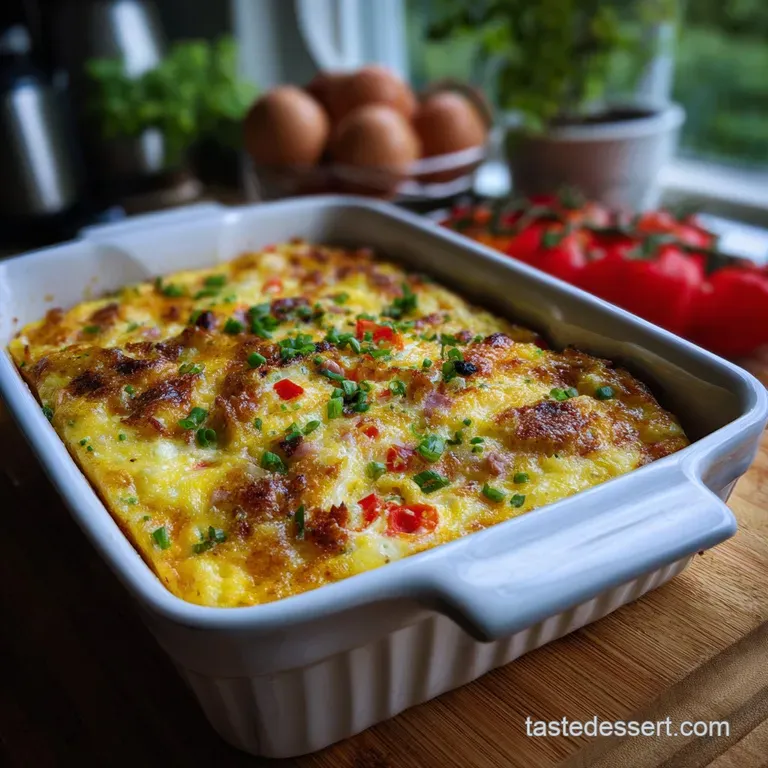
- Effort/Time: 20 minute prep / 1 hour total
- Flavor Hook: Smoked paprika and sharp cheddar create a savory, mahogany-crusted finish.
- Perfect for: Low-carb meal-prep and high-protein-density brunches.
- Engineering the Perfect Texture in Your Egg Casserole Recipes
- Scientific Foundations: Why This Casserole Defies Physics
- Critical Chronometry: Prep and Thermal Exposure Timelines
- The Alchemy of Umami: Selecting Your Elements
- Essential Arsenal: The Technical Tools for Success
- The Sequential Protocol for Maximum Structural Integrity
- Diagnostics and Recovery: Solving Texture Failures
- Architectural Variations: Adapting the Foundation
- ⚗️ The Scaling Lab: The Physics of Quantity
- Thermal Preservation and Zero-Waste Longevity
- Optimal Presentation and Complementary Flavor Pairings
- Recipe FAQs
- 📝 Recipe Card
Engineering the Perfect Texture in Your Egg Casserole Recipes
There is nothing more discouraging than investing forty dollars in organic produce and pasture raised proteins only to pull a grey, weeping, rubbery sponge out of the oven. I’ve seen it happen at countless brunch gatherings the center of the bake is a pool of liquid while the edges have the structural integrity of a discarded tire.
Most egg casserole recipes fail because they treat eggs like a solid block of protein rather than a delicate emulsion that requires specific temperature management and moisture buffering to remain tender.
I spent years ruining Saturday mornings by over whisking my eggs or choosing the wrong fat-to-protein ratio before I understood the physics of coagulation. I once served a "brunch masterpiece" that was so watery I had to drain the pan with a turkey baster while my guests waited a humbling moment that forced me to reconsider the chemistry of the bake.
I realized then that the secret isn't just adding more cheese; it's about managing the way protein strands tighten and push out moisture as they heat.
The breakthrough came when I applied the principle of "moisture buffering" using small curd cottage cheese. This creates a velvety, melt-in-the-mouth crumb that maintains its shape without the heavy, glycemic spiking bread cubes found in traditional egg casserole recipes. The result is a dish with a shattering, mahogany brown top and a center that jiggles slightly before setting into a dense, savory custard. If you enjoy the custard like richness of a Homemade Eggnog recipe, you will recognize the same structural elegance in this savory application.
Scientific Foundations: Why This Casserole Defies Physics
- Protein Buffering: Small curd cottage cheese acts as a thermal insulator, preventing the 12 large eggs from over coagulating and becoming tough.
- Maillard Optimization: Rendering the 1 lb ground pork sausage first creates a foundation of browned compounds (melanoidins) that infuse the entire bake.
- Emulsion Stability: The 1/2 cup whole milk provides the necessary lactose and fat to keep the egg proteins suspended in a liquid yet-solid state.
- Osmotic Moisture Control: Salting the bell peppers during the sauté phase draws out excess water, preventing the bake from becoming soggy.
Critical Chronometry: Prep and Thermal Exposure Timelines
Mastering egg casserole recipes requires strict adherence to the thermal timeline to ensure the center reaches safety without the edges desiccating.
- Prep Time: 20 minutes
- Cook Time: 45 minutes
- Total Time: 1 hour 5 mins
- Yield: 9 servings
The Alchemy of Umami: Selecting Your Elements
Selecting the right components is the difference between a mediocre breakfast and a masterclass level egg casserole recipes experience.
- 1 lb Ground Pork Sausage: Why this? High fat-to-lean ratio (approx. 30/70) provides essential lipids for flavor carriage.
- 12 Large Eggs: Why this? The primary binder; provides the sulfurous backbone of the dish structure.
- 2 cups Small Curd Cottage Cheese: Why this? Provides moisture retaining curds that melt into creamy pockets during baking.
- 2 cups Sharp Cheddar Cheese: Why this? High acidity and aged protein crystals (tyrosine) add sharp, savory depth.
- 1 cup Red Bell Pepper: Finely diced for even distribution and sweetness.
- 1/2 cup Yellow Onion: Minced to dissolve into the fat.
- 2 cloves Garlic: Minced.
- 1/2 cup Whole Milk: Why this? Balances the protein-to-fat ratio for a smoother set.
- 1 tsp Diamond Crystal Kosher Salt: Specific grain size for even seasoning.
- 1/2 tsp Cracked Black Pepper: Freshly ground for volatile oil release.
- 1/2 tsp Smoked Paprika: Adds wood fired depth and color.
- 2 tbsp Fresh Chives: For a bright, onion forward finish.
Ingredient Chemistry Breakdown
| Ingredient | Chemical/Physical Role (Science) | The Pro Secret (Why This Matters) |
|---|---|---|
| 12 Large Eggs | Protein denaturation & coagulation | Whisk just until combined to avoid air-tunneling (sponginess). |
| Cottage Cheese | Moisture buffering & acid stabilization | Curds prevent the egg matrix from tightening into a "rubber" state. |
| Ground Pork | Maillard reaction & lipid rendering | Sautéing first builds the umami base that eggs lack naturally. |
| Sharp Cheddar | Emulsified fat & salt delivery | High fat cheese adds "slip" to the mouthfeel of the bake. |
Essential Arsenal: The Technical Tools for Success
Using the correct tools prevents uneven heat distribution, which is a common killer of egg casserole recipes.
- Lodge 12 inch Cast Iron Skillet: For rendering the sausage and sautéing aromatics with superior heat retention.
- 9x13-inch Pyrex Baking Dish: The standard surface area to ensure the egg depth allows for a 45 minute cook without burning.
- KitchenAid Balloon Whisk: Essential for incorporating the milk and spices into the eggs without over aerating.
- Microplane Grater: If using block cheese, this ensures a fine shred that melts instantly.
The Sequential Protocol for Maximum Structural Integrity
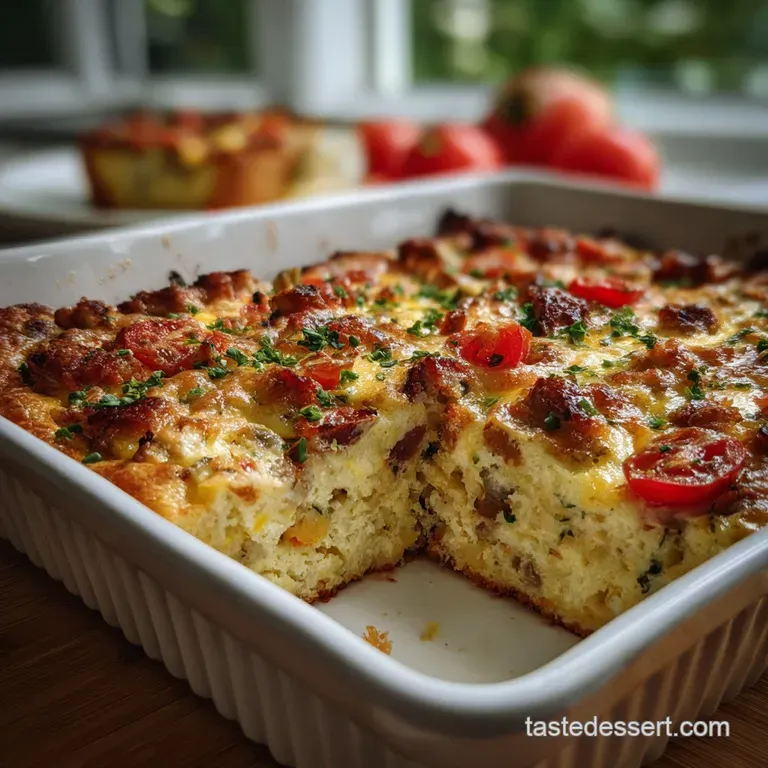
Follow these steps exactly to ensure your egg casserole recipes achieve the desired density and flavor.
- Preheat the oven to 375°F (190°C). Note: Critical for immediate surface setting.
- Brown 1 lb ground pork sausage in a Lodge skillet for 8 minutes until mahogany brown and fat is fully rendered.
- Sauté 1 cup red bell pepper and 1/2 cup yellow onion in the rendered fat for 5 minutes until edges are translucent and onions smell sweet.
- Add 2 cloves minced garlic for 1 minute until fragrant but not browned.
- Whisk 12 large eggs, 2 cups cottage cheese, 1/2 cup whole milk, 1 tsp salt, 1/2 tsp pepper, and 1/2 tsp smoked paprika in a large bowl until the mixture is a uniform pale yellow with visible curds.
- Incorporate the cooked sausage and vegetable mixture into the egg base.
- Fold in 1.5 cups of the sharp cheddar cheese.
- Transfer the mixture into a greased 9x13-inch baking dish.
- Bake for 35 minutes until the edges are puffed and a pale golden brown.
- Sprinkle the remaining 1/2 cup cheddar on top and bake for another 10 minutes until the cheese bubbles and the center jiggles only slightly when shaken.
- Rest the casserole for 10 minutes until the carryover heat sets the center completely.
- Garnish with 2 tbsp fresh chives before slicing.
Diagnostics and Recovery: Solving Texture Failures
Why Your Egg Casserole Weeps
When egg casserole recipes sit and a pool of water forms at the bottom, you are witnessing "syneresis." This is the scientific term for when protein strands tighten so much they squeeze out the water they were holding.
| Problem | Root Cause | The Fix | Pro Protocol |
|---|---|---|---|
| Liquid in pan | Overcooking or high heat | Pull the dish at 160°F internal | Use cottage cheese to buffer the heat. |
| Rubbery texture | Excessive whisking (air) | Whisk by hand, not machine | Stop as soon as the yolk and white are one. |
| Soggy bottom | Raw vegetables | Sauté veggies before adding | Salt the peppers while cooking to purge water. |
Architectural Variations: Adapting the Foundation
While the base of egg casserole recipes is reliable, you can modify the textures by introducing different lipids or binders. If you are looking for a more traditional holiday feel, you might consider the techniques used in a Thanksgiving Stuffing recipe, though this version remains bread free for a lighter profile.
Ingredient Substitution Matrix
| Original Ingredient | Substitute | Why It Works |
|---|---|---|
| Ground Pork Sausage | Ground Turkey + 1 tbsp Olive Oil | Turkey lacks fat; oil restores the "slip" needed for mouthfeel. |
| Whole Milk | Heavy Cream | Increases fat content for a denser, richer custard. |
| Sharp Cheddar | Pepper Jack | Adds capsaicin heat and a creamier melt profile. |
Chef's Note: For healthy egg casserole recipes, swap the pork sausage for sautéed mushrooms and spinach. Ensure you squeeze every drop of moisture out of the spinach, or the bake will fail the structural integrity test.
⚗️ The Scaling Lab: The Physics of Quantity
When you double egg casserole recipes for a large crowd, the thermodynamics change drastically.
- The Evaporation Paradox: If you double the batch in two separate 9x13 pans, the cooking time remains roughly the same. However, if you use one deep industrial pan, the center will take 40% longer to cook. Fix: Lower the temperature to 350°F to prevent the edges from burning while the center catches up.
- Flavor Saturation: Do not double the salt. Scale salt to 1.75x for a 2x batch. Sodium ions penetrate more efficiently in larger volumes.
- Pan Crowding: If you are browning 2 lbs of sausage in one skillet, you will drop the pan temperature, causing the meat to steam in its own juices. Mandatory: Cook the meat in two batches to ensure the Maillard reaction occurs.
Thermal Preservation and Zero Waste Longevity
Egg casserole recipes are the champions of meal prep because they maintain their structure through multiple thermal cycles.
- Fridge: Store in an airtight container for up to 4 days. The proteins will firm up, making it easier to slice cold.
- Freezing: This recipe freezes remarkably well due to the cottage cheese. Wrap individual slices in parchment paper, then foil. Freeze for up to 2 months.
- Reheating: Avoid the microwave if possible; it causes the egg proteins to snap and become rubbery. Reheat in a 325°F oven for 12 minutes to maintain the "velvety" center.
💡 ZERO WASTE PHILOSOPHY: Don't discard the fat left in the skillet after browning the sausage. Transform: Use it to sauté your peppers and onions.
Science: The rendered pork fat contains dissolved flavor compounds from the sausage spices that water based sautéing cannot capture.
Optimal Presentation and Complementary Flavor Pairings
When serving egg casserole recipes with cottage cheese, you want to contrast the rich, fatty mouthfeel with something acidic or bright.
- Pairing: Serve alongside a crisp arugula salad with a lemon shallot vinaigrette. The acidity cuts through the 24g of fat per serving.
- Texture Contrast: A side of crispy hash browns (see our egg casserole recipes with hash browns variations) provides the "crunch" that a breadless bake lacks.
- Drink Pairing: If serving for brunch, a spicy Bloody Mary complements the smoked paprika, or a chilled mimosa provides a bright counterpoint to the sharp cheddar.
For those seeking egg casserole recipes no bread, this specific formula provides 29g of protein per serving, making it an elite option for sustained energy. It follows the same logic as a high-quality Green Bean Casserole recipe, focusing on the harmony between the creamy binder and the savory inclusions. Whether you are making egg casserole recipes for brunch or a simple weekday breakfast, the key is the rest time. Letting the casserole sit for ten minutes allows the protein matrix to relax, ensuring every bite is velvety rather than tough. This is how you master the art of the bake.

Recipe FAQs
What is an egg casserole called?
Strata, frittata, or breakfast bake. These terms denote baked dishes where eggs are the primary structural binder, often mixed with cheese, meat, or vegetables.
What is an egg casserole?
A high protein, baked dish set with eggs. It functions as a convenient, single pan meal, contrasting sharply with stovetop scrambles because it sets via oven convection heat.
What is a breakfast casserole recipe?
A layered, savory bake containing eggs, starches, and proteins. These recipes are optimized for bulk preparation and often use bread or potatoes as a base layer to soak up the liquid emulsion.
Why does my egg casserole get watery after baking?
Protein strands squeezed out moisture (syneresis). Overcooking causes the egg matrix to tighten excessively, forcing bound water out into the pan.
- Reduce oven temperature slightly
- Introduce cottage cheese buffer
- Use freshly grated cheese exclusively
Is using cottage cheese in egg casserole the same as using milk?
No, cottage cheese provides structural buffering. Milk primarily adds moisture and fat, but the small curds in cottage cheese insulate the egg proteins from rapid coagulation. If you are mastering texture control in emulsions, see how that principle applies when making The Perfect Custard Scramble How to Make Silky Smooth Eggs.
Myth: You must use bread in an egg casserole to hold it together.
Myth: Bread provides necessary starch to soak up liquid and provide structure. Reality: High fat dairy, like cottage cheese, provides superior moisture buffering to create a tight, breadless set.
Should I use fresh eggs or refrigerated eggs for the best rise?
Fresh eggs provide better lift due to retained albumen viscosity. Refrigeration causes the thick albumen (egg white) to thin out over time, leading to a flatter final product.
Velvety Cottage Cheese Egg Casserole
Ingredients:
Instructions:
Nutrition Facts:
| Calories | 385 kcal |
|---|---|
| Protein | 29 g |
| Fat | 24 g |
| Carbs | 5 g |
| Fiber | 1 g |
| Sugar | 3 g |
| Sodium | 785 mg |
