The Colour Magic Violet Simple Syrup a Taste of Spring
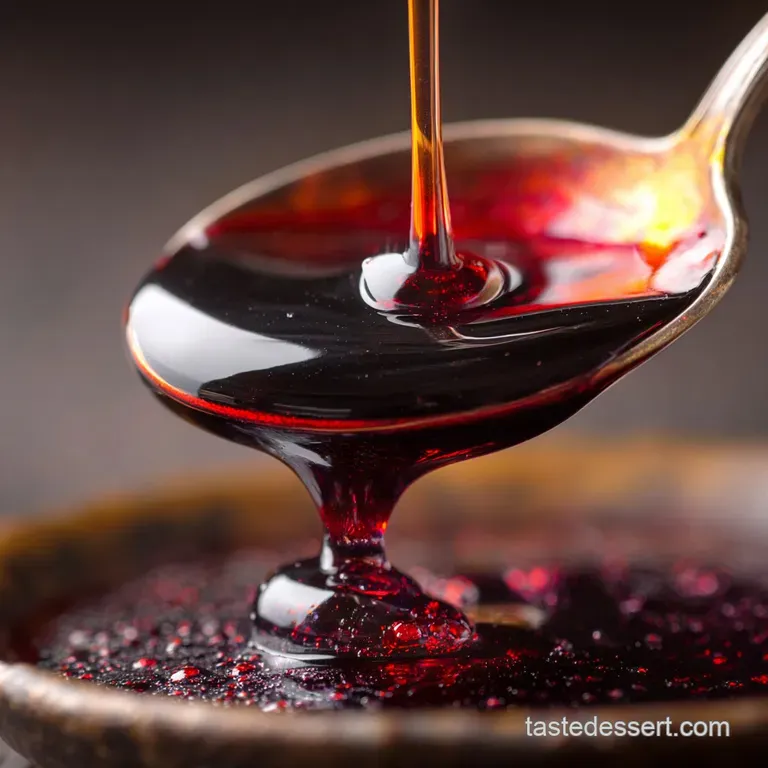
Bottling Early Spring: The Magic of Violet Simple Syrup
There is nothing quite as satisfying as capturing the fleeting essence of spring in a jar, and this Violet Simple Syrup is true culinary alchemy. By turning humble, foraged blossoms into a vibrant, jewel toned elixir, we create an elevated ingredient essential for sophisticated mixology and patisserie.
This homemade syrup stands leagues above any commercially produced counterpart, offering depth, brightness, and a natural floral perfume. If you’ve been searching for truly rewarding Edible Flowers Recipes , look no further.
Understanding the Delicate Flavour Profile of Wild Violets
Wild violets ( Viola odorata in particular) possess a truly unique taste that is often poorly imitated in artificial flavourings. Their flavour is subtly sweet, intensely floral, and carries a surprisingly verdant, almost faintly grassy undertone.
This delicate complexity is precisely why crafting a great violet simple syrup recipe requires patience and careful temperature control. We aim to extract the sweet perfume without introducing the bitter notes that reside in the stems and leaves.
When properly made, the resulting Violet Simple Syrup is an elegant, highly concentrated dose of springtime.
The Essential Golden Rules of Foraging and Preparation
Safety must always come first. Before starting this project, you must ensure that your flowers are 100% positively identified as edible violets, and that they have been collected far away from roadsides, public parks, or areas that may have been treated with pesticides or herbicides.
Once gathered, careful preparation is paramount to achieving a pure flavour. You must spend the time gently rinsing the flowers and meticulously plucking away all significant green stems, as these are the source of undesirable bitterness. Only the petals and the tiny green calyxes should remain.
How the pH Shift Creates That Stunning Jewel Tone
One of the most thrilling steps in making this purple simple syrup is the final colour activation. When the dried violets are initially steeped in hot water, the resulting liquid is often a dark, unappealing murky blue or grey.
This dull shade occurs because the natural pigments (anthocyanins) in the violet petals act as pH indicators, and tap water is usually neutral or slightly alkaline. The magic happens when we introduce a small amount of acid, such as fresh lemon juice, which shifts the pH dramatically.
This adjustment instantly transforms the dull blue liquid into the breathtakingly vibrant magenta or shocking purple for which this Homemade Syrup is famous.
Gathering Your Supplies: What You Need for This Elixir
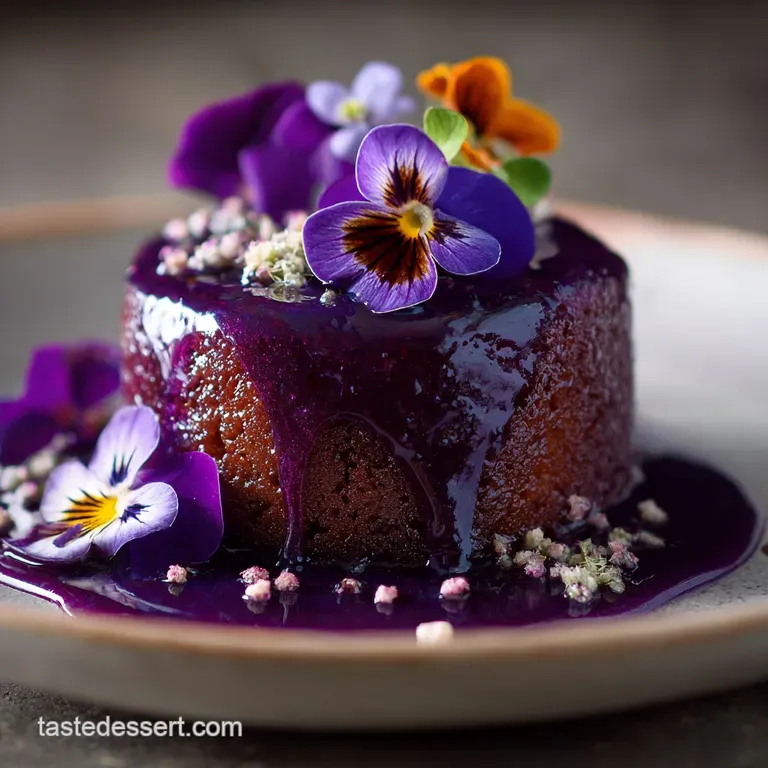
Moving from theory to execution requires just a handful of standard kitchen items and a clear understanding of ratios. This recipe is fundamentally simple, relying on the classic simple syrup structure combined with the power of botanical infusion.
Precise Measurements for the Perfect Sugar-to-Water Ratio
For our floral infusion base, we start with 2 cups of lightly packed, cleaned violet petals. These will be infused in 1 cup (240ml) of filtered water. Once strained, this liquid is combined with 1 cup (200g) of granulated white sugar.
This ensures a classic 1:1 simple syrup ratio by volume, guaranteeing stability and adequate sweetness, resulting in approximately 1.5 cups of finished, concentrated elixir. Using filtered water is highly recommended as it prevents mineral impurities from dulling the final colour or flavour.
Ensuring Purity: Essential Tools for Straining the Violet Simple Syrup
The quality of the finished product largely depends on clarity. While a standard fine mesh sieve is necessary for removing the bulk of the spent flowers after infusion, achieving the desirable glass like translucence requires specialized help.
We strongly recommend lining your sieve with either a double layer of muslin cloth, good quality cheesecloth, or a simple paper coffee filter during the straining process. This slow, passive filtration captures any remaining particulate matter, ensuring your violet simple syrup is crystal clear and visually stunning.
The Importance of Rinsing and Drying the Petals
As mentioned during the preparation phase, the petals must be meticulously cleaned to remove dirt or insects. However, after a quick, gentle rinse under cool water, it is crucial to carefully pat the flowers dry using a clean kitchen towel or paper towel before beginning the steep.
Any residual moisture will dilute the precise sugar-to-water balance we established, potentially weakening the flavour concentration and shortening the shelf life of the final Cocktail Syrups .
Related Recipes Worth Trying
- Blueberry Mojitos with Lavender Syrup A Sophisticated Summer Cooler — Elevate your classic Cuban cocktail Our Blueberry Mojitos with Lavender Syrup blend jammy fruit with floral elegance Includes a foolproof Lavender Syrup...
- Seriously Simple Homemade Cinnamon Rolls From Scratch — Ditch the tube These homemade Cinnamon Rolls are easy to make with a reliable yeast dough for the best sticky soft texture Get the recipe
- Best Ever Buttery Shortbread Cookies Recipe Simple Crisp — Forget fussy bakesthis easy shortbread cookies recipe delivers ultimate meltinyourmouth texture using just three core ingredients Perfect for tea time Get...
step-by-step Culinary Alchemy: Crafting Your Violet Simple Syrup
The process of making floral simple syrup is broken down into three key stages: infusing, dissolving, and activating. Follow these steps precisely to achieve the best flavour and colour result.
Preparing the Hot Water Infusion Base
First, gather the prepared 2 cups of clean violet petals and place them into a heatproof bowl or jug. Next, bring 1 cup (240ml) of filtered water to a rolling boil, but immediately remove it from the heat and let it cool for about 30 60 seconds.
Pouring actively boiling water directly onto the petals can ‘cook’ the delicate flavour, leading to a duller taste. Pour the slightly cooled hot water over the violets and stir gently.
Cover the bowl loosely and allow this base to steep at room temperature for a minimum of 4 hours, though 12– 24 hours will yield a far deeper, more perfumed flavour essential for a true violet simple syrup recipe .
The Crucial Simmer and Dissolution Phase
After the petals have fully infused, strain the resulting murky blue liquid into a medium saucepan, pressing gently on the solids to extract as much liquid as possible but avoid vigorous squeezing, which can release more bitter compounds. Discard the spent flowers.
Add the 1 cup (200g) of white granulated sugar to the saucepan. Heat the mixture gently over medium low heat, stirring constantly until the sugar is completely dissolved. It is vital not to let the mixture come to a rapid, rolling boil during this phase, as high heat can immediately degrade the volatile floral compounds we worked so hard to extract.
Sealing the Deal: The Acid Adjustment for Final Colour
Once the sugar is fully dissolved and the liquid is clear, immediately remove the syrup from the heat. Now comes the moment of transformation! Stir in the final, critical ingredient: 1 teaspoon (5ml) of fresh lemon juice.
Watch closely as the previously dull blue liquid instantly snaps into a brilliant, luminous magenta or deep purple. This final step not only stabilizes the colour but also adds a subtle, balancing tartness that makes this specific purple simple syrup exceptionally suitable for use in beverages.
Extending the Magic: Storage, Serving Suggestions, and Pro Tips
Once you have crafted this stunning elixir, the possibilities for application are limitless. Knowing how to store it correctly ensures its vibrant colour and fresh flavour last as long as possible.
Creative Ways to Utilize This Floral Syrup in Drinks and Desserts
The question, What is violet syrup used for? has endless answers. Naturally, it excels as one of the finest Cocktail Syrups available, perfectly complementing clear spirits like gin and vodka, adding an incomparable visual and aromatic dimension to classic drinks.
Try substituting it for standard simple syrup in a Tom Collins or shaking it into chilled Prosecco for an instant ‘Kir Violette.’ Beyond mixology, this syrup makes a phenomenal glaze for lemon cakes, can be drizzled over creamy desserts like panna cotta, or simply mixed with sparkling water for a refreshing, non-alcoholic cordial.
Preserving the Vibrancy: Best Practices for Long Term Storage
Because this Homemade Syrup contains no artificial preservatives, careful storage is necessary. Ensure your chosen glass bottle or jar is thoroughly cleaned and sterilised before filling, using either a hot water bath or commercial sterilizing solution.
Once the syrup has cooled completely to room temperature, seal it tightly and transfer it to the refrigerator. When properly stored in a sterilised container, this Violet Simple Syrup will maintain its flavour and intense colour vibrancy for up to one month.
For longer storage, it can be frozen in small batches for several months.
Troubleshooting Common Issues (Cloudiness or Fading Colour)
If your finished syrup appears cloudy, it usually indicates tiny fragments of petals or impurities were left behind during straining. The solution is simple: strain the cooled syrup again slowly through a coffee filter.
If the colour appears dull or brownish, you may have used water that was too hot during the initial steep, or you didn't add enough acid. If the colour is simply dark blue or grey, try adding another small drop of lemon juice until the magenta hue pops through.
Scaling the Recipe for Larger Batches
One of the great advantages of using a consistent 1:1 sugar-to-water ratio is the ease of scaling. If you have a particularly abundant harvest of violets, you can easily double or triple this recipe, provided you maintain the proportions: for example, 4 cups of violets, 2 cups of water, 2 cups of sugar, and 2 teaspoons of lemon juice.
Always ensure that when scaling, the proportional amount of lemon juice is also increased, as it is non-negotiable for achieving that signature deep purple colour.
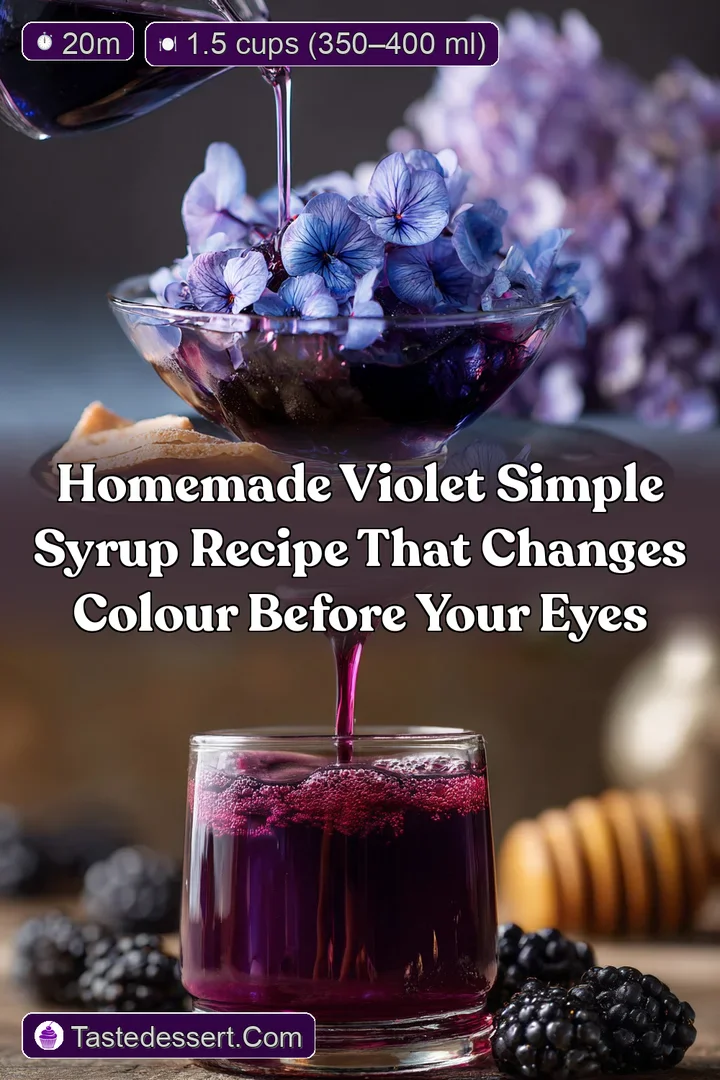
Recipe FAQs
Why did my infusion turn a muddy blue or grey colour? Did I ruin the beautiful purple?
Don't panic, darling! That murky blue or grey colour is completely normal at the steeping stage and simply reflects the pH of the flower pigments reacting with the water. The secret to unlocking that vibrant, shocking magenta hue lies entirely in the acid.
You need the full teaspoon of lemon juice added at the very end it's the culinary alchemy that instantly transforms the blue into the desired jewelled purple.
Are all violets safe to use in this Violet Simple Syrup? What if I accidentally used leaves?
A good question on safety! When dealing with foraged ingredients, certainty is paramount. You must be 100% sure you are using edible varieties, such as Viola odorata, and that they have been grown away from roadsides or sprays.
If you included large amounts of green leaves or stems, it is highly likely your syrup will carry a slightly bitter flavour, as those parts contain tannins. We highly recommend meticulous preparation to keep the flavour clean.
How long can I keep this beautiful elixir in the fridge before it goes off?
If you’ve sterilised your bottle properly a crucial step for any homemade cordial and kept it refrigerated, this syrup should happily last you 3 to 4 weeks. Since it’s purely sugar and water, it has a decent shelf life, but always keep an eye out for cloudiness or mould near the lid.
For long term storage, you can easily freeze small batches in airtight containers for up to six months, perfect for saving that taste of spring for a winter cocktail.
I've made the syrup, now how should I use it for a sophisticated afternoon tea or a grown-up drink?
This is where the fun begins! For afternoon tea, use it as a sophisticated soak for sponge cakes, or drizzle it over a classic plain scone topped with clotted cream. For something stronger, it's absolutely brilliant in a dry Gin and Tonic or a vodka soda.
For instant elegance, just top a glass of chilled Prosecco with a teaspoon of the syrup for a delightful "Kir Violette" moment.
My finished syrup is a bit cloudy or seems crystallised. What went wrong?
Cloudiness often occurs if you didn't allow enough time for the infusion to fully settle, or if you didn't use a fine enough filter, like a muslin cloth, when straining the liquid. Crystallisation (turning granular) happens if the sugar wasn't completely dissolved during the heating stage.
To fix minor crystallisation, gently reheat the syrup with a tablespoon of fresh water until the crystals dissolve, but take care not to boil it vigorously.
Vibrant Violet Simple Syrup Recipe
Ingredients:
Instructions:
Nutrition Facts:
| Calories | 787 kcal |
|---|---|
| Protein | 24.2 g |
| Fat | 15.9 g |
| Carbs | 108.5 g |
| Fiber | 3.2 g |
| Sodium | 813 mg |
