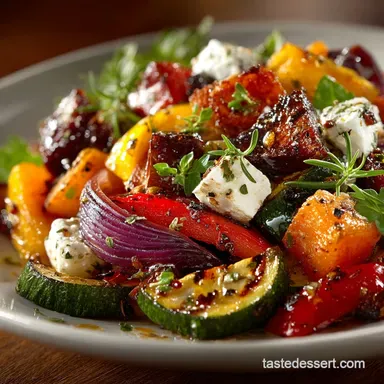
The Autumn Glow Roasted Vegetable and Feta Salad
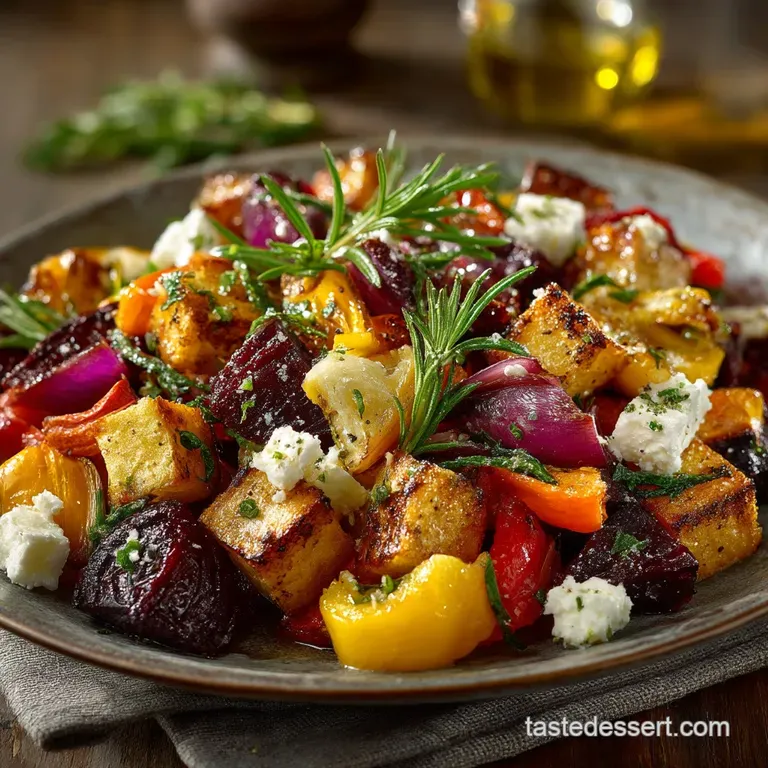
- Elevating Produce: Why This Roasted Vegetable Salad is a Dinner Game-Changer
- The Magic of Maillard: Unlocking Deep Flavor Through Caramelization
- Gathering the Harvest: Essential Components for Your Roasted Vegetable Salad
- Stocking the Pantry: Necessary Tools and Equipment
- Roasting for Perfection: Step-by-Step Preparation Guide
- Bringing it All Together: Assembly and Final Touches
- Customizing Your Plate: Flavor Variations and Dietary Swaps
- Chef's Notes: FAQs, Storage, and Reheating Best Practices
- Recipe FAQs
- 📝 Recipe Card
Elevating Produce: Why This Roasted Vegetable Salad is a Dinner Game Changer
Forget everything you think you know about salads. We are moving far beyond the realm of limp lettuce and bland tomatoes into a territory where depth of flavor, satisfying texture, and true substance reign supreme.
This Roasted Vegetable Salad is intentionally designed to hold its own, transforming humble root vegetables and seasonal greens into a dynamic, compelling meal. It’s a spectacular example of how simple cooking techniques can yield profoundly delicious results, making it the perfect choice for a robust Meatless Meal or a stunning centerpiece for any dinner gathering.
This isn't just a side dish; it’s a fully dimensional culinary experience with backbone, making it a fantastic addition to your repertoire of heartier Mediterranean Diet Recipes .
The Magic of Maillard: Unlocking Deep Flavor Through Caramelization
The key distinction between a good salad and a truly remarkable one lies in the heat treatment applied to the primary ingredients. By harnessing the oven’s high temperature, we activate the Maillard reaction the chemical process responsible for browning food and developing complex, savory flavors.
Unlike boiling or steaming, which simply cook the vegetables, roasting caramelizes their natural sugars. This intensifies the sweetness of components like sweet potato and carrot, giving this specific roasted vegetable salad recipe a rich, autumnal foundation.
What Makes the 'Autumn Glow' So Satisfying?
Our 'Autumn Glow' version achieves unparalleled satisfaction through thoughtful contrast. We start with the inherent sweetness of the roasted root vegetables specifically 350 grams of sweet potato cubes and 175 grams of sliced carrots which are balanced beautifully by the sharp bite of red onion and the earthiness of 150 grams of halved Brussels sprouts.
This warm foundation is then counterpointed by the salty, creamy tang of 100 grams of crumbled Greek feta and the sharp acidity of our bright roasted vegetable salad dressing , a vibrant Lemon Herb Vinaigrette.
The synergy of warm, cold, sweet, salty, and acidic components ensures every forkful is perfectly balanced.
Perfect Pairings: Serving Suggestions for a Robust Main Dish
While this salad is deeply nourishing on its own, its complexity makes it an exceptional partner for lean proteins. Consider pairing it with a simply seasoned fillet of baked salmon or a perfectly roasted chicken breast to create a complete meal.
For those looking to fully embrace Mediterranean Diet Recipes , serve the salad alongside warm, crusty sourdough bread and a rich, house made hummus, or perhaps a bowl of velvety whipped ricotta.
To elevate the experience further, accompany the meal with a crisp, dry white wine, such as an unoaked Chardonnay.
A Salad That's Anything But Limp: Our Philosophy on Hearty Greens
A proper Roasted Vegetable Salad requires greens that can stand up to warm ingredients and a vibrant dressing. We utilize 140 grams of a mixed baby greens blend including spinach, peppery arugula, or baby kale chosen specifically because they are hearty enough not to immediately collapse, yet delicate enough to soften slightly when combined with the warm root vegetables.
This slight wilting integrates the flavors of the Lemon Herb Vinaigrette directly into the greens, ensuring they act as a cohesive part of the dish, not merely a passive bed.
Gathering the Harvest: Essential Components for Your Roasted Vegetable Salad
The excellence of this dish relies on gathering high-quality, fresh ingredients across three primary categories: the hardy base, the zesty dressing, and the textural additions. For the roasting element, we require precisely 350 grams of diced sweet potato, 175 grams of sliced carrots, a medium red onion cut into wedges, and 150 grams of Brussels sprouts, all tossed with four tablespoons of extra virgin olive oil and fresh thyme.
The assembly is completed with the aforementioned mixed baby greens, 100 grams of crumbled feta, and 50 grams of crunchy nuts.
Stocking the Pantry: Necessary Tools and Equipment
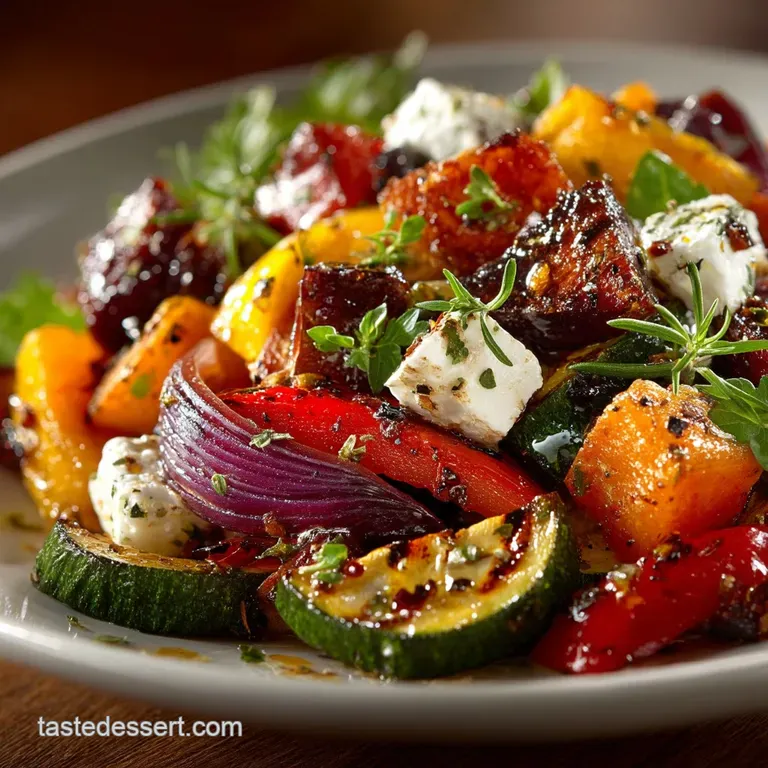
While the technique is straightforward, having the right equipment is non-negotiable for success. You will need a reliable sharp chef’s knife and cutting board for consistent prep, and a vegetable peeler.
The most critical item, however, is the proper infrastructure for roasting: you absolutely must utilize two large baking sheets. Attempting to cram all the vegetables onto one sheet will result in steaming rather than the desired caramelization, compromising the texture entirely.
Finally, keep a small jar with a tight fitting lid or a small whisk handy for emulsifying the dressing.
Selecting the Best Seasonal Root Vegetables
While the recipe is optimized for the combination of sweet potato, carrot, Brussels sprouts, and red onion, remember that uniformity in cutting is vital for even cooking. The sweet potato should be diced into 1 inch (2.5 cm) cubes, ensuring that the densest vegetable has enough surface area to crisp up, while the carrots are sliced 1/2 inch thick.
The Brussels sprouts are simply trimmed and halved.
The Secret to a Bright, Balanced Lemon Herb Vinaigrette
The true defining feature of the final dish is the zesty acidity provided by the roasted vegetable salad dressing . This Lemon Herb Vinaigrette is built on a base of three tablespoons of extra virgin olive oil combined with two tablespoons of fresh lemon juice about one whole lemon.
To achieve a perfectly creamy, emulsified texture, we incorporate one teaspoon of Dijon mustard and balance the acidity with one teaspoon of maple syrup or honey, finished with a generous pinch of salt and pepper.
Prepping the Vegetables for Optimal Roasting
After dicing the sweet potatoes and slicing the carrots and onions, toss the root vegetables in a large mixing bowl with the olive oil, kosher salt, freshly ground black pepper, and the fresh thyme leaves.
This ensures that every piece is evenly coated, allowing the herbs to infuse the oil and distribute flavor comprehensively before they hit the heat.
Optional Additions for Texture and Crunch
To elevate the salad’s textural profile, we incorporate 50 grams of roughly chopped pecans or walnuts, which are lightly toasted until fragrant for a nutty depth. The creamy, salty 100 grams of crumbled feta provides a wonderful soft contrast to the crisp tender vegetables.
For the final flourish, a scattering of roughly chopped fresh flat leaf parsley adds essential fresh, green brightness.
Related Recipes Worth Trying
- Grilled Chicken Salad with Strawberries and Spinac HoneyBalsamic Dressing — This easy Grilled Chicken Salad with Strawberries and Spinac is your perfect ProteinPacked Summer Salad Tender grilled chicken sweet fruit and a punchy...
- The Best Bright Easy LemonHerb Shrimp Salad Recipe — Ditch the dreary mayo This Quick Shrimp Salad recipe uses fresh lemon and herbs for a zesty satisfying lunch Perfect for a Shrimp Salad Sandwich
- Mediterranean Chickpea Salad with Cucumber Tomato Ready in 20 Min — Whip up this vibrant Healthy Chickpea Salad with Cucumbers and Tomatoesa simple zesty Greek Chickpea Salad perfect for light lunches or picnics Easy...
Roasting for Perfection: step-by-step Preparation Guide
Start by preheating your oven to 400° F ( 200° C) and lining both of your essential large baking sheets with parchment paper. Once the vegetables are uniformly chopped and tossed with oil and seasoning, they are ready for their transformation.
Next, divide the seasoned mixture equally between the two prepared sheets. The paramount instruction here is to ensure the vegetables are spread out in a single layer they should never overlap, guaranteeing proper moisture evaporation and caramelization.
Bringing it All Together: Assembly and Final Touches
Once the root vegetables are resting slightly after roasting, the final assembly is quick and intuitive, focusing on integrating the warm components seamlessly with the cool greens and vibrant dressing.
Achieving the Ideal Roast Temperature and Timing
The vegetables should roast for a total of 30 to 35 minutes at 400° F ( 200° C). Crucially, you must turn the vegetables once halfway through the process, typically around the 18-minute mark.
They are done when their edges are deeply golden brown and they yield easily to a fork, indicating they are perfectly crisp tender. While the vegetables are roasting, take 3– 5 minutes to toast your pecans or walnuts in a dry pan until they are fragrant.
Tossing and Seasoning the Vegetables Evenly
The initial coating of oil and seasoning in the large bowl is essential. When transferring to the baking sheets, take care to scrape up any residual herbs and oil from the bowl and distribute them across the separated trays.
This ensures that every root vegetable piece contributes its maximum flavor profile to the overall Roasted Vegetable Salad .
Whipping Up the Vinaigrette in Minutes
To create the bright Lemon Herb Vinaigrette, simply combine all the dressing components in a small jar. Seal the lid tightly and shake vigorously for about 30 seconds until the mixture thickens slightly and is fully emulsified.
Always taste at this stage and adjust a touch more lemon juice will boost brightness, while more maple syrup will mellow the acidity.
Layering the Salad for Maximum Visual Appeal
In your now-empty large mixing bowl, lightly toss the mixed baby greens with only half of the prepared vinaigrette. We want them coated but not saturated. Add the warm roasted vegetables, the toasted nuts, and the crumbled feta to the bowl. Gently toss the mixture just once or twice.
This minimal handling ensures the warm components integrate with the cool greens without turning the salad soggy. Serve immediately, garnished generously with fresh parsley, while the temperature contrast is still palpable.
Customizing Your Plate: Flavor Variations and Dietary Swaps
The beauty of this Roasted Vegetable Salad is its flexibility. If you are seeking to turn this into an even more substantial main course, consider adding 120 grams of cooked quinoa or farro to the base, or create a delicious roasted vegetable salad with orzo for a Mediterranean flair.
For those who enjoy a spicier profile, a pinch of smoked paprika or a dash of harissa paste tossed with the vegetables before roasting will impart a warming North African kick. If you want a creamy, savory experience, swap the lemon dressing entirely and try a rich roasted vegetable salad with tahini dressing .
Chef's Notes: FAQs, Storage, and Reheating Best Practices
Achieving perfection in roasting requires attention to a few critical details, but once mastered, this technique will transform your approach to vegetables.
Making This Vegan or Grain Free
This recipe is inherently grain free. To adapt this hearty Meatless Meal to a fully vegan diet, simply ensure you substitute the honey (if used) with maple syrup in the vinaigrette.
The feta cheese can be easily replaced with cubed avocado for creamy texture, or a high-quality store-bought vegan feta substitute.
Swapping the Feta: Alternatives to Salty Cheeses
If feta isn't to your taste, a fantastic alternative that provides a similar sharp, tangy counterpoint is soft goat cheese (chevre). Alternatively, for a richer profile, shaved Parmesan adds an umami depth, though it slightly changes the Mediterranean feel of the original dish.
Troubleshooting Common Roasting Mistakes
The single most common error is overcrowding the baking sheet. Remember the "Golden Rule of Roasting": use the two required trays, even if your volume seems small. Crowding traps steam, resulting in mushy, pale vegetables instead of the desired crisp, golden edges.
Next,, ensuring all dense root vegetables are cut to a uniform size (like the 1 inch sweet potato cubes) guarantees everything finishes cooking simultaneously.
How Long Does the 'Autumn Glow' Salad Keep?
This Roasted Vegetable Salad with Feta is best enjoyed immediately while the vegetables are still warm, maximizing the textural contrast. If you plan for leftovers, store the components separately.
The undressed roasted vegetables will maintain their quality in an airtight container in the refrigerator for 3 to 4 days, making them excellent for quick future lunch preparations.
Recipe FAQs
I’m struggling to get my veg properly crispy; any tips for achieving that perfect char on this Roasted Vegetable Salad?
Ah, the classic problem of steaming versus caramelisation! The ‘Golden Rule of Roasting’ is space, space, space. If your trays are crowded, the vegetables steam in their own moisture rather than browning nicely.
Use two trays, ensuring everything is spread in a single layer, and keep the oven nice and hot (400°F/200°C) to get that lovely, deep golden brown char.
Can I make the roasted veg ahead of time, or does the salad have to be served warm?
You can absolutely prep components in advance! The vegetables can be roasted up to a day ahead and stored in the fridge. However, for the best flavour and texture, reheat them slightly before combining with the other ingredients, as serving them warm helps the vinaigrette cling beautifully.
Make sure to keep the vinaigrette separate and only dress the salad right before serving, otherwise, you'll end up with a soggy mess, bless its heart.
I fancy a change from sweet potatoes and carrots. What other vegetables work well in this recipe?
Roasting is wonderfully versatile! Try swapping in seasonal goodness like parsnips, chunks of butternut squash, or firm vegetables like broccoli florets. Just remember that denser root vegetables (like parsnips) take longer than watery veg (like courgette or cherry tomatoes), so ensure your chopping is consistent for simultaneous cooking easy peasy!
This looks quite filling, but how can I turn this Roasted Vegetable Salad into a proper main meal?
That's a cracking idea! To boost the protein and turn it into a full dinner, stir in about four ounces of cooked grains like quinoa or farro during assembly. Alternatively, top each serving with grilled halloumi, a simple roasted chicken breast, or even a couple of poached eggs Bob's your uncle, you've got a complete, hearty meal.
Can I substitute the feta cheese with something dairy-free or different?
Certainly. If you need a dairy-free option, using cubed, creamy avocado adds wonderful richness and texture without the cheese. If you still want that classic tangy flavour, a good quality vegan feta alternative works well.
For those who can eat dairy but fancy a twist, goat cheese (chevre) or even cubed mozzarella offer lovely variation.
Autumn Feta Roasted Vegetable Salad